I paid someone to tell me I’m a 'Winter': Colour analysis, the modern age’s way of finding yourself
With colour analysis still trending, CNA Lifestyle’s May Seah subjected herself to the mysterious world of seasons and undertones, which she hoped might change her look. Instead, it changed her wardrobe, her self-regard and her relationship with orange shirts forever.
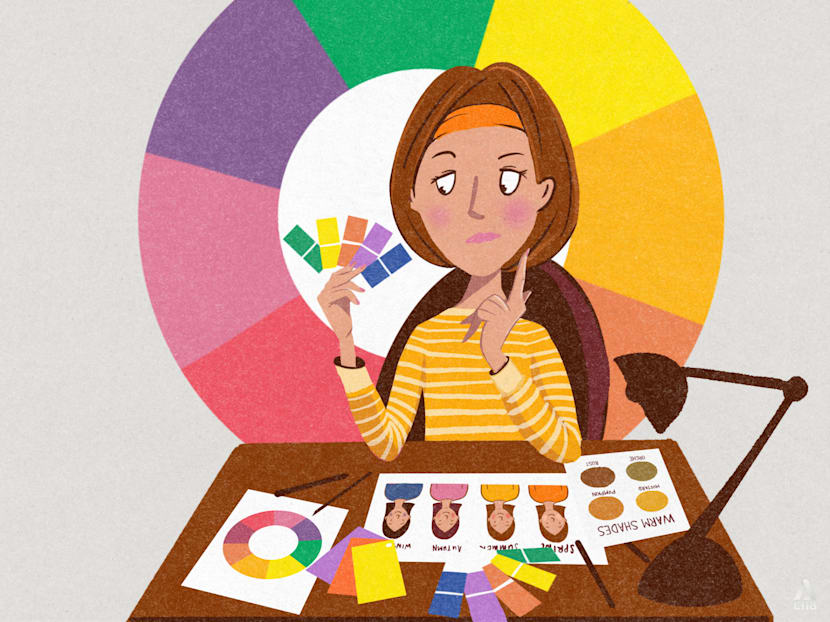
Have you had yourself colour analysed? (Art: CNA/Jasper Loh)

This audio is generated by an AI tool.


There are moments in a person’s life when they begin to suspect that civilisation has gone too far. For some, it’s when they encounter oat milk. For me, it was when a young woman named Xerene informed me that my “undertones” were cool.
In the last couple of years, people have been paying good money to have professionals tell them which colours they should wear based on their “season” like it’s the 1980s again.
The four options are Spring, Summer, Autumn and Winter, which sounds less like a fashion system and more like the lineup of a Gen-Z boy band.
Judging by the number of new colour analysis studios providing this service that are springing up and the long wait for available appointment slots, the trend, which fashionable Koreans revived about seven years ago, isn’t letting up any time soon.
My usual method of choosing clothes is to open the closet, pick something that doesn’t smell like barbecue sauce, and put it on.
Apparently, this is wrong.
Instead, I should pay someone to tell me which colours of clothing will make me look “vibrant.”
That was the “bonding session activity” I was dragged along to for a friend’s birthday: For S$228 per person, we made an appointment to see a “colour analyst”, a profession that exists because humanity has too much free time.

At the studio, as an introduction to the concept of colour analysis, we were shown pictures of Song Hye-kyo in her season’s colours and not in her season’s colours, which, when you are Song Hye-kyo, makes absolutely no difference to the radiance of your beauty.
Not being Song Hye-kyo, I was enveloped in a white drape like a Roman senator awaiting impeachment. Xerene seated me before a mirror and began holding coloured cloths up to my face.
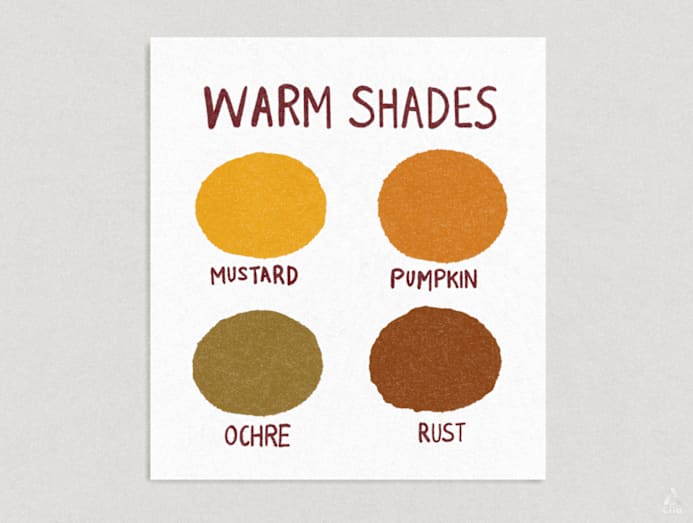
First came the “warm” shades: Mustard, pumpkin, ochre, rust.
“Hmm,” she said. “These make you look a bit… ill.”
I explained that this was merely my natural expression before lunch, but she was already moving on to icy blues and frosty greys.
Eventually, she proclaimed, “You’re a Winter!” Okay, but was that better or worse than Slytherin?
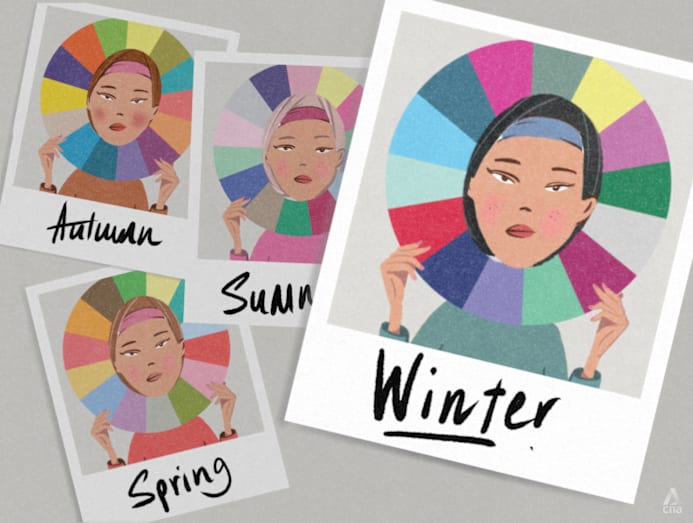
Being a Winter, it turns out, has nothing to do with skiing or seasonal depression. It means I have “cool undertones” and “high contrast”. Winters, she explained, flourish in bold, crisp colours like sapphire, emerald and crimson. They should avoid “warm” colours such as orange, beige and anything that reminds people of McDonald’s curry sauce.
This was a blow, as I own several beige items, all of which I had regarded as staunch companions through life’s sartorial battles.
Xerene explained that my melanin, eye colour and hair tone all contributed to my classification.
She laid out my “ideal palette”, which resembled a crime scene at a peacock convention: Bright cobalt blues, icy pinks and stark whites.
At the end of the session, she handed me a pocket-sized “Winter colours” card for easy reference, presumably so that if I should ever be in a medical emergency, ER professionals would know not to drape me in an orange hospital gown.
It is not pleasant to discover that one’s destiny is determined by the angle of light on one’s cheekbones.
I mean, what if I wanted to be an Autumn? They get to wear chic browns and burnt umbers, like pumpkin spice lattes with legs. Winters, on the other hand, are condemned to a life of icy tones and silver jewelry. Oh, how the forbidden called to me. Those cheery marigolds, those sunny yellows – the siren songs of garments I could no longer wear!
Eventually, I made peace with my lot. After all, there are worse things than being a Winter. Mosquitoes, for instance.
Once I started dressing like a main character from a Disney On Ice production of Frozen, things improved. My skin looked less sallow. My eyes stood out. I received compliments from strangers who did not appear to be drunk. People started saying things like, “You look great,” which, for an over-caffeinated journalist, usually means, “You look conscious.”
Then came the power trip. I started silently judging others. “That man’s obviously an Autumn,” I’d think, “and yet he dares to wear lime.” High on chromatic superiority, I felt a charitable sense of pity towards all the poor souls trapped in the wrong season, walking assaults on the human retina.
This, I realised, is how dictatorships start.
And so, I learned that colour analysis, while sounding like modern witchcraft, possesses a certain daft charm. It provides the illusion of order in a universe otherwise committed to chaos. Follow these rules, it says, and you will look like Song Hye-kyo.
In fact, it is less about fashion and more about existential comfort and immutable identity. It tells you that deep down, you are a specific type of person, and that person looks terrible in mustard.
In the end, it’s strangely comforting. Because now, whenever I face life’s uncertainties – mortgage rates, microplastics, social faux pas – I can take solace in one immutable truth: At least my undertones are cool.