Cramped seats, bumpy rides: How to make your flights more bearable if you hate flying
If you feel like air travel never gets any better, you're not alone. So what can passengers do about it?
(Photo: iStock)

This audio is generated by an AI tool.
Modern civilisation should be half-proud. We’ve achieved more than our share of innovative miracles. Mankind has plonked Rovers on Mars, split the atom, and designed high-speed trains that travel faster than a Formula One racer.
Yet despite these advancements, modern air travel can still feel positively medieval. As scores of people across the region prepare for well-deserved end-of-year flights, the question is, what factors make the experience so unpleasant – and is there reason to hope things will improve?
WORST SEATS IN THE HOUSE
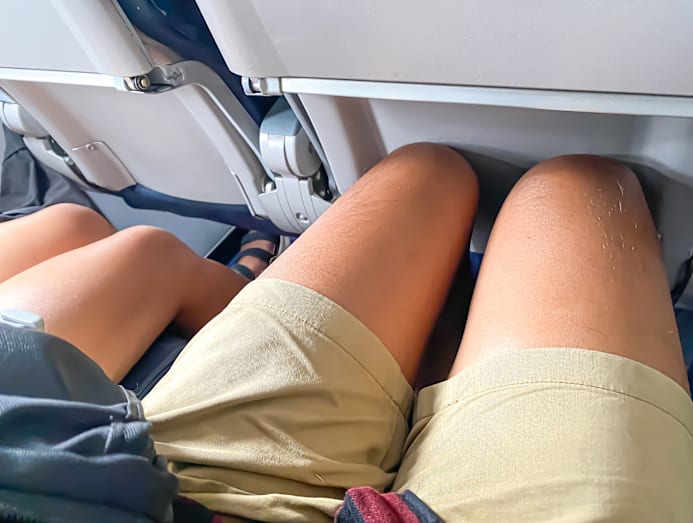
As a gawky, ageing man who clocks in at 189cm-tall, your average economy class seat is so cramped that my knees mash painfully against the sharp plastic frame of the chair ahead.
When my friends – always the shorter ones, mind you – tell me to stop complaining, I like to remind them that pets flying in cargo travel in more comfort than humans. The International Air Transport Association states that each animal on-board “must have enough space to stand up, sit upright, lie in a natural position, and turn around while standing up”.
You can blame high overheads for the human squeeze, as airlines in recent years have sought to remain profitable by packing more rows on planes, even as your average seat size has shrunk up to 12.7cm in legroom on some brands since the 1980s.
Comfort might be possible if you could fly in peace, but I also have the world’s worst superpower: I attract crying babies. High-pitched kids inevitably draw close to my seat, like diapered, howling magnets.
And it turns out their screams do more than strain the ears. A study just released by researchers at Jean Monnet University in France found that toddler’s shrieks cause the body temperature of people around them to spike – we literally get hot and bothered by their stress.
Not that most of us need the help. Increased rates of chaotically bumpy flights certainly aren’t helping. A few high-profile turbulent journeys, including on Singapore Airlines, have made the headlines, but they’re far from outliers.
This dangerous phenomenon can even occur when there’s no stormy weather: So-called "clear-air" turbulence, invisible to pilots, has ballooned in rates by 55 per cent since 1979 in some areas. The culprit: Warming air from climate change. The prognosis: Not good, according to researchers who note that “turbulence strong enough to pose an injury risk could double or triple in frequency”.
No wonder there are legions of airborne pessimists like me. Singaporean Jaclynn Seah, who runs a blog called The Occasional Traveller, is one of them. Seah has visited some 60 countries, and agrees that flying has lost much of what glamour it had, even as they add sneaky expenses to your user journey.
“I hate that airline websites nowadays nickel and dime everything, even things like using your credit card for payment,” she said. While a customer’s options are almost limitless, “ultimately because of budget airlines and cutting costs to go 'no frills', a lot of the older expectations of the flying experience like food, proper blankets, and entertainment have become optional now.”
Seah's pet hate is a lack of cabin cleanliness. Her first task after boarding: Wiping all the seat surfaces with a wet wipe. “Not just because of COVID,” she said, “but in general the seats don't get cleaned that much in a turnaround flight.” Her packing pro tip: Always bring noise cancelling earbuds.
“Blocking out the constant roar of the plane does so much to calm you, even if you aren't listening to any music – I usually have a hoodie on so I'm not directly touching the chair and also to keep my earbuds in discreetly.”
UP IN THE AIR
Whether your flight arrives or takes off on time is another matter. A constant slew of factors, from severe weather events, strikes and even cyberattacks can affect hundreds of flights at once, and leave passengers in limbo for hours.
Yuri Cath can sympathise. She was flying home from Paris to Singapore this summer, and fell asleep shortly after boarding, expecting to be airborne in a few minutes. No such luck. Awakening from a long nap, she found they were still on the runway. Even worse, “we weren’t allowed to leave our seats or even use the toilet,” she said.
Six hours after the original departure time, the pilot finally announced there was a brake malfunction and that engineers were on their way. “Another hour passed with no updates,” said Cath. Long story short: The plane wasn’t fixed, and she slept in a hotel lobby in Paris’ Charles De Gaulle Airport, as no rooms were available.
Her lesson from the saga? “Always splurge for premium economy.” The extra legroom comes in handy when a long flight spends half the time on the ground. “Premium economy quality differs from brand to brand though, so your mileage may vary.”
HOW TO FIND COMFORT IN ECONOMY
I often ask friends what they do to make their flight less of a pain. Some responses are practical – like flying on airlines with a bid-to-upgrade system through their website or app, which means you could get premium or business seats for a fraction of the cost. Or getting a credit card that lets you convert your spending into air miles at a respectably high rate, such as the DBS Altitude Credit Card for those in Singapore. Or the rise in parents not holidaying with children, enjoying so-called "momcations" with less mid-travel hassle.
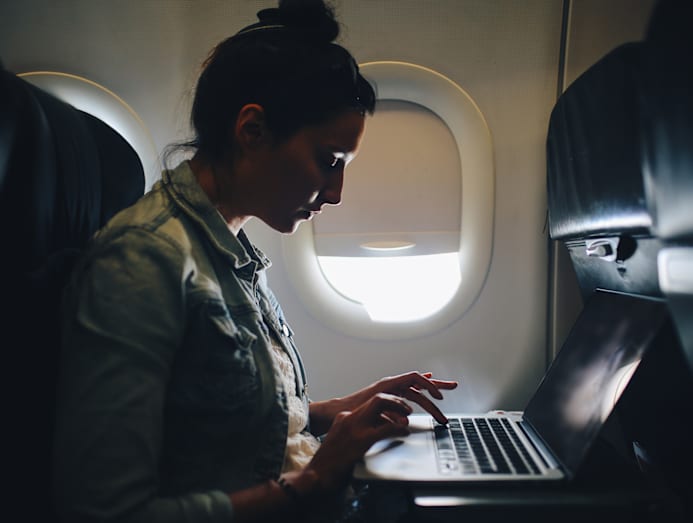
Other tips are more left-field. Some people swear by working onboard. Getting into ‘office mode’ makes the flight pass faster than watching a bad movie, since you have to concentrate fully, proponents say – though it does seem a deflating way to start a holiday.
Personally, I find creating a set of rules that guide how I travel to be surprisingly effective. By adhering to guidelines like “if a flight is longer than six hours, I’ll always fly premium” and “never land at London’s Stansted Airport (as it takes ages to get into town)”, I simplify my decision-making.
Pleasingly, I’ve also found a handy way to drown out in-flight baby howls. I’m too cheap to buy noise-cancelling headphones, but I’ve found the iPhone’s Background Sound setting plays the crackly white noise of a fireplace that calms me to sleep.
But my biggest life hack is psychological. I start every flight with a sense of unshakeable negativity, prepared for the worst. If the journey is hellish, I’m not shaken. And if it turns out to be bearable, I’m pleasantly surprised. It’s a mindset called defensive pessimism – and take it from this curmudgeon; it works.
LIGHT AT THE END OF THE TUNNEL
Yet there are people in the industry who are deeply optimistic about the quality of travel. Chris Sloan, a seasoned writer and editor specialising in the business of air travel, is one of them. “People like to live in the past and reminisce about the good old days,” he said with a laugh, but there’s improvements happening globally all the time, from refreshed airports to better in-cabin air quality, entertainment systems and high-speed airport-to-city connectivity.
Good things also happen when new players enter the market. Sloan noted that India and Saudi Arabia have brand-new or soon-to-launch carriers; a move which always means other brands boost quality to stay competitive. Meanwhile Emirates is one to watch in the coming months, with big announcements expected, he said. “They've actually said, ‘You know what? Everybody get ready, because we're going to reinvent the industry.’ And they don't usually pump hype that they can't deliver on.”
Whether the upgrade focuses on comfier seats, upgraded food or a floor-to-ceiling rebrand remains to be seen. But if it changes the game for customers, other brands will be forced to follow. “After all, imitation is the sincerest form of aviation,” Sloan quipped. Maybe there’s room to be optimistic about air travel after all.