The former Air Force engineers who started Wok Hey have 'no regrets' about going into F&B
They are also behind Wok Hey’s sister brand, Niku Iku, which just opened its first dine-in outlets serving yakiniku bowls with beef and unagi.
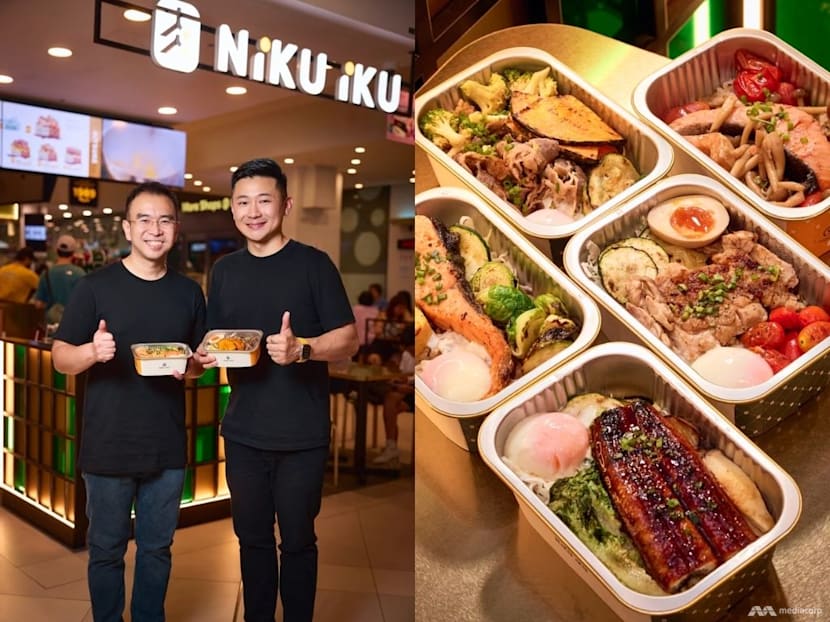
Wok Hey's sister brand – founded by Huang Changyong (left) and Jake Chia (right) – Niku Iku sees its first dine-in outlets serving yakiniku bowls with beef and unagi. (Photo: 8Days/Dillon Tan)

This audio is generated by an AI tool.


Wok Hey needs little introduction. Since launching in 2017, the halal homegrown brand has become a familiar sight with its bright yellow takeaway kiosks located islandwide serving stir-fried rice and noodles.
What you might not know is that the two-year-old halal Japanese grill concept Niku Iku is run by the very same founders: Former Republic of Singapore Air Force engineers turned F&B entrepreneurs Jake Chia, 43, and Huang Changyong, 42.
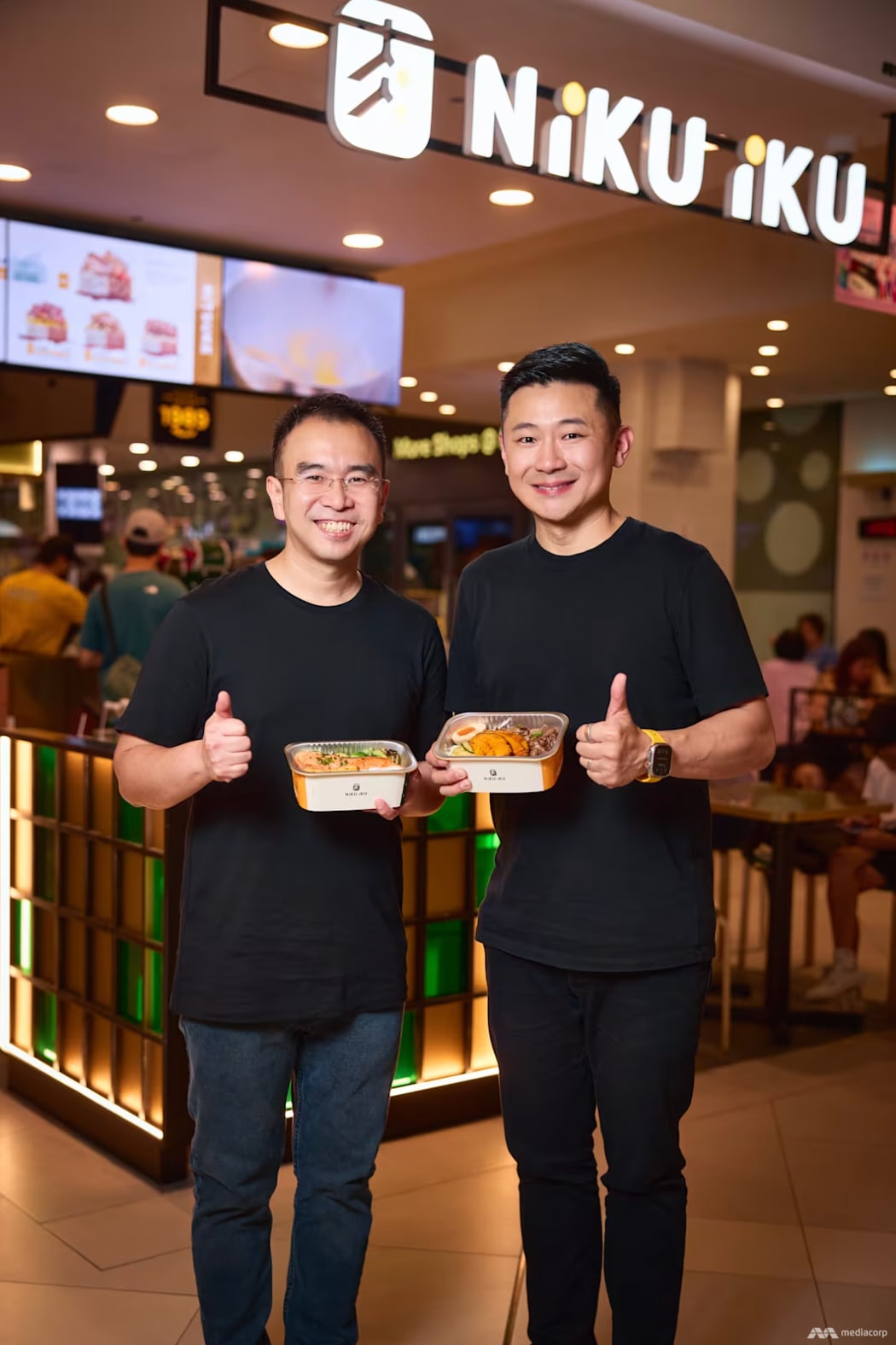
With the opening of Niku Iku's latest outlets at Our Tampines Hub and Lot One in May, the pair have introduced seating areas for the first time, moving the concept beyond its grab-and-go roots. It marks a new chapter for the duo, who have grown Wok Hey into a mini empire with 45 outlets in Singapore and five more in Kuala Lumpur, while Niku Iku now counts 11 outlets islandwide. 8days.sg catches up with the founders at the new dine-in Tampines outlet.
Long before they were slinging fried rice, Chia and Huang were aircraft engineers in the RSAF, having joined the military after completing their engineering degrees. Both were in-charge of the maintenance and repair of aerosystems.
After four and six years in the forces respectively, both men started thinking seriously about what came next. “I just thought it was time to embark on a fresh challenge in life,” says Huang. “I was interested in building a business, something that could add value to people’s lives.”
Both describe themselves as foodies, and the idea of creating an F&B concept from scratch excited them more than another engineering or corporate role. Chia also spotted a gap in the market for affordable, customisable zi char-style food served quickly and conveniently. The pair saw potential in the takeaway kiosk format and invested a six-figure sum to open Wok Hey’s first outlet at Bugis Junction in 2017.
The journey was far from smooth sailing. The pandemic, they say, was the lowest point. “Our staff couldn't be cross-deployed the way we normally would. Operations were disrupted and every day brought a new restriction we had to adapt to. We were navigating in the dark, in real time, with no playbook,” says Chia.
What he kept coming back to is a memo he wrote to staff during that period, titled 'Time for resilience and gratitude'. "I remember sitting down to write it, thinking: what do you say to people who are scared, when you're scared, too? You can't pretend everything is fine. But you also can't let fear be the loudest thing in the room.”
In the end, the founders shared their honest thoughts with the staff who chose to stay and fight through it with them. The memo, he adds, was about more than keeping the business afloat. "It was a reminder of why we do this."
Despite Wok Hey’s size today, the pressure hasn’t let up. “If anything, the stakes are higher now,” says Chia. “Early on, if we failed, it was just us picking up the pieces. Now there are families depending on us – our staff’s families too.” Wok Hey HQ today has employed around 30 staff.
The early years were especially gruelling for both men, who are married with children. “It was seven days a week,” recalls Chia. “Long nights dealing with store fit-outs, contractors, technical issues on-site, then still needing to be back in the office the next morning.”
“We were so consumed by building the business that we often had little energy left when we got home. Our spouses carried much of the family load on their own. They didn’t sign up for a startup life, but they held the fort,” Huang adds. Both say their spouses were supportive from the start. Huang, in particular, recalls telling his partner to give him two years to give it a shot.
That early chapter also left a lasting mark on them, physically. “We both put on weight,” quips Chia, who estimates he gained around 6kg due to the sheer volume of food tasting and recipe testing during Wok Hey’s early R&D phase. “I’m still trying to lose some of it now.”
His subsequent keto diet eventually inspired Wok Hey’s cauliflower rice option. “That was partly personal motivation,” he laughs.
When asked about their success, the pair are characteristically measured – proud of how far the brand has come, but quick to note that “F&B is still a day-to-day business”. “Every day brings a new challenge, be it manpower, systems, customer expectations or expansion plans,” says Huang.
That said, they do allow themselves the occasional moment of quiet satisfaction, like when they spot strangers carrying Wok Hey takeaway cartons while driving around the island. “My friend’s daughter, who’s an incredibly picky eater, loves our egg fried rice,” shares Chia. “Hearing that made me laugh, but also got me a little emotional. That’s a child’s honest verdict. You can’t fake that.”
Their military background still shapes how they run the business today. “‘Cover the 6’ is a military term – watch the angle your partner can’t see. That’s how we operate. We have different strengths, different instincts, and we lean into that,” says Chia.
Despite knowing they’d likely have been promoted to senior rank by now, both men say they have no regrets about leaving the Air Force.
“I don’t think about the ‘what ifs’ because I genuinely have no regrets,” says Huang. “But staying on would have been more comfortable – it’s a stable job, no doubt about that.”
Chia puts it more philosophically: “As humans, we’ll always compare. In a tie fan wan (iron rice bowl) organisation, you can roughly map out where you’ll be at 43, if you don’t screw up. But I don’t dwell on it. The exposure we’ve gotten, the customers we’ve met, the experience of being in an industry that’s very much alive, it’s all very rewarding.”
On the question of earnings – F&B versus staying in the RSAF – the pair decline to share figures or comment on profitability, but Chia eventually concedes: “Running a viable business of 45 outlets… I think it has to be better.”
After years perfecting the grab-and-go kiosk model, adding dine-in seating to Niku Iku might seem like an unexpected move, especially at a time when rising rent, labour shortages and operating costs have made many F&B players more cautious than ever.
But the founders are quick to play down any notion of a grand strategic shift. “The takeaway model is still our core,” says Chia. “But if a good location comes along where customers can sit and enjoy the food on the spot, we'll take it.”
In fact, the same thinking has already shaped parts of Wok Hey’s expansion. While most outlets remain takeaway-focused kiosks, selected branches such as White Sands and One@KentRidge also offer dine-in seating.
“Location comes first,” Chia adds. “We don’t specifically go out looking only for takeaway spaces or only for dine-in spaces. We evaluate whether the location itself makes sense for the brand and for the customer experience.”
As for a full-scale restaurant? Don’t hold your breath. “Running a proper restaurant is an entirely different ball game,” says Chia. “It’s not our expertise.”
Now, with 45 Wok Hey outlets in Singapore, the founders are setting their sights further afield – regional expansion for Wok Hey, while continuing to grow Niku Iku closer to home.
“As ex-military men, we are very patriotic and we want to bring our local brand overseas,” Chia quips. “Since Wok Hey is an Asian stir-fry concept, we’re looking at the broader APAC region first.”
Is there pressure for Niku Iku to become the next Wok Hey? “There will always be pressure, we’d be naive to pretend otherwise,” says Chia. “But what we keep reminding ourselves is to get the food right, take care of the customer, run operations with discipline and heart. If we do those things well, everything else follows. Niku Iku doesn’t need to be the next Wok Hey. It needs to be the best version of itself.”
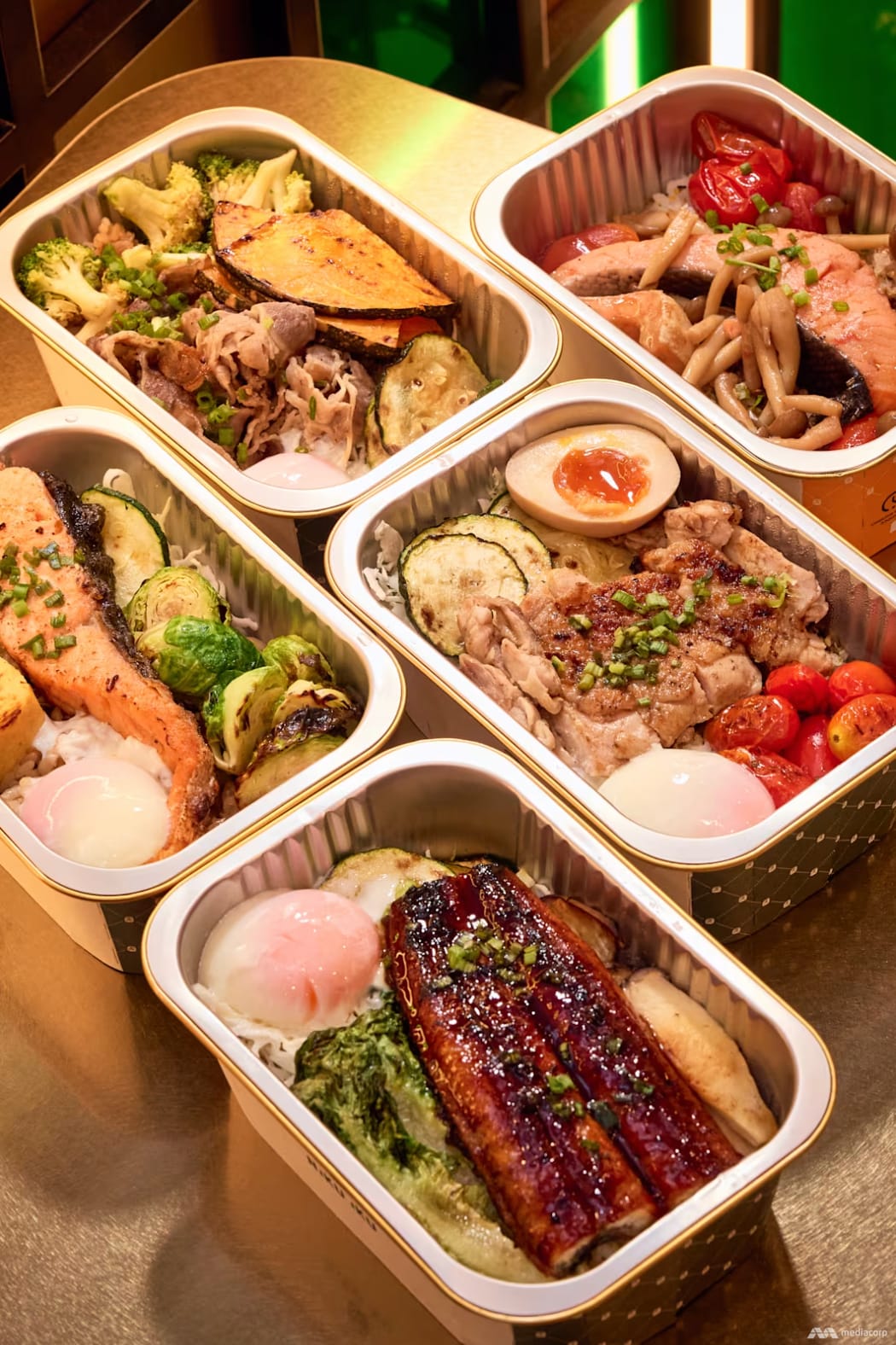
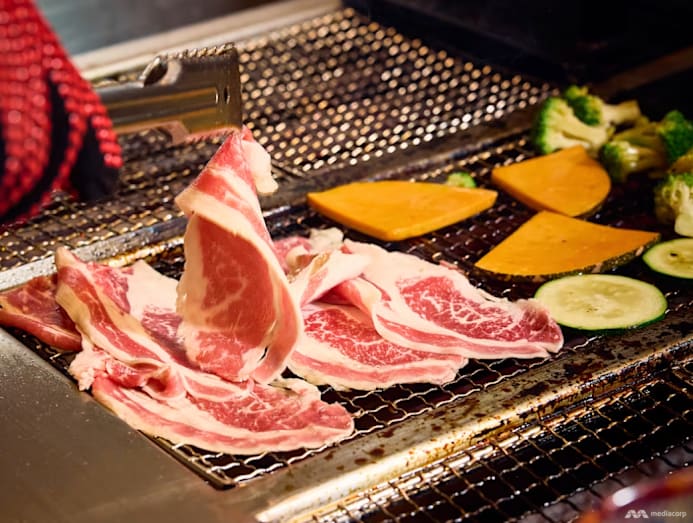
Niku Iku loosely translates to “Shall we go for meat?” in Japanese. The menu centres on two cooking styles: yakiniku (grilled) and nitsuke (simmered) proteins. Think beef, salmon and unagi – paired with rice and optional add-ons at S$1 each, such as tamagoyaki, pumpkin and king oyster mushroom.
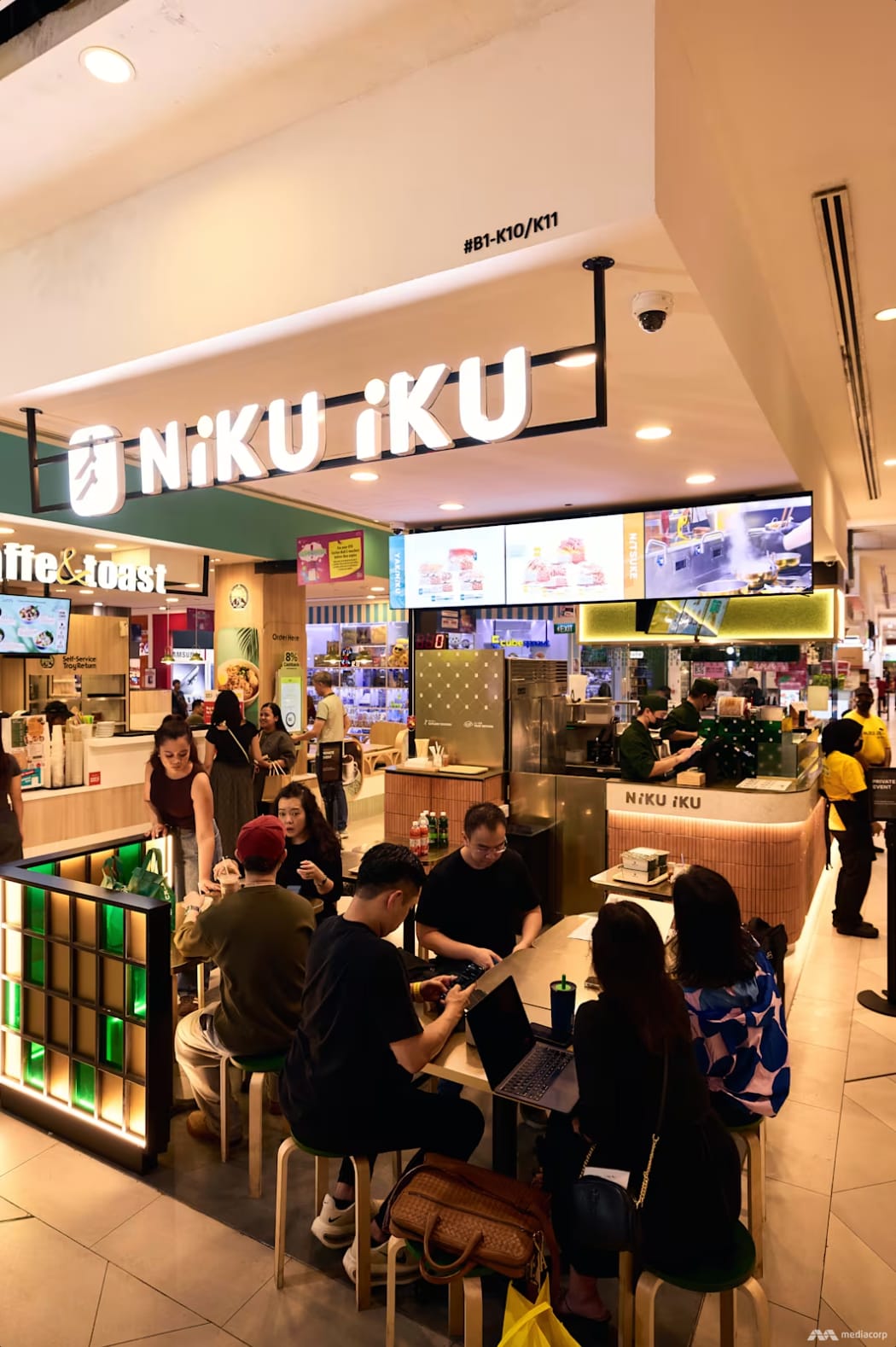
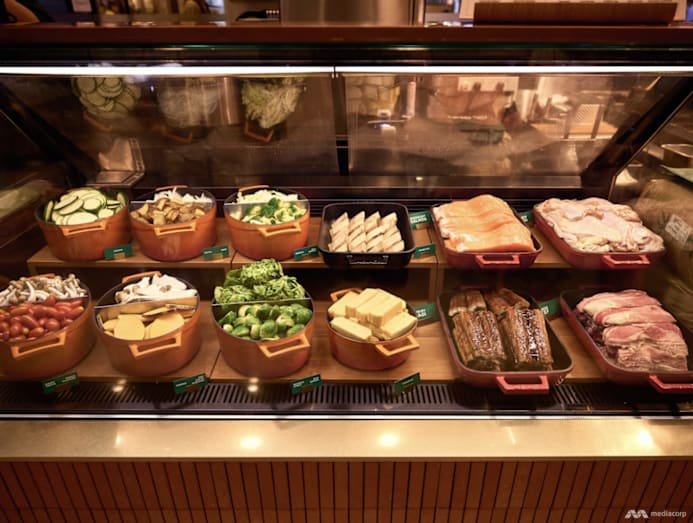
The kiosk is modern and sleek, ingredients neatly displayed in a glass counter, with all items cooked to order in the open kitchen behind it – electric grills and an induction cooking station in full view.
The Tampines outlet has 16 seats tucked alongside the kiosk, simply furnished for a quick meal. Don’t expect a separate dine-in menu – what you get here is exactly what you’d take away, right down to the box it comes in.
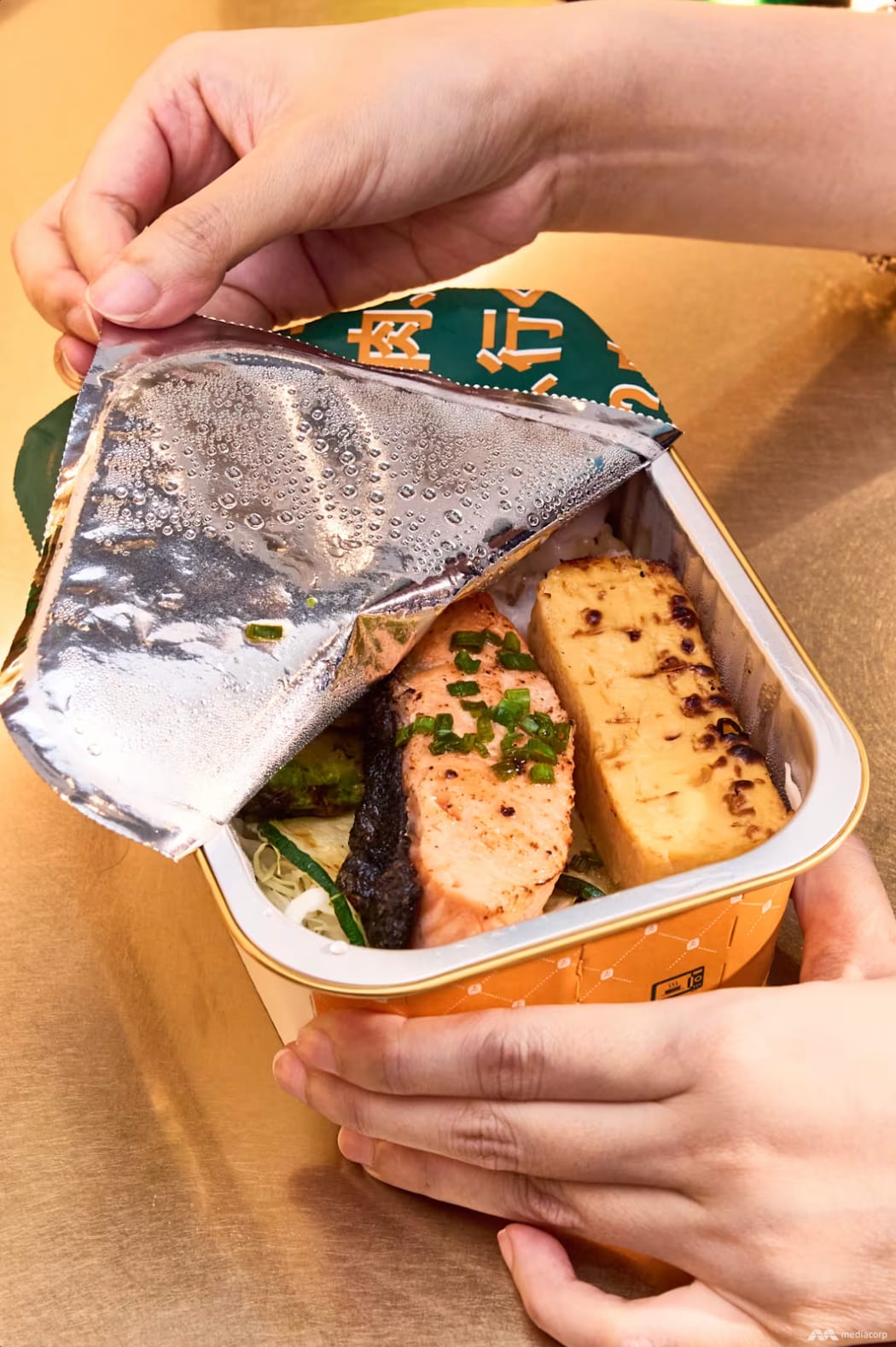
Niku Iku has developed a patent-pending packaging design engineered to retain heat better than standard foil containers. The aluminium box’s outer sleeve, when lifted, slightly elevates the container to reduce surface contact and slow heat loss, while a three-layer aluminium film seals in freshness immediately after preparation. Here’s what 8days.sg tried:
YAKINIKU BEEF, FROM S$8.80
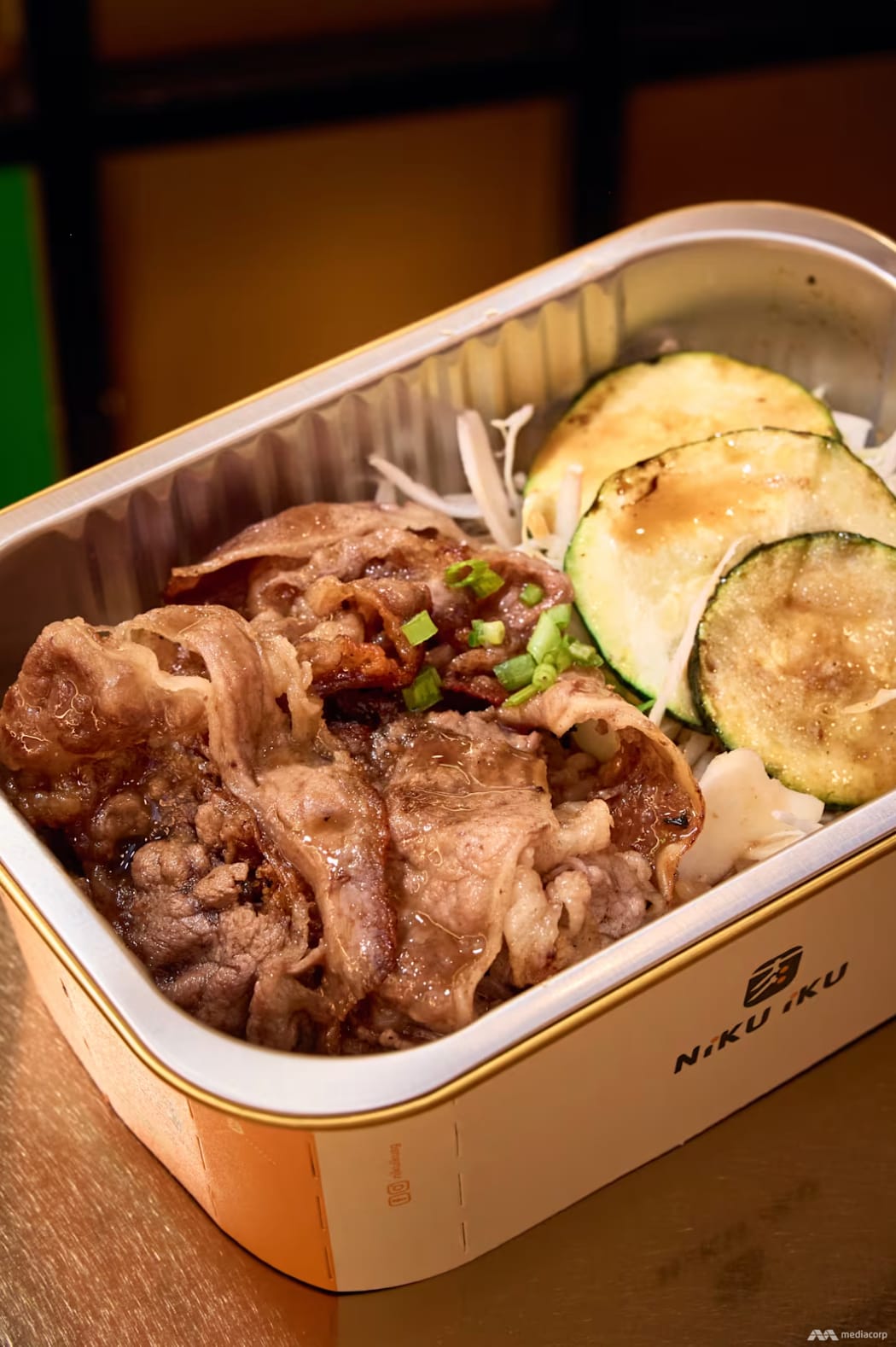
The sliced short rib beef is grilled to order, giving it a lightly caramelised finish. While we would’ve liked a stronger smoky char, the meat was generally tender, though some of the leaner slices were a touch dry.
For the carb base, diners can choose between plain rice topped with furikake or gobo rice – both use Japanese Masshigura rice imported from Aomori, but we preferred the latter. Cooked with fresh burdock root, the gobo rice has a subtle earthy sweetness and savoury depth that makes it more flavourful and moist than the furikake version.
Each yakiniku set comes with sliced fresh cabbage and grilled zucchini. We added sous vide egg, pumpkin and broccoli (S$1 each). The vegetables were fresh and lightly grilled, and the jammy egg brought some welcome creaminess. Portion-wise, the standard set is substantial enough for most appetites.
YAKINIKU SALMON, FROM S$10.80
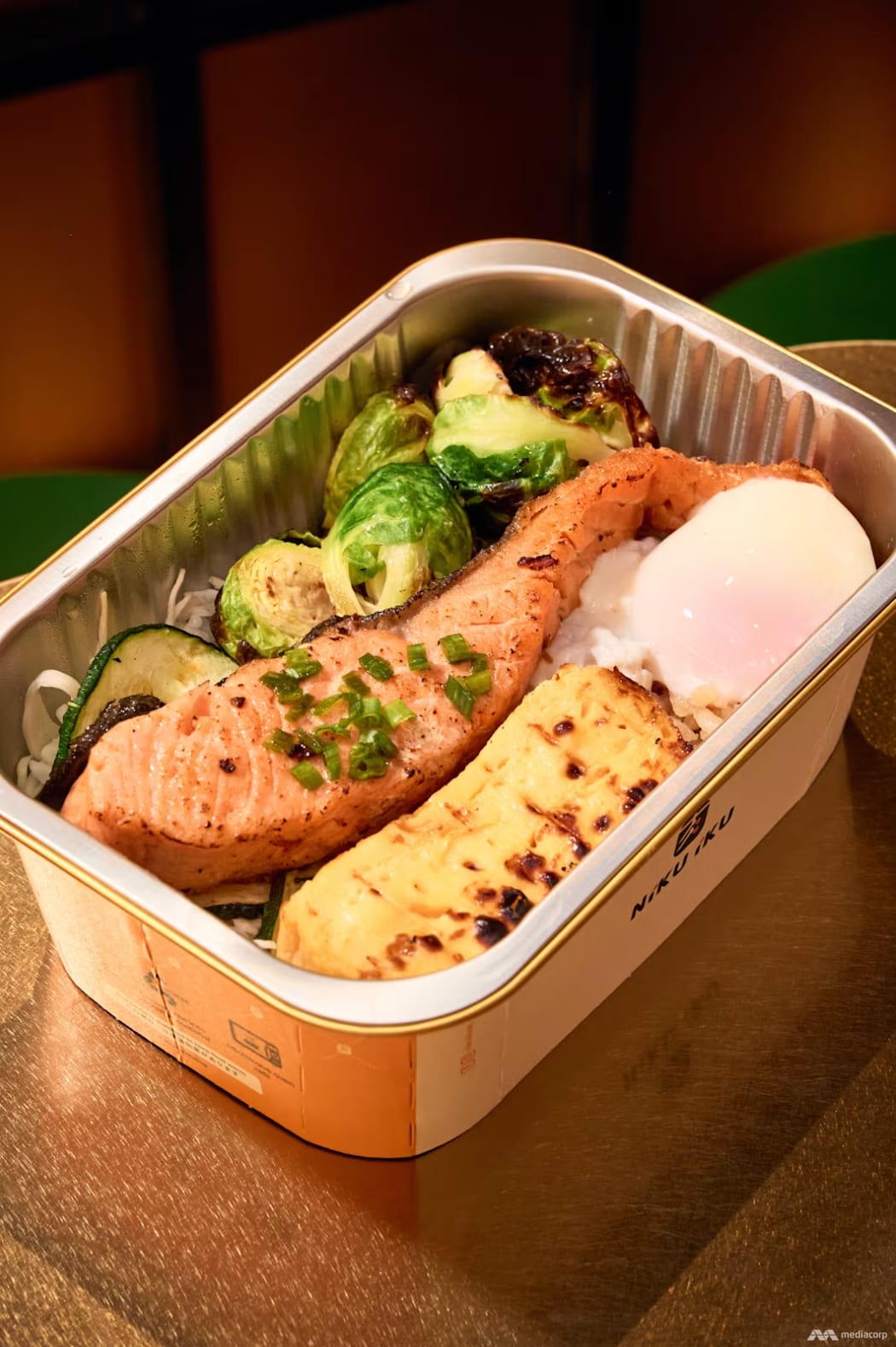
The grilled salmon retained its moisture well, with a rich glaze that complemented the fish’s natural fattiness. We opted for the gobo rice again, which paired particularly well with the lighter protein. Add-ons included tamagoyaki and grilled Brussels sprouts – the fluffy Japanese omelette added a touch of sweetness, while the sprouts brought a pleasant crunchiness.
YAKINIKU UNAGI, FROM S$12.80
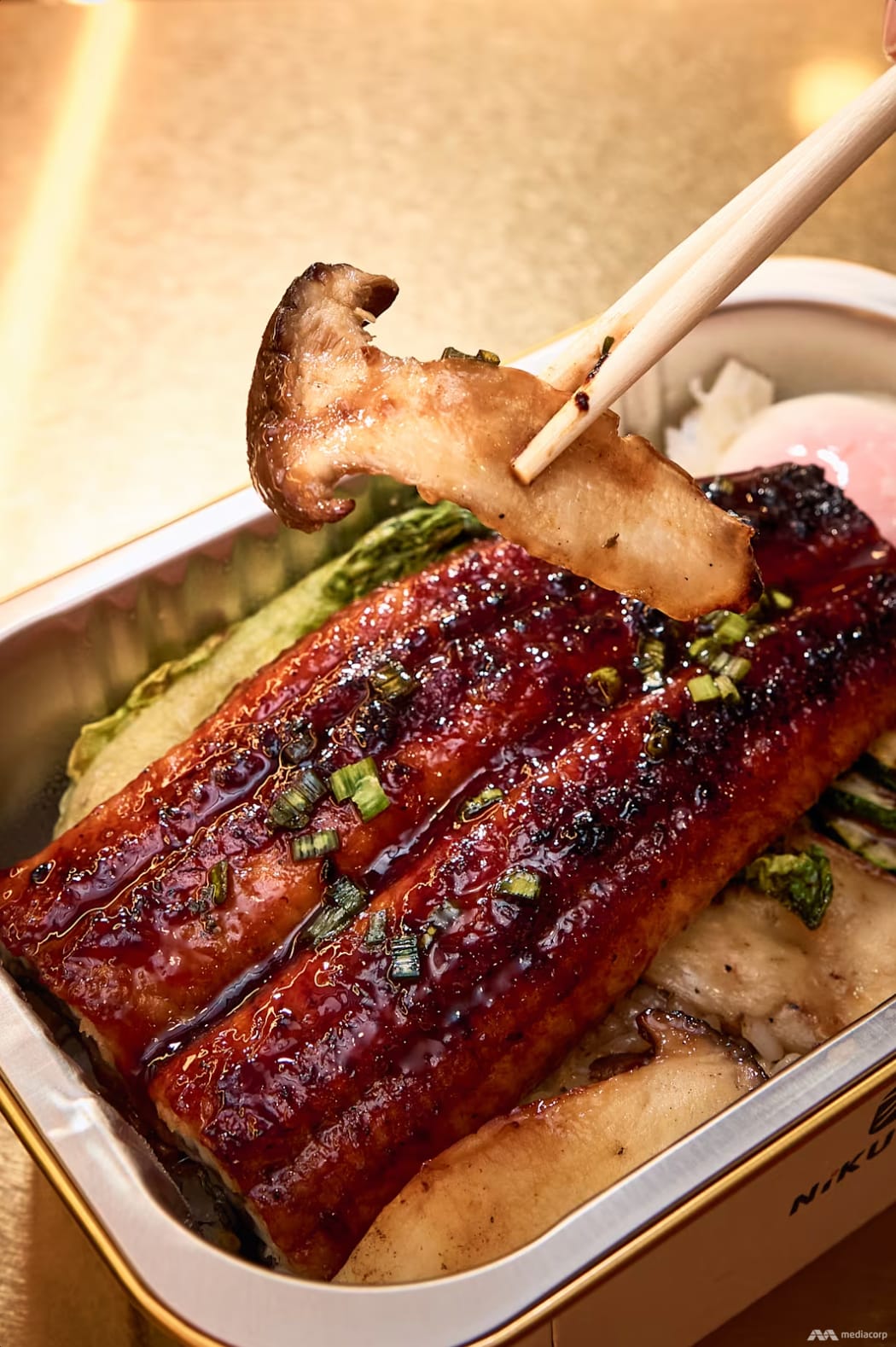
The standout of the yakiniku range. Prepared to order, the eel arrived warm and tender, with none of the muddy or fishy odour that sometimes plagues cheaper versions. The sweet-savoury glaze was glossy and well-balanced.
We chose furikake rice here, since the unagi already carries plenty of flavour on its own, and added sous vide egg, baby romaine and king oyster mushrooms – though honestly, the eel was more than capable of carrying the meal by itself. Surprisingly satisfying for its price point, and it compares favourably with many takeaway unagi bentos in the same range.
YAKINIKU CHICKEN, FROM S$7.80
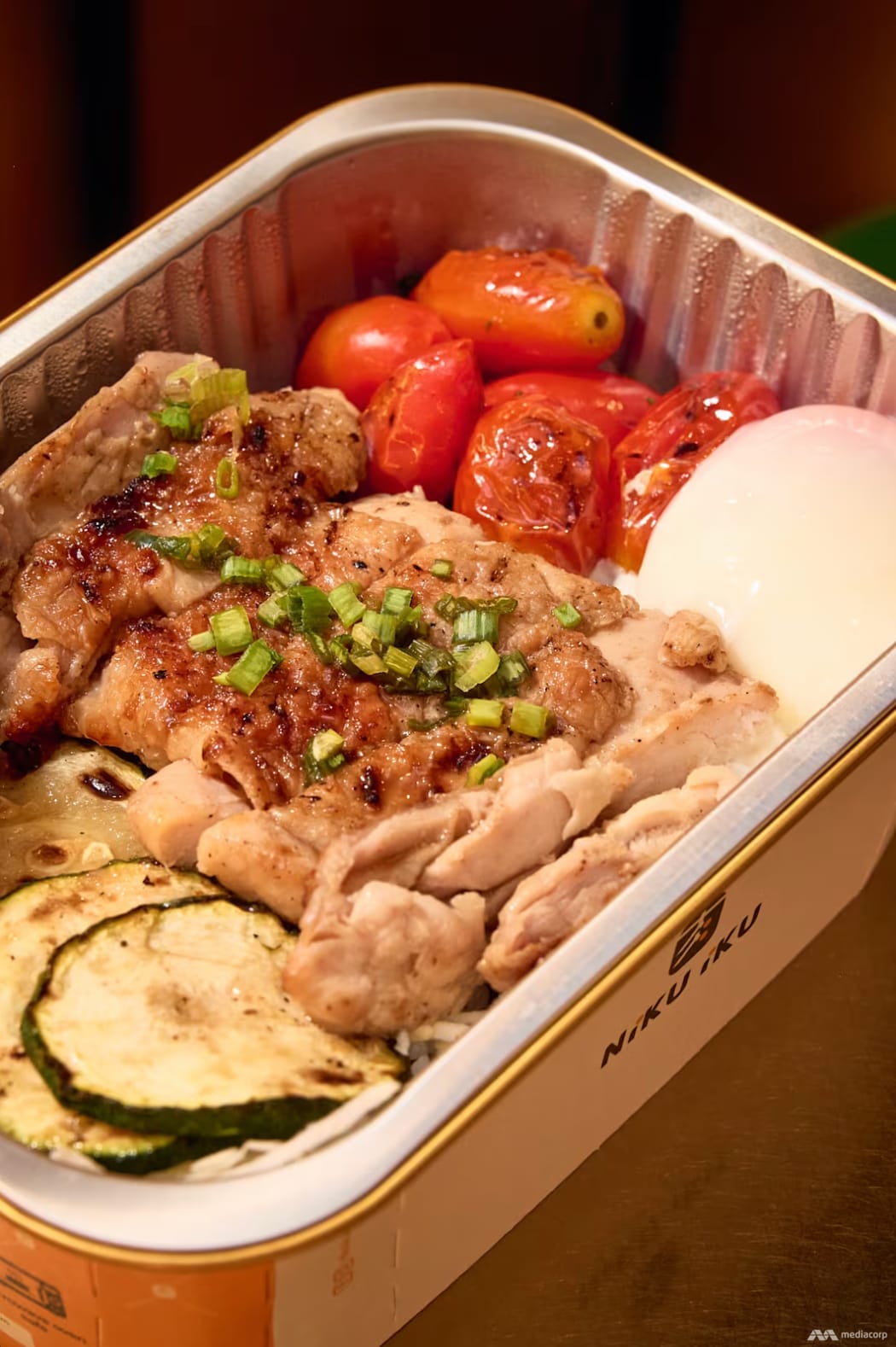
The most affordable grilled option on the menu. Not the juiciest chook, but well-seasoned and easy to enjoy.
We livened it up with NiKU iKU’s house-made shichimi seasoning, available at the table: a Japanese spice blend of chilli, sesame and aromatic spices that adds gentle heat, nuttiness and extra depth.
NITSUKE SALMON, S$10.80
Unlike the grilled salmon, the fish here is gently simmered in a sweet-savoury Japanese-style broth, allowing it to absorb flavour while staying exceptionally moist and tender. The flesh flakes apart easily with a spoon and is noticeably juicier than its grilled counterpart.
Served with furikake rice, shimeji mushrooms and cherry tomatoes, it’s a comforting, well-balanced meal that feels a little more home-style than the yakiniku offerings.
THE DETAILS
Niku Iku's dine-in outlets are at #B1-K10/11 Our Tampines Hub, S528523 and #B1-K10 Lot One, S689812. Open 11am to 9.45pm daily. More info via Facebook & Instagram.
This story was originally published in 8Days.
For more 8Days stories, visit https://www.8days.sg/