TWG Tea opens its first tea museum at Changi Airport with over 170 pieces of antique teaware
Its new flagship boutique at Terminal 3's departure transit lounge also offers exclusive tea blends and a takeaway counter serving tea-infused ice cream and sorbet.
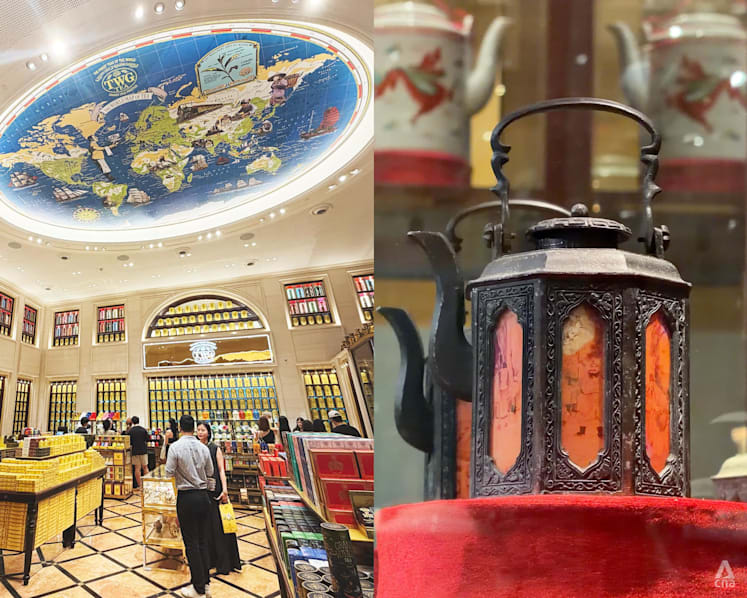
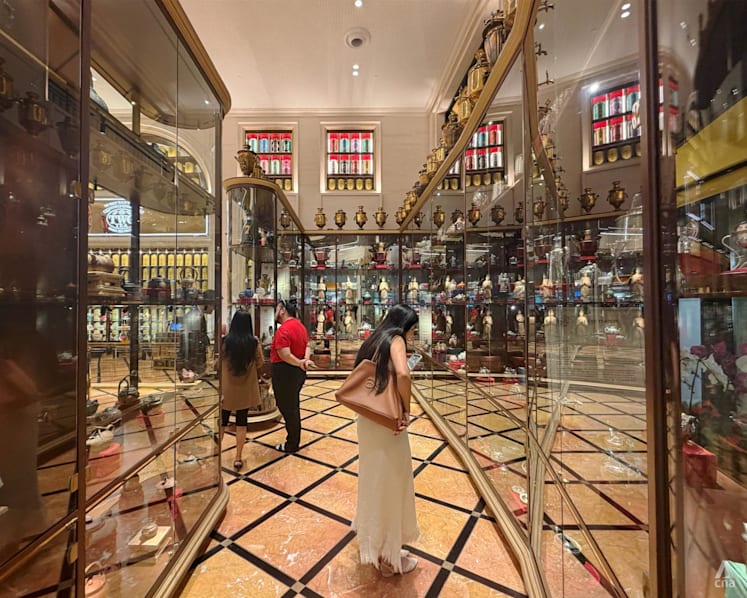
TWG Tea’s newest flagship boutique houses the brand’s first and only tea museum in the world. (Photo: CNA/Joyee Koo)

This audio is generated by an AI tool.


Home-grown tea brand TWG Tea has opened its largest flagship boutique worldwide at Changi Airport Terminal 3.
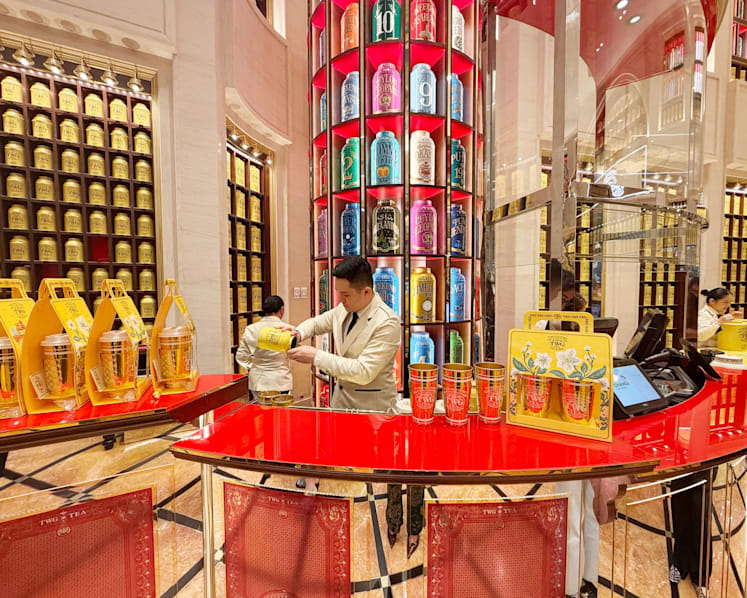
The TWG Tea Gallery, which opens to the public on Friday (Oct 2) at Terminal 3's Departure/Transit Lounge North, spans 2,700 sq ft and features a wall displaying more than 1,200 tea tins and a hand-painted world tea map across its high ceiling.
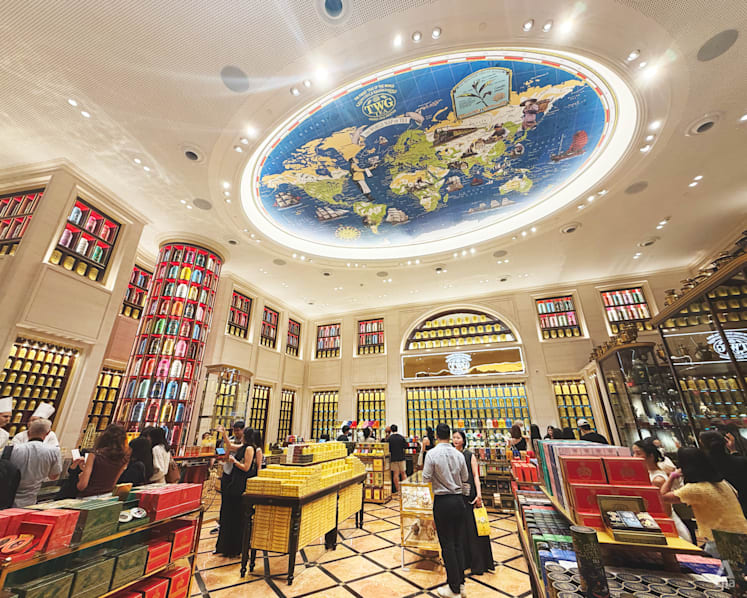
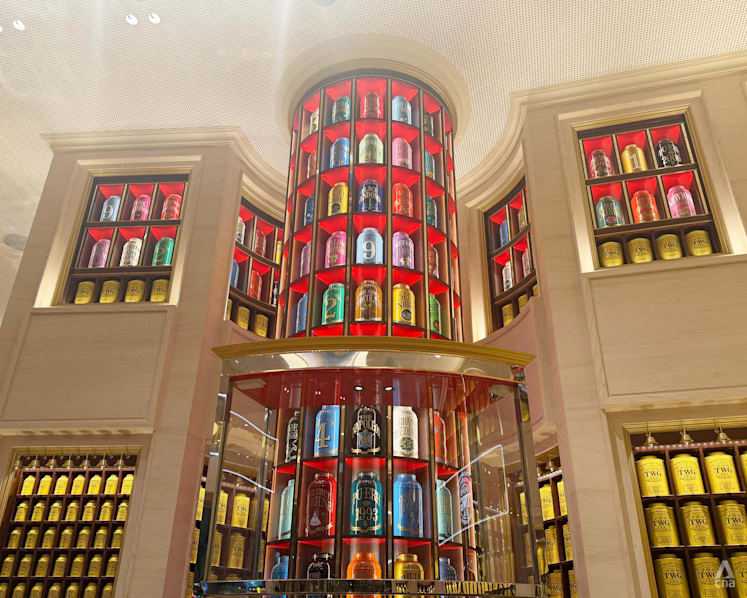
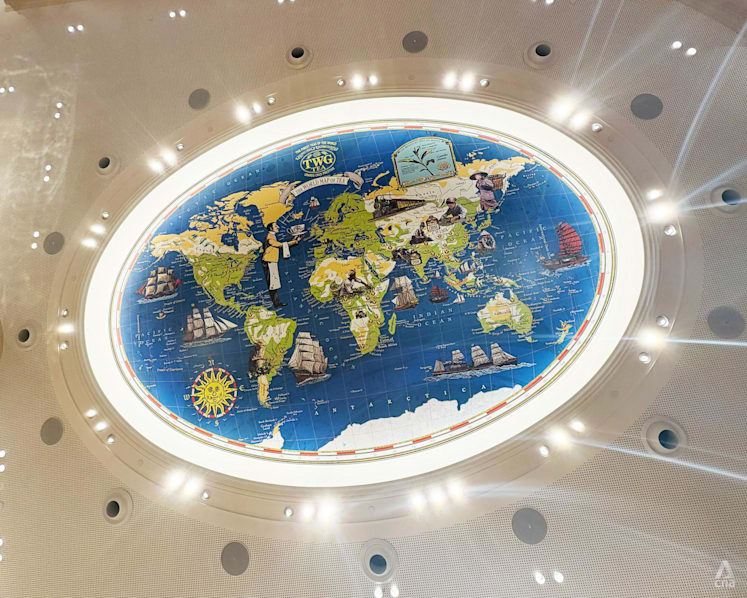
The space also houses the brand’s first museum, showcasing antique teaware, decorative objects and Russian samovars (or metal containers) dating from the 17th to 20th centuries. The collection was personally assembled by Taha Bouqdib, president and CEO of V3 Gourmet and co-founder of TWG Tea, who’s an avid antique collector. He’s been collecting from around the world over the past 15 years for the brand.
Beyond the museum, visitors can browse tea blends, accessories and travel-exclusive gifts, or pick up tea-infused sweet treats, including ice cream and sorbet.
INSIDE THE TWG TEA MUSEUM
The museum showcases more than 170 pieces of antique teaware, offering a glimpse into how craftsmanship and different cultures have shaped tea rituals over the centuries. Visitors can get a short guided tour led by one of the TWG tea trainers.
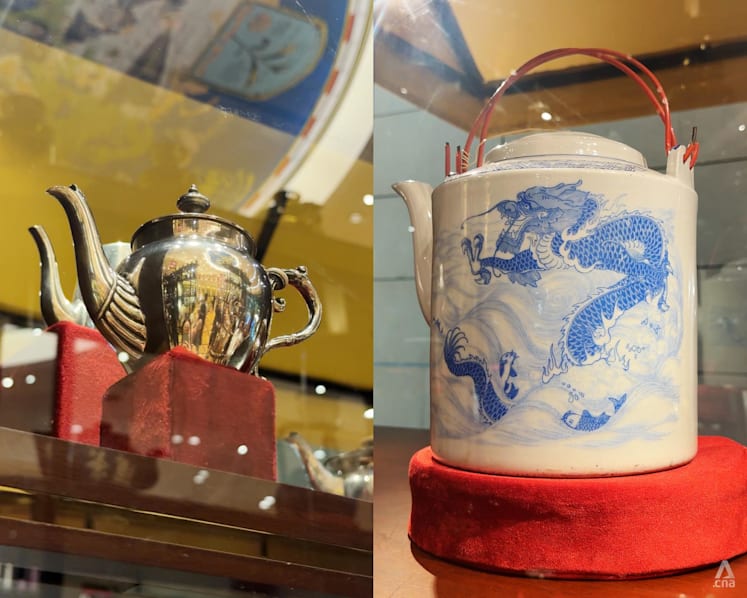
Highlights include Yixing teapots, made from unglazed, porous clay that absorbs the tea’s flavours over time, enhancing each brew with repeated use. The collection also features iconic white-and-cobalt-blue teaware, which emerged from exchanges between Islamic and Chinese potters. By the 17th century, Chinese porcelain was so prized in Europe that it became known as “white gold”.
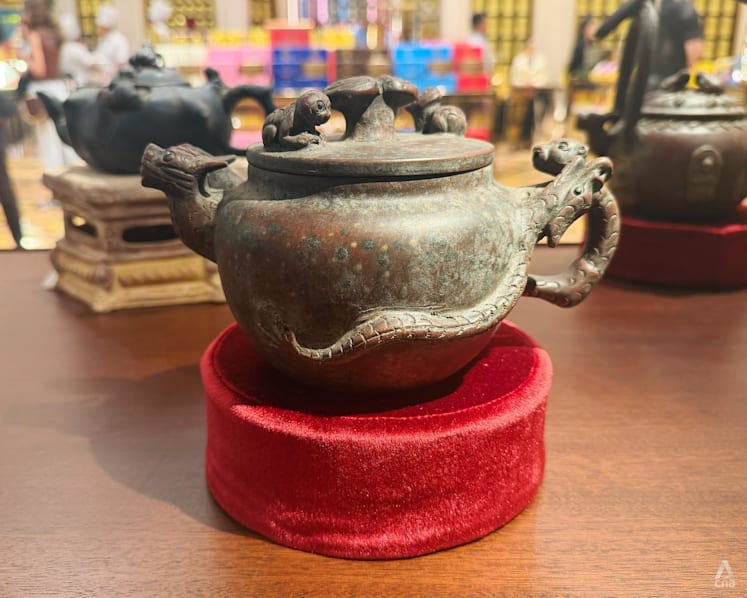
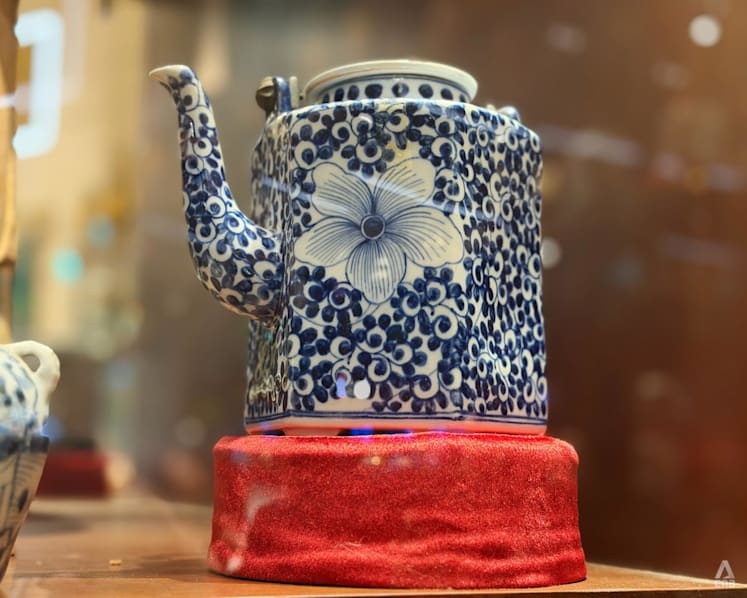
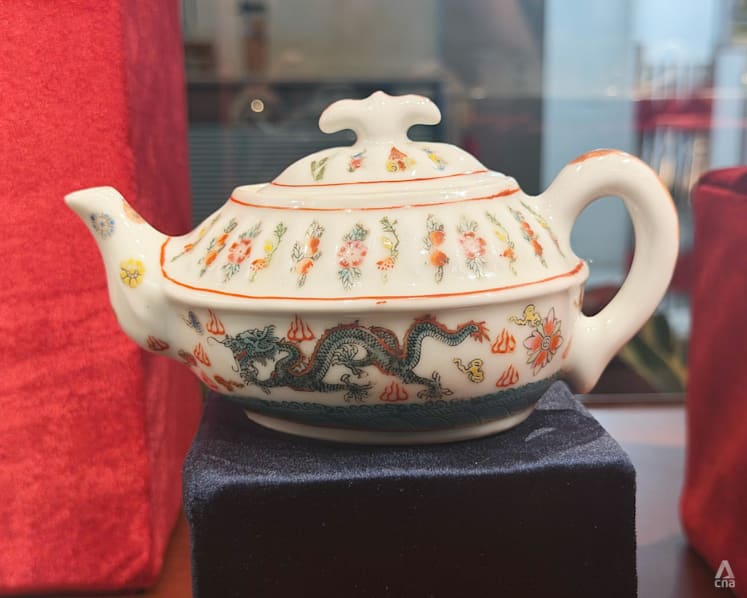
Throughout the museum, visitors can learn how teaware was often smaller in the past, when tea leaves were significantly more expensive. Examples include bachelor teapots made from sterling silver and silver plate. Dating to the 1800s, before the invention of tea bags, these were designed for individual use. Larger vessels, such as Chinese porcelain teapots, emerged as tea drinking became a family ritual.
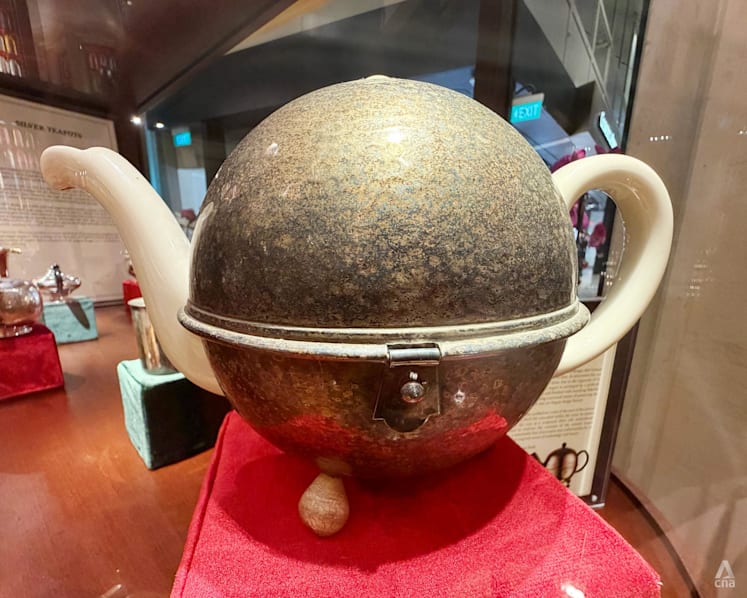
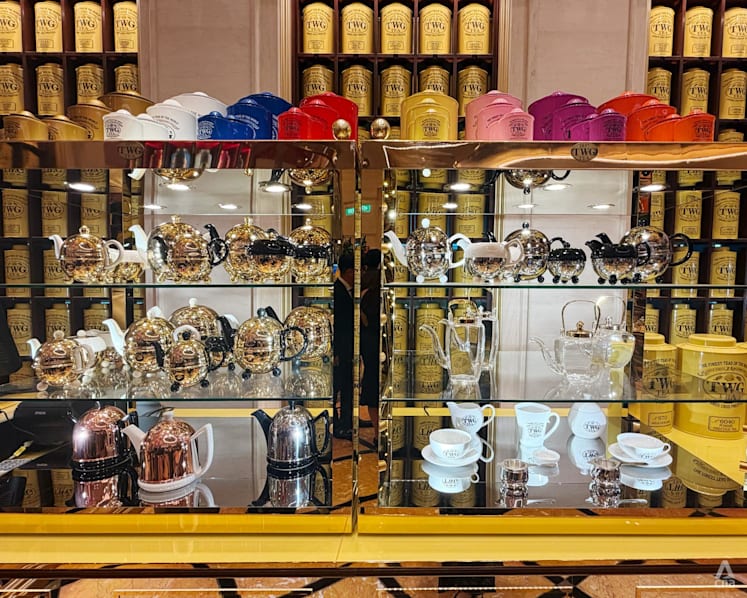
Among the exhibits is a German teapot with a 1930s Art Deco design. Its ceramic body is enclosed in a fitted, felt-lined silver cover that keeps the tea warm, with matching Bakelite feet and finial completing the design. TWG Tea’s Design Teapot reinterprets this concept with polished stainless steel or gold finishes, paired with ceramic or glass teapots.
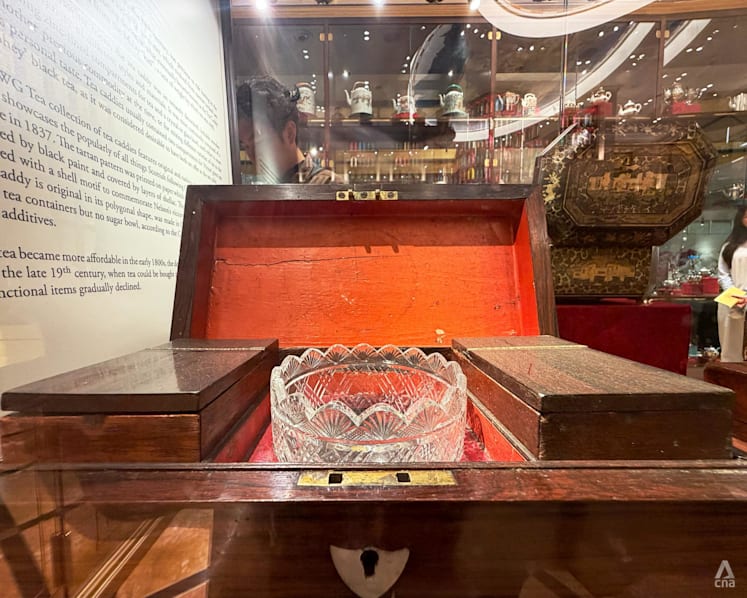
There are also tea caddies, used in 18th-century Britain to keep expensive tea under lock and key in the parlour. These evolved from narrow-necked jars with caps that doubled as measuring devices into what became known as tea caddies. The word “caddy” derives from the Malay word “kati”, a unit of weight by which tea was traditionally sold. A TWG Tea trainer explained during the tour that the lady of the house would also use tea caddies to blend two types of tea together.
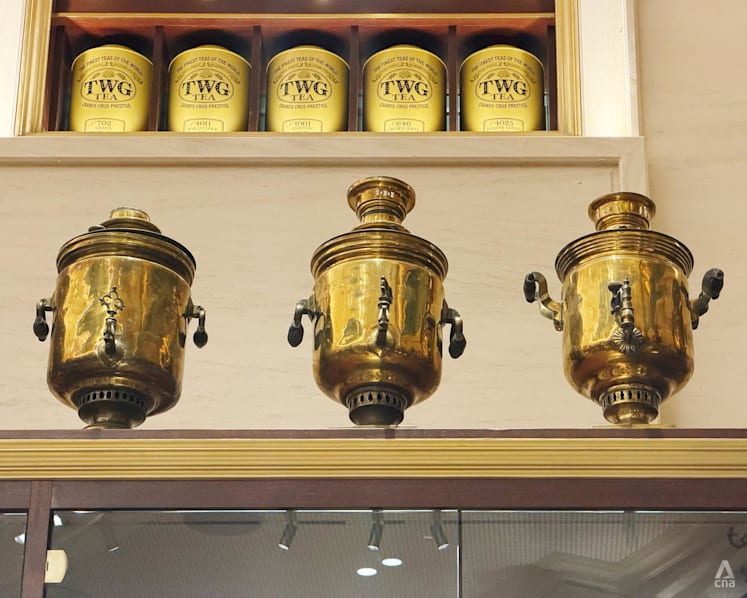
The collection includes more than 50 antique Russian samovars, which served as both tea-making devices and decorative centrepieces in homes. Among them are pieces from well-known factories in Tula, dating to the 19th and early 20th centuries. Some bear stamps marking awards won by their makers, as well as stamps from countries they travelled to – much like a passport.
EXCLUSIVE TEA BLENDS AND SWEET TREATS
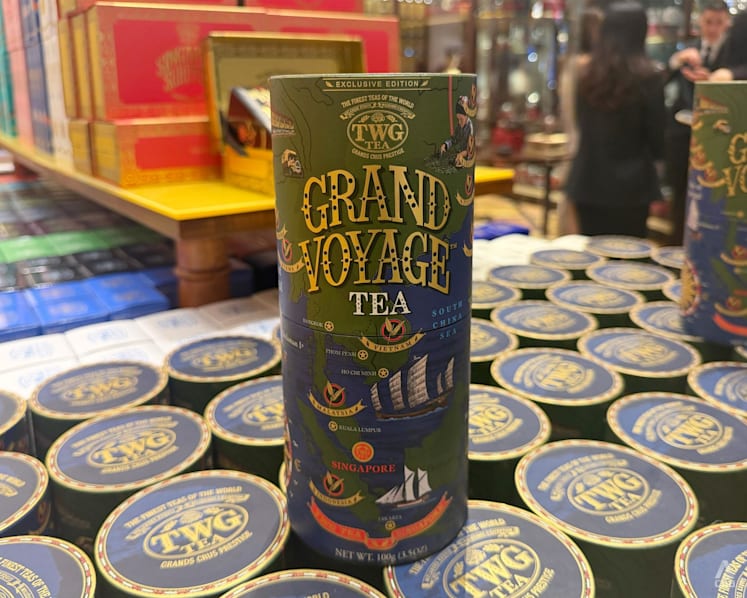
The retail section offers more than 1,000 single-estate teas and exclusive blends, including Grand Voyage Tea (S$45.87), created to mark the boutique’s opening.
Inspired by Singapore’s mix of cultures, the blend has notes of golden orchard fruits, pink rose petals, mallow blossoms and warm spices. It is available as packaged tea or freshly prepared, hot or iced, at the takeaway tea counter.
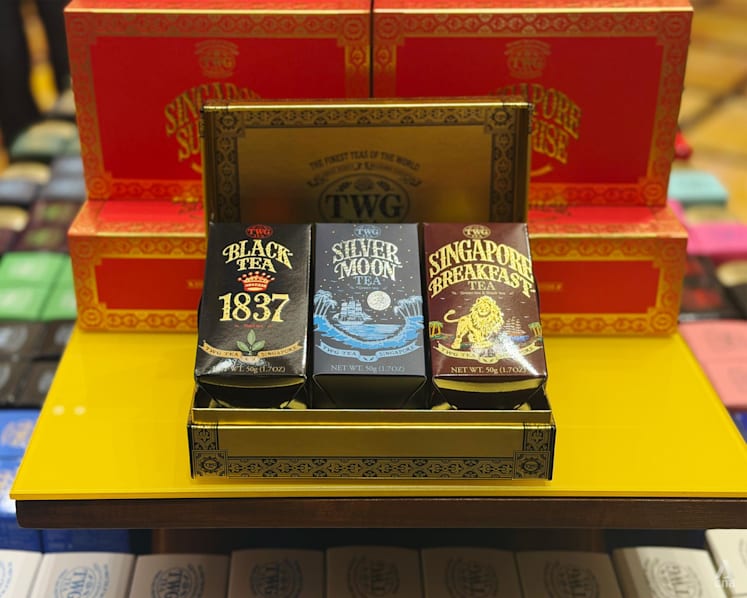
Another exclusive offering is the Singapore Surprise Gift Set (S$89.91), which brings together three of the brand’s popular blends: Singapore Breakfast Tea, Silver Moon Tea and 1837 Black Tea.
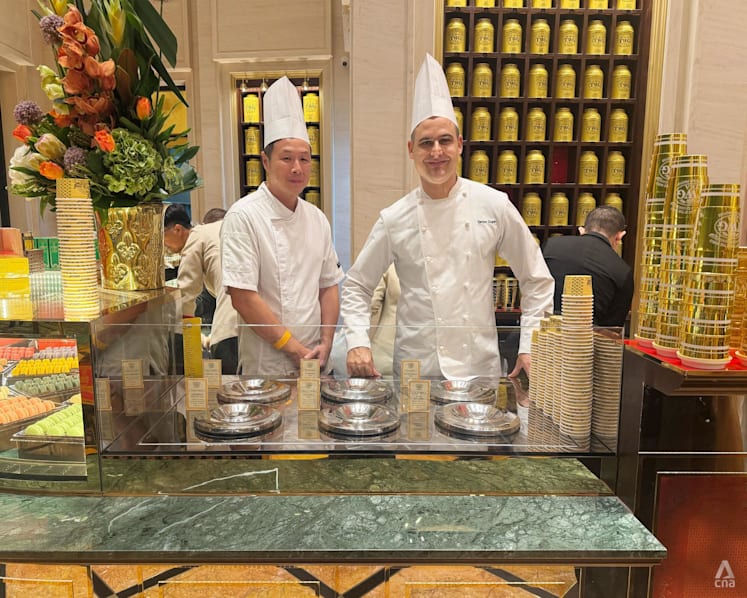
The boutique also introduces the brand’s new takeaway ice cream and sorbet concept. Locally inspired flavours include pandan gula melaka and coconut tea ice cream, as well as soursop and Temi FTGFOP1 sorbet.
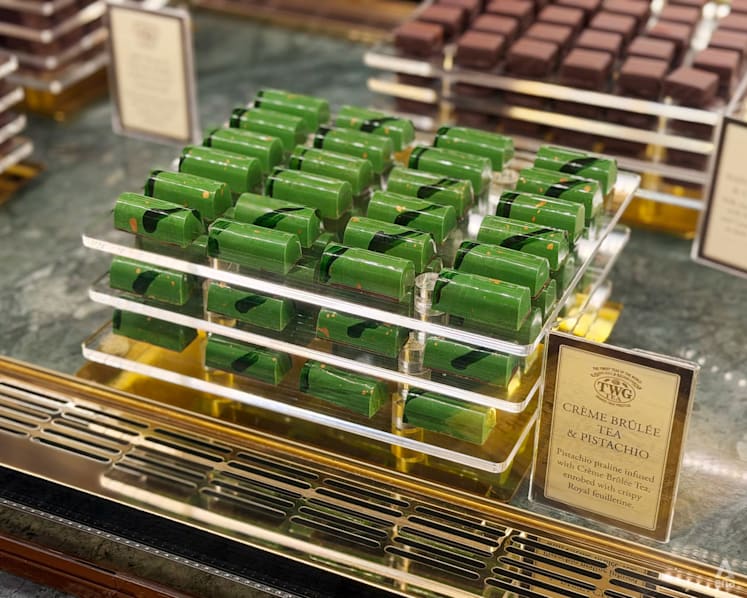
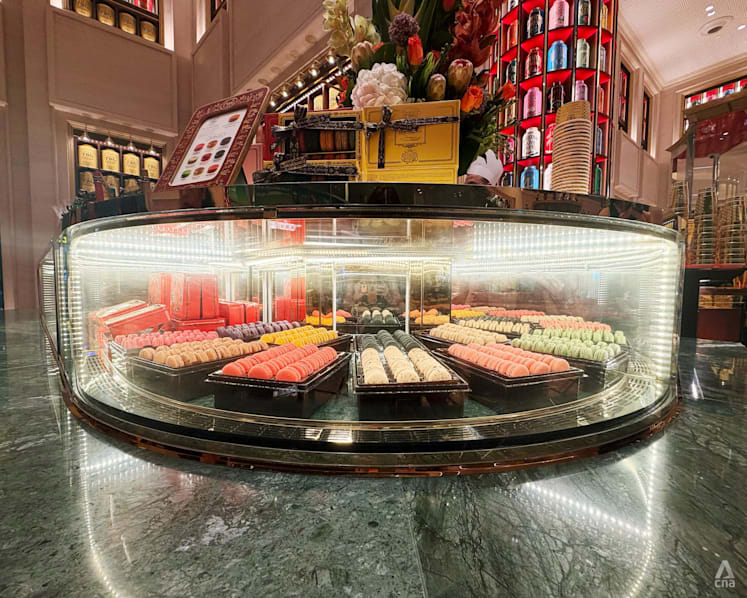
Other sweet treats include tea-infused macarons and chocolate bonbons, such as a mango macaron with Alfonso tea-infused chocolate ganache, and pistachio praline with creme brulee tea-infused royal feuilletine crisp.
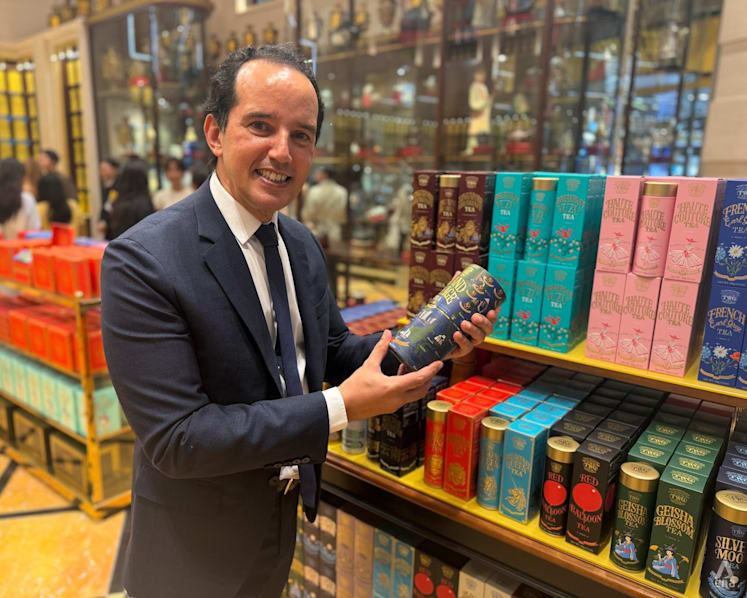
Bouqdib described the gallery as “the most definitive expression of TWG Tea to date”.
“More than a tea boutique, the flagship brings the past, present and future of tea into one immersive experience, celebrating the stories, traditions and artistry that have shaped tea over the centuries, brought to life through its landmark TWG Tea Museum," he said in a statement.
"Singapore has remained central to TWG Tea since its founding, and we are honoured to present our largest global flagship at Changi Airport, an icon of aviation excellence and an extraordinary platform to bring the world of TWG Tea to travellers from around the world.”
TWG Tea Gallery is open 24 hours daily at Changi Airport Terminal 3, Departure/Transit Lounge North, #02-58B.