Martin Yan at 77: The TV cooking legend still doing push-ups, cracking jokes and inspiring people
In Singapore for a brief visit, Yan talks to CNA Lifestyle about a lifetime of championing good food, keeping fit, memorable on-air mishaps and the philosophy that helped him shape how the world sees Asian cuisine.
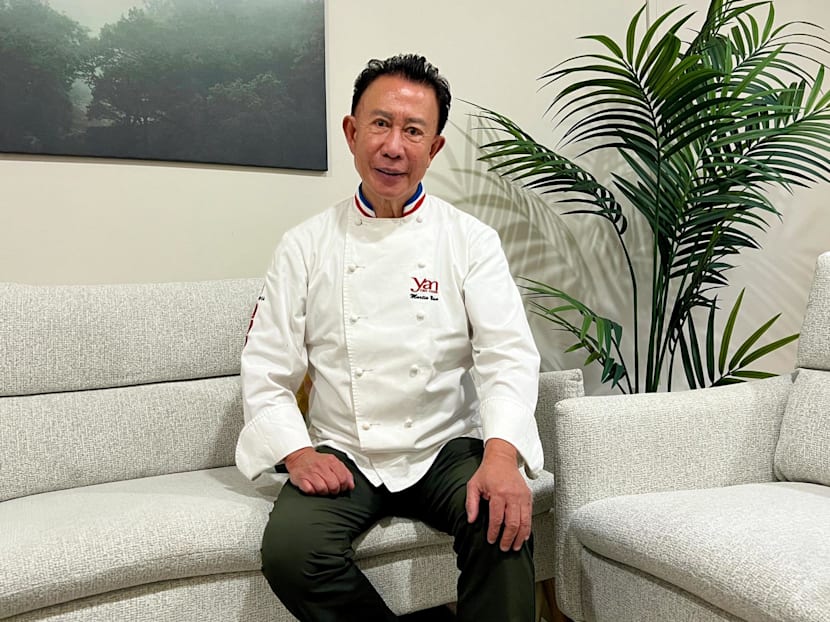
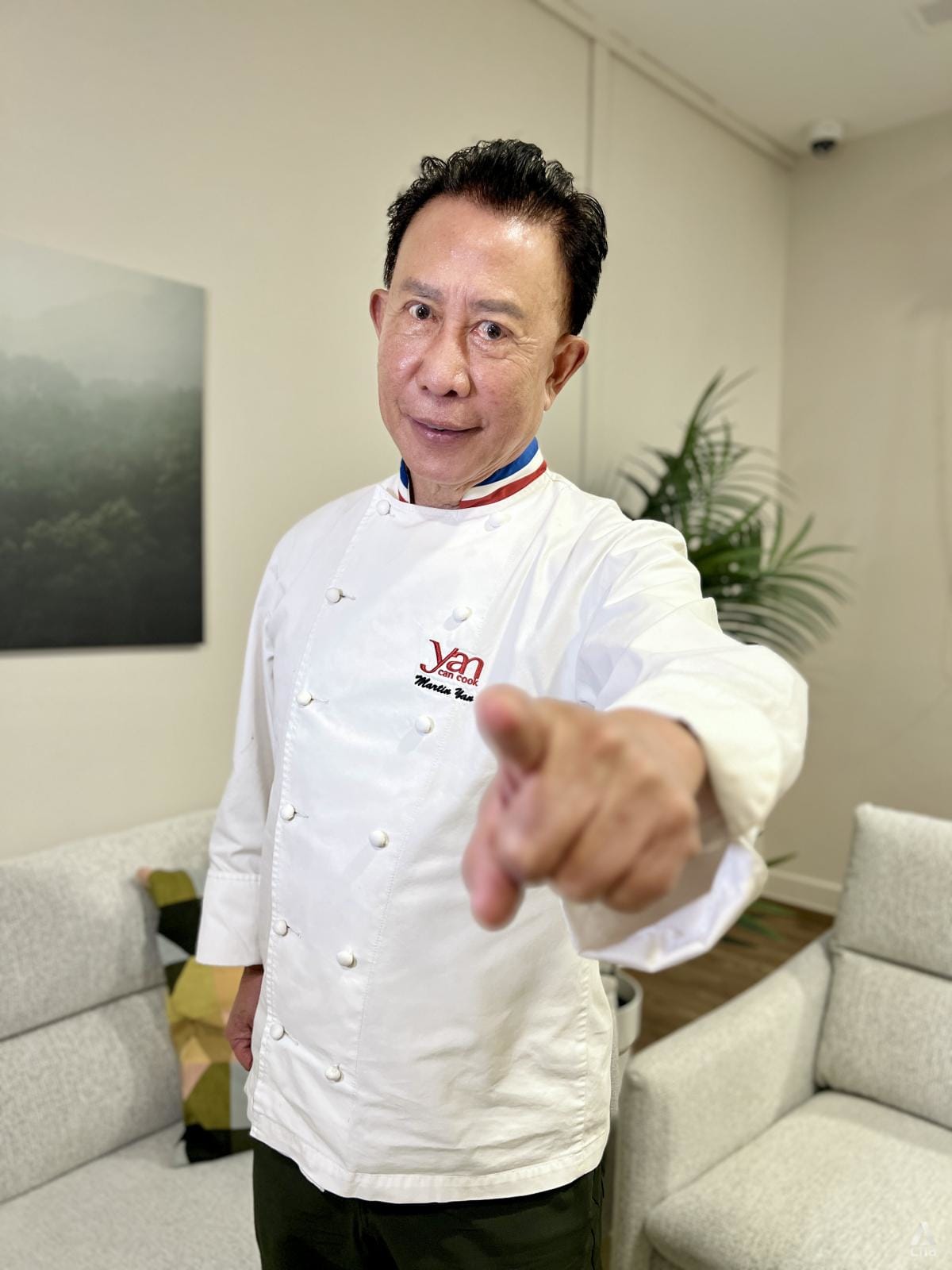
Martin Yan was in Singapore recently meeting fans. (Photo: CNA/Lindsay Jialin)

This audio is generated by an AI tool.


It was only our first meeting, and Martin Yan was insisting I feel up his biceps.
I had barely breathed an appropriate compliment when he immediately leapt to demonstrating his push-up routine, right in the middle of the room.
At 77, the man has more energy than a toddler with a fistful of gummy bears.
The secret to rude health and a radiant countenance? He holds the martial arts “horse stance” while brushing his teeth, declared the OG TV chef, who was in Singapore recently to meet fans at the Singapore Swimming Club and HCSA Community Services.
“I always tell people, ‘I have not gained one pound in 45 years. The reason is that I eat with chopsticks,” he said. “You eat slower, right? When you use a knife and fork, you shovel it in. I say, ‘Look at this physical specimen’. I eat Asian food. I eat a lot of vegetables. You are what you eat.”
Physical vigour may seem unrelated to cooking, but it’s clearly this natural exuberance that made Chef Martin Yan a TV icon around the world – and still propels the ear-ringing reverberations of his lusty battle cry: ‘If Yan can cook, so can you!’”
One could easily argue that the television chef and global celebrity has singlehandedly done more for raising the profile of Chinese cuisine and culture around the world than anyone else.
When the Yan Can show debuted in 1987 in Canada before moving to the US in 1982 as Yan Can Cook, he was one of the few Asians on Western screens who wasn’t a comic book villain or a kung fu fighter.
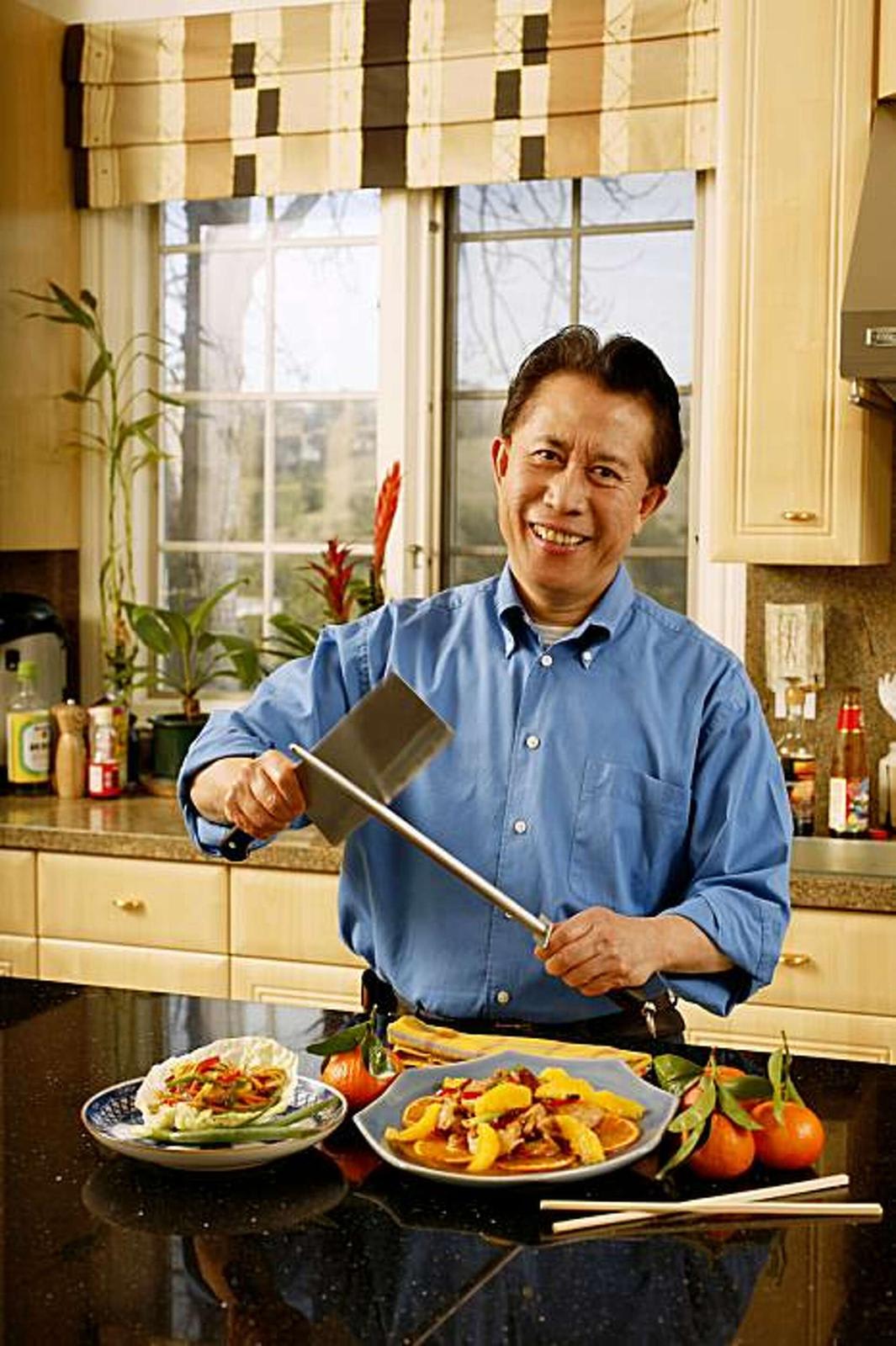
Back then, “cooking shows were not very popular. You could only watch them on one channel, and no other network had cooking shows,” he recalled.
“I was very fortunate. I was in the right place, in the right time, with the right people to trust me. The Yan Can Cook show was the first Asian cooking show on air, and I was the first Asian chef to host a daily food and travel show.”
Up until today, “I'm still doing what I do, and I still love what I do. I feel very fortunate that I'm in a profession where I can connect with people. I can communicate and reach out to people everywhere I go.”
Born in Guangzhou, Yan’s childhood wasn’t filled with the bubbling pots and heaving plates he’s known for serving up. “When I was growing up, it was the most turbulent, most challenging time in modern Chinese history," he said.
"Everything was rationed, and we could only have about four ounces of oil a month and two catties of meat a month. So, I always went to bed hungry. I told my mum that one day, if I ever got a chance, I would hang around restaurants or hotels, so I wouldn’t go hungry.”
He never imagined that decades later, he’d have hosted over 2,000 cooking shows and published more than 30 cookbooks.
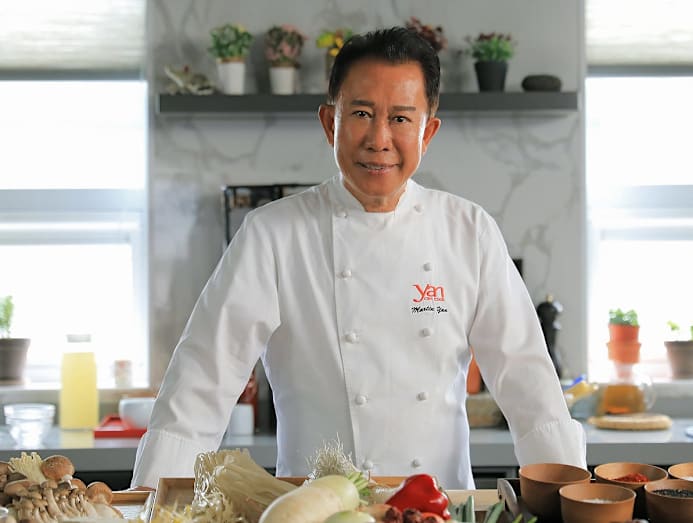
“If I expected and hoped, and then dreamt of success, I don't think I'd ever have lasted for so long,” he mused. “I think, the more important thing is, the more I give cooking classes and the more I do television, the more I feel like I love it. It's my passion, because you know that you're making an impact on somebody's life.”
Sure, anyone can cook – but not everyone can be entertaining at the same time. Even back in the 80s, Yan was a bit of a troll. One of my favourite bits from his repertoire is when he imparts to his audience the importance of “relaxing the chicken” before preparing it. He laughed when I told him this.
“We just had to make it interesting to people,” he explained. “I told people I could break down a chicken with my knife in 18 seconds. Then I told them the secret is, you’ve got to make sure your chicken is relaxed. So, I massaged the chicken, just to make it more interesting. I know that most people will not be able to break down chicken in 18 seconds, because there's no reason to do it so fast, right? Basically, I just wanted to entertain and captivate the audience. That's why I was kind of fooling around a little bit.”
The show always had to go on, even if there was an on-air disaster.
“One time, I cut myself in the middle of the taping, really badly. I always joke with people that fortunately, I only use red towels. Nobody can tell, right? If you use a white towel, you’ve got a problem.”
Yan put his injured hand behind his back – it was "dripping with so much blood that they had to send me to the emergency room after” – and told the audience, “‘I rarely do this. But, today, I'm going to show you how to finish a dish with one hand.’”
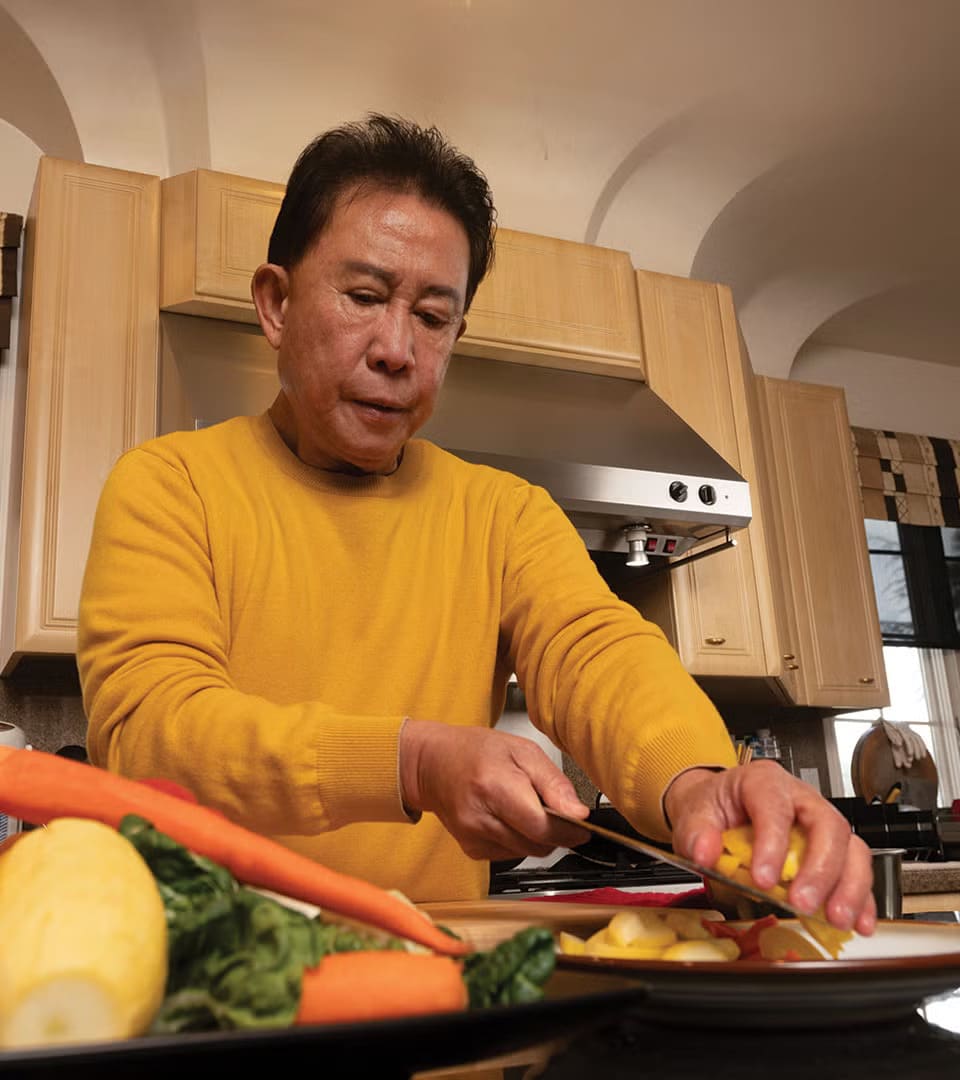
Another time, unbeknownst to him, someone had turned the heat on under a clay pot in order to save time. When he put ingredients into it, “it cracked, ‘boom’, in front of the camera. I said to the audience, ‘Just make sure you buy a clay pot that won’t break.’”
He added: “But, these were not really disasters. It was reality. We never cut the footage. We actually used it.”
Similarly, “I tell (young people) that life is never a smooth ride. If you fall down, you just have to pick yourself up and move on. Life is a challenge. Life is exciting. You just have to believe in yourself.”
What does he think of how cooking shows have evolved, particularly into reality competition shows? Well, he’s been a guest “on practically every single one” from Hell’s Kitchen to Iron Chef, Master Chef and Top Chef.
“But, I normally don't compete because it's very stressful. I always joke with people, ‘The reason I don't like to be part of competitions is because I'm too fast. I don't want to embarrass anybody.’”
He’s also done plenty of travel food shows such as Martin Yan’s China and Yan Can Cook: Spice Kingdom, and sampled his share of adventurous foods. One dish he “might not want to try again” is live scorpion, which he ate in Xi’an. “You have to chew it and swallow it right away because otherwise it could be dangerous. I do not believe I want to try that again!”
A much more common dish he doesn’t eat much of is instant noodles. “Unless I’m on a 16-hour flight when I can’t have a decent meal – if I get really hungry, I order instant noodles. I love the seafood flavoured ones and some of the spicy Korean ones. But, I’d rather cook fresh noodles.”
In his real life, he eats fresh greens from his home garden in California and finds joy in what most of us don’t: “I love leftovers,” he divulged. “I don't want to waste things.”
If he feels peckish before bed, “I heat up my rice, chop some vegetables and turn that into congee. I sprinkle some green onion or cilantro on top.”
Each bowl is perhaps a memory of the young boy in Guangzhou who merely dreamt of going to bed without hunger, but ended up whetting the appetites of millions of people around the world.