Zhang Linghe’s face is the real star of Pursuit Of Jade – and that’s the point
As viewers tune in for his flawless looks, the actor’s appeal points to a deeper shift in Chinese dramas where male leads are styled, shot and adored like never before.
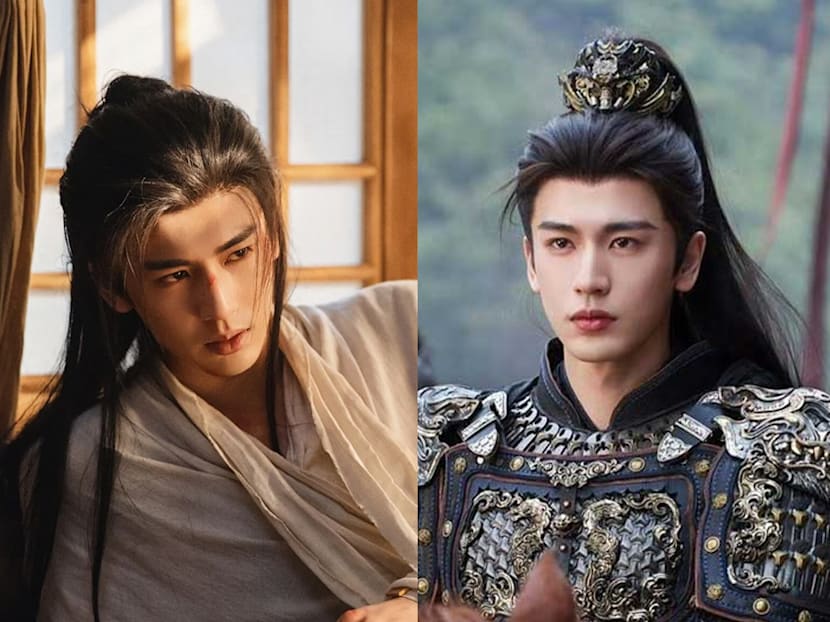
Is it a skincare ad? No, it's just Zhang Linghe in Pursuit of Jade. (Photos: Weibo)

This audio is generated by an AI tool.


There are, in theory, many reasons to watch a C-drama: the plot, the costumes, the emotional payoff somewhere around episode 27.
In reality, Pursuit Of Jade has distilled it down to one: actor Zhang Linghe’s face. And, if it wasn’t obvious before, it throws into relief the winning strategy of the times that C-drama has lit upon – relinquishing power entirely into the hands of the feminine viewer in ways that are quite unique.
Viewers have been tuning in to Pursuit Of Jade in droves, and not all of them are especially concerned with what is happening in the story.
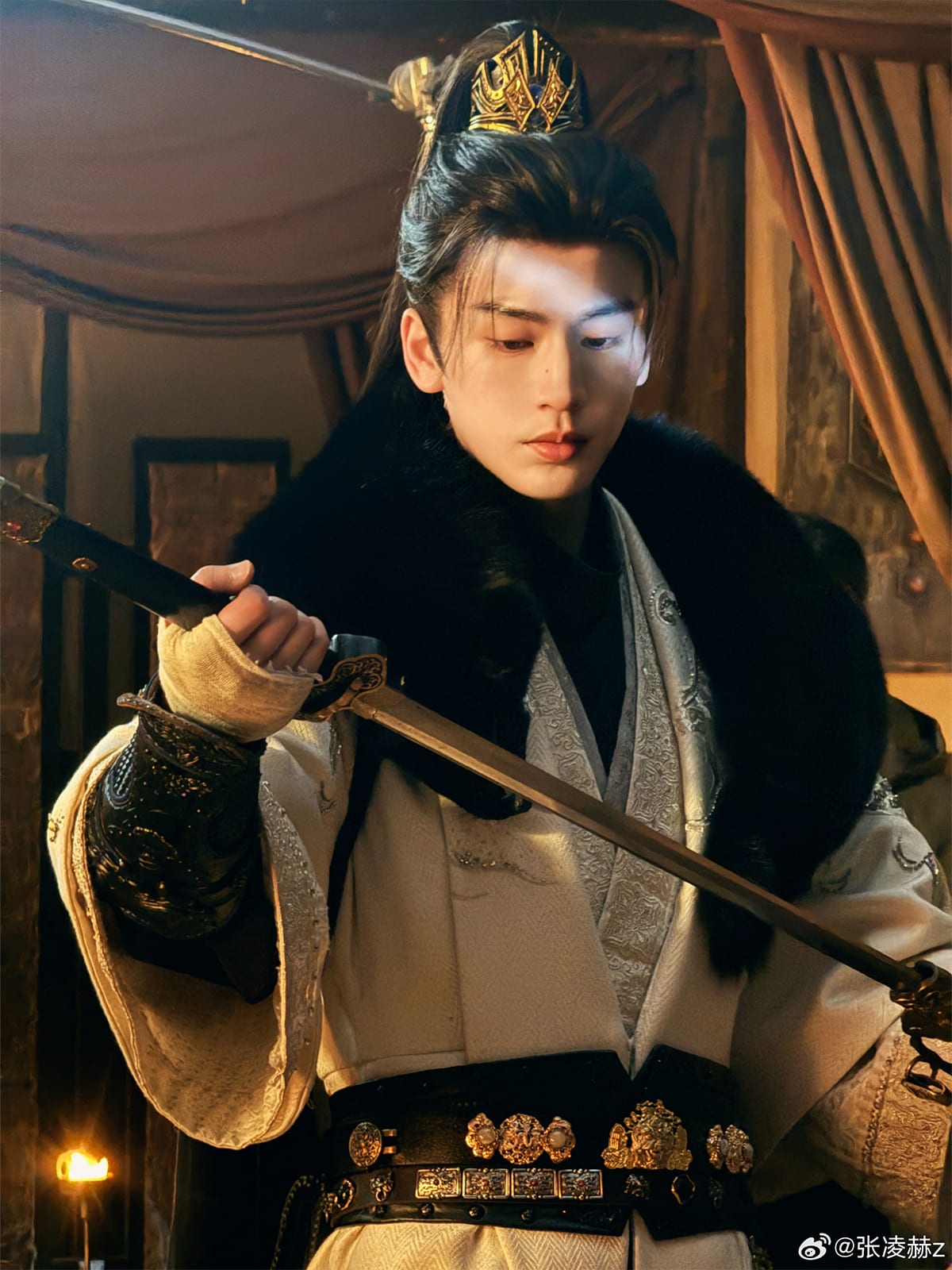
Mere minutes into the first episode, one realises that the male lead, who’s supposed to be a battle commander, is not just good-looking. He is implausibly pretty. Not in a “he probably moisturises” way. Not even in a “genetically fortunate” way. No, this is a level of beauty that suggests intervention from higher powers – celestial, cosmetic or otherwise.
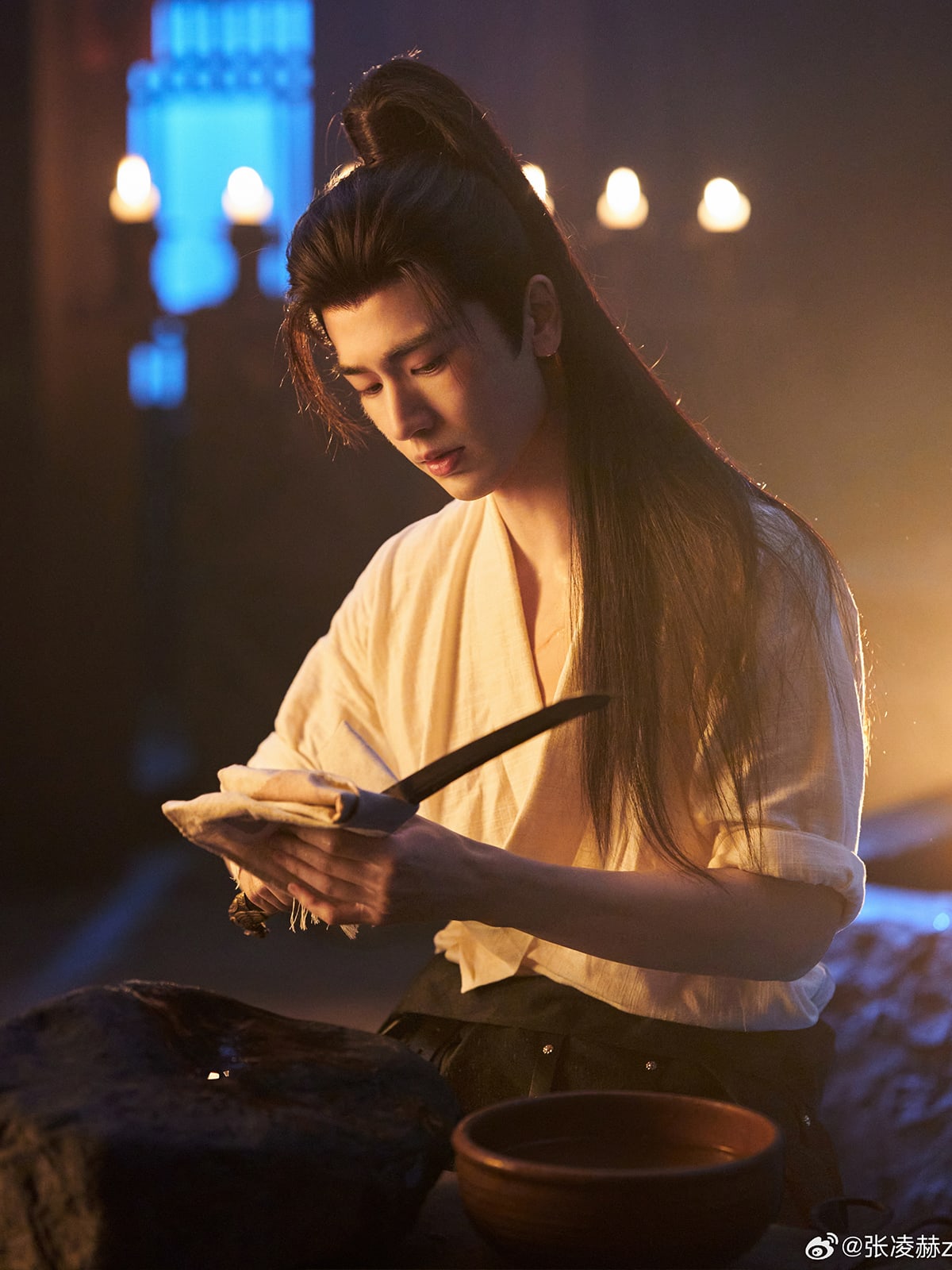
His skin has never encountered a pore in its life, his hair behaves as though it has entered into a private contract with gravity to defy it at all times, and his cheekbones could be a national monument.
“Foundation General”, as he’s been nicknamed by netizens, makes you want to rush out and buy some makeup. The finish is seamless. The lighting appears personally invested in his success. You watch him stand there – not doing very much, just breathing in an aesthetically pleasing manner – and get the distinct impression that if the plot were to pause entirely for a full five minutes while he simply stood there being luminous, no one would object.
Which, in a sense, is exactly what the camera is doing. Because what Pursuit Of Jade, and indeed a great many C-dramas, understand very well is this: If you have gone to the trouble of casting a man who looks like that, it would be frankly irresponsible not to film him properly.
PRETTY MEN AND THE CAMERAS THAT LOVE THEM
It was K-dramas and their BB-creamed men that started the trend of the painfully pretty male lead in the 2000s, but C-dramas took it even further by developing a visual language that could best be described as “if a Renaissance painting married a particularly expensive skincare advertisement and got slapped by Meituxiuxiu”.
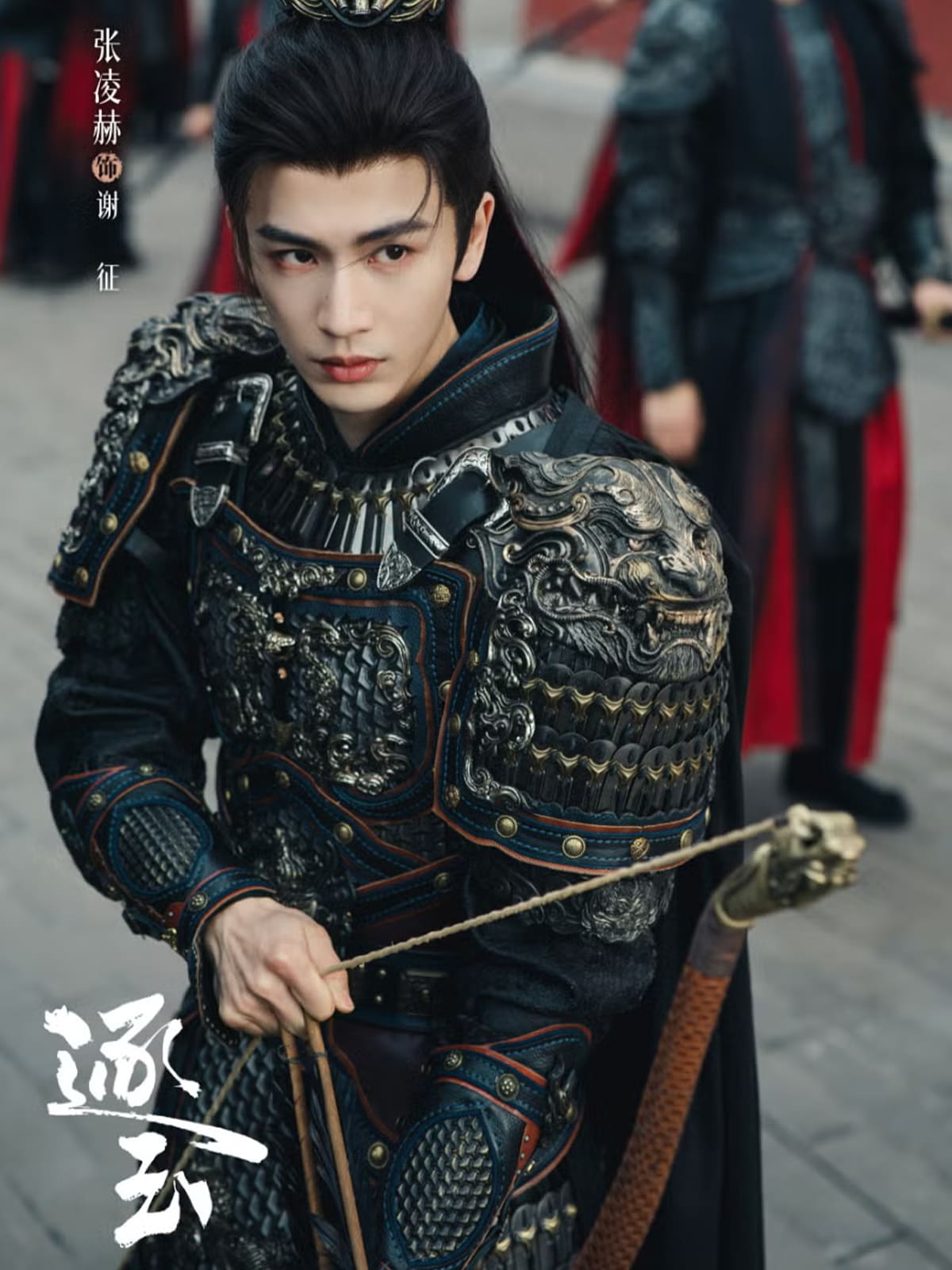
Over the past decade, this has become one of the defining features of Chinese dramas, particularly in the historical and xianxia genres. It is not incidental. It is not accidental. It is, in fact, engineered – carefully, deliberately and with a level of commitment that suggests spreadsheets may be involved.
Spend any amount of time in the world of period C-dramas, and you’ll notice that the visual dynamic between male and female leads is not built on contrast. The male lead does not merely complement the female lead, but rivals her in aesthetic perfection. This is not the rugged man and the delicate woman, it is the delicate man and the equally delicate woman, both with hair that appears to have never known humidity.
In Pursuit Of Jade, this symmetry is particularly pronounced. Zhang’s character is styled with the same level of care as his female counterpart – the same flowing fabrics, the same crimson lipstick, the same commitment to looking as though he has never experienced an unfortunate angle in his life.
And, it’s not just him, but every single male character significant to the plot, even the baddies, of course. It certainly doesn’t help that the story opens with a reversal of traditional gender roles, with the girl saving the guy and entering into a marriage of convenience in which he takes her surname and lives off her.
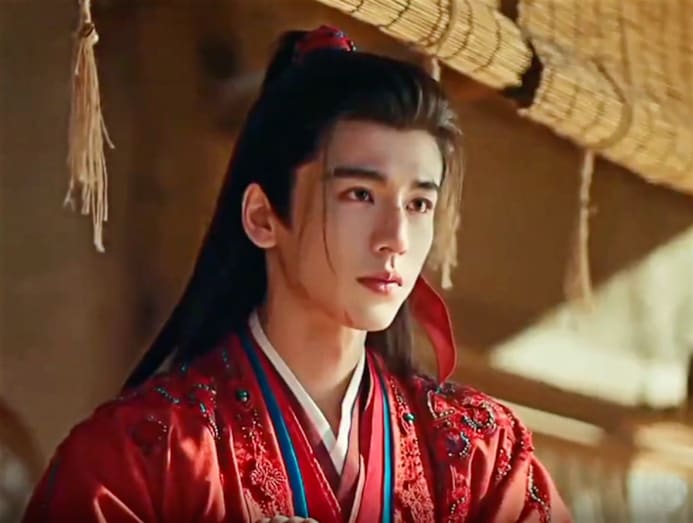
Even if you wonder whether Pursuit of Jade’s female lead is in love with the male lead, you are never in any doubt about the camera’s love for him – a love not present to such a degree in any of Zhang's previous dramas. Here, it lingers with a devotion that can only be described as reverence. There are close-ups that last long enough for you to reconsider your life choices. The lighting does not simply illuminate, it caresses; it appears to have strong opinions about cheekbones and intends to support them. This is not, in any way, about realism; it is about unabashed idealisation.
WHAT WOMEN WANT
Turnabout is fair play. For decades, mainstream global cinema has been described as operating under the “male gaze”, a framework in which women are positioned as objects of visual pleasure, and the camera reflects a heterosexual male perspective. Think John Woo films of the 80s or Megan Fox in tiny shorts in Transformers.
In the 2000s, female viewers started to reclaim power with scenes and storylines that objectified men’s bodies in the same way – gratuitous close-ups of pecs and abs; entire shows with names like “Cougar Town”. The general sentiment was: “Why shouldn’t women sexualise men in the same way that men have sexualised women throughout history?”
Western productions – Bridgerton, for example – are arguably still in that placards-and-manifestos stage of feminism where female characters are reclaiming their agency and discovering themselves as sexual beings.
But, C-dramas, in a way, have moved into a higher, metaphysical realm, quietly and very successfully recalibrating that dynamic. They have pointed the camera at a very beautiful man, and asked: What if we simply… stayed here?
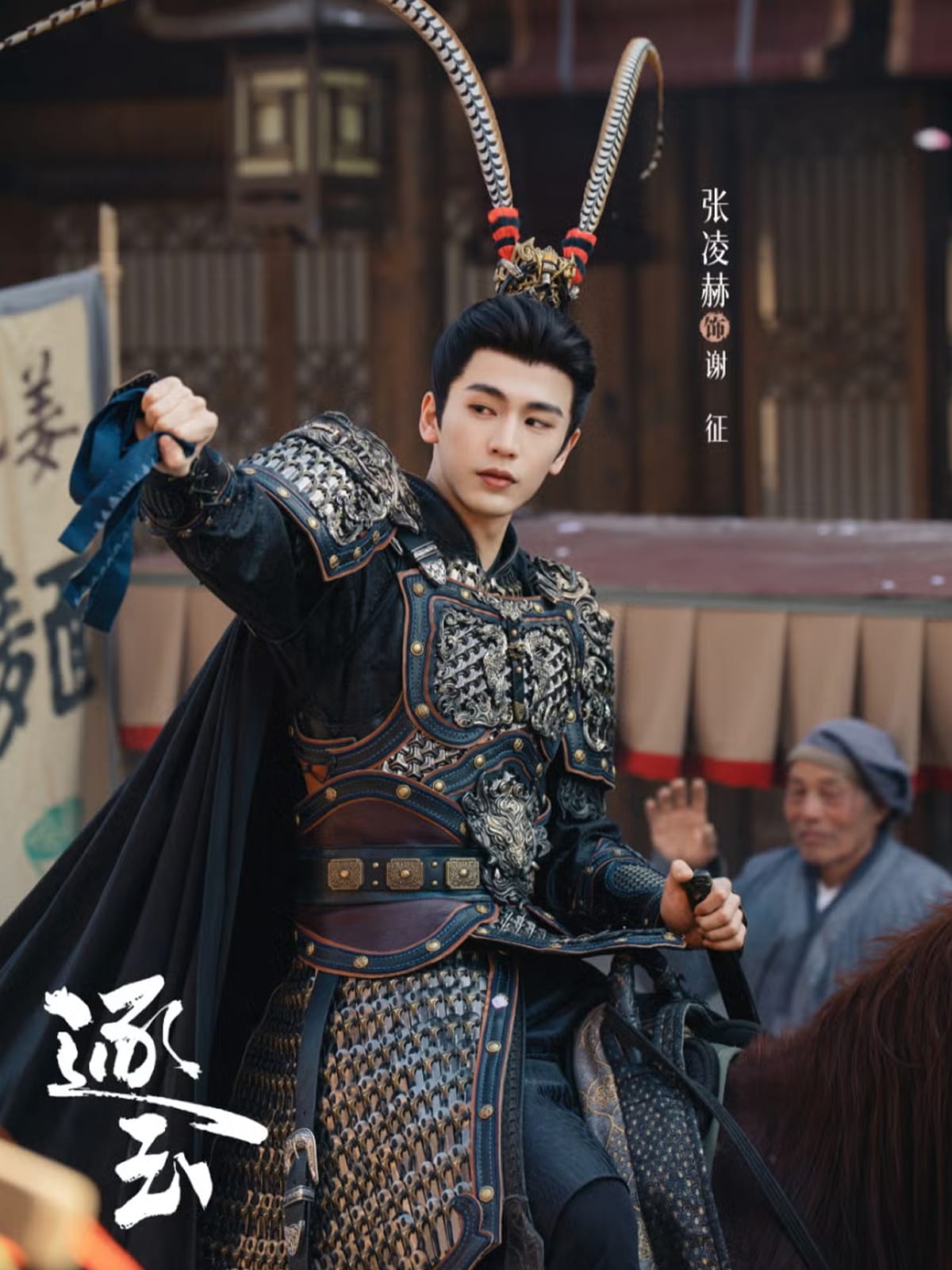
This is not a reversal, but a refinement. The camera in Pursuit Of Jade does not leer. It does not ogle. It does not behave like a man at an all-you-can-eat buffet making regrettable decisions. Instead, it observes. It waits. It is interested in what happens when very small things occur to very composed faces. A flicker of emotion, a tightening of the jaw, a glance that lasts perhaps half a second too long.
This is not the aesthetics of conquest, but the aesthetics of restraint. It is interested primarily in the emotional story, because it realises that how women idealise a romantic partner today is not in terms of physicality but emotional capacity.
Here, male beauty is presented as refined rather than rugged, elegant rather than aggressive, distant rather than dominating. Meanwhile, masculinity is reframed as powerful composure. This creates a sense of safe admiration, rather than confrontation. Even physical proximity is often delayed – hand-holding or a brief touch can carry more weight than overt intimacy.
In a world where “Man or bear?” trends exist and toxic masculinity is increasingly flagged, C-dramas offer something different from many Western romance narratives: less overt sexualisation, more emotional layering and a stronger emphasis on longing and restraint. For many viewers, this can feel more immersive, more romantic and sometimes more “earned”.
The modern C-drama industry operates within an ecosystem that is acutely responsive to its audience – and that audience, increasingly, is female. Women are not just watching these dramas; they are driving them. They are the primary consumers, the most engaged fans, the ones generating discussion, edits, and the kind of sustained attention that keeps a show alive long after its final episode. And when a particular aesthetic proves effective, the industry pays attention.
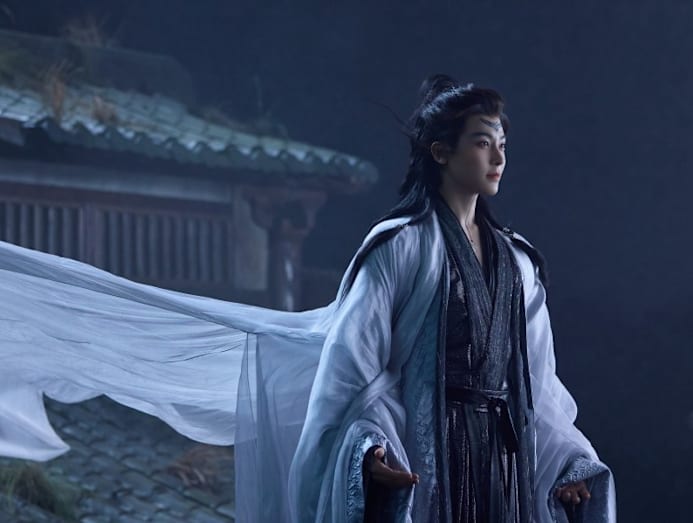
In recent years, much has been made of the so-called “she economy” – the growing economic influence of women, particularly in urban China. Women are earning more, spending more, and, crucially, making more of the decisions about where that spending goes. In industries ranging from beauty to entertainment, their preferences carry weight.
It would be overly simplistic to suggest that the rise of the androgynous, less “other” male lead is a direct result of this shift. Culture is rarely that linear. But, it would also be naive to ignore the correlation. When the primary audience for a product changes, the product adapts. In the case of C-dramas, this adaptation has taken the form of a visual language that prioritises emotional resonance, aesthetic pleasure and a certain kind of softness – one that allows male characters to be looked at and lingered upon, not just followed.
Part of the reason actors like Zhang are so striking is that they are required to do very little, very well. In many Western productions, an actor is expected to project – to emote, to declare, to make things abundantly clear to the viewer who may, at any moment, be distracted by a phone, a snack or a passing existential crisis.
In C-dramas like Pursuit Of Jade, the expectation is almost the opposite. The actor must hold stillness. He must allow emotion to gather, like a storm that is determined to be polite about it. The male lead does not confess. He hesitates. He does not reach out. He almost does. A glance lingers a fraction too long. A jaw tightens. A pair of eyes softens just enough for you to notice. This is desire reframed, not as spectacle, but as sensation.
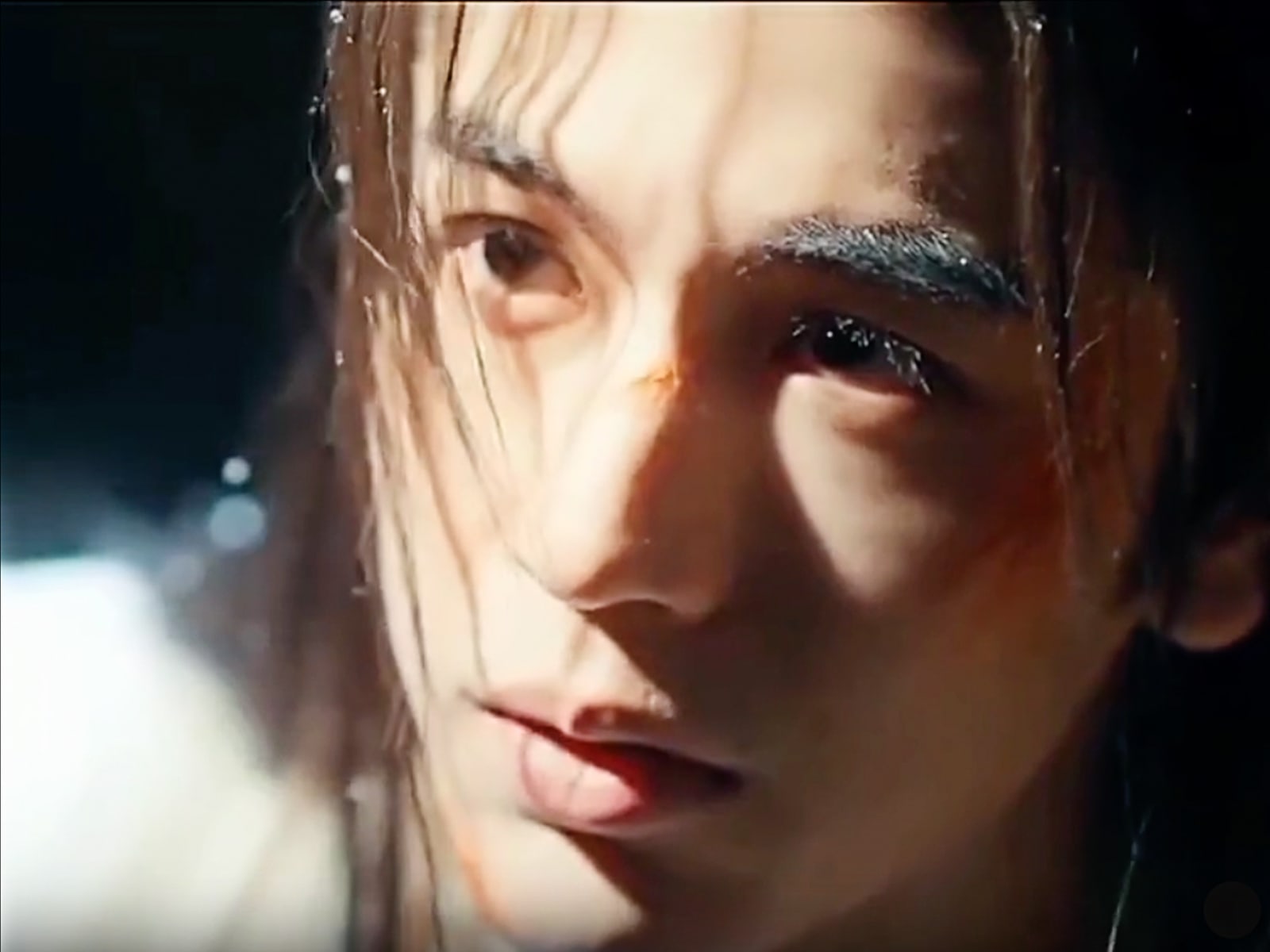
Here is where the face becomes crucial. Not just attractive, but legible. Not just symmetrical, but capable of suggesting entire emotional subplots without actually committing to them.
You begin to understand why casting directors might favour a certain type. If your storytelling relies on the audience leaning in – on them noticing the slight softening of a gaze, the almost imperceptible hesitation – then you need a face that can carry that weight. It helps, of course, if that face also looks excellent under soft lighting.
And what lighting it is.
BEAUTY IS TRUTH, TRUTH BEAUTY
The patriarchy has objected (ha, ha). Chinese regulators have called for an end to what they describe as “looks worship”, suggesting that the industry might benefit from focusing a little more on plot, character and the general business of storytelling.
On paper, this is entirely sensible. No one is pretending to be watching Pursuit Of Jade for the plot, and it’s not even the worst plot in the history of C-drama. There have been, it must be admitted, dramas in which the narrative appears to have been assembled after the casting, possibly by an intern under time pressure. There are moments when one suspects that the script has been written primarily as a delivery system for close-ups. The call for stronger plots, better writing, and more substantive storytelling is not only valid; it is, in many cases, overdue.
And, yet, the difficulty lies in the inconvenient matter of economics. C-dramas do not exist in a vacuum. They exist in a fiercely competitive market where attention is the most valuable currency and where audiences, when presented with a choice between “competent but visually unremarkable” and “visually arresting with a tendency to stare meaningfully into the middle distance”, have shown a marked preference for the latter.
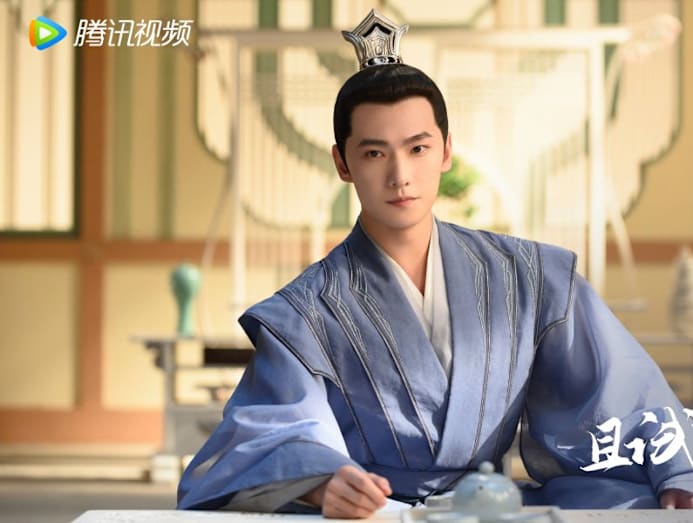
An exceedingly pretty male lead is not just an aesthetic choice. He is a marketing strategy. He generates interest before the first episode airs. He sustains engagement across multiple platforms. He inspires edits, fan art, lengthy online discussions about the angle of the arch of his left eyebrow, cosmetic sales, hair salon treatments, aesthetic doctor visits, you name it. He travels well, appealing to international audiences who may not follow every nuance of the plot but can certainly appreciate a well-lit jawline.
In short, he is good for business. To ask producers to abandon this is rather like asking a bakery to stop making bread and focus instead on the philosophical implications of flour.
As long as audiences continue to respond – as long as they tune in, discuss, share, and return for episode four, five and six – the system will continue to produce what works. Naturally, no one tunes in to a period drama for the gritty realism – who wants to watch a brutish war general covered in grime and fleas? – but for the fantasy.
And, in this context, it’s actually not at all illogical. Traditional Chinese culture is full of male figures described in ways that align very neatly with today’s “C-drama pretty” aesthetic.
In fact, Chinese cultural history has long accommodated a more nuanced understanding of male beauty. The ideal of the jun zi, or cultivated gentleman, emphasised refinement, composure and moral integrity – qualities that often translated, in artistic and literary depictions, into a certain elegance of appearance.
Historical figures like Pan An of the Western Jin dynasty and Song Yu of the Warring States period were frequently described in terms that would not feel out of place in a modern script: Clear skin, graceful bearing, an almost ethereal presence.
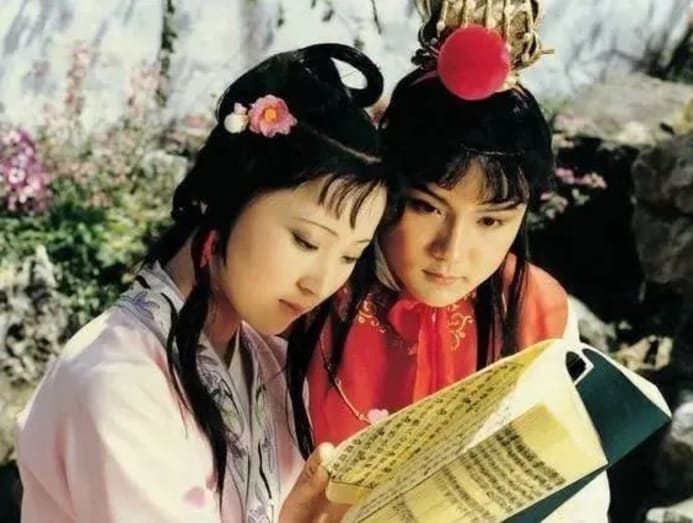
In literature, the tradition continues. In Dream Of The Red Chamber, Jia Baoyu, one of the most famous male protagonists in Chinese fiction, is repeatedly described in almost androgynous terms. He has soft features, luminous skin and a sensitivity that sets him apart from more conventionally “masculine” figures. His beauty is tied not to strength, but to refinement and emotional depth. Similarly, in Romance Of The Three Kingdoms, Zhou Yu is noted not just for his military brilliance but for his striking good looks, his elegant bearing and his grace and composure.
What contemporary C-dramas are doing, then, is not so much inventing a new aesthetic as amplifying an existing one. They have taken this tradition, applied modern production values, and, crucially, placed it under a very attentive camera. In other words, the modern C-drama male lead, with his flawless skin, careful styling and composed emotional restraint, isn’t a radical departure. He’s a high-definition update of a much older ideal.
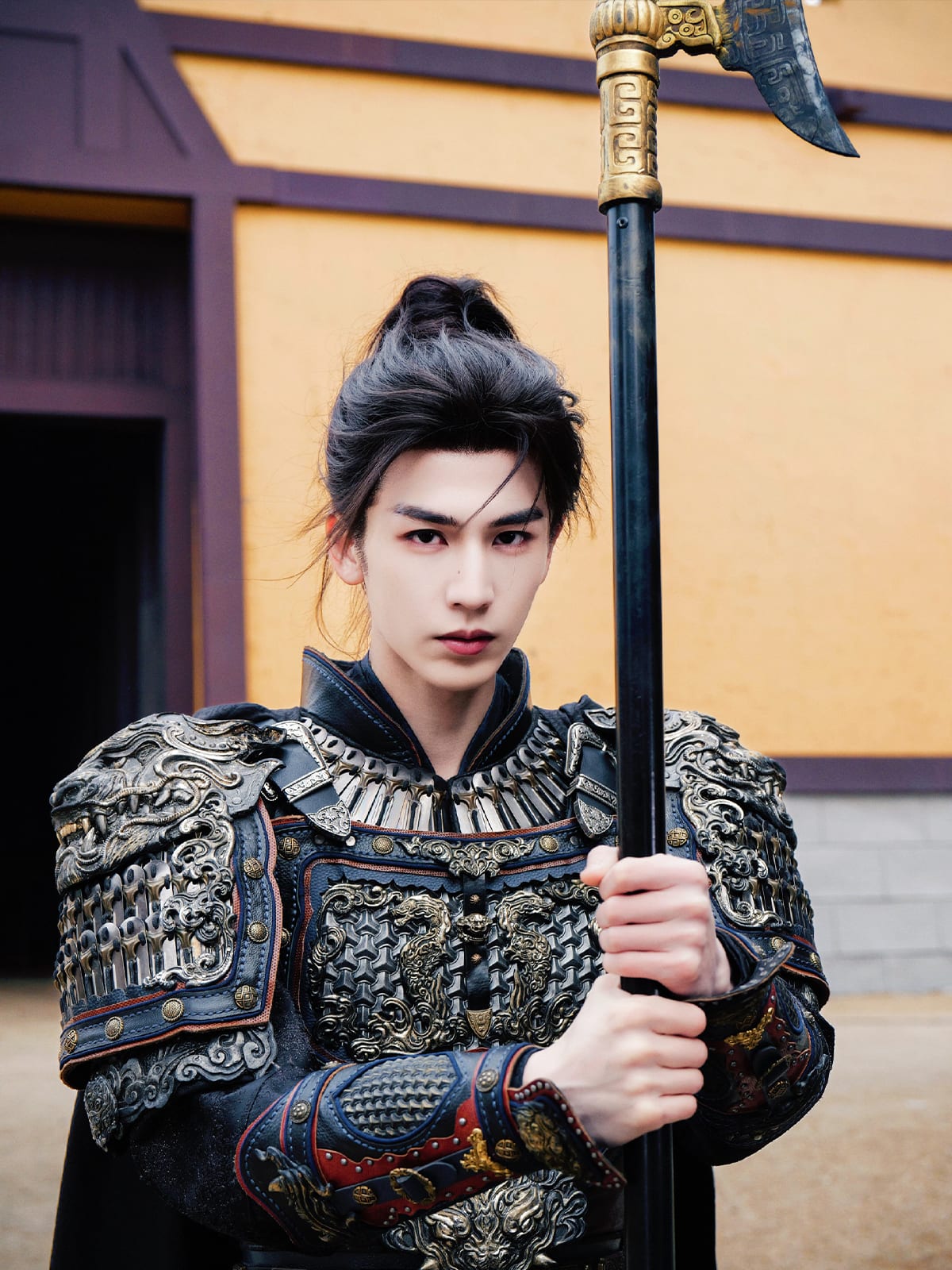
Which brings us back to Pursuit Of Jade. You are watching. The male lead is standing there, doing very little, and yet somehow conveying everything. The camera is treating him with the kind of attention usually reserved for priceless artefacts and Chef’s Table slow-mos. Time appears to have slowed, possibly out of respect.
You could dismiss it, if you wished. You could argue that it is excessive, indulgent, even slightly absurd. You would not be entirely wrong. But you would also be missing the point. Because what these dramas are offering is not just beauty, but a particular kind of experience – one that values anticipation over immediacy, subtlety over spectacle, and the quiet thrill of noticing something before it is fully revealed.
It just so happens that this experience is delivered by men who look as though they have been personally curated by the universe.
And, really, it would be a shame not to make the most of that.