Raised differently, united by food: The couple making Singapore food heritage part of everyday life
Anugerah Murni Sabta and Aqid Aiman Azmi run Sendok Rakyat through workshops, walks and gatherings. They encourage participants to experience food heritage through shared stories and everyday cooking.
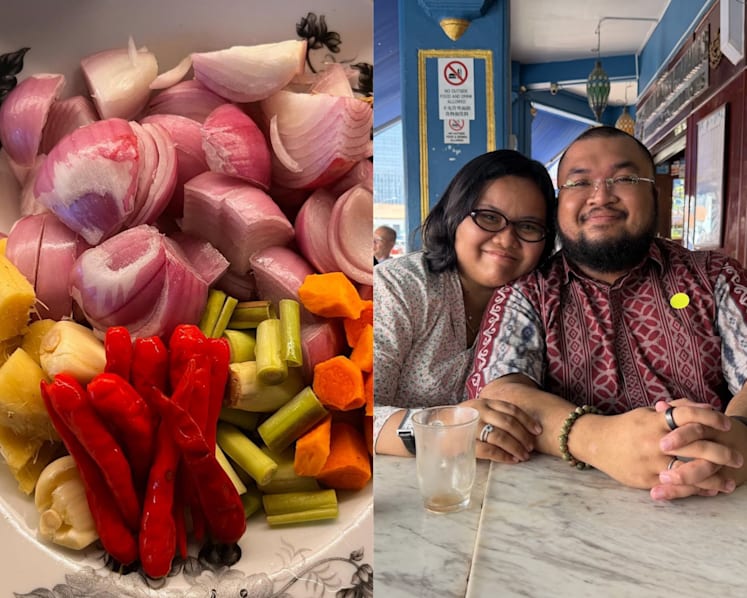
Sendok Rakyat is run by the couple – Anugerah Murni Sabta and Aqid Aiman Azmi – who grew up loving food and the stories around them. (Photo: Sendok Rakyat, CNA/Izza Haziqah)

This audio is generated by an AI tool.


At Sendok Rakyat’s nasi ulam workshop, participants gather around a mix of spices and herbs, often including kemangi (sliced lemon basil), Thai basil, mint, coriander, kaffir lime leaf, daun kaduk (wild betel leaf) and bunga kantan (torch ginger flower). They chop ingredients such as cucumbers and onions, mix the herbs and take in the bright assortment of colours and aromatic scents from the herb mix.
But the workshop does not stop at making the traditional Southeast Asian herbal rice dish, which combines cooked rice with a medley of finely sliced fresh herbs and vegetables.
Participants also learn the stories behind the ingredients and why they are used in the dish. As they chop and mix in small, intimate circles, they are encouraged to share their own experiences: What do these ingredients mean to them? Have they ever had the chance to touch or taste these herbs? Is the scent familiar? Have they tried cooking similar dishes at home? Or are these the kinds of dishes their mothers or grandmothers once prepared?
These are the kinds of questions that the married couple behind Sendok Rakyat – Anugerah Murni Sabta, 28, and Aqid Aiman Azmi, 33 – weave into their programmes.
Sendok Rakyat, which translates to “the people’s ladle”, is a platform that uses food as a way for people to understand their heritage and communities better. It runs food programmes at various community spaces including Wisma Geylang Serai, Chong Pang Market and Proud Spaces, and collaborates with organisations such as Singapore HeritageFest, the National Heritage Board and ArtsWok.
While it has a particular focus on Malay food, these activities also explore how different food traditions have intertwined in Singapore over time, from laksa and mee soto to mee goreng and rojak.
"Food is a way into conversations about identity, belonging and what that means in Singapore today," Aqid said. “It's so important, emotional and meaningful – and we want to share that value with others, too."
BONDING OVER A LOVE FOR FOOD AND STORIES
When Aqid and Anugerah met and started dating in 2022, they bonded instantly over their interest in local food.
They would exchange their food experiences, compare how different stalls prepared their favourite dishes and debate whether a particular dish was underrated or deserved more attention.
That interest eventually became a food diary on Instagram, called Sendok Rakyat, where they documented their experiences, and attempts to cook new dishes.
What began as a simple way of sharing their interest in food and cooking gradually grew into something broader. The couple began thinking not only about what was on the plate but also the people, histories and everyday practices surrounding it.
Through the comments they received online, they also managed to learn about different cooking styles and techniques, lesser-known stories behind the names of dishes, and where they can get the best ingredients at affordable prices around the country.
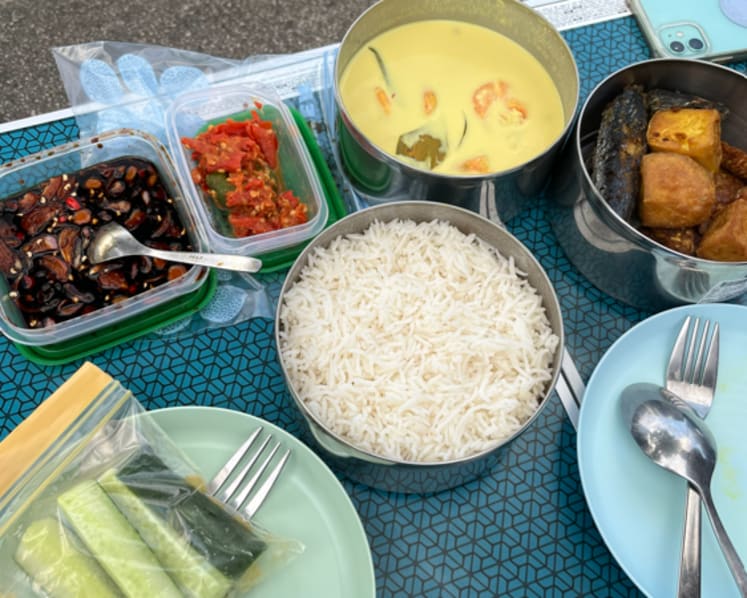
Aqid quickly realised that the platform the platform could become a way of exploring how food could lead people to deeper conversations.
“Gathering over food is one of the most powerful types of gatherings because food is always the starting point for deeper and more introspective conversations. What are you cooking? What are you eating? These are great questions that can often come up in a shared meal,” he said. “That's a gateway to understanding things about the way we live, who we are, how we relate to each other.”
That idea would become central to how Sendok Rakyat developed. As they realised others were equally curious about local food, the couple decided to take those conversations beyond social media.
A TOOL TO ADDRESS INEQUALITY
As a teenager, Anugerah lived in a transitional shelter, where much of her household's food came from donated supplies, canned ingredients and whatever was available through the community kitchen.
"For many years, I felt embarrassed about that part of my life, even long after my family was no longer in the same situation," Anugerah said. "I also sometimes felt bad whenever I wanted to enjoy or spend more time making elaborate traditional food, since I often ate just instant noodles or whatever was available that was cheap and easy to prepare."
Yet, some of her most cherished food memories came from the occasions when her mother and grandmother had enough time or ingredients to prepare more elaborate dishes such as lauk lemak, a creamy coconut gravy dish.
“In those moments, I remember feeling very loved,” Anugerah said. “When I see the way my mother and grandmother chopped ingredients and spent so much time and labour to make the meal, I really appreciated it.”
These moments in turn made her love to cook and bake. Despite having limited time and resources, she would still find a way to prepare traditional Malay dishes for her family, or bake treats such as chocolate chip cookies or simple kueh.
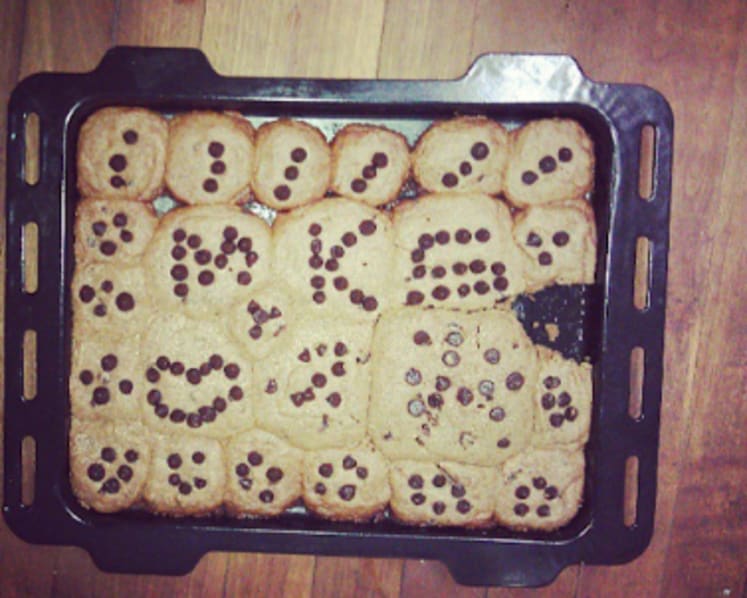
"Some people may call what I cooked 'inauthentic' because I lacked the time to get the real, proper ingredients, or I used sachets to create instant lauk (dishes) instead of spices from scratch," Anugerah said. "But to me, they tasted amazing, and they tasted like a proper home – can't that be what authentic food is about, too?"
Her relationship with food therefore became tied to questions of access: Who gets to cook these dishes? Who has the time and money to prepare them? And who gets to feel that these traditions belong to them?
“I had to take back my own story. I had to reclaim it as more than just being a ‘struggling teenager who went through poverty’ – I didn’t let that part of my life define me,” she said. “It was very important to me that I didn’t feel bad for myself anymore, and instead own that part of my upbringing to see how I can be a better person for myself, others and the community.”
That experience is part of what she hopes Sendok Rakyat can offer to others who may similarly feel disconnected from the more polished versions of traditional food.
“I can imagine a kid out there who feels the same way, who's going through the same things or struggles, who loves cooking local food but doesn't have the resources to do so," she said. "I want to see how I can make others in similar situations feel better and feel as though they can belong in the larger story of food heritage."
Aqid's upbringing was different from Anugerah's, but he too saw food as something closely tied to care, relationships and memories. His background in arts management and storytelling shaped his interest in how stories can create connections between people, regardless of their income or background.
“It’s why I believe understanding and knowing about our heritage can be a tool to fight inequality,” Aqid said. “Rather than making people feel excluded because they lack the resources or time to experience elaborate traditional food, making them engage with their heritage as part of everyday life can make them feel seen and understood."
BUILDING ACCESSIBLE SPACES
These values are now reflected in the way Anugerah and Aqid run Sendok Rakyat.
What began as a simple online food diary in 2023 has since grown into a range of programmes, including nasi ulam workshops, food storytelling sessions, walking tours, cooking classes and picnic gatherings centred on different Singaporean foods.
But making food heritage more accessible is not only about getting people interested in it. For the couple, it also means making sure people can actually participate, regardless of how much time, money or prior knowledge they have.
They often keep their programmes free or charge minimal fees for those who may not have the means to attend, and work with organisations and individuals whose interests intersect with their own, including Sayur Story, a food programme by and for domestic migrant workers in Singapore.
Across these formats, they also try to move away from treating heritage as something that exists only in the past, or something that has to be replicated perfectly and rigidly from scratch.
“I know some people think we run programmes that make dishes or kueh from scratch, which takes hours,” Anugerah said. “But while those programmes can be fun to learn, we want to stick with what we see every day. We want people to have the freedom to encounter heritage through their own experiences and how they live today.”
This includes making multiple visits and designing experiences around local pasars in Geylang, Chong Pang, Bukit Gombak and Tekka Market, treating these places not as relics of a romanticised, bygone Singapore but as living parts of the city where people still shop for ingredients, eat all kinds of dishes and gather with friends and family.
“These markets aren't places of the past; they shouldn't be overly romanticised because they exist now and many people – regardless of generations – still see value in them,” Aqid said. “So we often involve visits to these spaces as part of our programmes, for both the seasoned and those who want to start making visits to pasars a regular thing.”
Their workshops similarly focus less on teaching people a “correct” way of making a dish, and more on giving them the context and confidence to engage with it themselves.
“For our nasi ulam or sambal workshop, we don't really teach people how to make the nasi ulam or sambal,” Aqid said. “We bring the ingredients together, but one table's product can be entirely different from another group's because each participant's experience and stories can be distinct from the other.”
Running workshops grounded in dishes such as nasi ulam also feels like a particularly fitting example of how food heritage can be made more accessible, precisely because of the amount of labour traditionally involved in preparing it.
“We often tell audiences that if someone makes nasi ulam for you, they must really, really love you," Aqid said. "Why else go through all that trouble of preparing so many ulams and slicing them so finely?”
And rather than romanticising that labour, the workshop will also cover what it can take to make the process easier and more accessible for people with little time and resources on their hands.