'I'm selling memories': How one Singaporean turned childhood bus dreams into a transport-themed shop
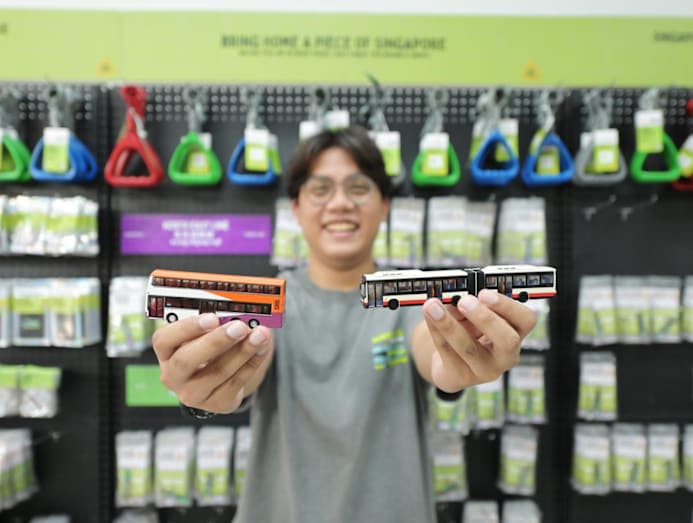
Danial Sim's childhood fascination with buses has since come full circle with the opening of Tap Space, a new shop at Burlington Square offering transport-themed merchandise, from MRT station keychains to die-cast buses.
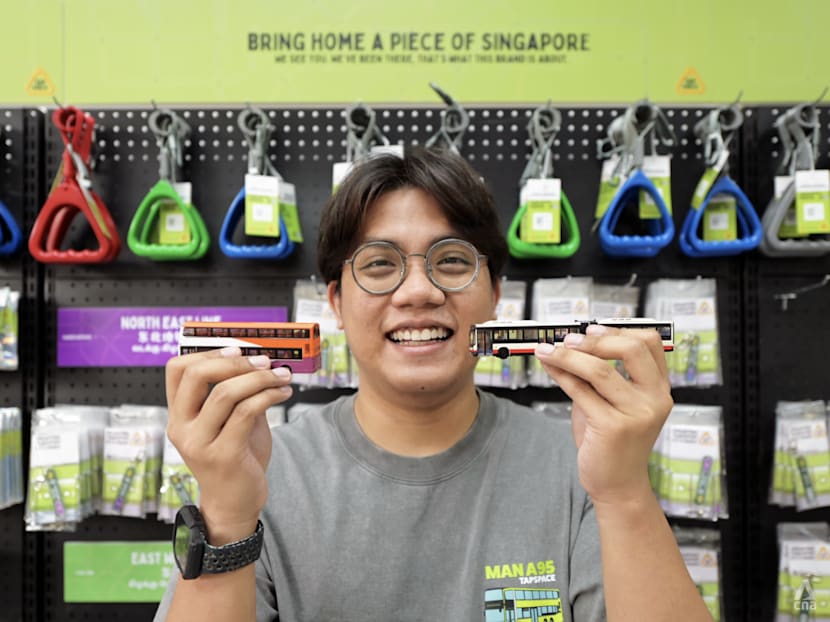
28-year-old Danial Sim turned his childhood fascination with buses into a business, selling transport-themed merchandise, from die-cast buses to MRT station keychains. (Photo: CNA/Joyee Koo)

This audio is generated by an AI tool.


Growing up in Singapore, many would remember buses with sliding windows and no air-conditioning, or the long “bendy” ones that once defined certain routes. Some bus numbers or MRT stations still linger in the mind simply because they were part of the daily commute.
For many children, there were small rituals too, like racing for the front seats to pretend to be the bus driver, or riding the LRT as if it were a roller coaster. These are the moments Danial Sim hopes to preserve at his newly opened shop, Tap Space.
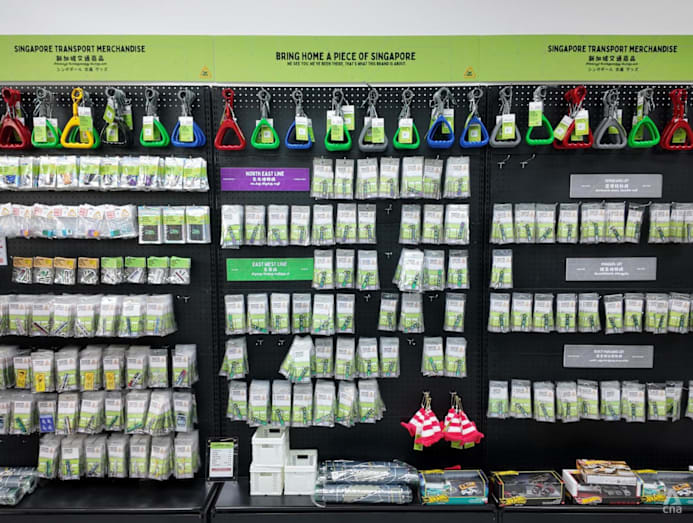
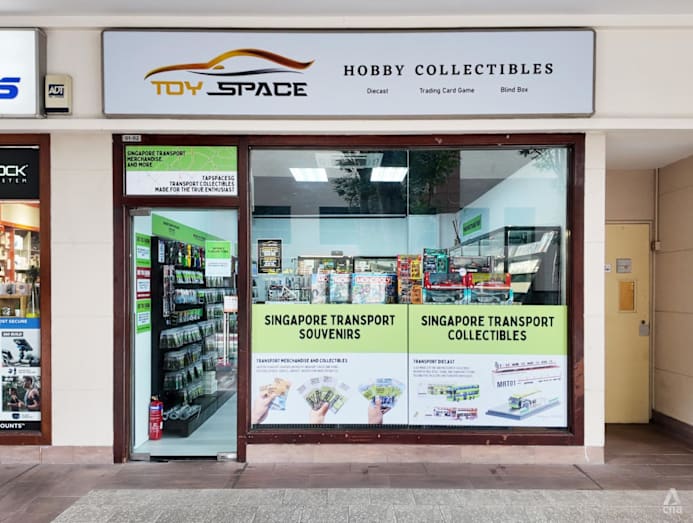
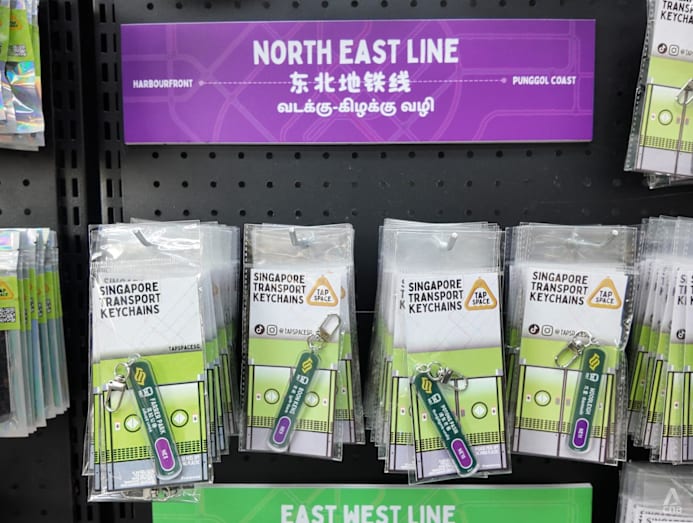
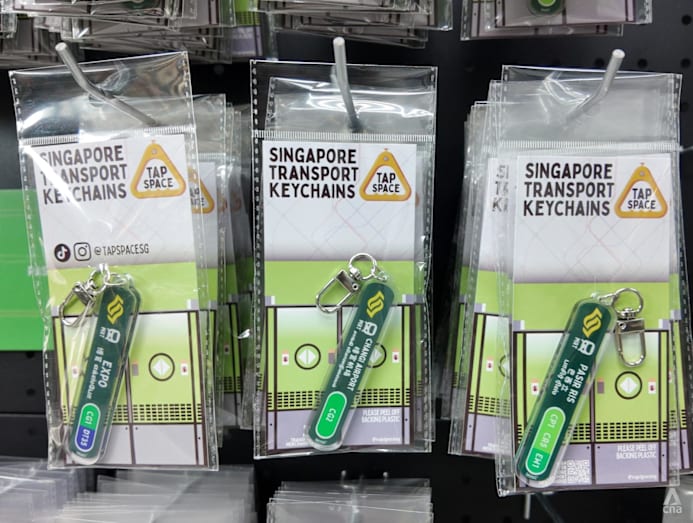
Located at Burlington Square and opened earlier this year, the cosy space is lined with rows of MRT station keychains, neatly organised by train line, from familiar central stops to newer neighbourhood stations.
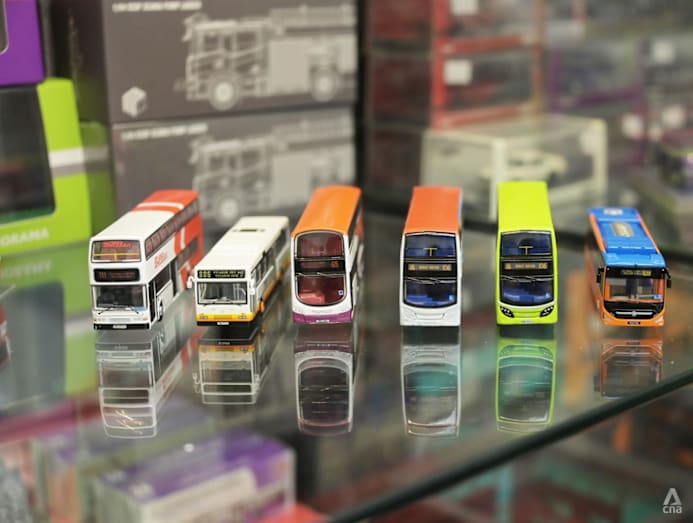
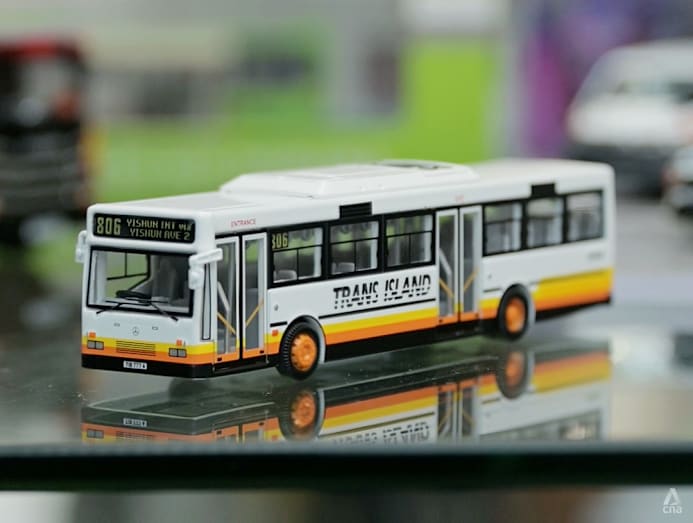
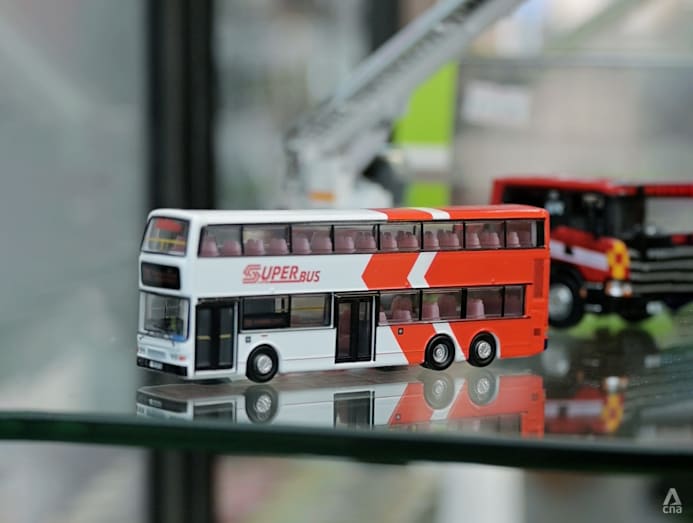
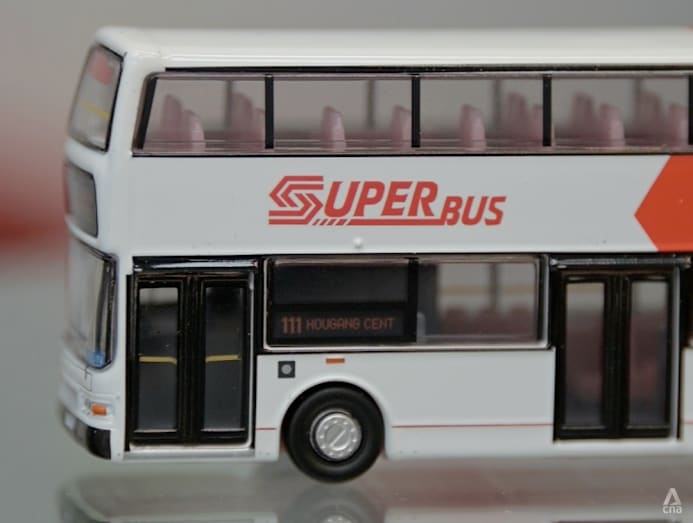
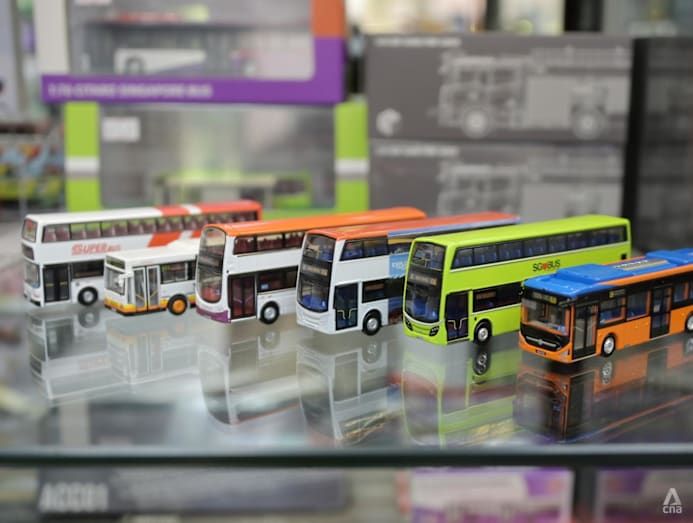
A full glass display cabinet also traces Singapore’s public transport story through die-cast buses spanning different operators, designs and service eras.
There are models inspired by Trans-Island Bus Services, SBS, SBS Transit and SMRT Buses, alongside buses from different design eras, including non-airconditioned models with sliding windows, double-deckers and bendy buses. Familiar coach buses commonly taken on road trips to Malaysia sit with the collection, tapping into another layer of shared travel memories.
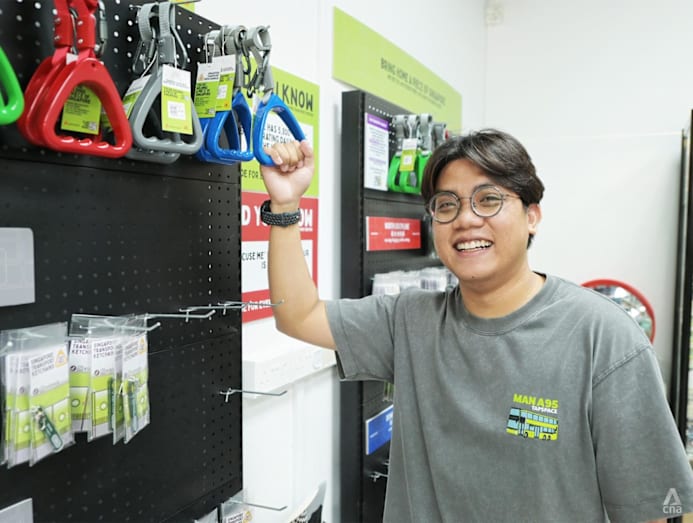
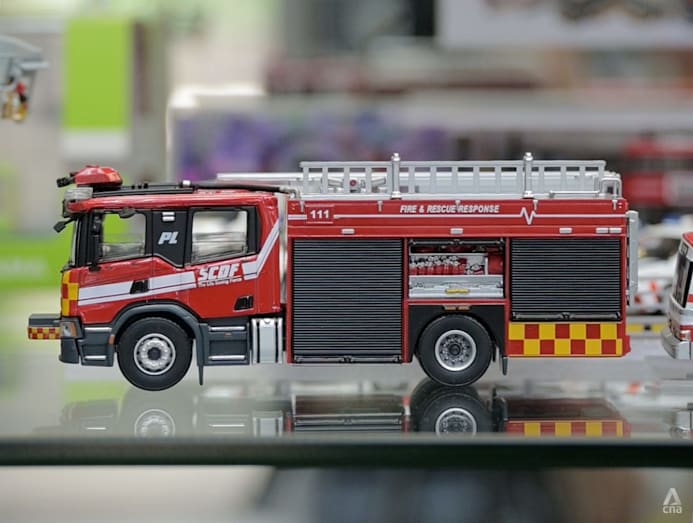
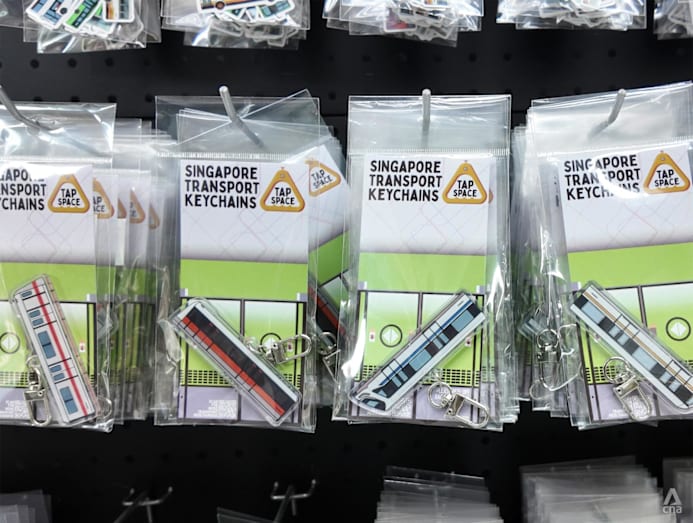
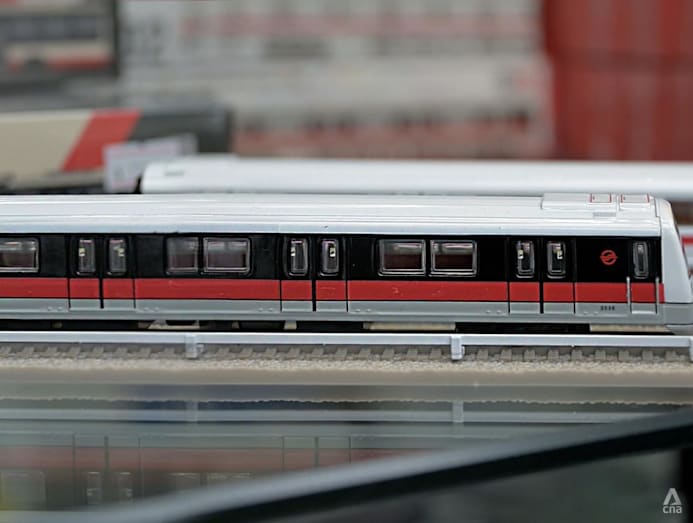
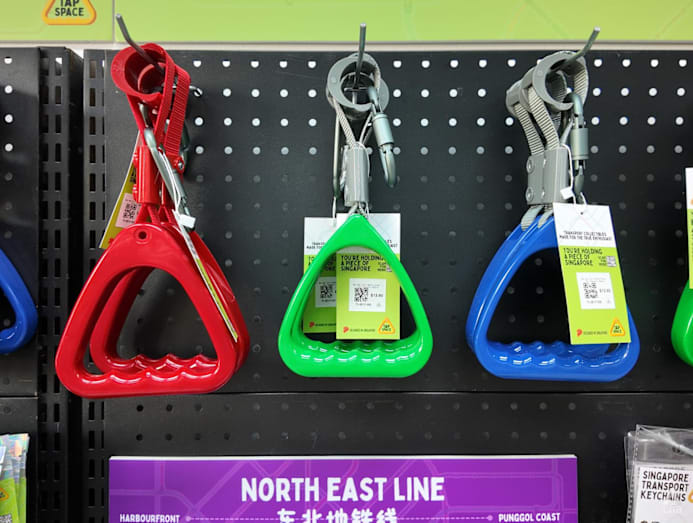
Beyond die-cast buses, the range extends to miniature MRT trains, SCDF fire engines and police cars, alongside playful accessories such as life-sized handrail keychains in different colours representing the MRT lines, miniature card reader scanners and other transport-themed knick-knacks.
“JUST GIVE ME A BUS AND I’LL BE HAPPY”
Sim’s love for public transport runs deep, rooted in daily bus rides to school and hours spent playing with his toys at home.
“My mum only recently told me that when I was in primary school, I used to create traffic jams in the house,” he said. “I would line up all the cars and buses and then solve the traffic jam myself. I wouldn’t disturb anybody. Just give me a bus and I’ll be happy.”
His mother, a collector of die-cast cars, unknowingly helped fuel his obsession. After playing, he would carefully clean and rearrange the toys, placing newer ones at the front and organising them by category.
“I’d sit in the seats right behind the driver and imagine I was driving,” he said, with a laugh. “Back then, before the MRT was as connected as it is now, we had to take buses everywhere. My parents and I would sometimes spend two hours on a bus ride. They’d be sleeping, and they wouldn’t worry about me because they knew I was very happy just looking out the front.”
Other fond memories include the design of older buses. “I remember the buses without air-conditioning, with sliding windows,” he said. “I used to call them cockroach buses because there were cockroaches inside.”
The nickname stuck. When he later released a model inspired by those older buses, customers immediately understood the reference.
“They knew exactly what I was talking about. It was a shared memory that everyone has,” he said.
STARTING WITH S$50 AND FOUR MRT STATIONS
The idea of selling transport-themed merchandise first took shape during a holiday in Seoul in December 2023.
“I saw that they have quite a strong public transport community,” he recalled. “They had merchandise like keychains, tote bags and even small tickets to commemorate the opening of new lines and celebrate old ones being renovated. I thought it was pretty cute. I kept thinking, why doesn’t Singapore have something like this?”
That question turned into a side business the following year. Still working an office job at the time, Sim decided to test the market with a modest budget of S$50, producing his first batch of MRT station keychains featuring four stops: Changi, Orchard, Punggol and Sengkang.
“I thought those were the popular spots people would want to get. Then they sold out in one day,” he said. “That’s when I knew people actually wanted this.”
What followed was a steady expansion driven largely by public demand. Instead of launching dozens of designs at once, Sim let customers guide what came next.
“I started with the stations people requested, like hometown stations. Woodlands, Redhill, Jurong East and Choa Chu Kang,” he said. “So from there, we just kept expanding based on requests.”
Sales began on his TikTok account at a time when new sellers could operate without a minimum follower count. As orders trickled in, his following grew by a few hundred users almost every night, prompting him to start livestreaming to sell the merchandise.
“I started in my bedroom, on my table, packing orders every night,” he said. “The orders started coming in by the hundreds each day, and my parents even chipped in to help. That was when I thought I could turn this into something.”
In August 2025, he left his office job to focus on the business full-time. Before the physical store opened, he sold his wares online and at pop-up stores.
DESIGNING SHARED MEMORIES THROUGH COMMUNITY
Sim designs the products himself, sometimes with help from friends, and works with suppliers locally and overseas, prioritising Singapore-based production whenever possible. While he currently uses his own fonts and interpretations, he is in the process of securing licensing from SMRT to incorporate more accurate bus details, something he says matters deeply to transport enthusiasts.
“If the detail is slightly off, they won’t be happy, because it’s not true to their memory,” he said.
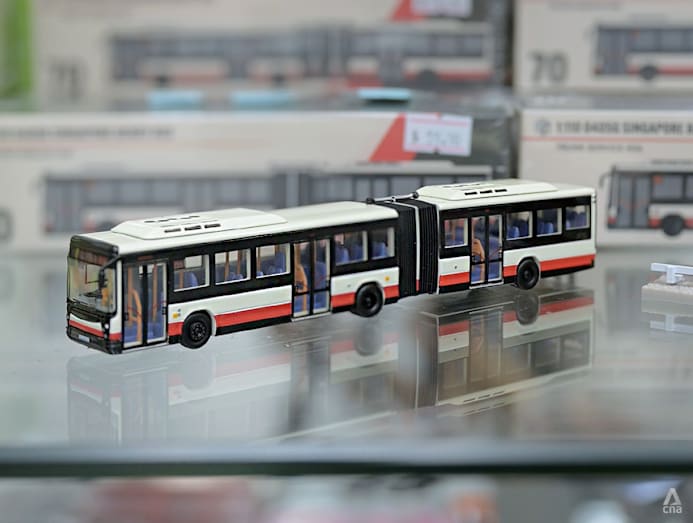
Older buses pose particular challenges, from recreating sliding windows to engineering bendy bus mechanisms.
“We tell people you can bend it at your own risk,” he added with a laugh. “Because if it breaks, we already warned you.”
With so many bus numbers in Singapore, producing every single one would be unrealistic. So how does Sim decide which ones to make? He actively involves customers through Instagram polls and social media feedback, selecting the most requested numbers.
One of the most popular bus numbers, set to be released soon, is bus 190. For those who live around Choa Chu Kang and Bukit Panjang, like Sim himself, it is a particularly recognisable bus number.
“Even if you don’t take that bus, you still recognise it,” he said. “You see it in Orchard every few minutes and it’s always full. I think people from Bukit Panjang can really relate to that.”
The community is also invited to vote on the advertisements featured on the buses, some of which are more memorable than others. Requests have even come from students at NUS and NTU for campus shuttle buses, showing that the appeal extends beyond public bus routes.
MORE THAN MERCHANDISE
Customers often share their own stories when they visit the shop or browse online.
“Now people just walk in, browse, talk and reminisce. You realise they have the same experiences with the exact same bus or the exact same hometown,” Sim said.
Some purchases are also about marking new chapters. New homeowners, for instance, have bought MRT station keychains tied to upcoming BTO estates to celebrate their future homes. Others pick up keychains for their ageing parents, so they remember which station to alight at when travelling on their own, especially as new train lines and stations are added.
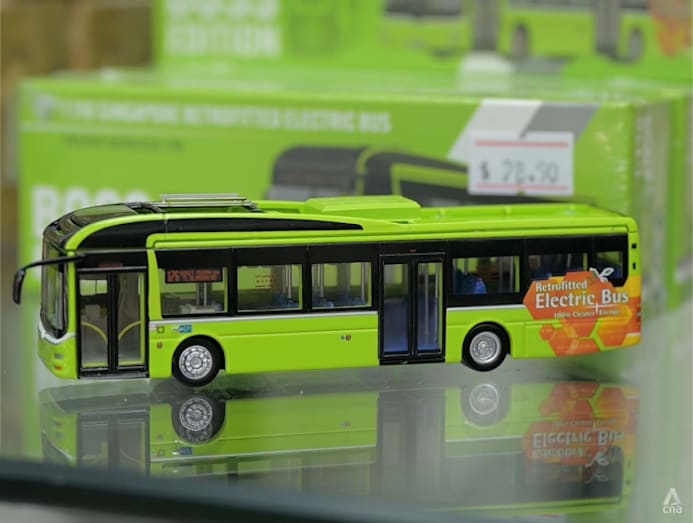
The shop has even drawn overseas collectors, intrigued by Singapore’s distinctive green buses and transport design. “They say it’s something they don’t have in their country,” Sim said.
Looking ahead, he plans to continue expanding the range based on community feedback, particularly when it comes to bus models and numbers. There are also plans to venture beyond Singapore. A small trial featuring transport stations from Kuala Lumpur was well received, with more regional designs in mind once the Singapore collection feels complete.
“At the end of the day, I’m not just selling merchandise,” he said. “I’m selling memories.”