How Singapore fashion label The Dori turns old saris into one-of-a-kind shirts
Named after the Hindi word for thread, The Dori is how three childhood friends are upcycling old saris into everyday wear, and reconnecting with their roots.
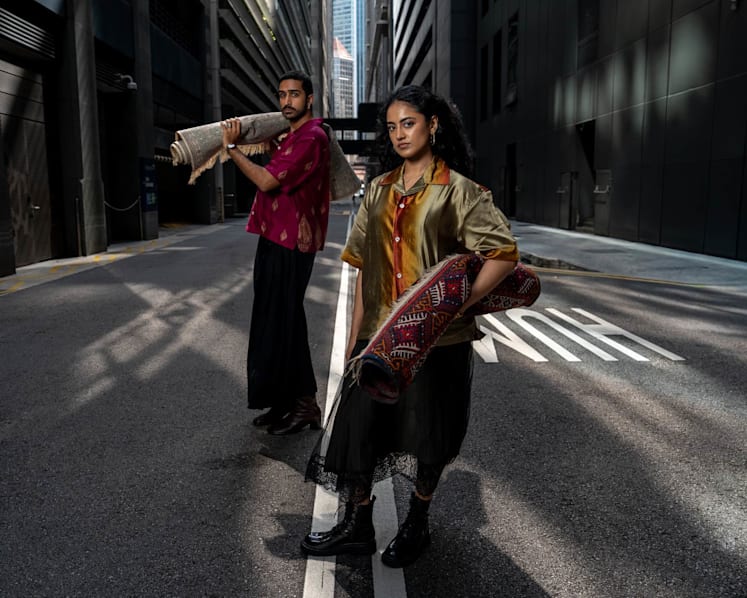
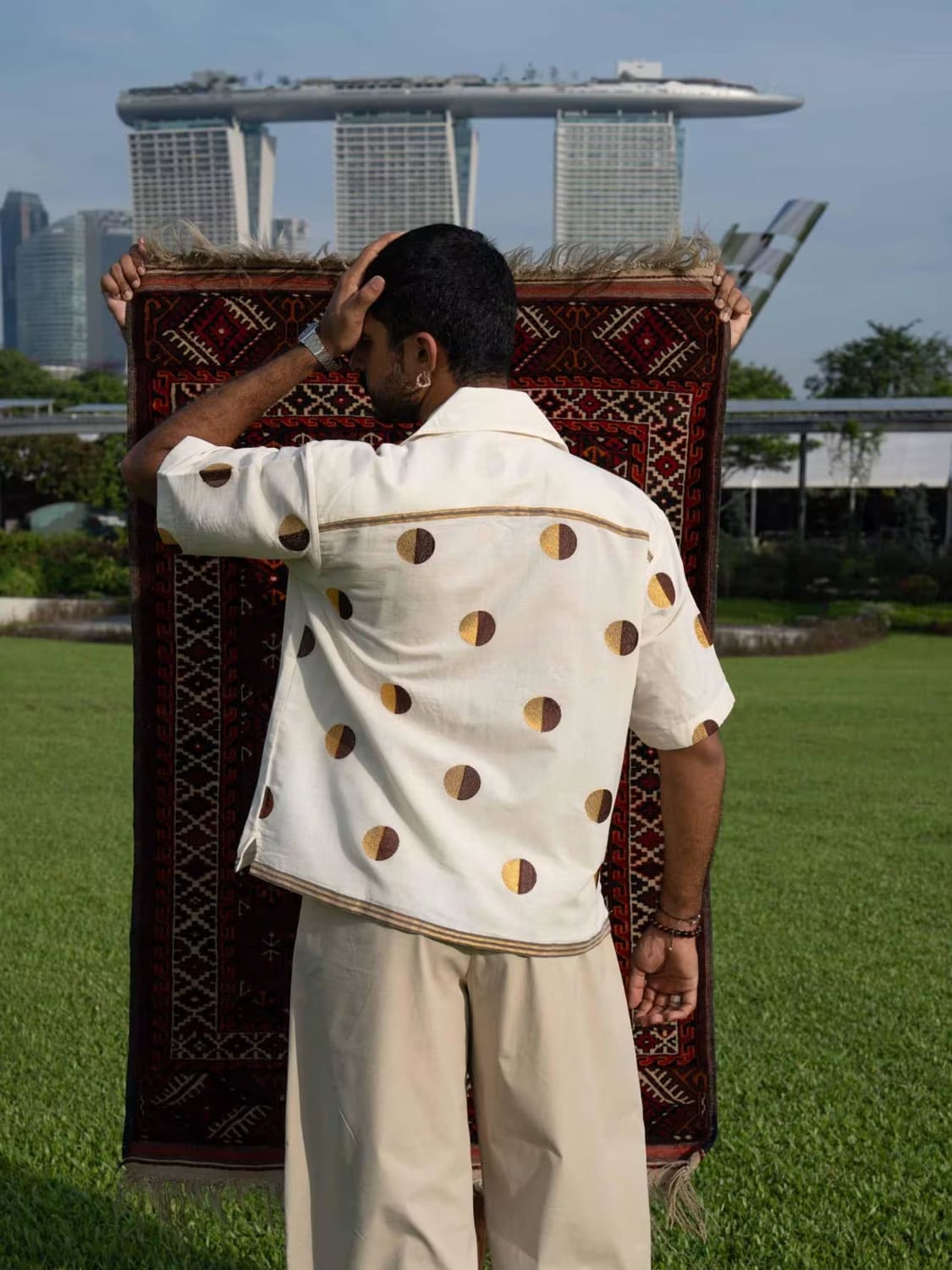
The Dori's debut collection, "New Beginnings," shot against the backdrop of Singapore's Central Business District. (Photo: The Dori)

This audio is generated by an AI tool.


Digital creator Rishabh Sharma, 27, had spent two to three years making social media content about brands reviving South Asian textile traditions. Then he decided to bring that curiosity closer to home.
It started as an experiment in January 2025, then Sharma turned one of his mum's saris into a short-sleeve shirt with the help of a tailor, documenting the process on Instagram and TikTok. The video did unexpectedly well. Soon, his DMs were flooded with people asking how they could get their hands on something similar.
That planted the first seed.
By August, Sharma spotted a gap: plenty of brands were giving saris a second life, but mostly as women's wear. Why not make something for everyone?
"The fabric had so much story in it already. There was no reason men should miss out on that craft. This is when I decided to fill the gap myself, with what I love most in my own fashion journey: unisex and androgynous garments," Sharma said.
He began asking family friends what happened to the saris they'd accumulated over years in Singapore. Many told him the same thing: once worn to a prayer session or wedding, a sari might rarely see daylight again – especially after everyone had already seen it – and end up collecting dust in a closet. There were few obvious avenues for donating ethnic clothing, too.
Once worn to a prayer session or wedding, a sari might rarely see daylight again – especially after everyone had already seen it – and end up collecting dust in a closet.
For Sharma, there was another consequence. Younger Singaporean Indians like himself had fewer opportunities to interact with the fabrics and weaves previous generations grew up around.
"Embarking on this project has allowed me to connect with my heritage more than ever before," he said.
He brought childhood friends from Tanjong Katong Primary School, Ajinkya Kulkarni and Laavanya Kejriwal, both 27, on board as co-founders. The Dori – dori means thread in Hindi – was born.
On Jul 19, the label launched its debut collection, New Beginnings: 45 one-of-a-kind shirts made from donated saris. The launch was held at One Trick Pony, a bar-restaurant and third space for creatives on Club Street.
The response was crazier than the trio expected. Around 80 people had signed up; close to 200 showed up, packing the space shoulder-to-shoulder until the building lost power twice.
Priced between S$125 and S$190, two-thirds of the shirts sold by the end of the day.
Embarking on this project has allowed me to connect with my heritage more than ever before.
FROM SARI TO SHIRT
Growing up, Sharma says he wasn't exactly "fashionable, fashion-forward".
"I'd be the guy who'd pick up the first T-shirt and shorts out of my closet and walk out of the house, not caring whether it was colour-coordinated or not."
It was during national service, dressing up on weekends, that he found room for creative self-expression through clothes.
His family was initially apprehensive about The Dori. No one had run a business before, and there were doubts that contemporary designs made from old saris would sell. Sharma had imagined it as a side hustle; once he realised how much legwork was involved, he went into it full-time.
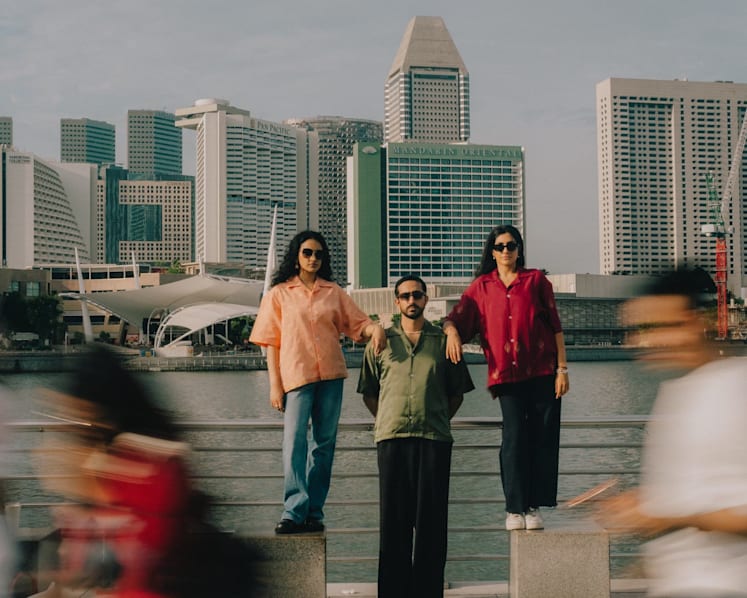
The team started with close to 140 saris from their mothers and family friends. Word spread quickly through the many WhatsApp groups Indian mums are typically part of, Sharma jokes.
Only around 100 of the saris were usable. Then came another problem: finding artisans who could work with them.
After several suppliers they found online didn't make the cut, Sharma reached out to brands and contacts he'd worked with during his years making content about Indian fashion. Eventually, the trio found a manufacturer in New Delhi who shared their commitment to doing things slowly and carefully. In June, Sharma and Kulkarni flew over to meet the team.
Sharma also drew on his experience as regional manager of retail performance for Southeast Asia at Tiffany & Co, where he'd developed a deeper appreciation for craftsmanship and cultural storytelling.
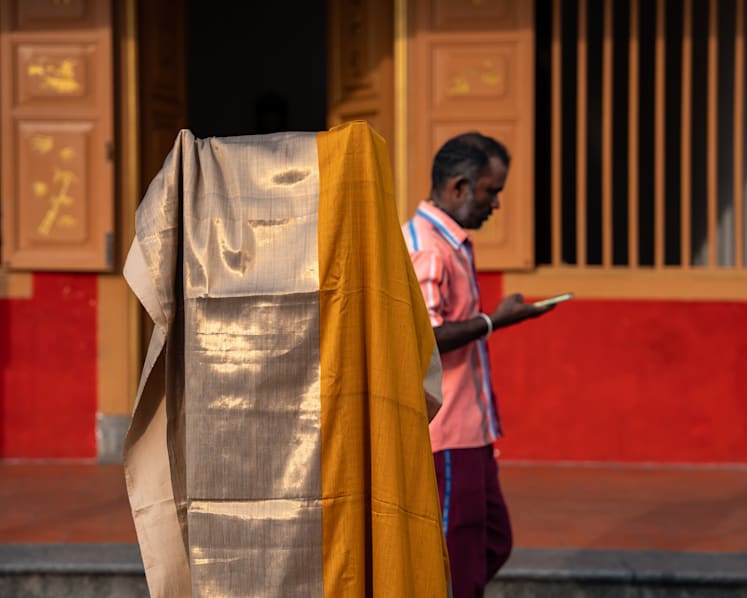
Each shirt begins with the sari itself. Its pallu – the decorative end and often its most intricate panel – becomes a focal point, while borders are turned into cuffs, plackets or back yokes. No two shirts are quite alike, and each requires its own discussion around the fabric and embroidery.
"It becomes a slow and laborious task of love," Sharma said.
A single sari typically yields just one or two shirts.
The team had assumed the subtler, safer designs would be easiest to sell. They were wrong. The loudest, most heavily patterned pieces went first.
One shirt featured elaborate kantha embroidery from West Bengal depicting scenes of village life. It sold within half an hour, with customers asking for more.
For Kulkarni, who works full-time in tech consulting, the brand has become a "creative outlet" – and a crash course in running a clothing business.
"Since we started, it's been a lot of learning for us – how to actually run a clothing brand, how to communicate with stakeholders in India, and navigate the different working styles," he said.
A SINGAPORE, INDIA STORY
As second-generation Singaporeans with strong ties to India, the trio see themselves occupying what Sharma calls a "very unique third-culture-kid space".
"We see this as a huge blessing, twice the cultural roots to tap into and build something out of."
That dual identity runs through the clothes. Even the tags play with it: "India" is written in English, while "Singapore" appears in Hindi.
Some pieces borrow their names from familiar Singapore icons.
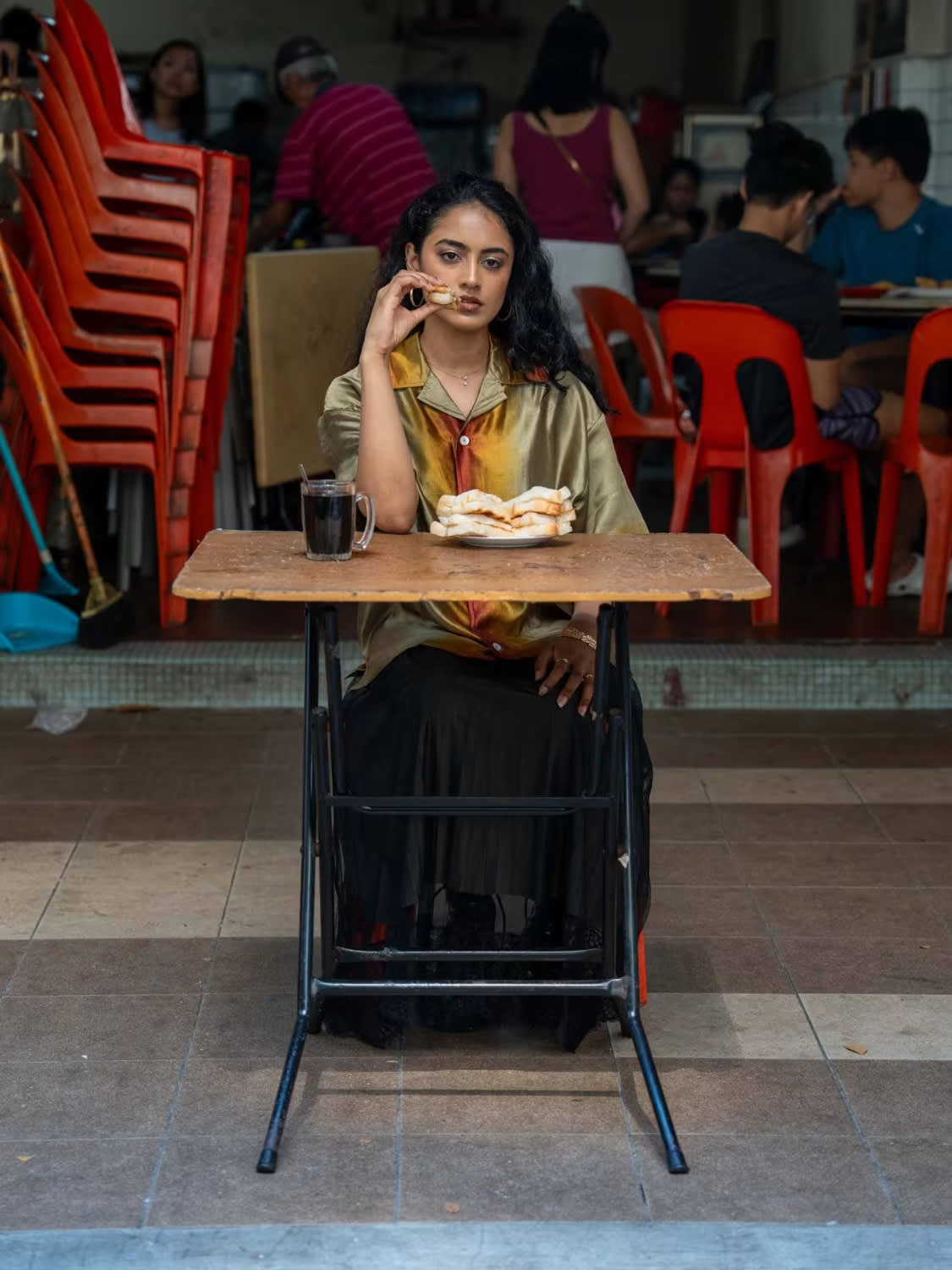
There's the Kaya Toast shirt, named for its colour palette; Majulah, whose geometric patterns reminded the team of the Singapore flag; and Bandung Rose, with rose-and-milk hues in Tussar silk and a hand-embroidered kantha border.
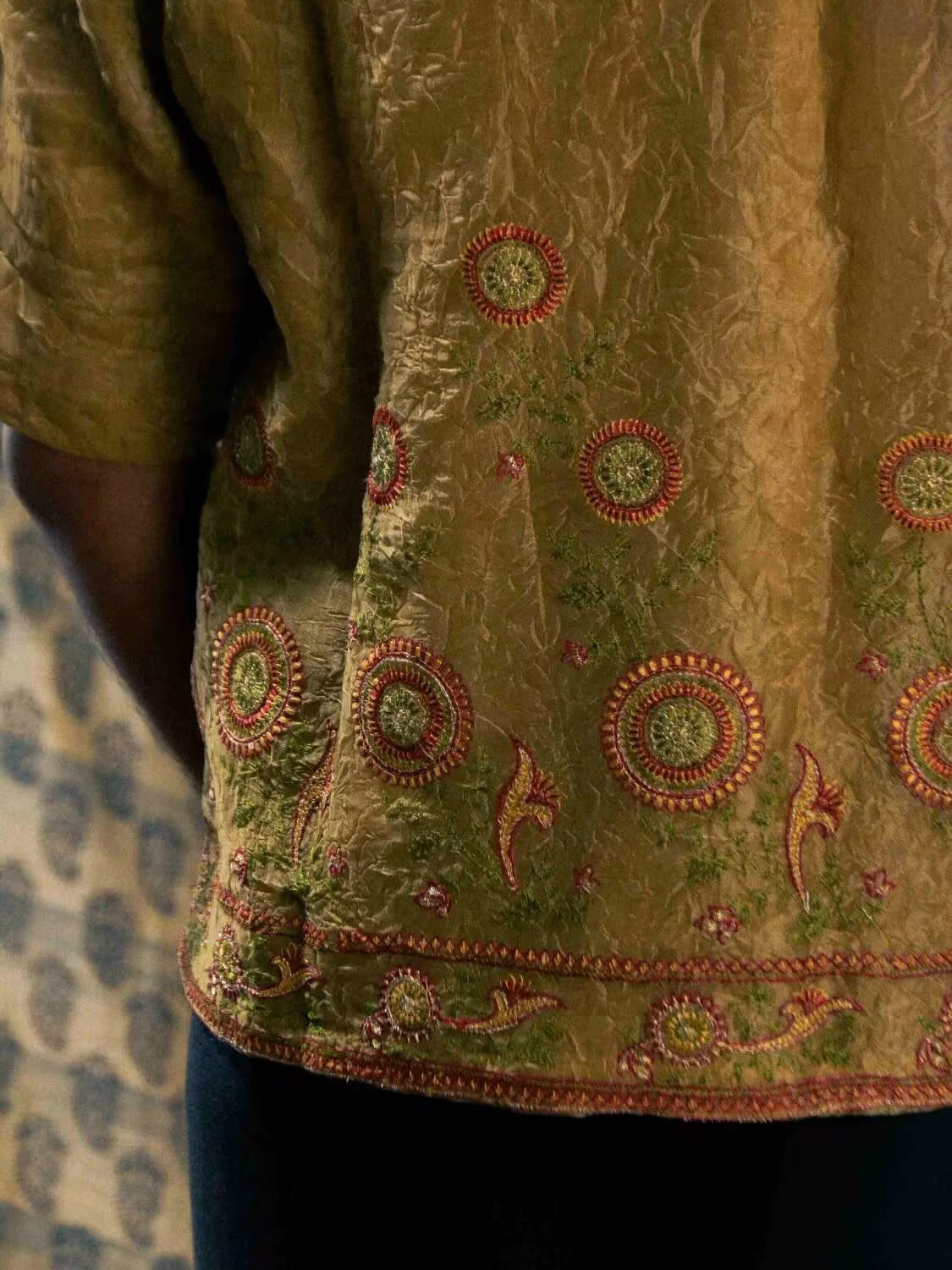
Golden Bay Sands riffs on Marina Bay Sands, using crushed organza – a fabric that once travelled the Silk Route from China to India – with a delicate crinkled texture.
Then there's Wah Taj, named after the catchphrase from India's iconic Taj Mahal Tea advertisements, its gold-and-blue colourway recalling packaging familiar to generations of Indian households.
The same Singapore-meets-India idea shaped the debut photoshoot.
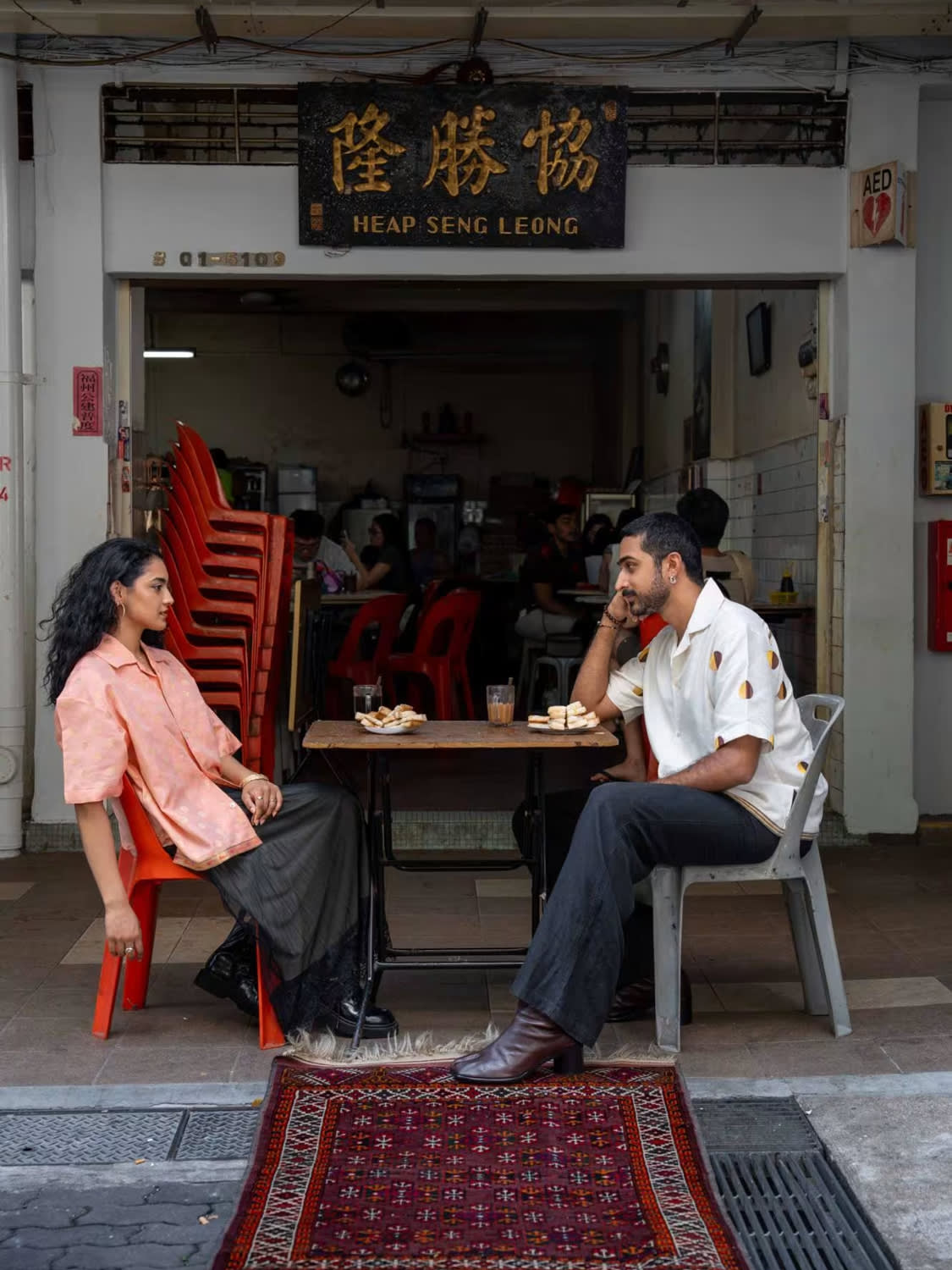
Rather than the more obvious backdrop of Little India, saris were draped across Marina Barrage against the CBD skyline. Models posed at Lau Pa Sat and heritage coffeeshop Heap Seng Leong.
The shoot was a community affair too. The two photographers were friends – a ship trader and a doctor – while the models were a mix of friends and professionals.

LEARNING AS THEY GO
It's early days, but the trio have been surprised by who has responded to the clothes. Most customers are in their early twenties to thirties, and buyers have come from beyond the Indian community.
The process has also forced the founders to learn more about the textiles they're cutting into.
India has dozens of sari traditions, each with its own subcategories. The team works with a master artisan with more than two decades of experience to identify donated pieces. But saris often arrive without their origin stories, so sometimes even that identification remains an educated guess.
"We've always known that different parts of India have different textiles and different stories, but experiencing and feeling them is unique," Kulkarni said.
"Through the sourcing and manufacturing, we learnt so much more."
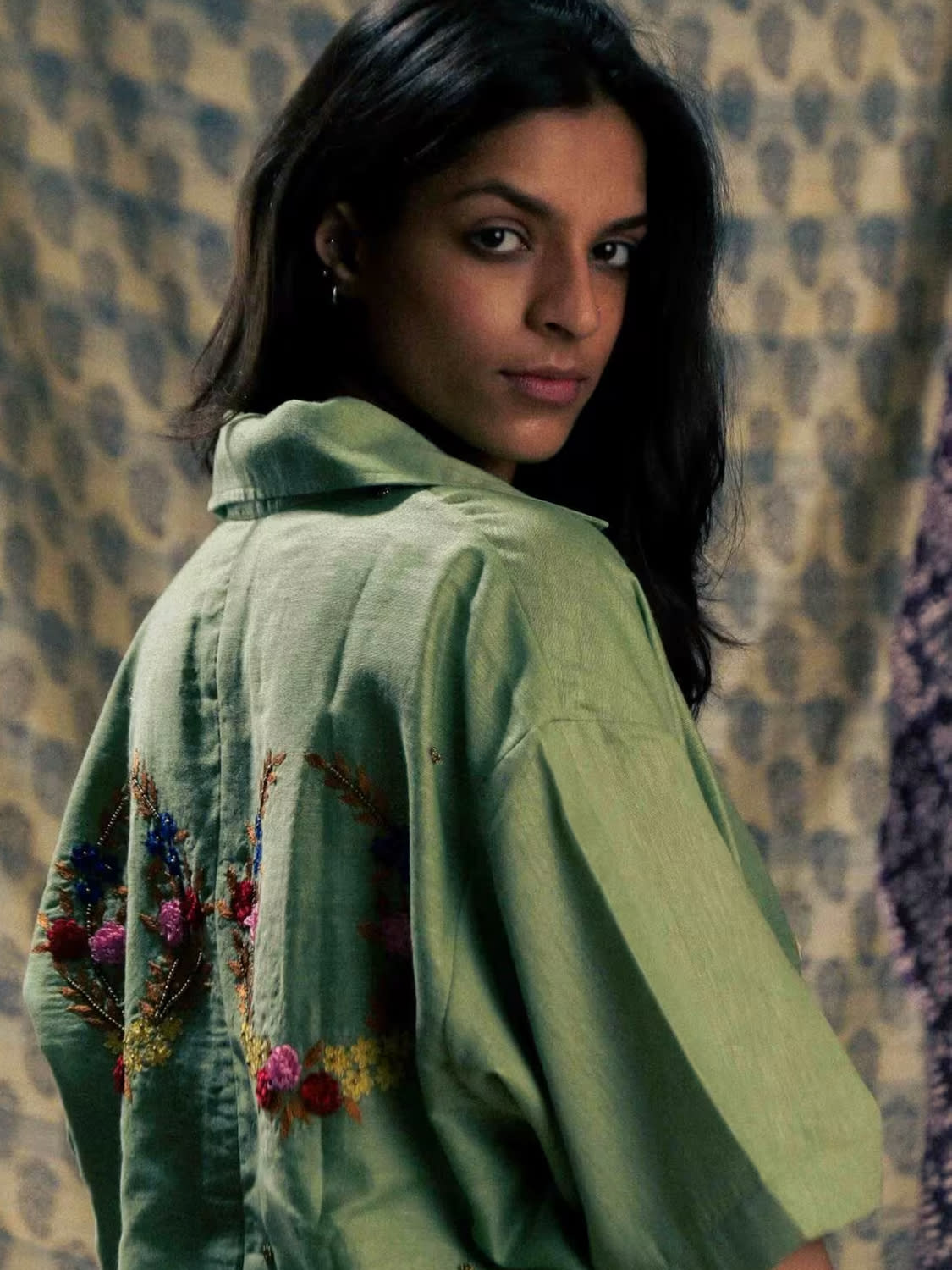
One example is the Jewel Tone Weave shirt, made from Jamdani, a centuries-old Bengal weave in which motifs are woven directly into the fabric.
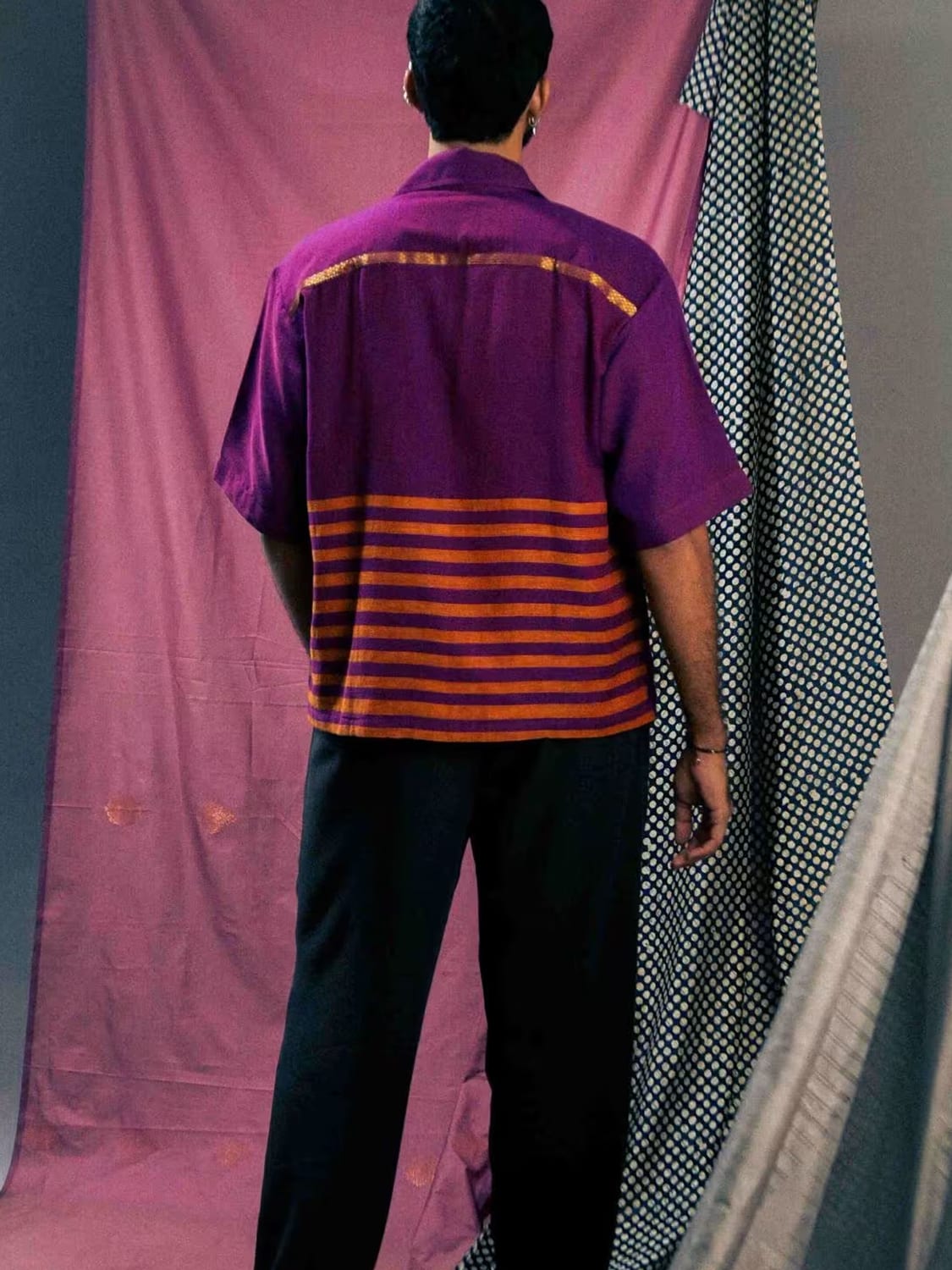
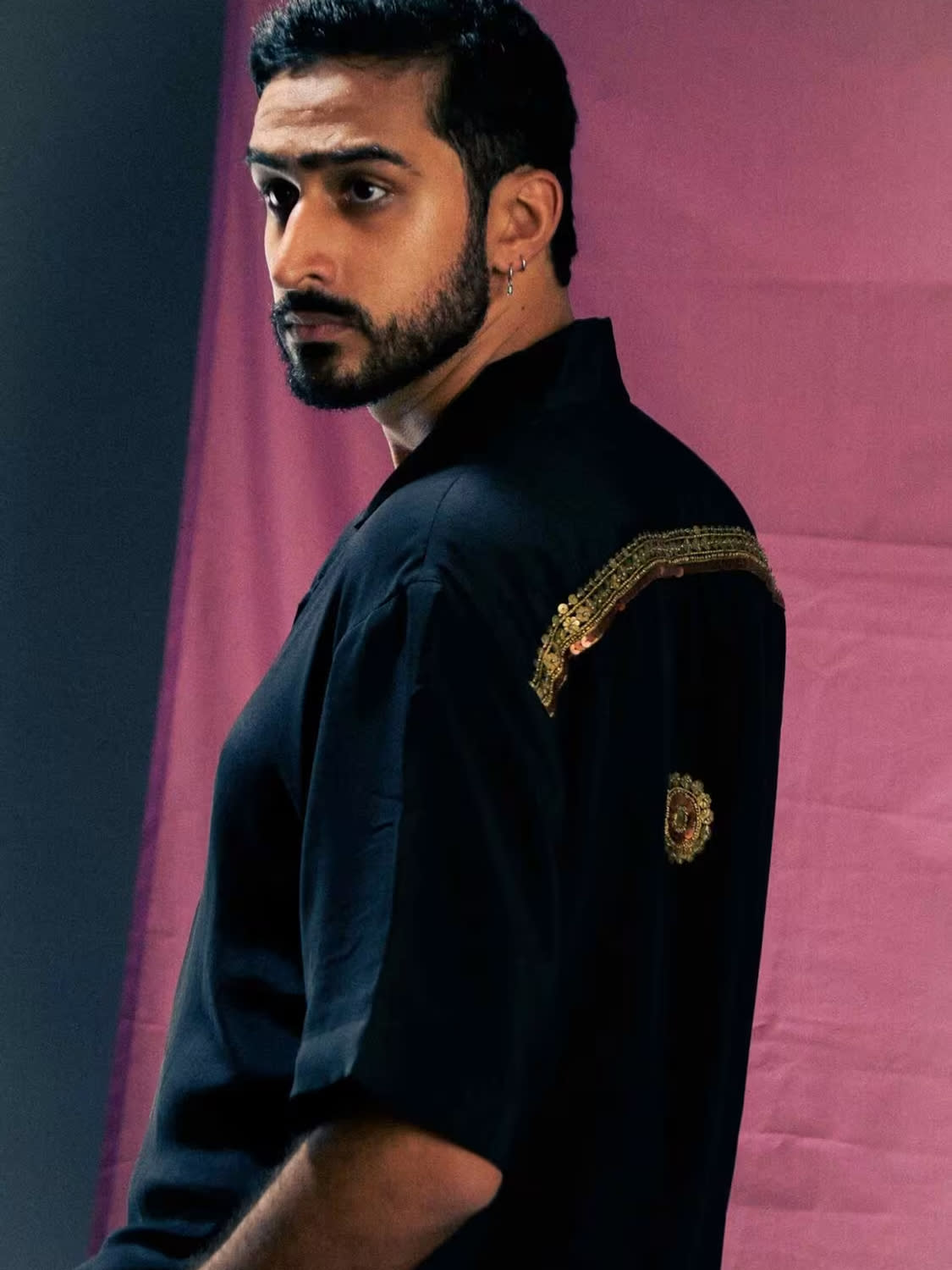
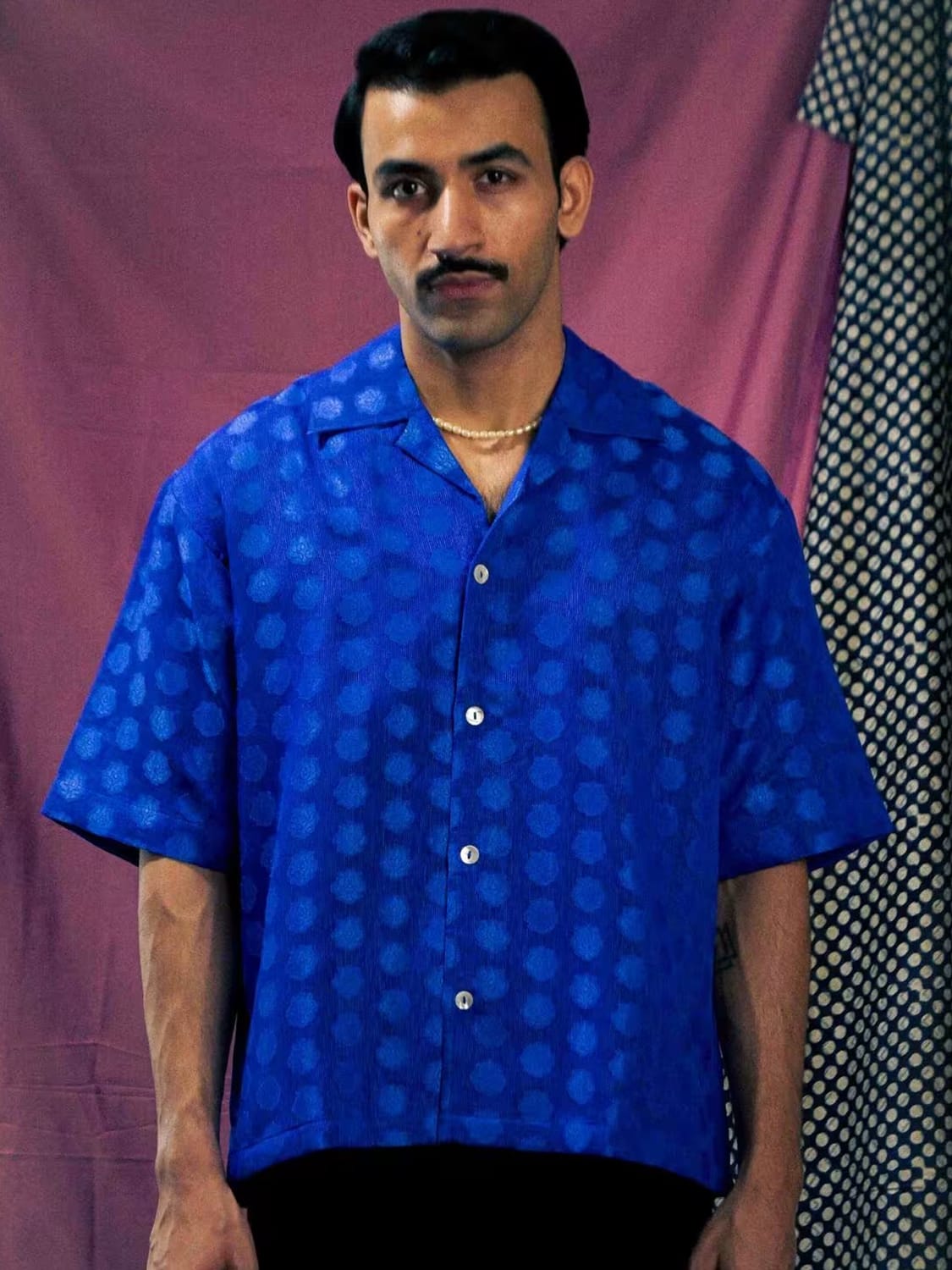
For Kejriwal, a sustainability analyst based in Melbourne, understanding those regional differences is part of the point.
"Nowadays, culture tends to be very homogenous, but a place like India has so much diversity in the clothing people wear, and the fabrics produced, by region and weather," he said.
The founders pass some of that learning on through each garment's tag, which details its fabric, where in India the sari came from, its motifs or embroidery, and even the tailor who made the shirt.
For Sharma, it's a small way of putting a human face to something fast fashion often makes anonymous.
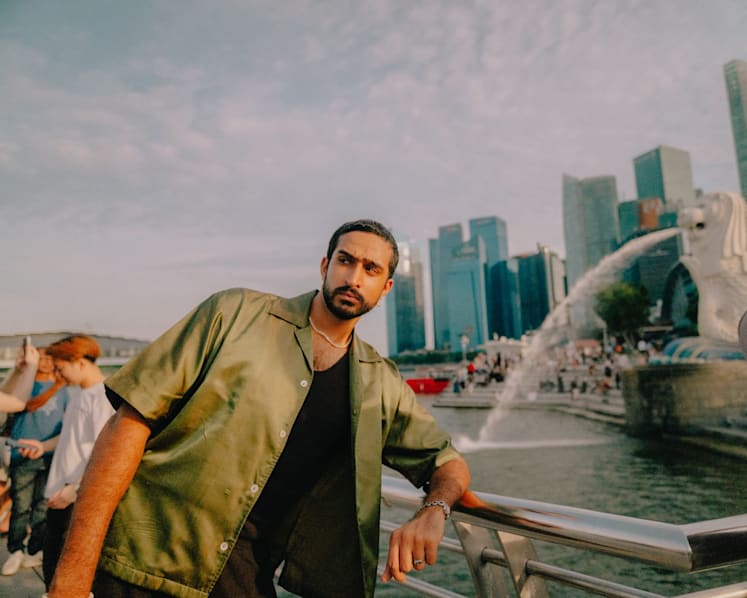
For now, revenue from the first collection is being channelled into the second, with the trio hoping to build the business towards profitability. They're also planning a parallel photoshoot in India by the end of the year.
Sharma wants to dig deeper into India's textile history, including disappearing traditions such as the vintage stamp and matchbox art once used to package and sell textiles, as well as future drops exploring different Indian fabrics, fibres and techniques.
But at The Dori's launch, he got a glimpse of what the project might mean beyond the clothes.
He found himself speaking to customers from different racial backgrounds, watching them handle the saris and ask about the fabrics and styles.
"It felt extremely heartwarming," he said. "Being able to share it with people, and seeing them receive it so well, makes me very proud of my heritage."
For Sharma, modernising cultural clothing doesn't have to mean losing what came before.
"When it comes to cultural clothing, respect and understanding where it's coming from is the most important thing. But there's no issue with modernising it in a way that lets the newer generation enjoy and appreciate each other's culture – a quintessential part of the social fabric of Singapore."