A quick guide to Hanoi: Street-side pho, egg coffee and a luxe stay in the Old Quarter
Explore Hanoi’s Old Quarter, from northern-styled beef pho to decadent egg coffee, sticky rice and mung bean for breakfast, hidden architectural grand dames and the latest luxury hotel to call it home.
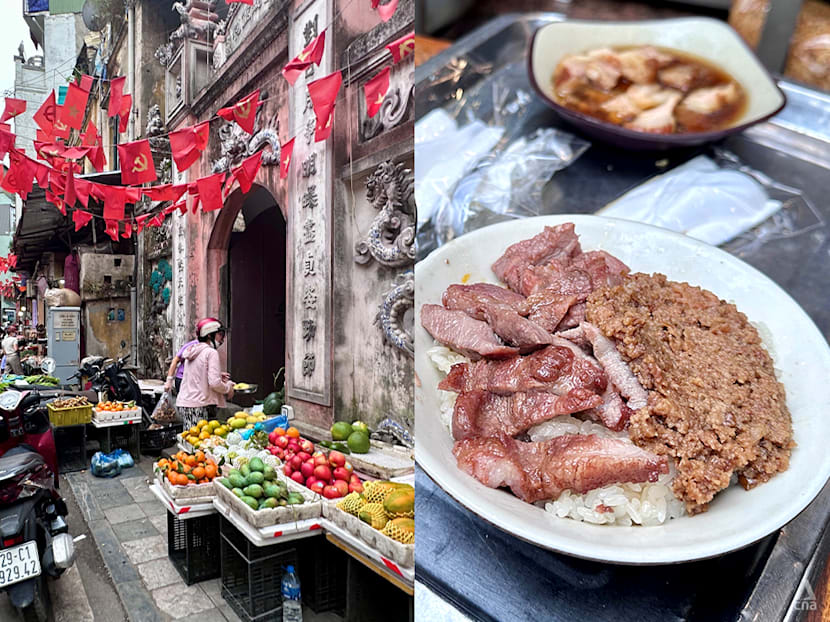
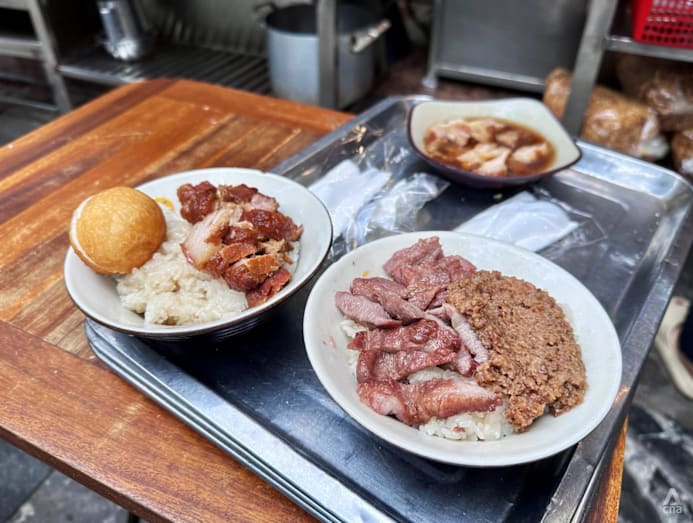
Innovative use of street spaces to sell produce (left) and xoi xeo, a sticky rice and mung bean dish topped with choices of meat. (Photos: CNA/Khoo Bee Khim)

This audio is generated by an AI tool.


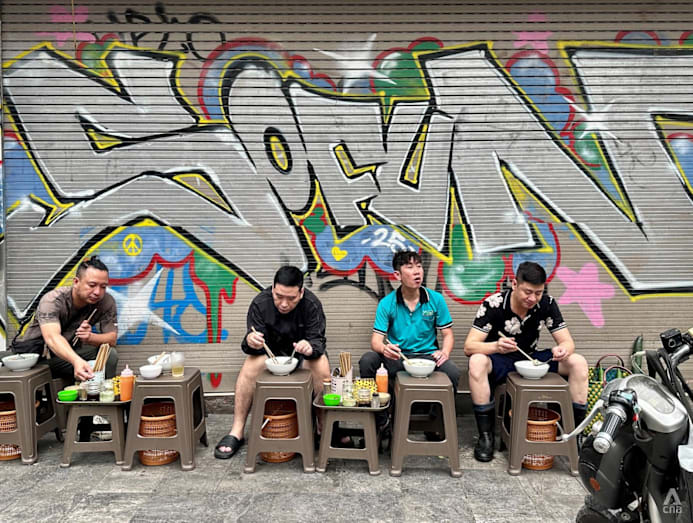
Hanoi is a city of contrasts. You'll encounter seafood vendors shifting tubs of slithering eels across the street; and just as likely, you might see a pour-over made from locally grown coffee beans right next door. In an alley, goatee-sporting creative types slurp pho on low tables, sharing condiments with housewives catching a quick break.
I was in Vietnam’s capital at the invitation of Fairmont Hanoi, located just minutes from Hoan Kiem Lake, to attend its grand opening in late March. It was a quick stop, not enough time to leisurely sip Vietnamese drip coffee a hair’s width away from a passing train on that Instagram-famous train street.
At least I didn’t have to risk life and limb to find good pho. Furthermore, with the city’s urban restructuring underway, exploring the Old Quarter, Hanoi’s cultural heart, on foot is about to get more pleasant.
“A lot of office buildings were no longer needed and are being removed to create more public spaces,” said Do Hanh Dung, the hotel’s senior sales manager. “I live in this area and I like that there is going to be more space, particularly more greenery, for everyone to enjoy.”
The new Fairmont Hanoi is part of this changing scene. Each of its 241 rooms are spacious, elegantly designed with touches of Hanoi art, and supplied with Le Labo toiletries.
Outside, the 36 historical streets of the Old Quarter beckons, each named for the specific goods traded, such as silk, silver or bamboo. You’ll still find these old-school shops but these days, they’re also likely to sell modern items such as SIM cards and souvenirs.
Woven into this street tapestry are lanes, alleyways and even residential courtyards that come alive with vendors selling farm-fresh watercress and dragonfruit, mulberry juice, live snails, and jellyfish – an essential ingredient for a seasonal chilled salad in Hanoi.
Occasionally, you’d come across a boutique inn, an artisan cafe or a hipster florist. It was all very intriguing, and I couldn’t wait to take a bite.
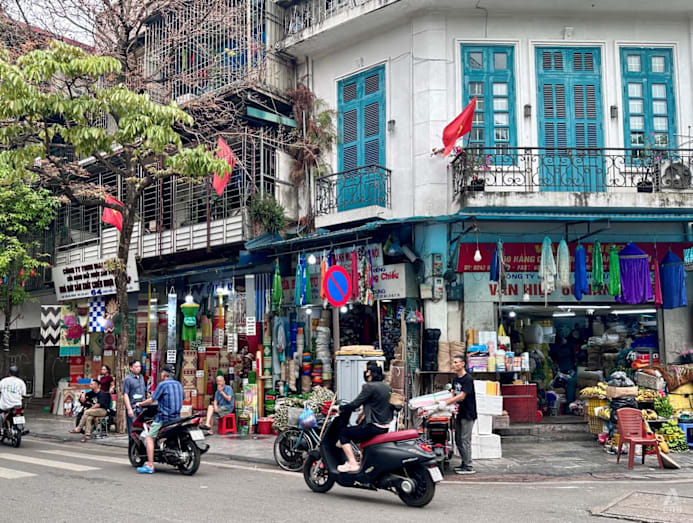
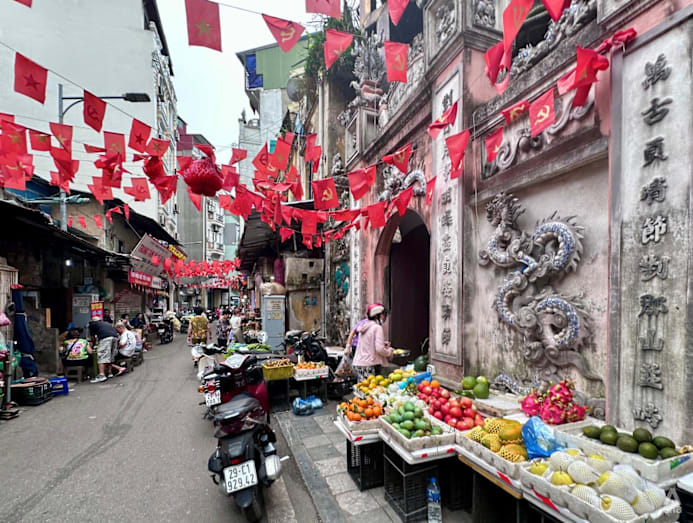
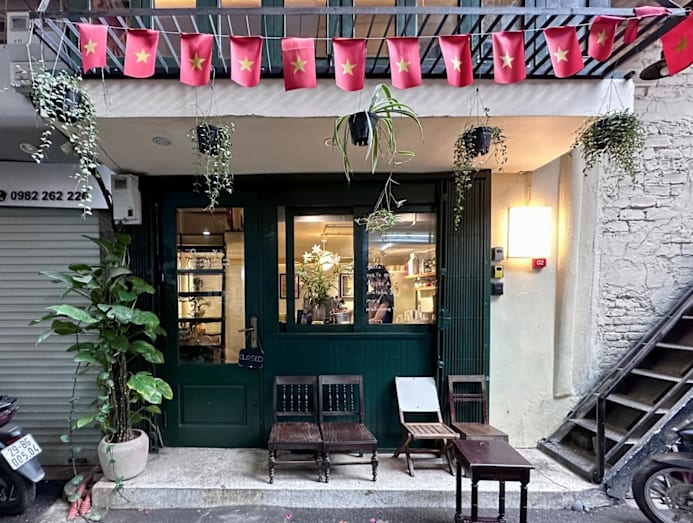
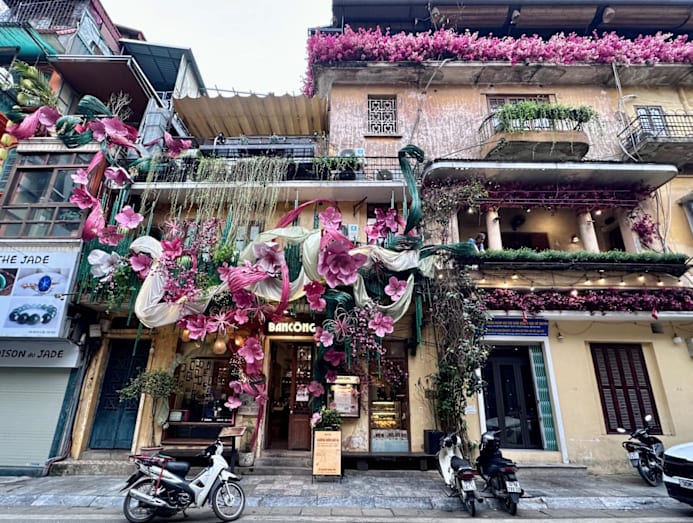
SLURP HANOI-STYLED PHO
I quickly realised that everyone has an opinion of where to go for “the best pho”. This is, after all, the birthplace of Vietnam’s iconic dish, which is often eaten as the first meal of the day by workers and bleary-eyed school children on low stools in alleyways.
My bowl at Pho Suong arrived with silky rice noodles; pink, tender beef slices; and topped with chopped spring onion and a squeeze of lime in a broth clear enough to see your future in. And mine was saying I’d never have pho this good again back home.
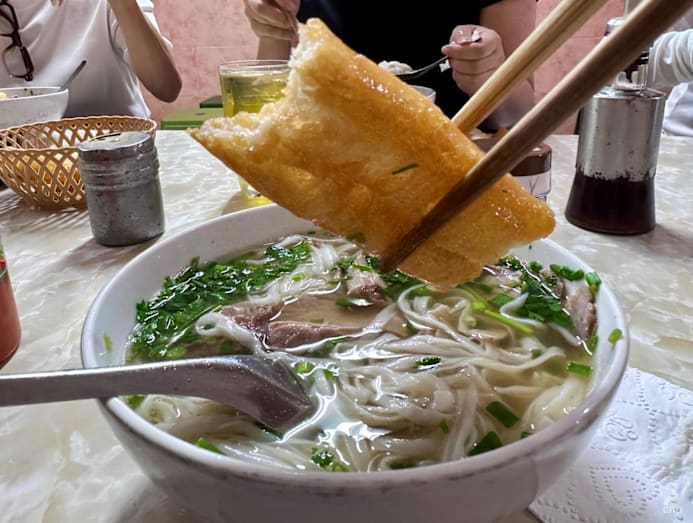
Unlike the south’s sugar-sweetened, herb-ladened version accented with hoisin sauce, the OG in Hanoi looks clear, honest, unassuming – like the heroine of a Jane Austen novel. But a sip of her deep, umami-packed ambrosia, dear gentle readers, and you’ll be in seventh heaven.
“That’s what the name ‘suong’ (with a tilde) means: extreme happiness,” said Tran Thu Giang, Fairmont Hanoi’s director of marketing and communications, who had brought me to this pho nirvana. Even if you can’t find this exact shop, she said, you can’t be very wrong whenever you spot a crowd.
Hanoians love dunking short dough fritters into the broth to enjoy another layer of aroma and texture. But you can do even better. “Try with garlic,” said Tran, sliding a jar filled with peeled garlic cloves and vinegar across the foldable table. Instant fireworks for the taste buds.
If you’re on a protein-loading mission, say “cho toi them thit bo” to ask for more beef – that was what the hotel's personal trainer “Bean” told me. I would recommend running it through a translation app to get your intonation right first. Like Mandarin, the different tones in Vietnamese can mean different things; “pho”, for instance, can mean street or rice noodles with different pitches.
“EAT” EGG COFFEE
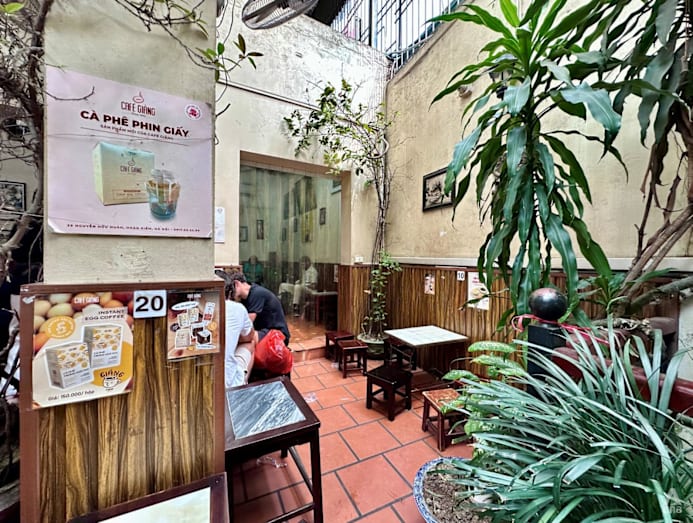
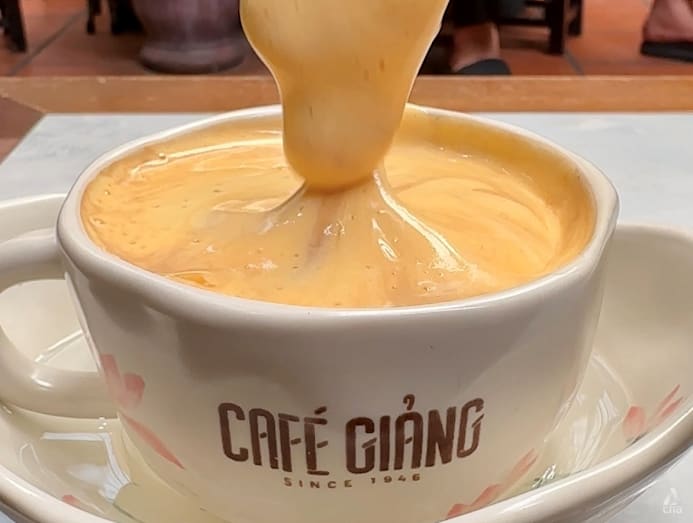
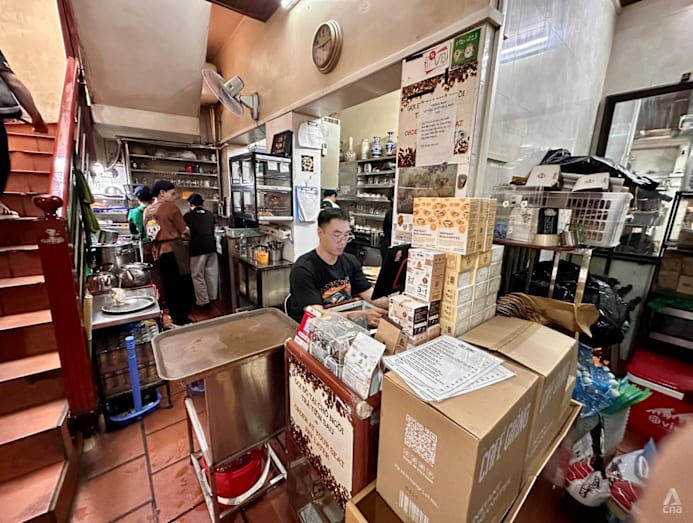
Eggs and coffee, to me, make the quintessential start to the day. So, you can imagine my excitement at Tran’s recommendation of Cafe Giang, the birthplace of Vietnamese egg coffee less than 10 minutes away from the hotel.
The drink owes its fortuitous origins to a time of war in 1946, when milk was scarce but the demand for frothy cappuccinos was high. Nguyen Van Giang, a bartender working at the then Metropole Hanoi Hotel, came up with an idea: whip egg yolks with flour, sugar and spices to create a luscious egg cream.
There are three Cafe Giang outlets in Hanoi but the one at 39 Nguyen Huu Huan, in my opinion, has the most character.
Once you see the cafe’s sign, enter the long, dark alley to reach the shophouse. I’m not in the business of encouraging reckless behaviour when overseas but trust me on this one. I prefer the seats on the second floor, next to the memorabilia-covered staircase; it’s got great light and it gives you a good vantage point.
My cup of egg coffee came in a little hot-water bath to keep it warm (you can also order the iced version). So thick was the egg cream that I could barely stir up the layer of strong robusta coffee at the bottom. Needless to say, you can’t actually sip it; it’s more of a dessert than a drink.
Not a fan of eggs? Order iced brown coffee (ca phe nau) instead, which is made with condensed milk and brown sugar. You can ask to have it less sweet if that sounds like too much sugar for you.
PURSUE A TASTY STICKY END
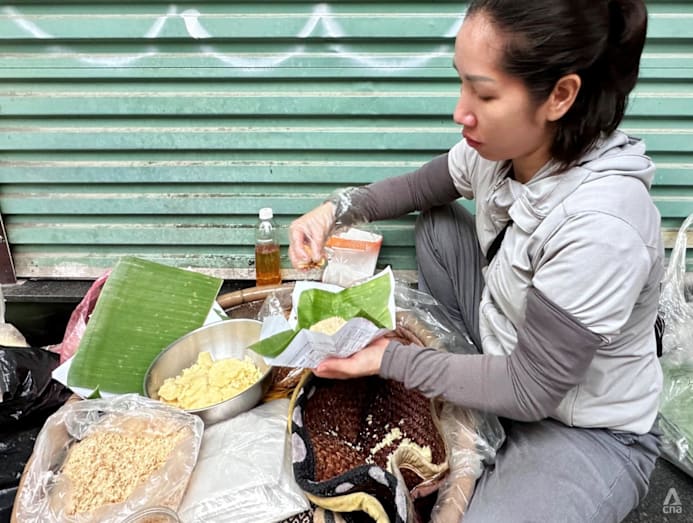
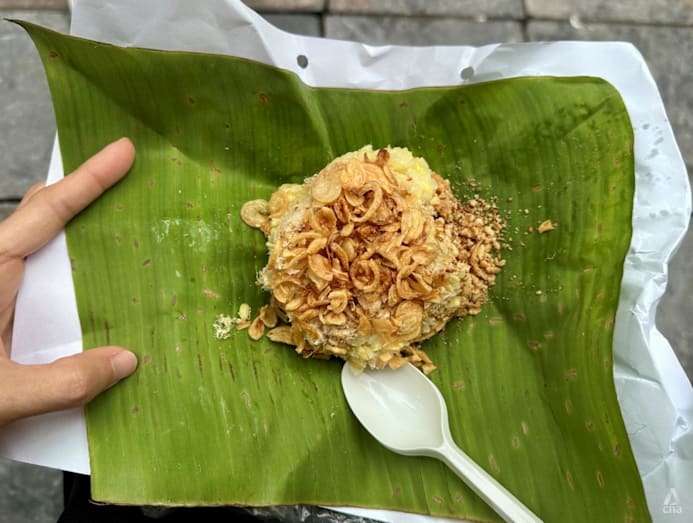
When a local person offers to take you to breakfast, you say “yes” – even if that meant meeting up at 7am. But to Thuy Hang, Vietnam News’ editor, this was a rather late start for Hanoians. “Many people make trips of more than an hour every morning from the outskirts of the city,” she said. “By 7.30am, they would have finished their breakfast in time to make their way to work or school.”
Good thing we were still able to score some xoi xeo (say soy siao). Like how we eat nasi lemak for breakfast, the locals eat this leaf-wrapped, sticky rice dish coloured a pleasing yellow with turmeric and topped with copious amounts of crunchy, fragrant fried shallots; pork floss; a drizzle of pork oil and shavings of savoury mung bean paste.
Thuy got me a portion from a street vendor, who expertly assembled a warm packet from the depths of her large woven basket. I sat on a stoop, as is customary, to tuck in. It was like eating a deconstructed rice dumpling – comforting, texturally wonderful and very filling.
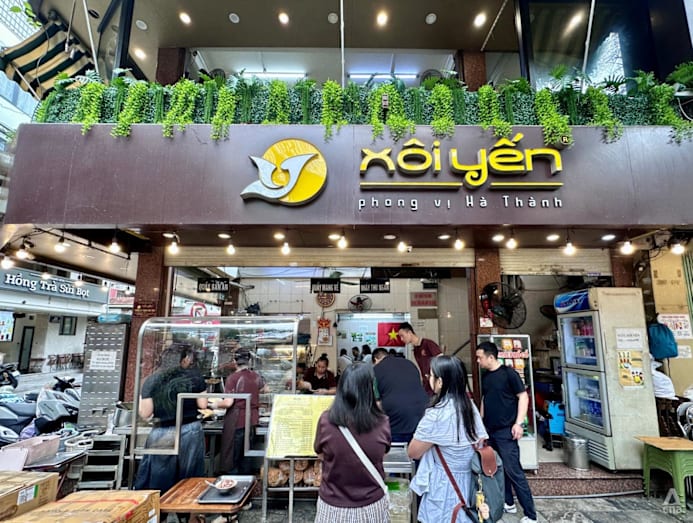
Not to worry if you can’t find a xoi xeo street vendor (they disappear like the morning mist on Hoan Kiem Lake by 8am). Navigating the bustling streets (where I learned about the traffic-stopping power of a held-out hand) brought us to Xoi Yen, a local xoi xeo institution that opens from around 6am to midnight.
Here, the mung bean and glutinous rice are topped with your choice of melt-in-the-mouth stewed pork belly, pork pate, shredded chicken, Chinese sausage (it looked like the lup cheong here) or deep-fried hardboiled eggs, served with a side of pickled cucumber slices. Chope a low table next to the parked scooters or head upstairs if you want a quieter spot to eat.
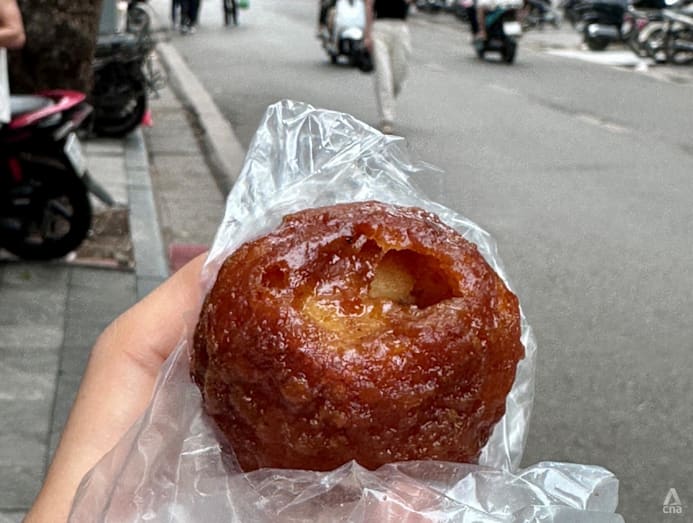
There was yet another sticky rice and mung bean combo to try: banh ran, golden orbs of glutinous rice with a sweet mung bean filling often seen bobbing in large woks of oil on the street. “Get the cane sugar-coated ones,” Thuy suggested. And she was right. The darker-coloured balls offered a smoky, not-too-sweet crunch and chewiness before yielding its creamy centre. I could have inhaled 10 at a go.
DINE LIKE A TRAN DYNASTY KING
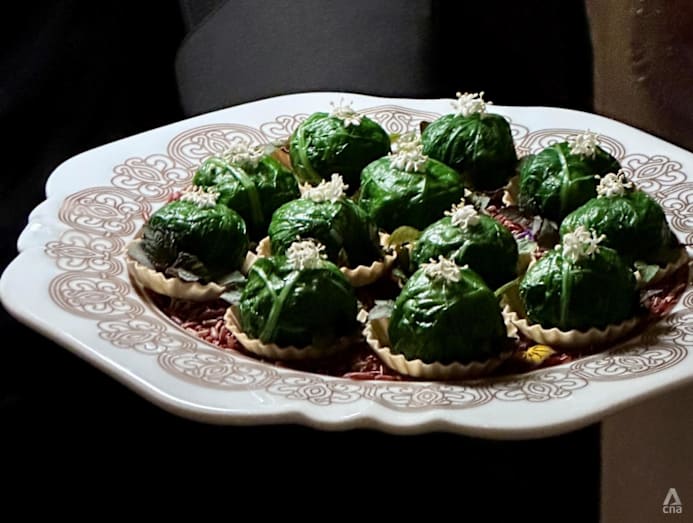
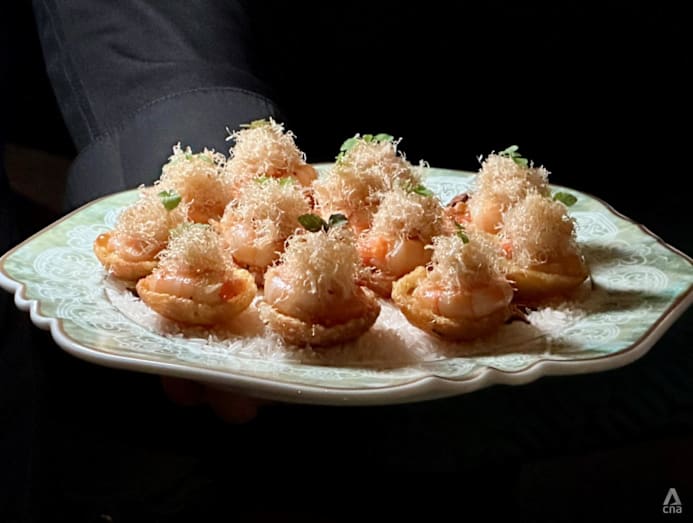
Humble street bites aside, the Old Quarter also has a new fine-dining destination: a brand-new, progressive-Vietnamese restaurant in Fairmont Hanoi called Tran Dynasty. It is so new that when I popped in for a sneak preview, they were still putting the finishing touches to the interior.
But there was enough star power to keep diners intrigued, namely the helming by celebrity chef Luke Nguyen and the stellar Vietnamese ingredients he plans to spotlight in his canape-led menu.
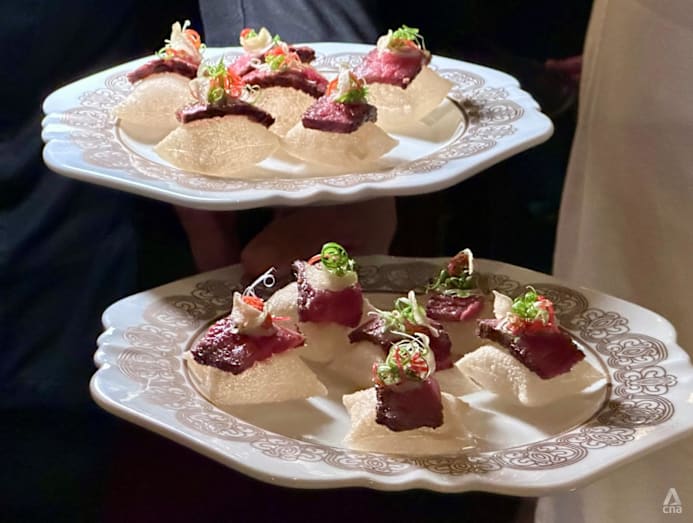
"What you see here is a sauce made from fermented white soyabean in a small, artisan village in Hanoi called tuong ban," said chef Nguyen, holding a platter of airy puffs. "In French cuisine, you’d find slices of puffed-up, oven-baked potato; here, we use locally made rice noodles as a pillow for the wagyu beef."
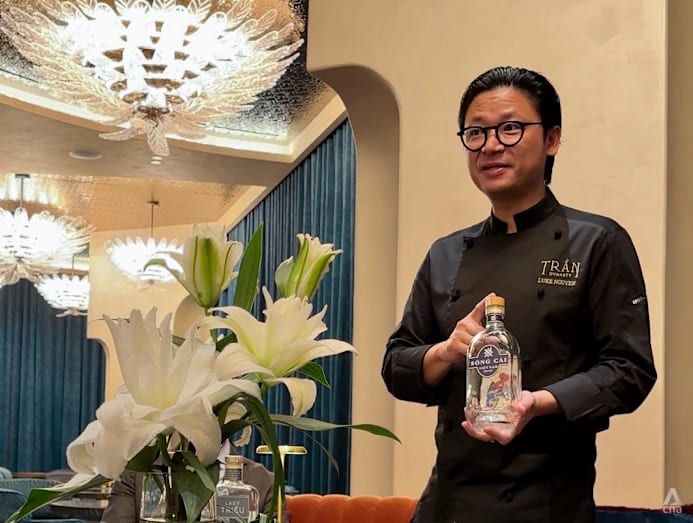
To study the Tran dynasty, a golden age in Vietnamese history, chef Nguyen poured over books and visited a cultural museum to learn about the cuisine and even the ceramics of that era.
He'd also spent time with the Red Dzao ethnic minorities to discover unusual seasonal ingredients. “There was this artichoke, song la (phonetically), that looks like the Michelin Man. It’s found deep in the ground, almost like a truffle. It’s on my menu for now because it’s seasonal and we’ll be serving it with tomahawk pork. It’s bitter-sweet and has a good crunch.”
You can expect to feast like a Tran dynasty king, who used to dine on small bites of 40 to 50 dishes every single night, according to chef Nguyen. "To ensure he wasn't getting poisoned, the king would eye the preparation and cooking. So we’re going to bring that to the table. We’re going to do some table-side cooking and preparation. It is premium dining but I want to make it fun as well."
VISIT A FRENCH GRAND DAME
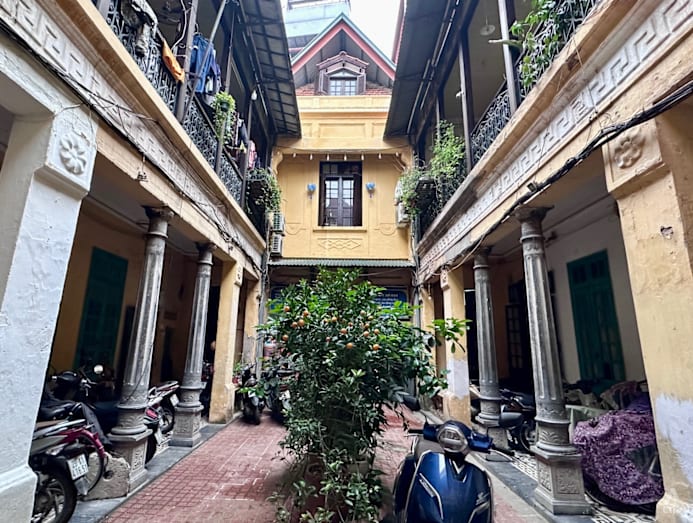
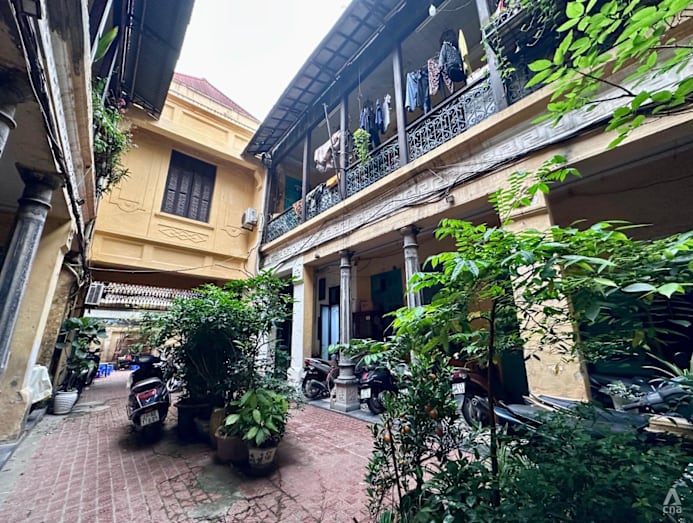
Some of the city’s architectural grand dames hide from plain sight. And sometimes, behind a pho shop, like the charming French-styled house on 44 Hang Be Street. It is so well known that movie makers and musicians have featured it in numerous Vietnamese movies and music videos.
If not for Thuy, I would never have thought of venturing down an alley (yes, another seemingly dubious undertaking) to meet this icon of Hanoi. It led me to a beautifully lit rustic courtyard framed with rooms and four stone pillars carved with peach, bamboo, chrysanthemum and apricot trees – symbols to bring luck to the denizens.
This 800 sqm house was designed by a French architect and built in 1926 for a rich Vietnamese merchant family. Typical of French houses of that time, it has two floors, intricate wrought-iron banisters, and distinctive yellow walls and green windows.
“It later became a primary school,” Thuy said, pointing out a blue sign that hangs on the inner end of the courtyard. The school no longer operates but interestingly, the descendants of the original family are said to still occupy a small part of the house, while the rest of the rooms are leased out.
WELLNESS IN THE OLD QUARTER
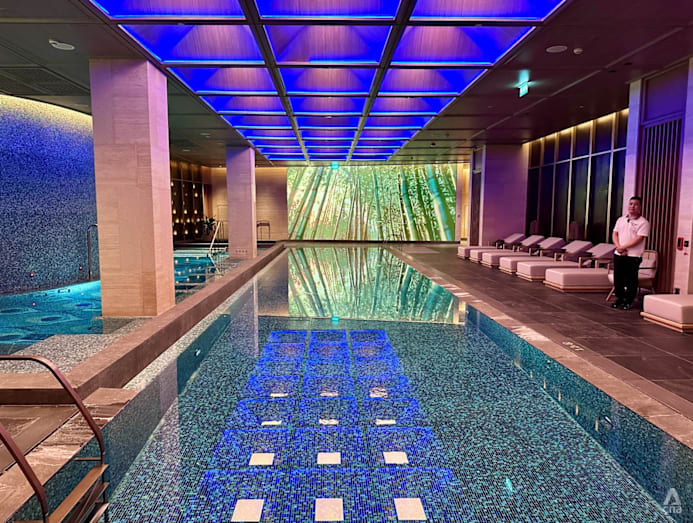
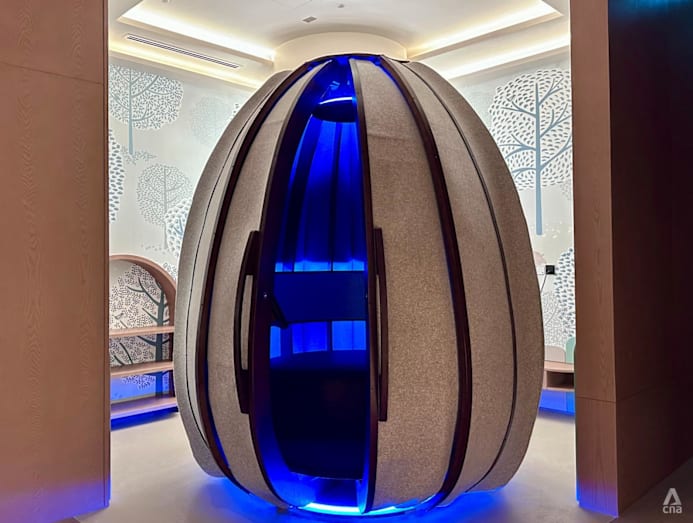
Exploring new sights, sounds and tastes can immensely nourish the soul. But it can also be taxing on the body – which makes Fairmont Hanoi’s Cirua (say see-wah) Spa, Fitness & Wellness Club something to look forward to after a day of exploration.
The impressively expansive retreat – all 38,000 sq ft of it – houses not just private spa treatment rooms, a salon, a gym stocked with Techno Gym equipment and a beautifully lit indoor lap pool, it also has three plunge pools of differing temperatures as well as a Vichy room that delivers a full-body water massage to anyone who doesn’t mind getting wet.
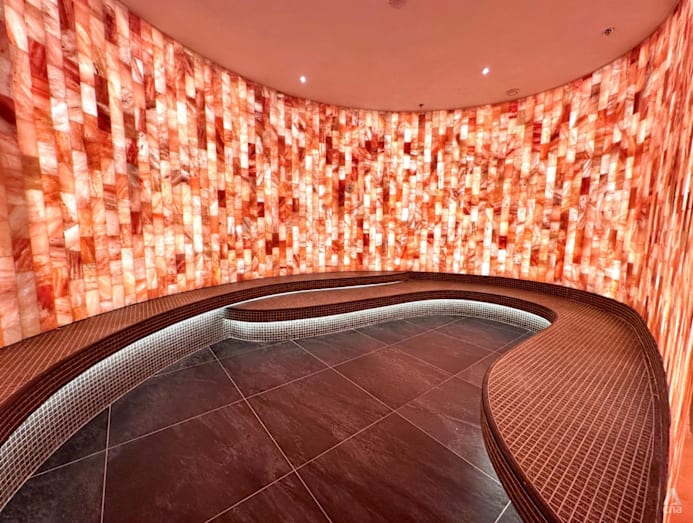
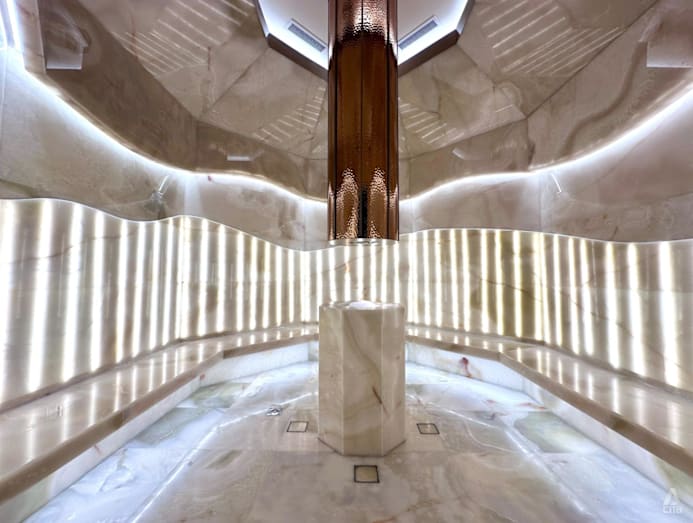
If heat is more of your thing, take your pick from the Himalayan salt sauna, traditional dry heat cabin or steam room to improve blood circulation. Then, cool down in the marble-lined ice room. There are also medication pods to let your mind catch a moment of calm.
CNA Lifestyle was in Hanoi at the invitation of Fairmont Hanoi.