We went trekking in the Himalayas with the kids – here’s how our family adventure in Nepal went
What’s it like to explore the Himalayas with your family on a holiday – including two young girls? This writer went on a five-day trek.
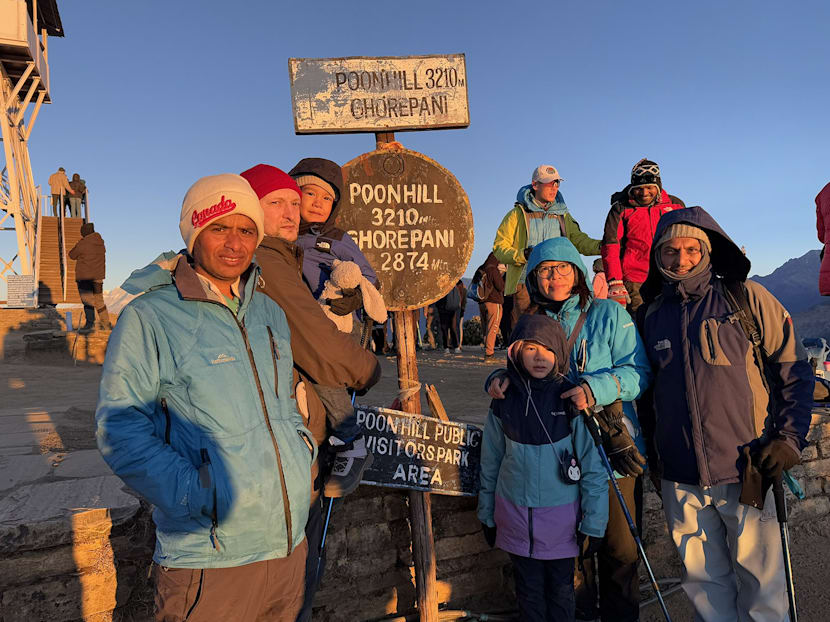
The writer (second from right) with her family and porters during their Nepal adventure. (Photo: Soh Wee Ling)

This audio is generated by an AI tool.
After a whole day of plane travel, I found myself helping a Nepali traveller remove his gold necklace for security checks just before exiting Tribhuvan International Airport. It wasn’t how I imagined our adventure would unfold but it was nice to have a small moment of human connection upon landing amidst the chaos.
In December of last year, on a whim enabled by affordable off-season flight tickets, we headed to Nepal with our children – Elna, eight, and Llucia, four – on their first trek. There’s nowhere better to develop a love for the mountains than in the country that has eight of the world’s 14 highest peaks.
My plan in Nepal was simple – visit the Gurkha Memorial Museum in Pokhara and trek for a few days in the Himalayas. Not too much of an ask with young children, I suppose.
We picked a manageable 3,200m trek in the lower Annapurna region and rented a pony to give the two girls extra motivation. The pony was a splurge and would restrict us to certain routes but it also meant we would be more likely to complete the five-day trek with the girls taking turns riding the pony if they were tired.
OF SERPENTS AND GURKHAS
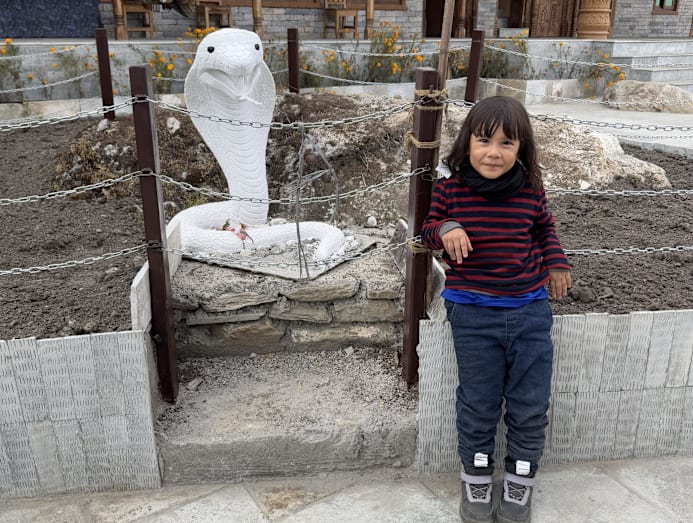
Nepal is where nagas, or serpent deities, reign, pretty much the perfect destination for my snake-obsessed children.
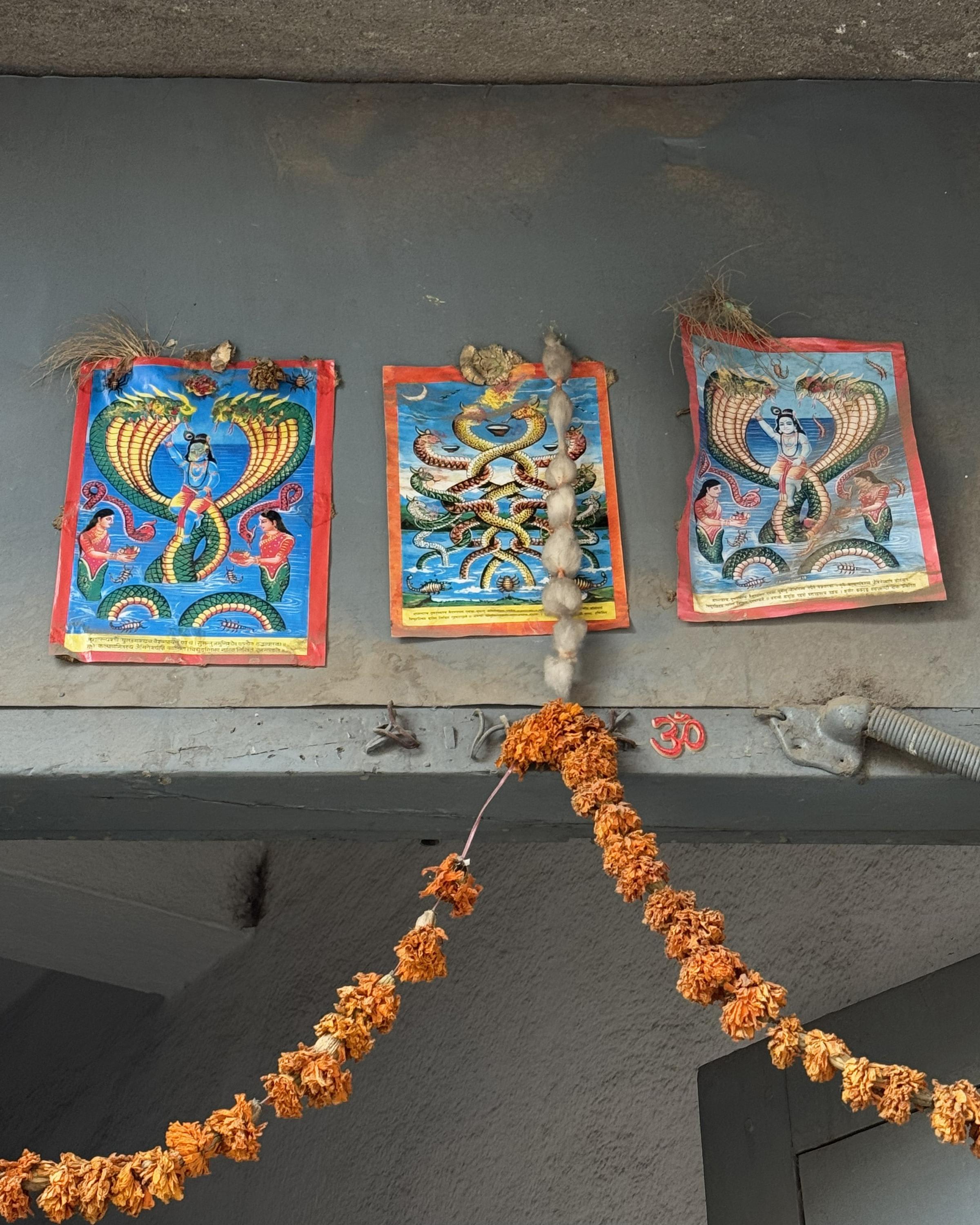
We paused every so often in the streets, the girls spotting five-headed snake statues, serpent details on fountain carvings, and Nag Panchami posters above doorways. An added bonus: Hunting down French street artist Invader’s mosaic artworks in downtown Kathmandu.
The eight-and-a-half-hour bus ride from Kathmandu to Pokhara was mostly uneventful, greased by naps, sketchbooks, books, and lollipops.
My mantra for long bus rides is the same for kids as it is for adults. Never sleep on a rest stop toilet break. Go even if you don’t feel like you need to. I had learnt it the hard way, feeling the weight of a full bladder on an overnight bus ride, unable to sleep and not knowing when the next rest stop will be.
Naturally I was pleased the trek we had chosen brought us to Pokhara, where the Gurkha Memorial Museum was situated. As the main recruitment base for the Brigade of Gurkhas in the British Army and Singapore Police Force's Gurkha Contingent, Pokhara is peppered with private training centres. Like a sign, we drove past a big group of sweaty potential recruits on a run the moment we arrived.
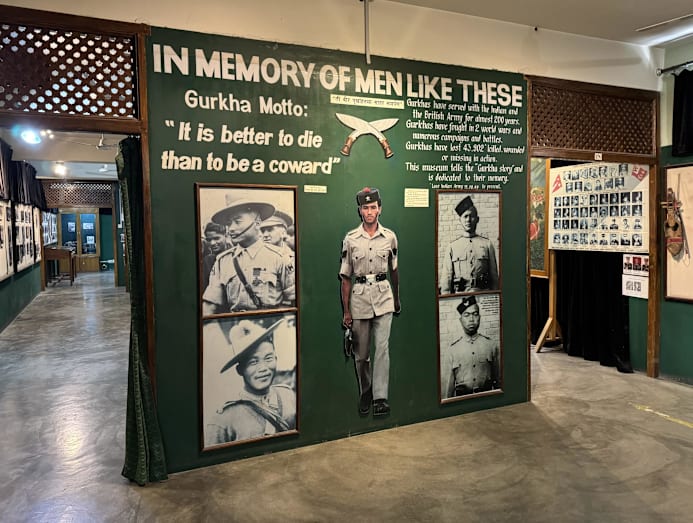
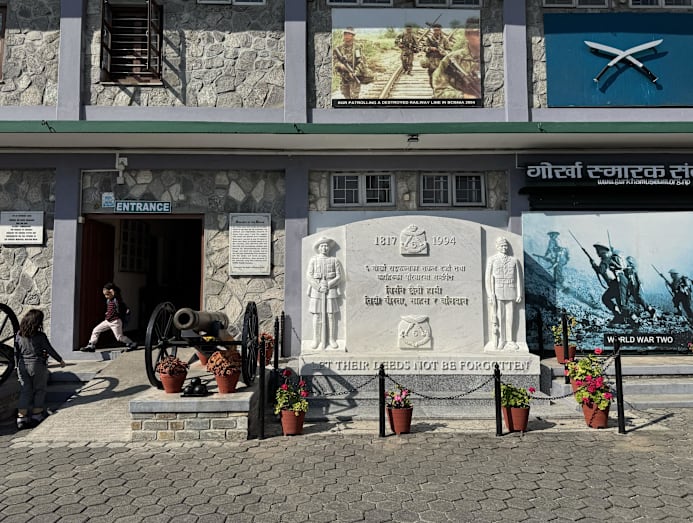
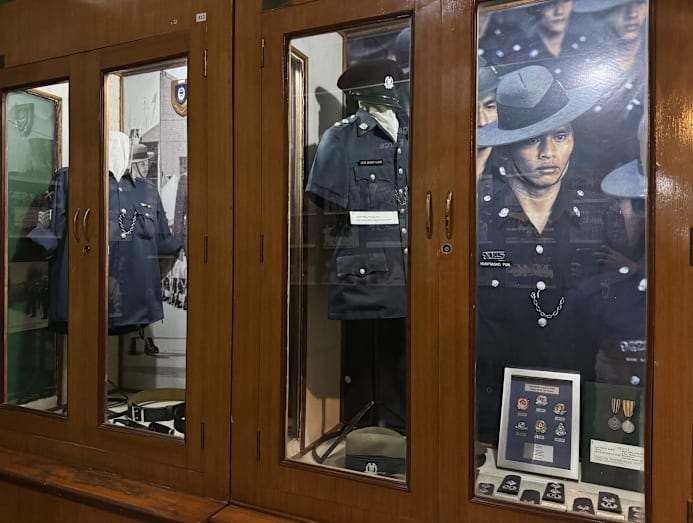
The Gurkha Memorial Museum was barebones but well-maintained, manned by a friendly security guard who doubled as the ticket seller. Three floors of photos and artefacts showcased Gurkha history from 1815 through deployments in two world wars, Afghanistan, and Iraq, extensively covering various units and recipients of the Victoria Cross.
What it lacked in sleek displays, the museum more than made up for in heartfelt descriptions. There was so much to read and see those with lesser interest in military history might get bored. The girls were restless by the time they got to the third floor. Not my husband or I though as that was where the section dedicated to Singapore Police Force’s Gurkha Contingent was.
TREKKING WITH KIDS
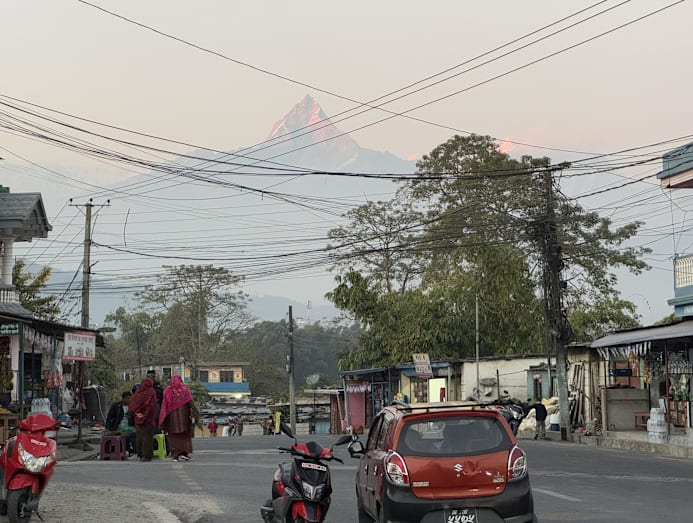
Perhaps more interesting for children about to go on their first teahouse trek would be the International Mountain Museum, a massive space framed against a breathtaking backdrop of sacred peak Machhapuchhre and other snow-capped peaks.
The museum covered a broad array of topics including the world’s highest mountains, geology, fauna, indigenous tribes from Nepal's mountainous regions, and French mountaineer Maurice Herzog who led the successful but ill-fated 1950 expedition to Annapurna I. He and Louis Lachenal became the first climbers in the world to climb a peak over 8,000m and Annapurna I remains the only eight-thousander to date that was summited on first attempt.
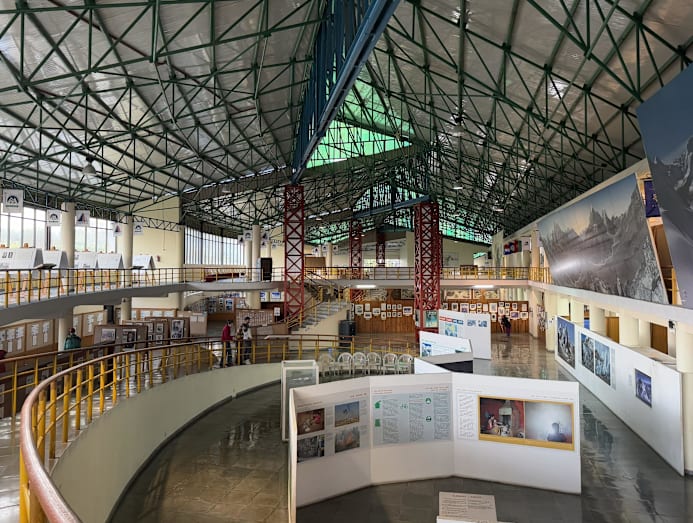
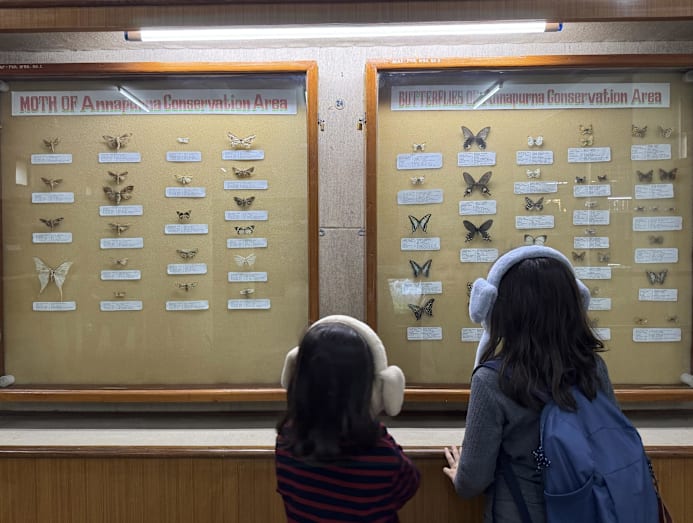
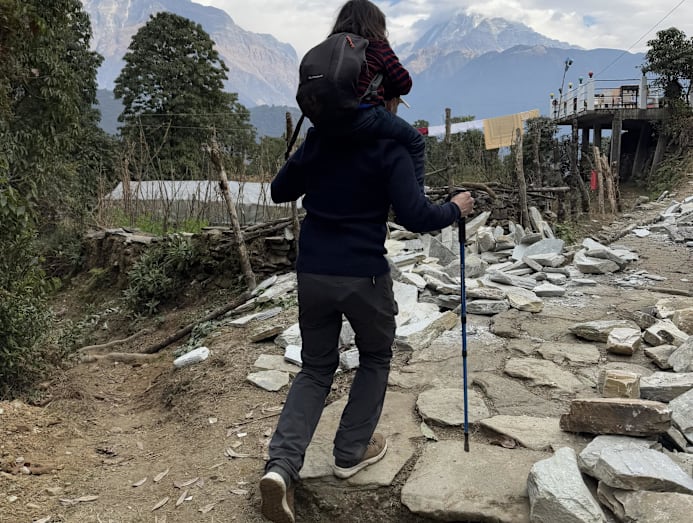
Our trek in the Lower Annapurna range would take us to Ghorepani then Poon Hill before descending through Ghandruk over five days. No camping gear necessary as we would stop at different teahouses every night.
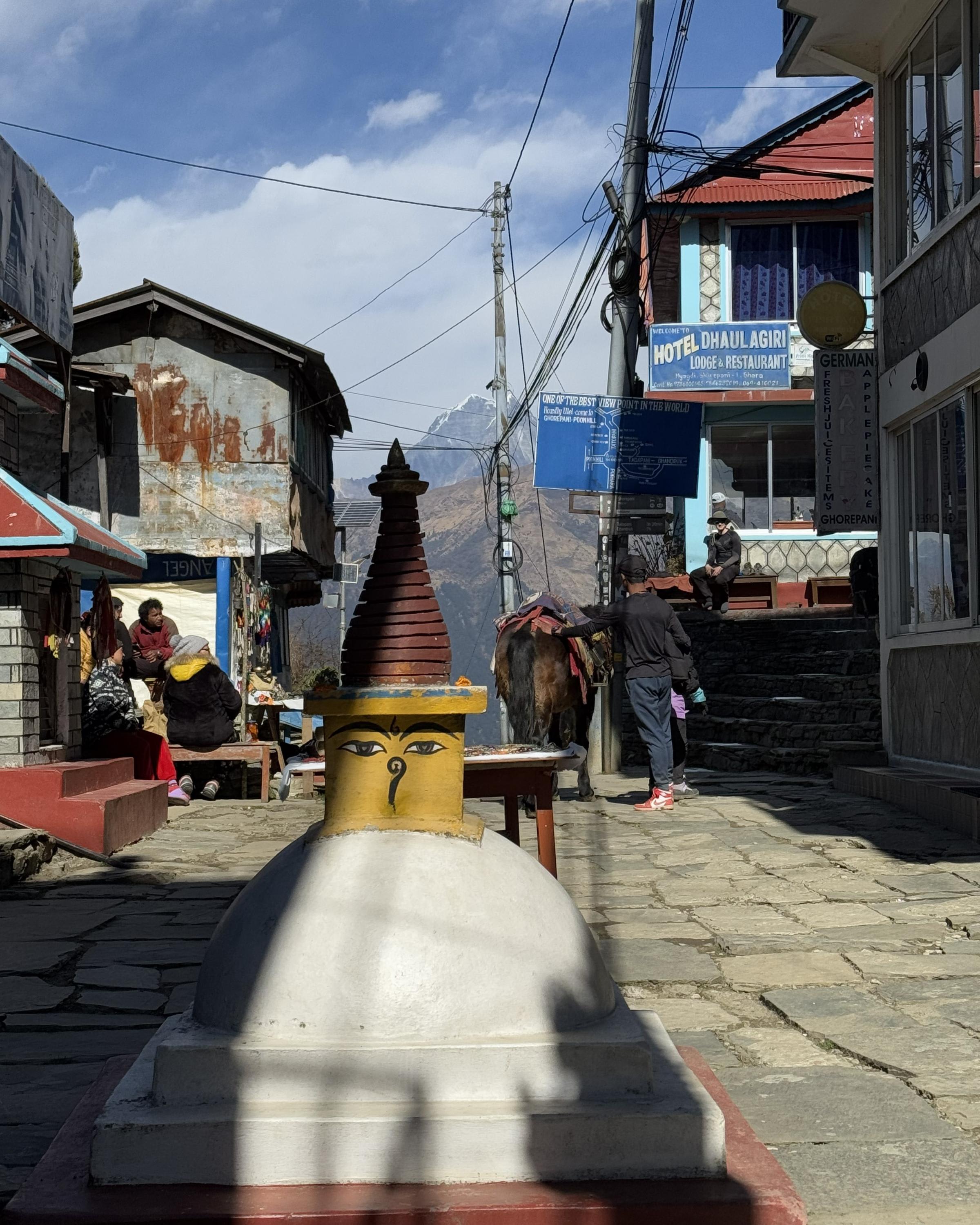
We travelled as light as we could, leaving things we didn’t need in the guesthouse in Pokhara, but also opted for a second porter to help with our backpacks if we needed to carry Llucia.
Not long after starting our trek, our guide told us the steep trail ahead might be too challenging for the pony so he would take the two children on the pony via the road instead. My husband and I could take the trekking trail with one porter if we liked.
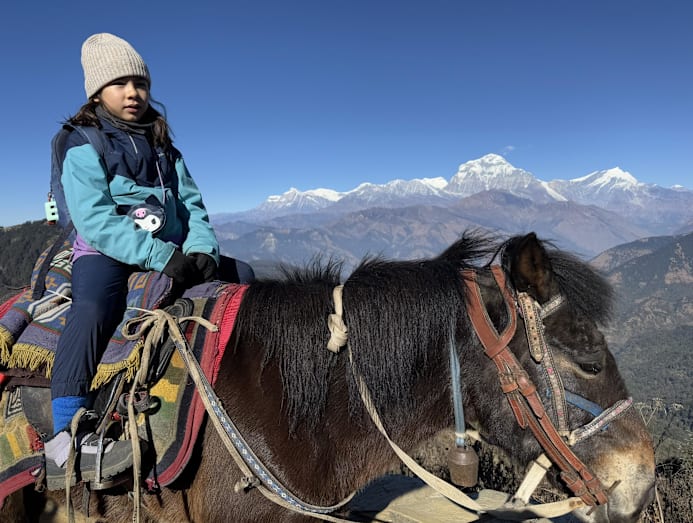
We took up his offer immediately. Leaving our children with strangers for a few hours – perhaps not something many parents would be comfortable with – was a bonus I had not expected. Crisp mountain air, sunlight dappling through foliage, I was kids-free and could fully immerse myself in the quiet labour of exerting physical strength.
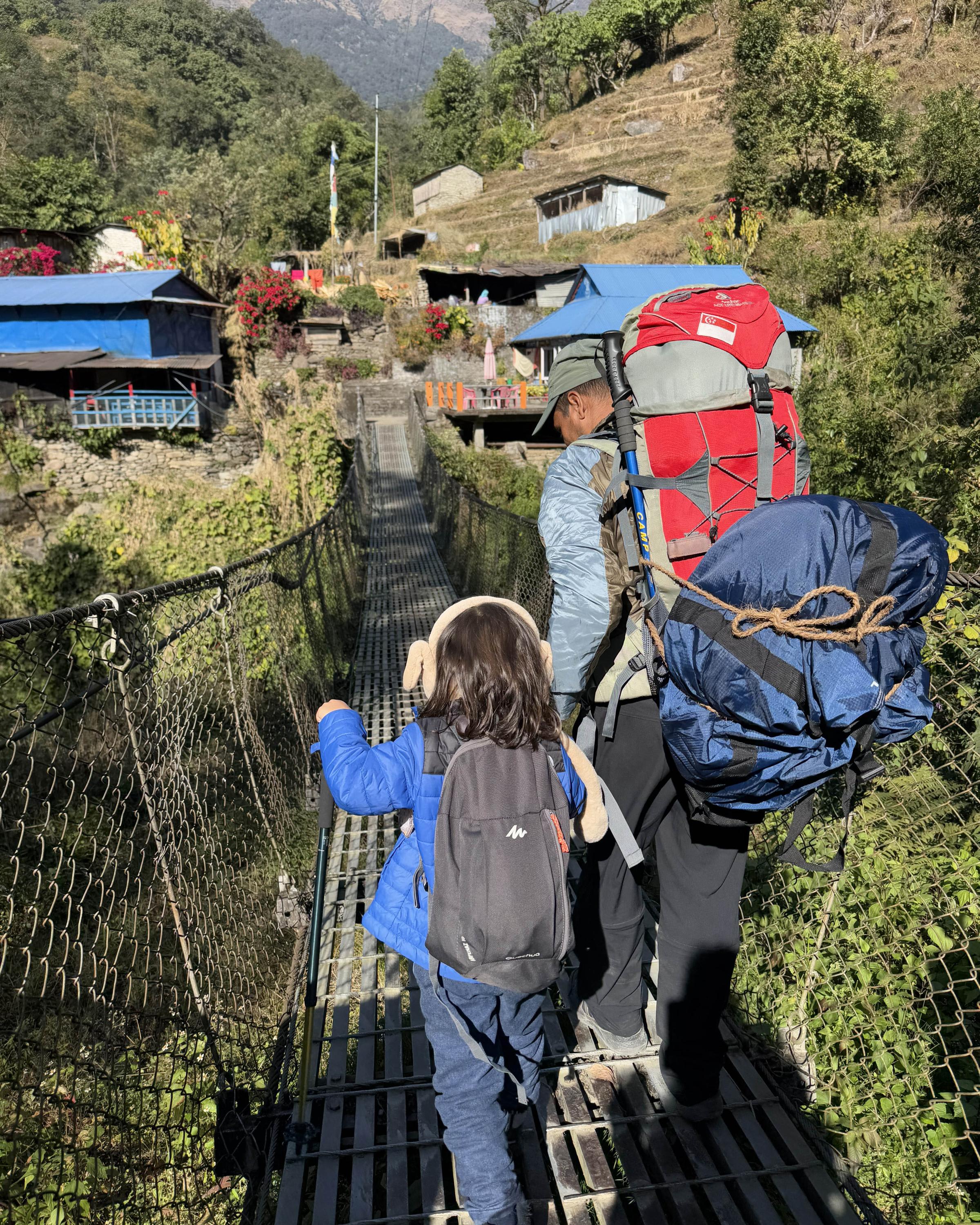
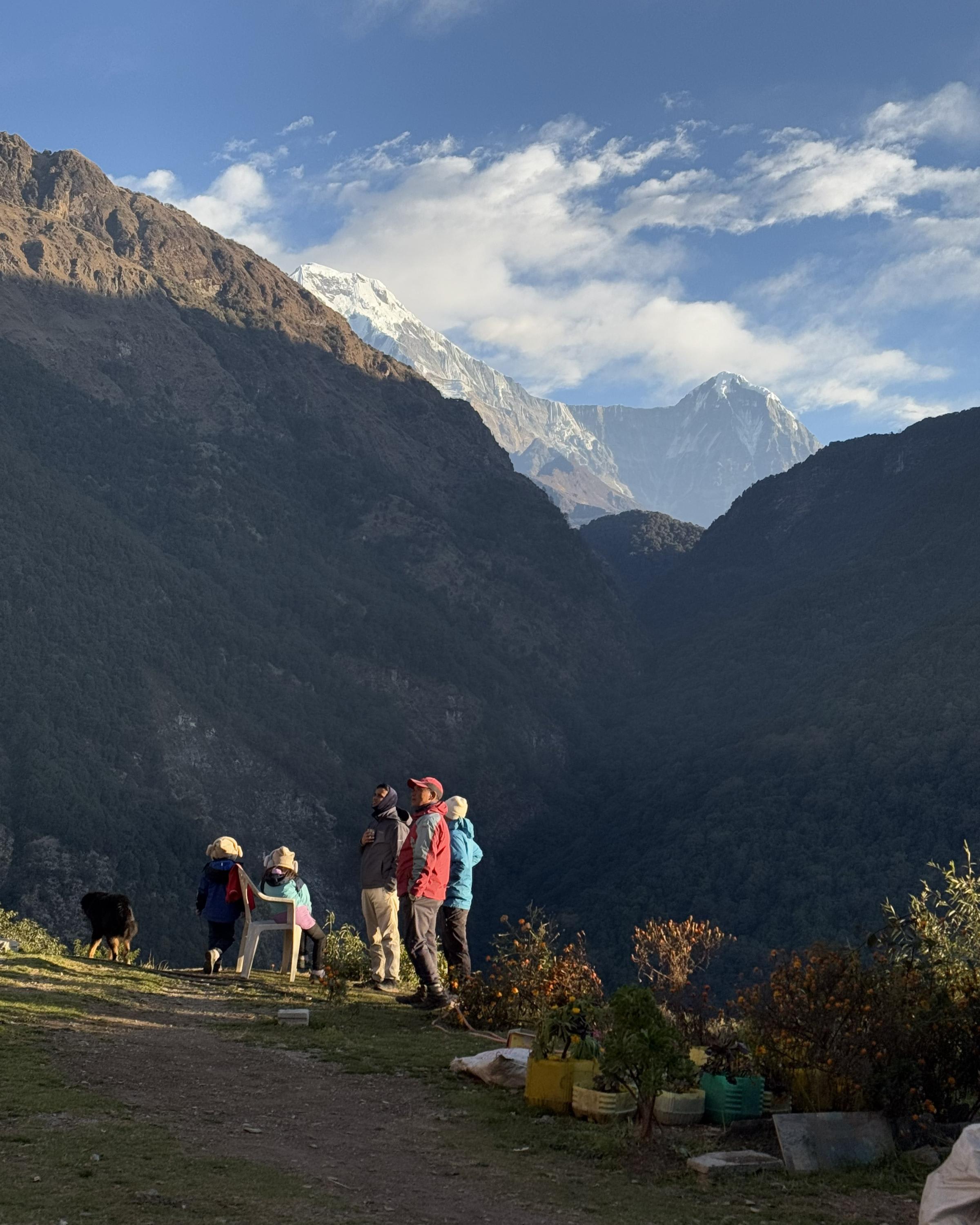
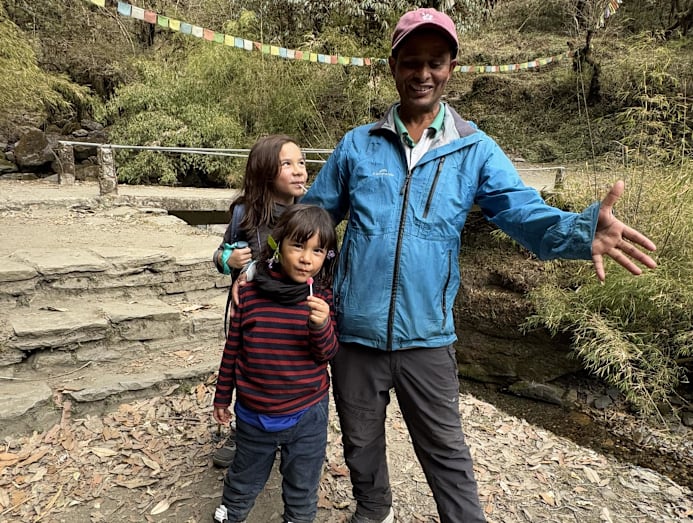
On the trek, the porters played with our children and guided them across rope bridges. We played Floor is Lava, the girls skipping over real-life obstacles of puddles and overflowing streams. Llucia proved to be a hardy climber-in-training, walking with us when she could have been on the pony, sometimes running with the porters.
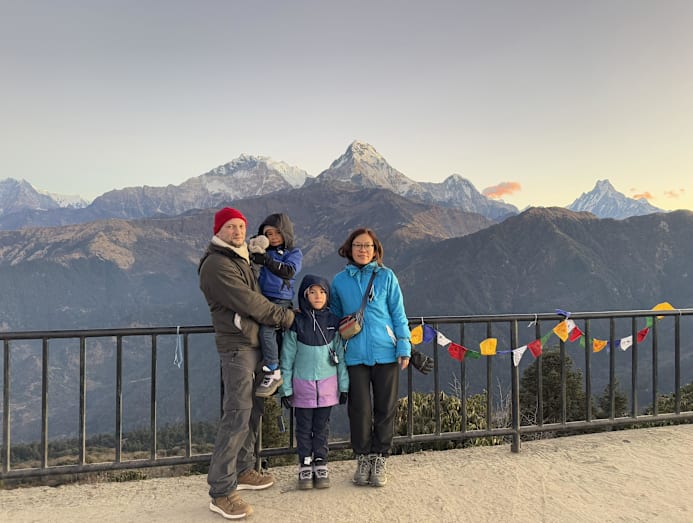
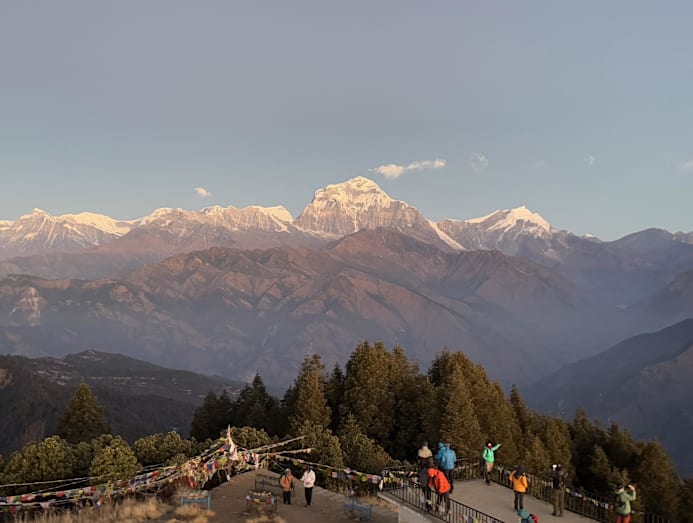
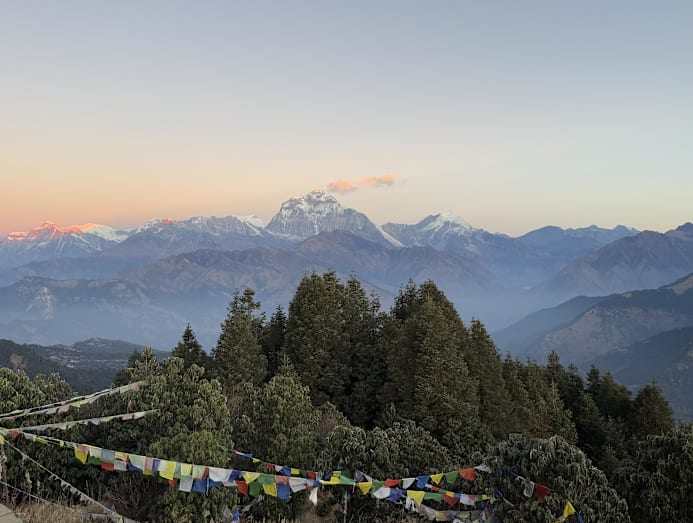
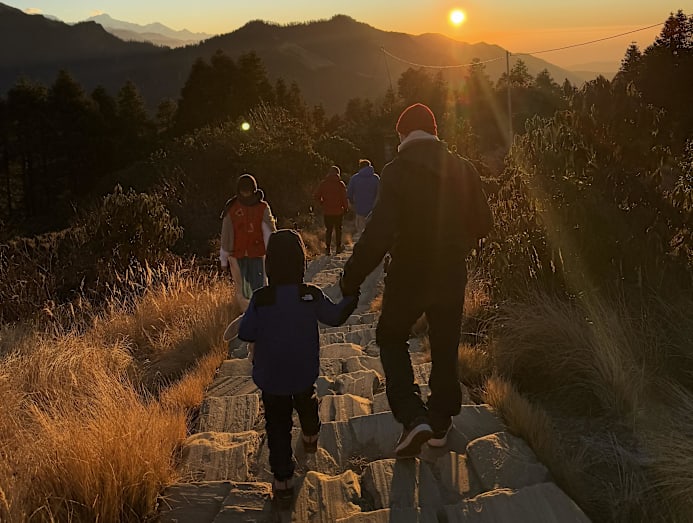
Climbing Poon Hill in the freezing, pre-dawn darkness with everyone else hoping to make it to the peak before sunrise, not once did Llucia take a break. On the other hand, her older sister Elna rode the pony at every opportunity and pointed out how slowly time passed whenever she had to walk.
CHRISTMAS EVE AND A “DISNEYLAND”
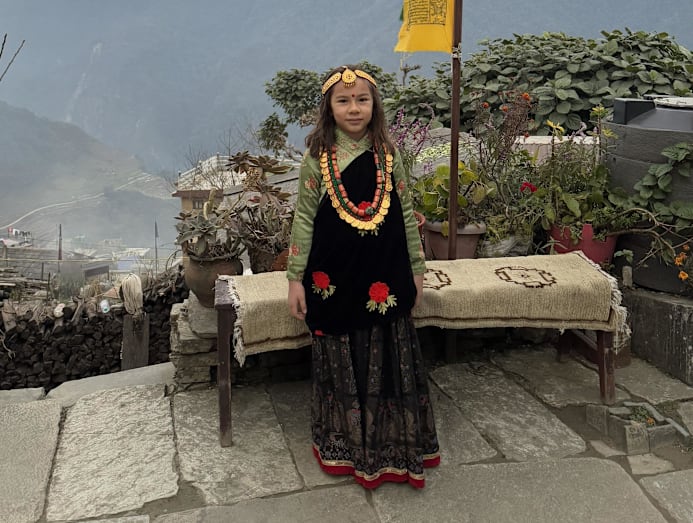
On Christmas Eve, we arrived at Ghandruk, greeted with a spectacular view of the Annapurna massif. The quaint Gurung village has a strong Gurkha legacy with many of its young men serving in the United Kingdom, India, and Singapore.
At dinner, fittingly for the first time, we spotted fried chicken on the teahouse menu, a festive treat for the girls after days of dal bhat, ketchup spaghetti, and momo – with a surprise side of broccolini. The leafy greens in rural Nepal were so delightful we sometimes asked for seconds when eating dal bhat.
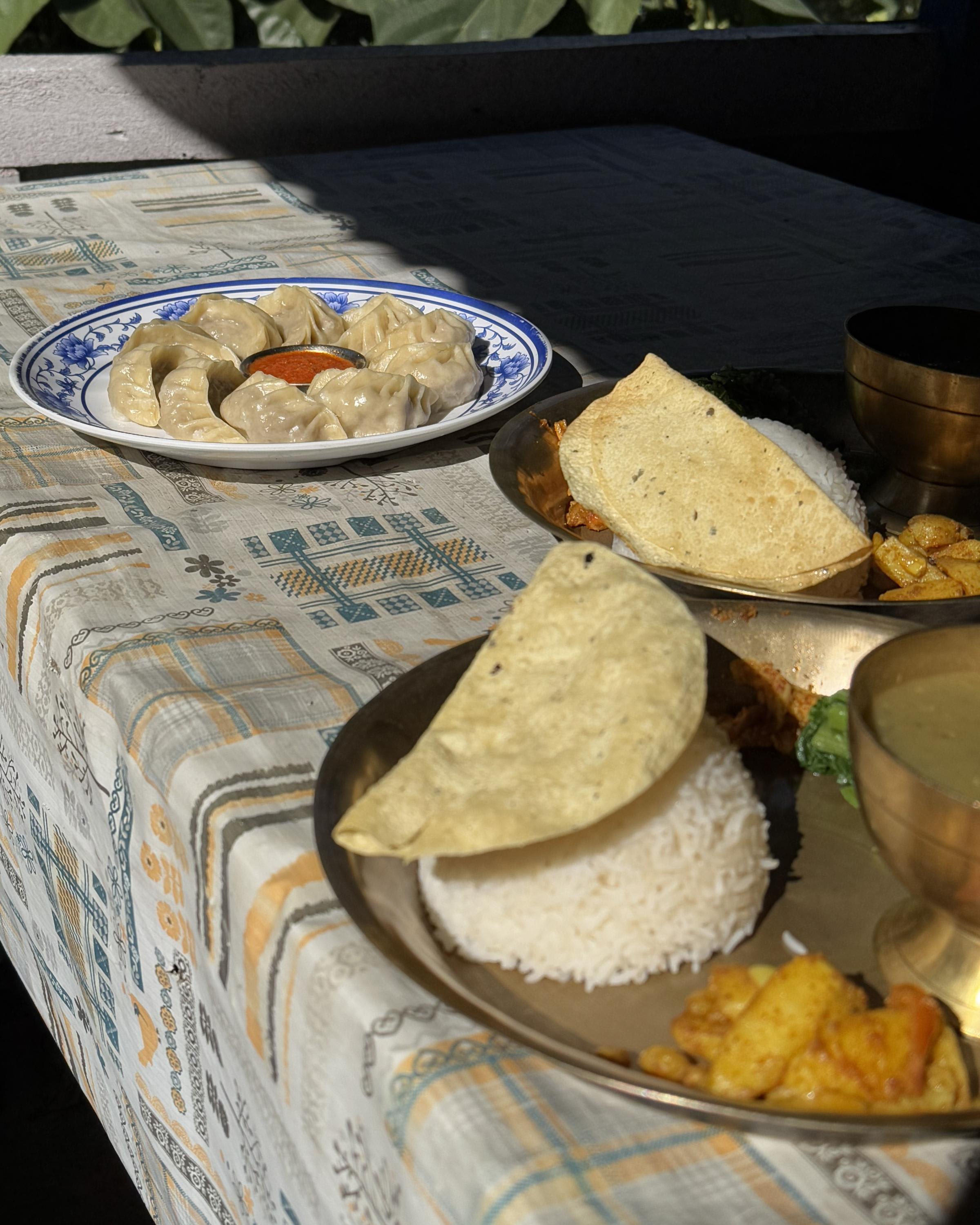
I almost regretted not ordering the same meal but whenever I found myself among Tibetan ethnic groups, I would be drawn towards thenthuk, a hand-pulled noodle soup not unlike mee hoon kueh, and tongba, a hot alcoholic beverage of fermented millet served in a special mug with a straw that filters out the seeds.
That night, I succumbed to an overpriced mug of tongba. Fortunately, it was bottomless and I topped it up with hot water as many times as I could before we had to get the girls to bed.
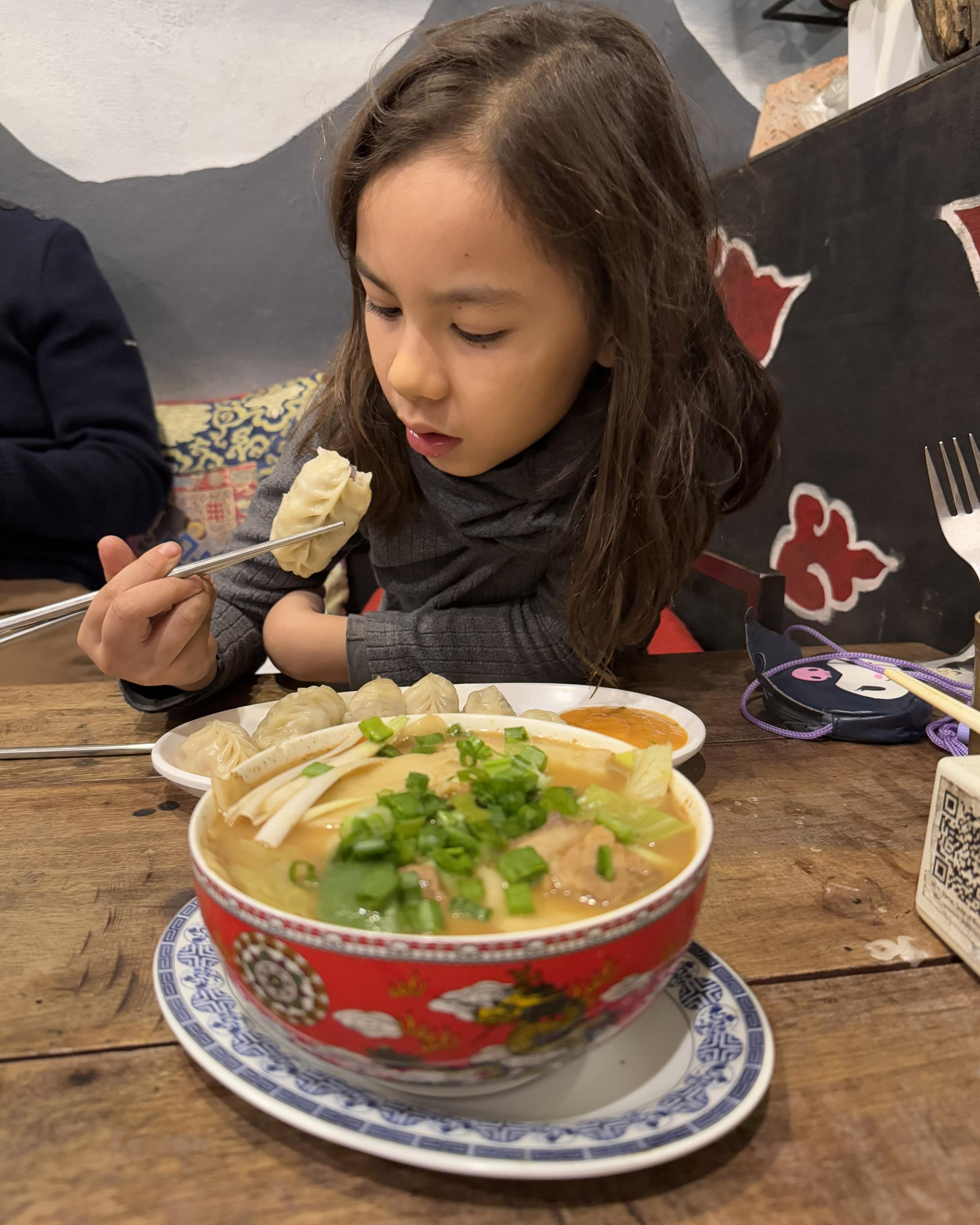
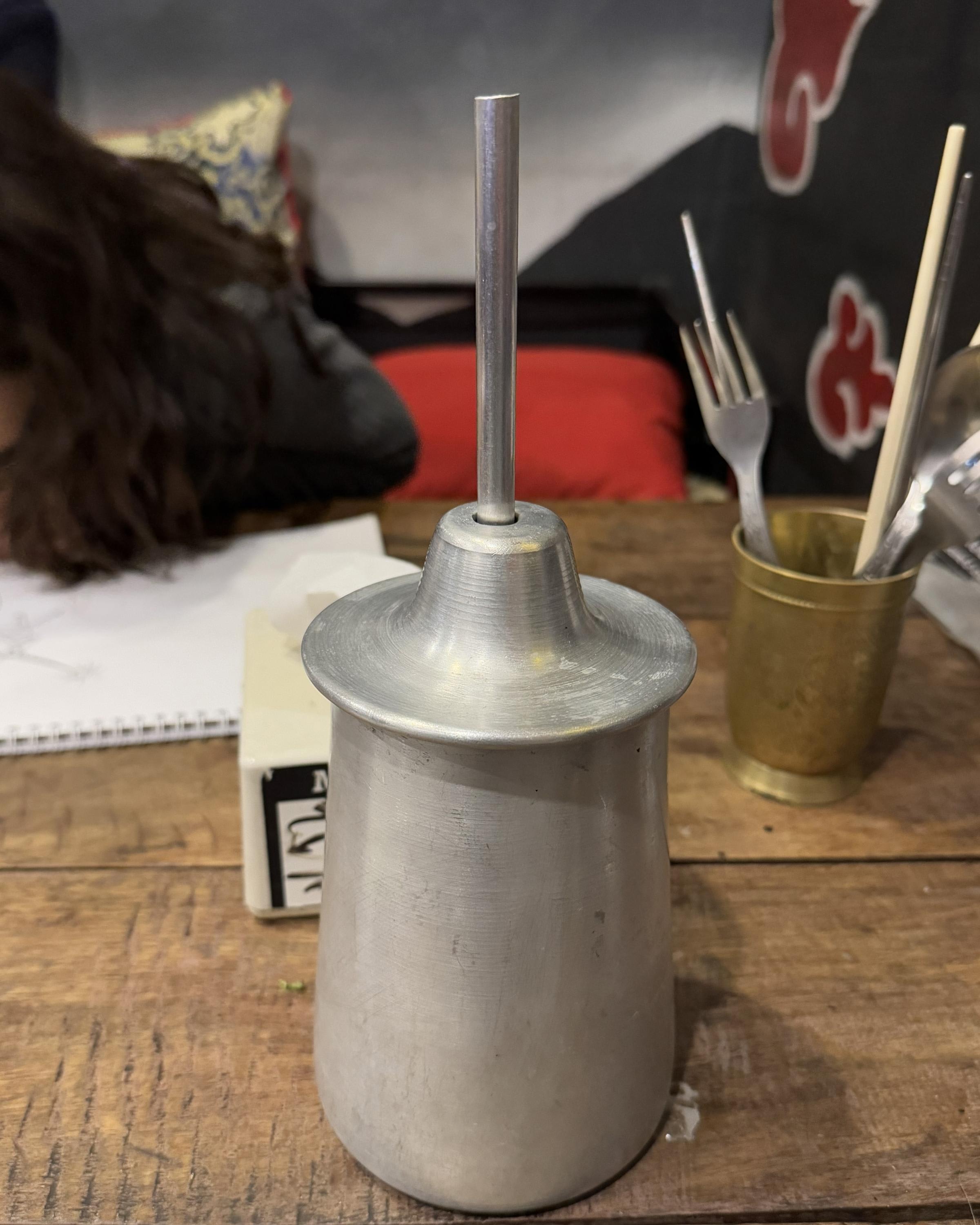
For thenthuk and tongba that are a little more accessible, Taste of Boudha in Pokhara would be a good bet. A laid-back eatery and bar run by Sherpa brothers Pasang and Thupten, we enjoyed the food so much we went back a second time after our trek. If you are lucky, you might meet Coco, their Doberman that the girls were enamoured with.
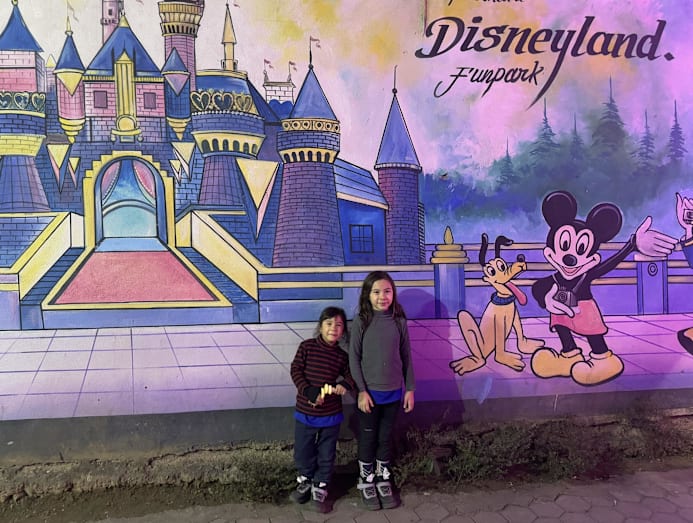
Nearby, on the banks of Phewa Lake, Pokhara Disneyland is an attraction not to be missed, which says a lot since I’m not usually a fan of amusement parks. But this one was charming – inexpensive, almost rickety rides, hand-painted non-official cartoon characters, and a giant bouncy castle with no time limit. We even got to chat with a father serving in one of India’s Gorkha regiments on home leave, enjoying a night out with his family.
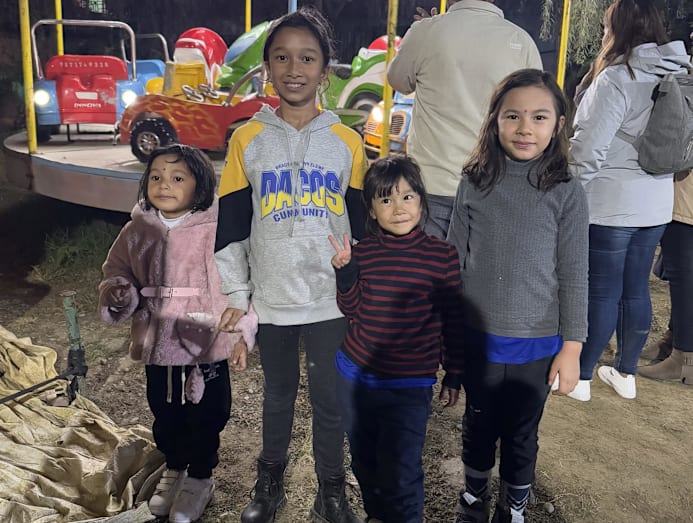
In Nepal, for the first time ever, the girls fell asleep the moment they crawled into bed after their shower, wet hair and all, under the glare of fluorescent lights most nights.
Squat toilets proved to be less of a problem than non-potable tap water. As it turned out, I might well be the last person to find out that my children love drinking water in the shower.
They had to be constantly reminded not to talk or open their mouths in the shower. Likewise, toothbrushing became an activity that demanded their total concentration for fear that they would accidentally gargle with tap water out of habit.
It is a good idea to keep plans loose in Nepal in case of unforeseen circumstances. Always leave enough buffer time to get to destinations so you won’t be stressed if your domestic flight gets cancelled because of fickle weather conditions.
It took us close to 11 hours to make the same trip back to Kathmandu from Pokhara no thanks to a punctured wheel and an unexplained traffic jam behind a long queue of stationary vehicles. We now know it is never a good sign when the driver goes looking for a big rock to wedge behind the back wheel to prevent the bus from rolling backwards.
As much as I like adventures, I’m learning to get out of my comfort zone more. While the girls discovered cold winter showers and a clogged toilet, they also had fun turning prayer wheels, ringing bells, and searching for nagas in the streets.
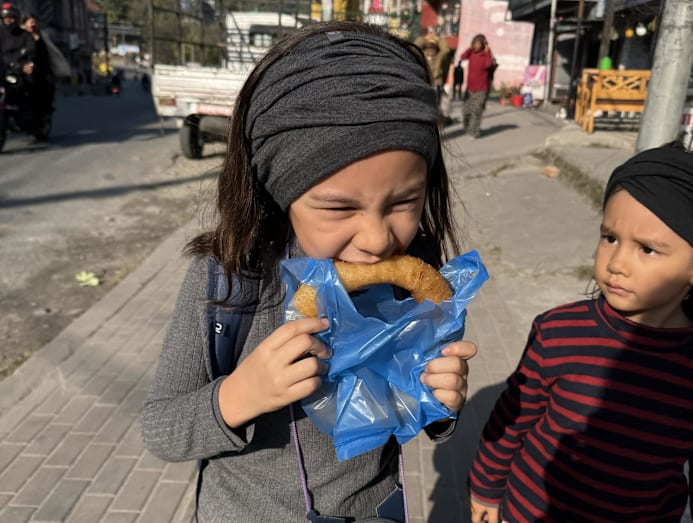
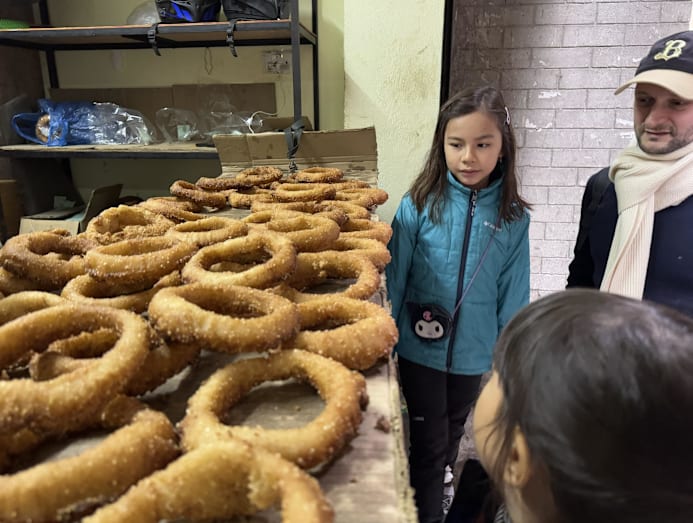
Countless sel roti, gurung bread, and cups of chai later, I’m reminded of the joys of roughing it out in a new country and appreciating the simpler things in life – and I think the kids are ready for it. Llucia is already talking non-stop about going back to “climb Mount Everest”.