Why do our feet change size – and suffer from flat feet, bunions and aches – from baby to middle age?
You were born with 22 cartilaginous bones in your feet that "harden" into 26 adult bones as you grew. Find out what other changes your feet will undergo when you hit middle age.
(Photo: iStock/Manuel-F-O)

This audio is generated by an AI tool.


They say that the average human walks more than 120,000km in a lifetime – enough to circumnavigate the equator three times over. Okay, maybe fewer for those struggling to cover 10,000 steps each day. But between your first barefooted step as a baby to your final one with a walker, it is still a lot of steps taken.
With all that wear and tear, it is no wonder that your feet undergo transformation as you get older. Here's a look at how they develop from babyhood to middle age – and why you sometimes need a different shoe size when you’ve been size 7 for the most part of your life.
BABIES’ AND TODDLERS’ FEET: FROM CARTILAGE TO BONE
Chubby baby feet with their little, curled toes are some of the cutest appendages around. They also look flat-footed because each foot has a thick layer of fat in the arch as well as 22 mostly cartilaginous bones that eventually harden into 26 adult bones and 33 joints.
“During infancy, a baby’s feet naturally look flat as the fat pads and ligaments are still loose,” said Tiffany Tsao, the chief podiatrist at Feet First Podiatry. “As the feet start to bear weight through standing, walking and running, these tissues strengthen and tighten. Over time, the mechanical load helps the feet develop stability and begin forming an arch.”
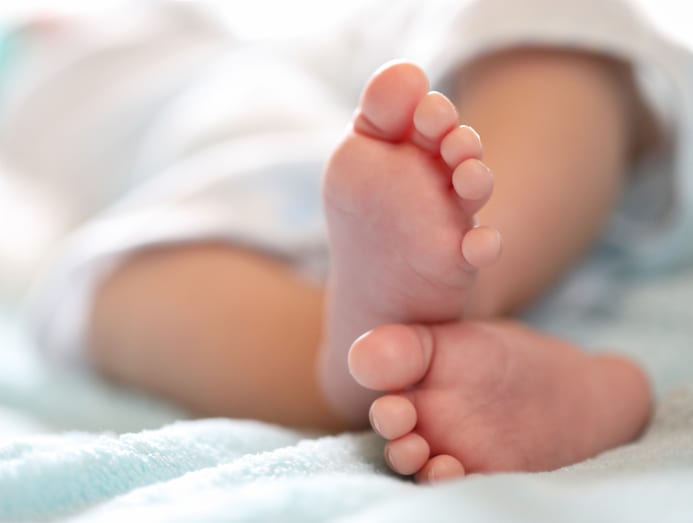
Tsao explained that even though the arch begins to form between ages two and three years, the overall foot structure is still very soft, so any footwear can affect development. “It is best to allow your children to go barefoot for as long as possible, ideally up to 24 months,” said Tsao.
“There are many benefits to being barefoot as it allows infants and toddlers to naturally develop the muscles in their feet and strengthen their neurological development in the brain.” Put on socks or protective shoes only when outdoors, or if you have hard tiles or concrete floor at home, she added.
CHILDREN’S FEET: ONE SHOE SIZE INCREASE EVERY 2-3 MONTHS
As a child grows, growth plates found at both ends of the metatarsal bones contribute to and determine the length of his feet.
“Growth plates are made of cartilage, and their function is to produce new bone tissue,” explained Tsao. “This process allows the bones to grow in length and eventually reach full maturity, ensuring proper skeletal development, and structural strength and stability.”
This growth can be affected by genetics (the arch shape, for instance, tends to take after the parents’), growth hormone, nutrition, physical activity and sleep, said Tsao.

Skeletal maturity occurs at different ages for different genders. For boys, it happens between ages 15 and 17; in girls, ages 13 to 15, according to Manfred Mak, the senior principal podiatrist from National University Hospital’s Department of Rehabilitation. “This may extend to the early 20s for some people,” he said.
Until then, parents are often exasperated by how quickly their kids need to upsize their footwear. But those little feet do grow quite fast; one shoe size bigger every two to three months for children aged 12 to 30 months, according to a study on 112 children.
The growth slows down over the subsequent four years, noted the researchers, to a shoe size change every four months up to four years of age, and every six months in children from age four to six years.
This is the time when unsuitable footwear may cause issues as young as toddlers, said Mak. “In most cases, structural changes to the foot start showing signs from the early teens.”
ADULTS’ FEET: AGE OF DEFORMITIES
At some point, you might look down and wonder: just when did your feet change? We’re talking about what podiatrists refer to as deformities, including the common ones such as bunions, hammertoes and adult-acquired flat feet. “Bunions and hammertoes may develop from the prolonged use of narrow shoes. Flat feet can worsen with weight gain and a sedentary lifestyle,” said Mak.

HOW TO SIZE CHILDREN’S FEET
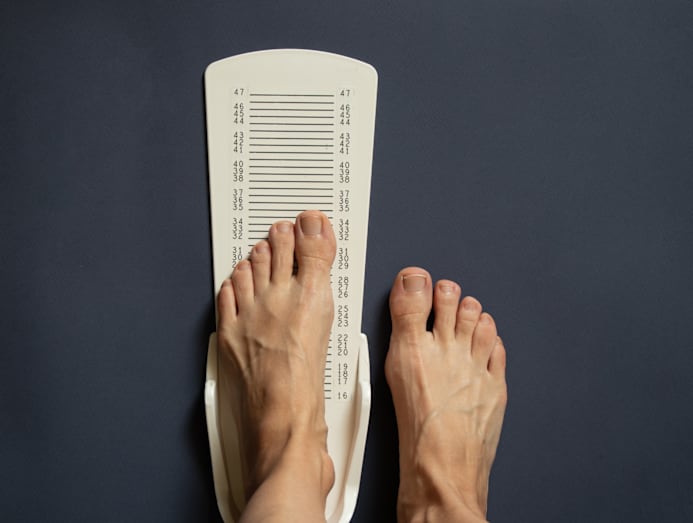
Shoe sizing varies by country (such as US, UK, EU and Japan) and they can be confusing, said Tiffany Tsao, the chief podiatrist at Feet First Podiatry. The most accurate way, she said, is to trace your child’s feet on a piece of paper while he is standing. Then, use a ruler to measure the distance from the heel to the big toe in centimetres.
“When buying shoes, add an additional 1.5cm to this measurement (1cm for proper spacing, and 0.5cm to allow for feet swelling in the heat),” advised Tsao. “Measure your child’s feet every three months, or right before heading to the store.”
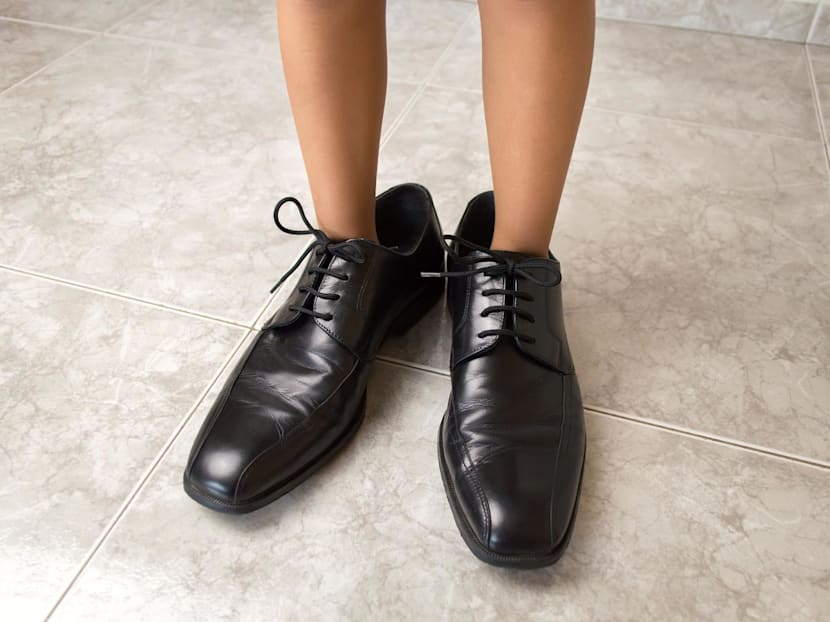
Do not buy a larger size for your child to grow into. “Oversized shoes in both length and width can cause micro-trauma from repetitive friction, ankle instability and may increase the risk of falls,” said Tsao.
Slippers or sandals are generally fine for our humid weather and indoor activities that don't involve complex foot movements. "Ensure the slippers are cleaned regularly, and natural materials are preferred as they reduce friction and help maintain personal hygiene."
But switch to sports shoes for outdoor activities or weight-bearing tasks that last more than four hours a day, advised Tsao.
And sometimes, these deformities can be caused by changes in the foot muscles and joints, said Mak. Bunions, for instance, are created when the foot’s small muscles – crucial for maintaining the alignment of the big toe joint – weaken due to inactivity or rigid footwear.
You’re also not alone if you find yourself needing a larger shoe size after wearing a certain size for years. “Foot length can increase up to one size,” said Mak, who attributed the enlargement mainly to the degeneration of the foot’s muscles, ligaments, tendons and fatty padding. “This will cause widening of the foot and flattening of the arches.”
“Some medical conditions such as diabetes will contribute to these conditions as well,” he said.
If you have had a pregnancy before, you may also notice a change in your foot size. That’s because the hormone, relaxin, increases during pregnancy, which softens ligaments and causes foot arches to flatten and feet to become longer and wider. “These changes can cause overpronation, and even a permanent increase in foot length and arch drop,” said Mak.
He added that studies show the majority of women do not regain their original foot size after birth. “The foot length can increase on average by 2mm to 10mm, which is approximately half a shoe size.”
LADIES, TIME SHOE-SHOPPING TO YOUR MENSTRUAL CYCLE
Women may want to wait till their follicular phase (it begins on the first day of a period), advised Manfred Mak, the senior principal podiatrist from National University Hospital’s Department of Rehabilitation. That's when swelling and bloating are at their lowest.
Studies also show that rising oestrogen levels during the follicular phase may make you feel more analytical and less prone to impulsive purchases, making it a good time to choose shoes you'll love long-term.
On the contrary, avoid shopping during the luteal phase when women often experience more bloating and swelling. "Shoes bought then may feel loose or rub at other times of their cycle," said Mak.
MIDDLE-AGED FEET: PAIN AND STIFFNESS
Your sexy heels or sharp-looking dress shoes would have made way for thick-soled sneakers by now. Comfort tops your list because by age 50, you may have lost nearly half of the fat pads – your natural shock absorbers – in the soles of your feet, which explains why every step feels like walking on bone, noted Harvard Health.
No thanks to the middle-age weight gain, plus stiffer ligaments and tendons in each foot, every step feels less comfortable because of a greater pressure and strain on your feet. Also, “osteoarthritis and other forms of arthritis can develop in the foot joints, causing pain and stiffness,” said Mak.
Those problems that started in your adulthood, such as adult-acquired flat feet, hammertoes and plantar fasciitis? “They often become more noticeable or worsen in middle age due to cumulative wear and tear, weight changes, and/or reduced tissue elasticity,” said Mak.