Are you on your way to becoming a grumpy old person? You don't have to – starting now
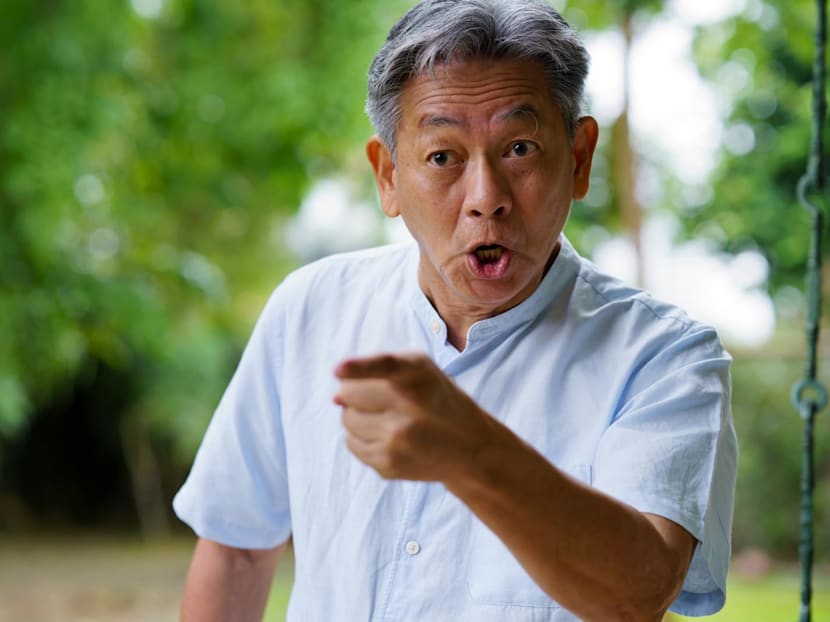
From scolding aunties and entitled uncles on public transportation, cranky seniors seem to be everywhere. But does ageing really make people irritable or does it simply magnify who you are? How do you not become a grumpy, old person?
(Photo: iStock/tylim)

This audio is generated by an AI tool.


Growing up, my late paternal Ah Ma was the archetype of a grumpy old person. There was not a single day that went by without her scolding or disapproving of someone. Walked past her in a way she didn’t like? You’d get reprimanded. Once, my classmate came over to work on a school project together. She shamed my bewildered project mate for using my PC (“Doesn’t your household have a computer? Why do you have to come over and use ours?”).
My sympathies if you have also encountered seniors behaving badly in the wild. Like the entitled uncle who demands other passengers give up their seats for him on the MRT. The auntie who cuts in front of you to board the bus or order bak chor mee. At work, it may be the old-timer whose default response is “no” – if you even dare to approach them in the first place.
I often wonder what these cranky folks were like in their younger days. Have they always been irritable, or did something happen that made them the way they are now, like Mr Fredericksen in Pixar’s Up? And can you be your own Russell and Doug to lift you out of misery if your positivity bubble keeps getting popped?
DOES AGE = GRUMPINESS?
Turning a certain age doesn’t flip a switch in your personality that morphs you into a misery-loving Squidward or raging Plankton. “If age really made people grumpy, every senior would be miserable – and clearly, that is not the case,” said Serene Lee, a psychotherapist and the founder of counselling centre ICCT.sg. “Age does not automatically equal grumpiness. This is very much a stereotype.”
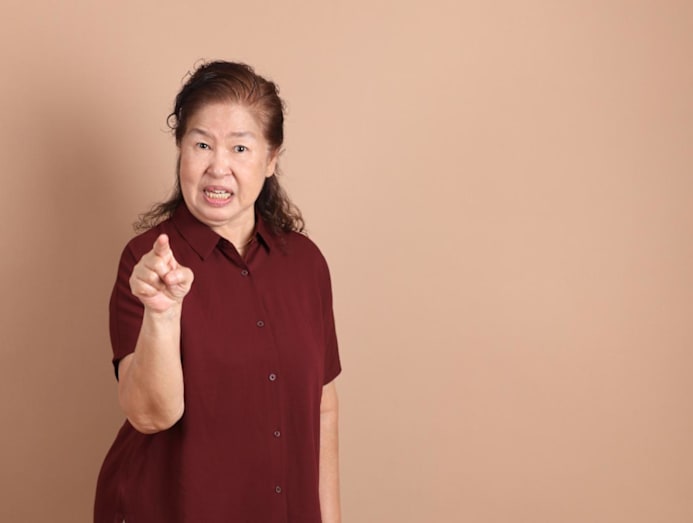
What might make seniors seem grumpy could be their age amplifying their existing traits. “As we get older, we tend to care less about others' opinions,” said Lee. “So, if someone was a bit impatient when they were younger, it may become more visible later on.”
On the flipside, “those who were warm, humorous and adaptable often become even more grounded and joyful with age”, Lee explained. Ageing “reveals what is already there, often influenced by life experiences”.
Moreover, “many older adults regulate emotions as well as, or even better than younger adults because they become more selective about what they spend their time and energy on”, observed clinical psychologist Dr Annabelle Chow from Annabelle Psychology.
Besides, “occasional irritability is human,” she said. Even “persistent irritability is usually a signal, not a flaw”.
“Clinically, (grumpiness) can appear with stress overload, depression, anxiety, trauma, sleep problems, pain, medication effects, or cognitive decline,” said Dr Chow. “In seniors especially, irritability is often how distress shows up when sadness, fear or loss is harder to express, or when a sense of control feels reduced.”
CAN OUR PERSONALITY CHANGE AS WE AGE?
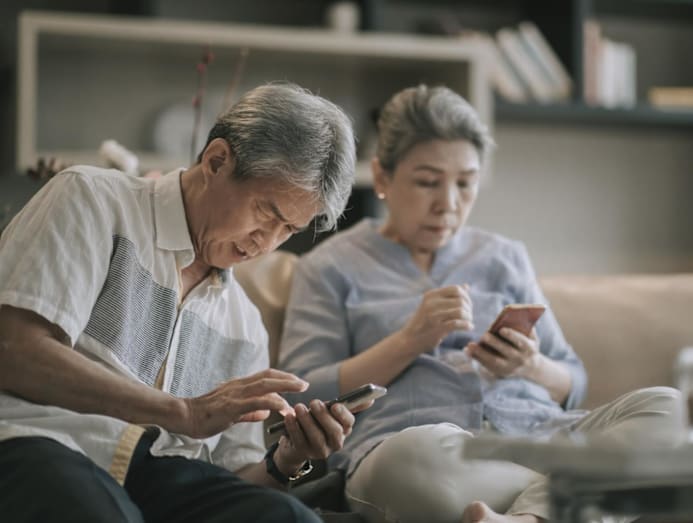
“How someone behaves in later life is often shaped by what they have lived through – and how they have coped with life’s challenges over the years,” said Brenda Loh, a medical social worker with Allium Healthcare.
For example, when obstacles such as unmanaged health problems, the loss of loved ones, or reduced independence are not addressed, “distress may show up as irritability or grumpiness”, she said. “This is not caused by ageing itself but by the challenges the person is facing.”
Yes, even optimistic people can become irritable if they keep facing unaddressed pain, loss or loneliness, said Lee. “Personality sets the tone but life experiences write the script. Think of personality as the steering wheel and life events, the road conditions. Even a good driver struggles on a bumpy road.”
As a matter of fact, your personality is “fairly steady” by adulthood, said Dr Chow. “How you are in your 30s to 50s can offer a rough clue to your default behaviour under pressure. But it does not lock in whether you will become ‘grumpy’ later in life.”
In many cases, said Dr Chow, “later-life irritability has more to do with accumulated strain, such as poor sleep, chronic pain, health issues, ongoing stress, loneliness and reduced support than personality itself”.
WHY DO WE LOSE PATIENCE AND TOLERANCE AS WE AGE?
If you often find yourself complaining internally when you encounter a crying baby, crowds or other triggering situations, we have bad news: you’re going to complain externally as you get older.
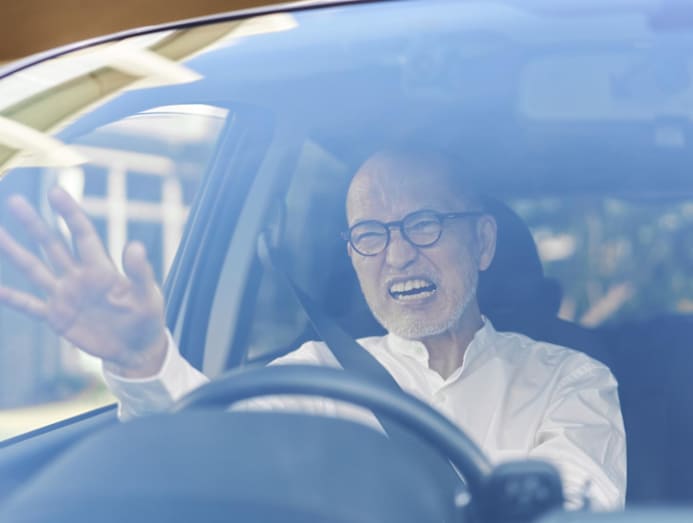
That’s because seniors feel less obligated to suffer silently, said Lee. “When you feel your years are limited, you are less willing to waste them being annoyed by a phone blaring in public. After decades of life, we often feel entitled to not put up with foolishness. It is not always about being grumpy; sometimes it is simply having a lower tolerance for nonsense.”
Another factor is “our patience often shrinks not because we care less but because our mental and physical bandwidths are lower”, explained Dr Chow. “Loud noises, crowding and constant stimulation are nervous-system stressors. And when you are tired, stressed, in pain or not sleeping well, your brain has less capacity to filter them out."
Also, “with age, many people mask less socially”, continued Dr Chow. “Where younger adults may grin and bear it to avoid conflict, older adults are more willing to express their frustrations to protect their space and energy, especially in high-load environments like Singapore.”
WHY DO SOME PEOPLE HAVE A BREEZIER TAKE ON LIFE THAN OTHERS?
Ah, to be unbothered and flourishing in your own lane.
Unfortunately, “a happy-go-lucky style is not always purely inborn”, said Dr Chow. “For many people, it is the result of learned emotion regulation, such as reframing, perspective taking, humour, gratitude and choosing what is worth engaging, that helps them recover faster after daily frustrations,” she said.
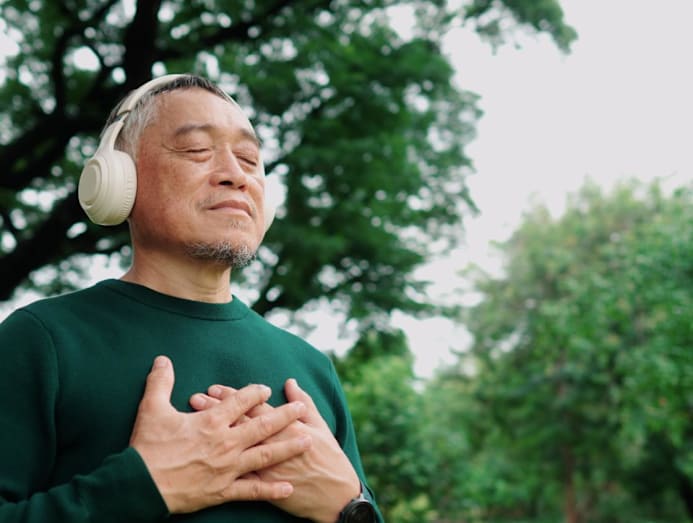
Even if you can tap into that state of mind, “good coping can be worn down by prolonged adversity”, said Dr Chow. In cases that involve physical brain changes, for instance, such as after a stroke, cognitive decline or dementia, the patient’s impulse control and emotional regulation may alter, making them seem out of character, she said.
Which is why “supportive relationships, good healthcare and emotional support all play a crucial role in ageing well”, said Loh.
“It’s not a magic shield,” highlighted Lee. “Life can still deliver blows but starting from a positive mindset makes emotional recovery easier.”
HOW CAN WE LIGHTEN UP?
There is something called the positivity effect that lets you focus more on positive information and memories than negative ones.
“The positivity effect is a skill that takes time to develop,” explained Lee. “Those who find it easier to access this effect usually have practised emotional regulation from a young age, learned how to let go, and developed perspective through hardship.”
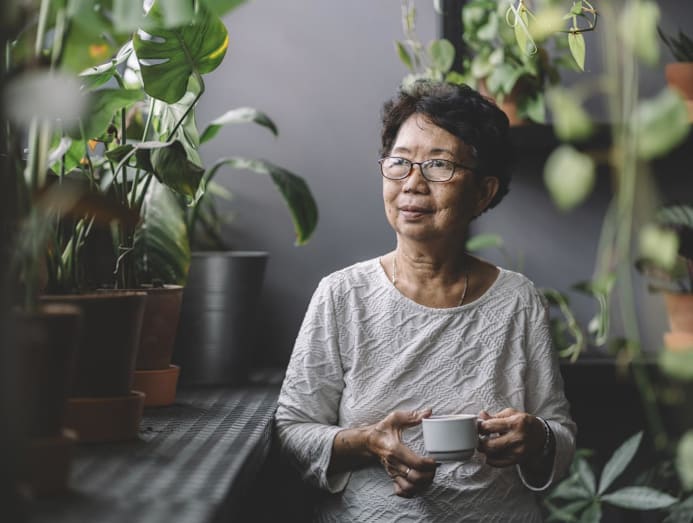
So, what makes some people better at accessing the positivity effect? “Think of it like a savings account,” said Lee. “Those who have consistently invested in good relationships and healthy coping mechanisms have a greater emotional reserve to draw from later on.”
On the flipside, those who struggle to process emotions, ruminate heavily or experience unresolved trauma may find it harder to focus on the positive, even in older age, said Lee. “To put it simply, emotional habits do not suddenly change at age 65; they are refined versions of patterns that have been built over decades.”
The version of you that you envision in your senior years starts now, said Dr Chow. "Imagine it is your 80th birthday and the people who matter most are speaking about you. What would you hope they say? How would you want them to describe you, how you treated people, or how you lived your life? Keep that picture in mind to help you start making more meaningful choices."

Another way to approach it is to work on building self-awareness and emotional regulation in our 30s to 50s, suggested Loh.
“For example, during a difficult or conflicting conversation, ask yourself: ‘what emotions am I feeling right now?’ and ‘what triggered these feelings for me?’," said Loh. "These questions will help you to understand your emotions and triggers, notice patterns that may lead to frustration or irritability, and make intentional choices when similar circumstances arise.”
At the end of the day, becoming an old, grumpy person doesn't have to be your final stop, said Lee. "It is usually a build-up from not taking care of your emotions over time. Sure, daily affirmations can be beneficial but there is also this straightforward question to consider: will this matter in a year from now? If the answer is 'no', take a deep breath and let it go. Your future self will thank you."