‘I don’t let my background stop me’: This nurse-turned-hospital CEO wants to lead with an open mind
A nurse by training, Alexandra Hospital CEO Margaret Lee welcomes artificial intelligence, embraces new ways of working – even when it means making mistakes – and sees staff differences as a strength in tackling Singapore’s healthcare issues.
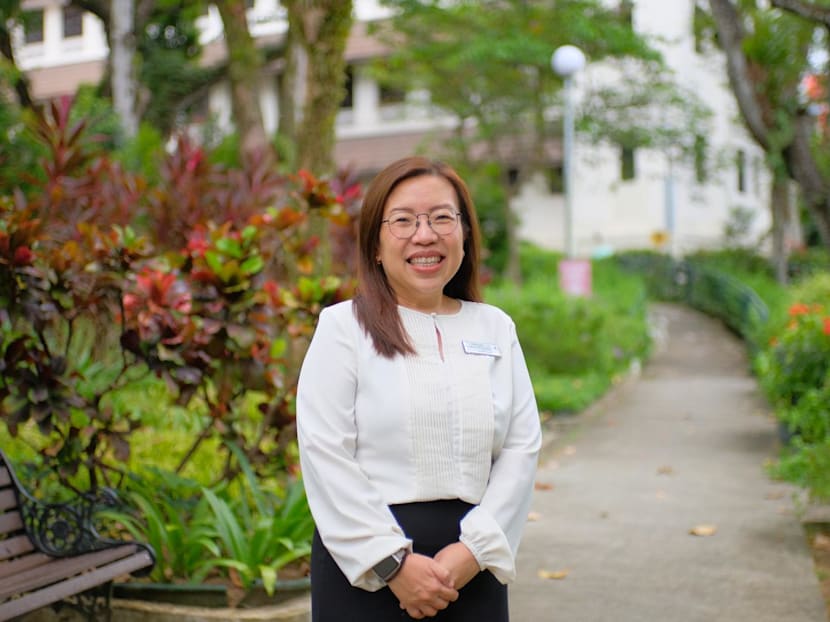
After serving as Alexandra Hospital’s chief nurse for six years and its deputy chief executive officer for a year, Margaret Lee is now its new chief executive officer, from Jan 1, 2026. (Photo: CNA/Izza Haziqah)

This audio is generated by an AI tool.


Margaret Lee is aware of how unusual her career path is in the healthcare landscape.
She is one of the few nurses in Singapore to take up a C-suite position, assuming the role of Alexandra Hospital’s new chief executive officer on Jan 1, 2026.
“It is rare for a nurse, especially one who never even intended to join healthcare, to be in the C-suite, let alone CEO of a hospital,” Lee told CNA Women. “But I don’t let my unconventional background stop me – in fact, it’s an advantage. I bring with me perspectives others may not have thought about.”
She didn’t do well in her O-Levels, and nursing was her ninth choice for post-secondary education. “It was one of the few options offered with my GCE O-Level results,” the 49-year-old said.
Still, Lee wanted to serve people, so after polytechnic, she started her career as a clinical nurse at National University Hospital (NUH) in 2001, working in intensive care and other specialised units.
Despite her initial lukewarm feelings about nursing and after a brief stint in other ventures, Lee stayed in the profession, rising through the ranks.
DEVELOPING CONFIDENCE AS A NURSE
Leadership did not always come naturally to Lee.
One of her roles during her time in NUH included being a liver dialysis coordinator, where she provided clinical care to liver patients. The job came with responsibilities beyond clinical work, such as managing junior nurses, procuring equipment and supplies, and working with external vendors.
There, she grappled with imposter syndrome, at times feeling that she didn’t deserve – or wasn’t capable of – leading her team.
“It was a steep learning curve for me,” Lee said. “Nurses weren’t always exposed to the management aspects of work if we were purely providing direct care, but I had to do all of these – even when I didn’t feel sure.”
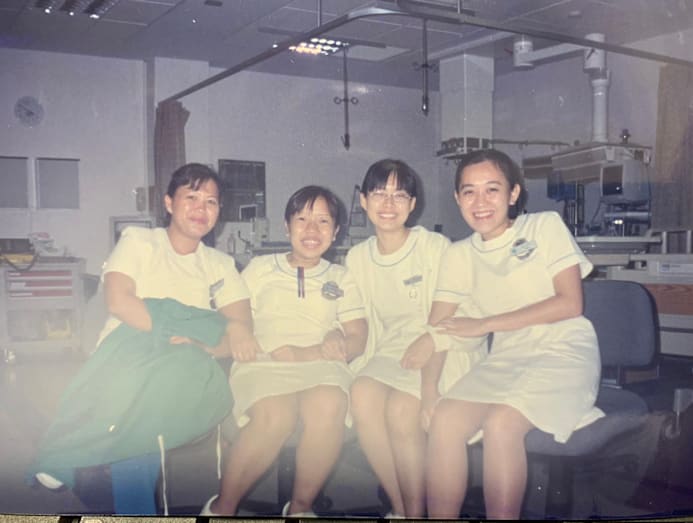
She recalled how, in meetings with senior leaders and external vendors, she often felt small and uncertain about whether her voice mattered.
Over time, as she gained experience and came to understand the realities on the ground, her confidence grew. She also began to see how leadership decisions, shaped by her speaking up for staff, could improve nurses’ daily work.
For instance, after she raised concerns about long shifts for nurses, the hospital set about procuring more efficient, time-saving equipment for managing kidney disease, allowing nurses to spend less time handling machines and more time caring for patients.
In 2016, when the National University Health System (NUHS) began planning the development of the current Alexandra Hospital campus, Lee took on a broader role as nursing lead, overseeing the preparation and training of both new and existing nursing teams.
She then joined Alexandra Hospital as its chief nurse in 2019, and five years later, after leading her nurses through the COVID-19 pandemic, was appointed deputy chief executive officer.
“I realised that while managing others was hard, the role made it possible for me to let the voices of nurses and various other staff be heard,” she said, adding that she saw how diversity in leadership was a safeguard against narrow thinking.
“Diversity has become a buzzword, and ironically, it has divided people,” Lee said. “But actual diversity, as in different people with different experiences and backgrounds coming together for a shared cause, is crucial, especially in running a hospital.
“When everyone in the boardroom comes from the same background – when everyone used to be schoolmates or former colleagues – that’s when there’s a high risk of groupthink,” she added. “And that’s when no one thinks out of the box.”
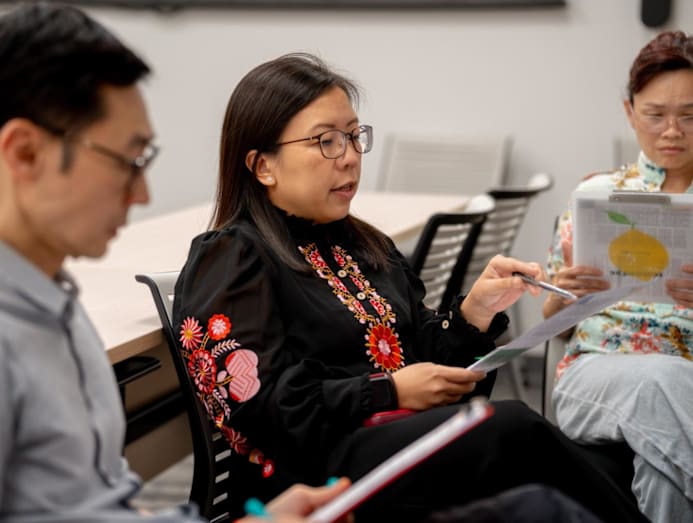
As the hospital’s chief nurse, Lee wanted to focus on building a culture where staff felt heard. That focus on people later earned her another hat in 2022: chief culture officer.
The position formalised work she was already doing – bringing together doctors, nurses and allied health professionals to address low morale, burnout and high turnover rates, especially among nurses, problems that worsened during the pandemic.
Lee said the title at times seemed more “feel-good” than practical, but the role allowed her to put in place lasting changes that would improve how people worked and felt at the hospital.
She engaged staff across different functions to better understand the challenges they faced. It was time-consuming and even met with skepticism, but Lee said listening to the ground was crucial.
From there, she introduced concrete changes. Nurses were allowed to complete certain administrative tasks from home, reducing the need to remain on-site after long shifts.
The hospital also expanded teleconsultation services, which helped increase staff efficiency while enabling patients to receive care – from physiotherapy sessions on virtual communication platforms to general medical advice and follow-up updates – closer to home outside the hospital.
In addition, more flexible working hours were introduced for staff caring for elderly parents or young children.
“Culture and diversity aren’t just token terms,” Lee said. “When taken seriously, they translate into decisions that affect how people show up to work, how safe patients are, and whether staff stay or leave.”
ADOPTING AN OPEN MINDSET IS NO LONGER A LUXURY
Lee’s new appointment comes at a time when Alexandra Hospital – and the healthcare industry as a whole – is undergoing significant change.
The hospital is in the midst of major redevelopment, expanding from its current 300-bed capacity to a 1,300-bed facility that will start operation in phases from 2028.
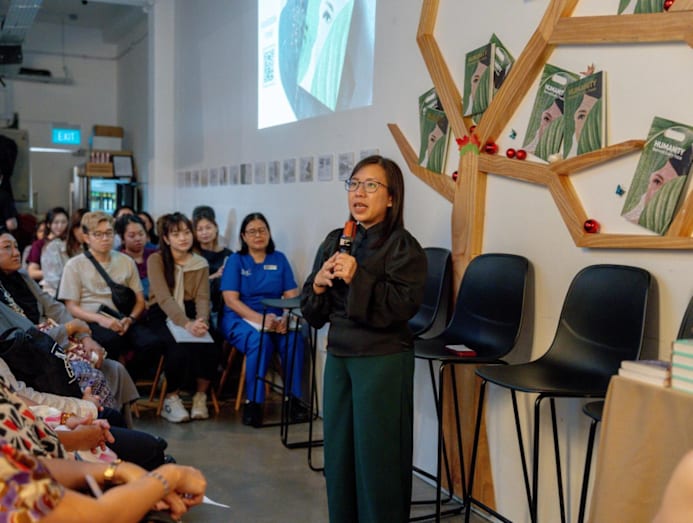
At the same time, there is growing pressure for care to be delivered beyond hospital walls, as the healthcare system adapts to an ageing population with increasingly complex needs, including mental health issues such as depression and increasing loneliness among the elderly.
“Knowing all these complex issues in mind, thinking out of the box isn’t just a luxury or nice-to-have, it’s necessary,” she said.
“And tackling these unprecedented problems starts with building a more open mindset among our staff members, most of whom may not be very familiar with or comfortable with new ventures in the first place, or even just the idea of making mistakes,” she said.
For example, Lee is a strong advocate of continuous learning, including the responsible use of artificial intelligence (AI) tools in hospital work.
“AI is everywhere, and while it’s exciting, it’s also very new,” she said, adding that such tools have helped staff process spreadsheet data, prepare presentations and cut tasks that once took hours to minutes.
Some staff remain hesitant, viewing platforms such as ChatGPT as intimidating, irrelevant to patient care or even a threat to human roles.
Lee, however, sees AI as a way to encourage more open and curious thinking, an approach she believes is necessary as healthcare problems become more complex.
It’s why she supports optional AI workshops for staff across the hospital, from clinicians to operations and communications teams, run by colleagues with an interest in the technology.
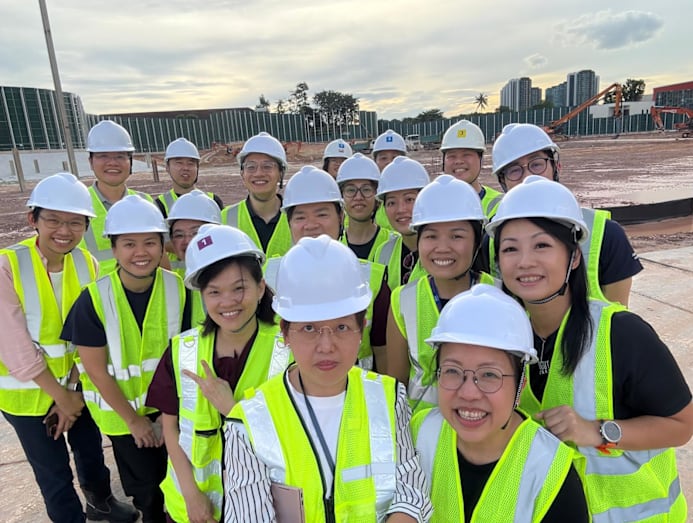
For Lee, encouraging innovation is not about piling on more work, but about giving staff the tools to grow in an industry that is constantly evolving.
“Shying away from innovation will only sabotage the hospital,” she said. “And innovation, like diversity, can feel like a loaded buzzword, but it’s really the idea of introducing new things.”
THE IMPORTANCE OF GROWTH ALONGSIDE SERVICE
In the current economy, Lee recognises that altruism alone is no longer enough to sustain a healthcare workforce stretched thin. It is especially a task for the hospital, which is ramping up its capacity and looking to hire more staff to attend to patients’ dynamic needs.
“People need to feel they are learning, growing and staying relevant,” she said. “Altruism can still be the anchor, but we shouldn’t take advantage of staff’s willingness to serve.”
That belief was shaped when she saw just how close some staff came to walking away from the profession altogether. During the pandemic, Lee recalled conversations with nurses who told her they loved patient care, but no longer recognised themselves at work.
For Lee, fulfilment does not mean romanticising sacrifice. It means creating space for staff to grow, whether by picking up new skills, rotating roles, or simply being heard. It’s with growth that service can remain a choice for every healthcare worker, rather than a burden.
“If people stop growing, they’re stretched way too thin for little to no reason, and then they leave,” she said. “And when good people leave, good leaders must listen – and change.”
CNA Women is a section on CNA Lifestyle that seeks to inform, empower and inspire the modern woman. If you have women-related news, issues and ideas to share with us, email CNAWomen [at] mediacorp.com.sg.