She treats life-threatening infections – and fights the stigma that keeps patients from seeking treatment
From bloodstream infections to tuberculosis and HIV, Associate Professor Sophia Archuleta has spent nearly two decades diagnosing complex infections – while working to counter misconceptions that can delay testing and treatment.
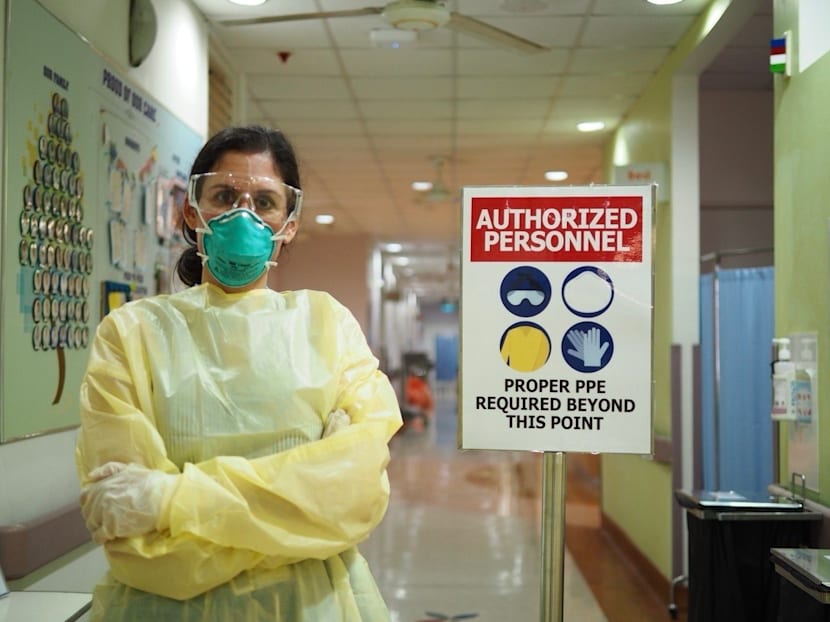
Associate Professor Sophia Archuleta at the National University Hospital during the COVID-19 outbreak in 2020 – the infectious diseases specialist treats patients with complex and sometimes deadly infections. (Photo: Dr Nares Smitasin)

This audio is generated by an AI tool.


The patient arrived with a severe lung infection, coughing and gasping for air. Her oxygen levels were so low that she was rushed into the intensive care unit and placed on a life support ventilator.
She was found to have pneumocystis pneumonia, an infection that occurs most commonly in people with a weakened immune system, including human immunodeficiency virus (HIV). She later tested positive for HIV.
After her lung infection stabilised, her doctor, Associate Professor Sophia Archuleta, broke the news to her. Only in her early 30s at the time, and married without children, it seemed like her hopes for starting a family were suddenly dashed.
But it is a common misconception that patients living with HIV cannot have healthy babies, said Assoc Prof Archuleta. “With antiretroviral therapy (medicine that suppresses HIV), you can halt vertical transmission so the HIV will not pass from mum to baby,” she explained.
This patient went on to deliver two healthy babies.
This is all in a day’s work for the 53-year-old, who grew up in Greece and is a Singapore permanent resident. The senior consultant at the Division of Infectious Diseases at the National University Hospital (NUH) has spent nearly two decades in Singapore treating complex infections such as COVID-19, bloodstream infections and fever of unknown origin, while pushing back against misconceptions and stigma around conditions like HIV.
DIAGNOSING DANGEROUS INFECTIONS
When most people think of infectious diseases, the deadly COVID-19 pandemic might come to mind. But the field encompasses hundreds of illnesses caused by bacteria, viruses, fungi and parasites that can affect nearly every organ in the body.
Some, like COVID-19, tuberculosis and measles, can spread through the air, which require doctors to wear respirators and other protective equipment when treating patients.
Others, such as dengue fever, HIV and some forms of viral hepatitis, spread through mosquitoes, blood or bodily fluids, and are less easily transmitted in clinical settings when standard precautions are followed.
Indeed, some of these bacteria normally live harmlessly on the body. One recent case at NUH involved staphylococcus aureus, a bacterium commonly found on healthy skin.
Because the patient had folliculitis – inflammation of the hair follicle that broke the skin barrier – the bacterium entered her bloodstream and caused sepsis, a life-threatening condition in which the body’s response to infection resulted in fever and dangerously low blood pressure, putting vital organs at risk. The infection had also spread to her lungs and spine, putting her at risk for paralysis without timely treatment.
In some patients, staphylococcus aureus can even attach to heart valves, or infect prosthetic devices such as pacemakers, defibrillators, or knee and hip replacements, making treatment more difficult, Assoc Prof Archuleta told CNA Women.
Each day, she sees one or two patients with infectious diseases in critical condition, where accurate diagnosis and treatment is a race against time.
Recently, a patient from Bangladesh came in with abdominal pain, and after a CT scan was found to have a liver abscess, a pocket of pus in the liver. He was found to have a parasitic infection rarely seen in Singapore.
Other infectious diseases in Singapore that Assoc Prof Archuleta has treated include malaria, caused by parasites spread through infected mosquito bites, and mpox, a viral disease that spreads through close contact, and causes fever and a rash.
Assoc Prof Archuleta relies on physical examination, tests of blood, urine and sputum, and in some cases, diagnostic imaging and biopsy. She also considers factors such as travel history.
In people living with HIV, as well as cancer and transplant patients with weakened immune systems, she must also consider a wider range of more unusual infections when making a diagnosis and prescribing treatment.
CONFRONTING HIV STIGMA
Because infectious diseases often provoke fear, such as HIV, Assoc Prof Archuleta’s work extends beyond treatment to confronting stigma.
Early in her career, people living with HIV often faced discrimination, even from healthcare workers who feared the virus would spread to staff and other patients, she said – although HIV is “only transmitted from sex, blood and fluids, not from contact”.

“Stigma surrounding infectious diseases exists to greater or lesser degrees. For HIV, (the stigma is greater) partly because it’s a sexually transmitted infection,” she noted.
People may also make off-hand remarks and judgments about those living with HIV, linking it to certain sexual behaviours such as homosexuality or promiscuity, Assoc Prof Archuleta added.
“I’ve also had newly diagnosed patients tell me that their own families asked them to use separate plates, disposable utensils or wash their clothes separately because of fear of transmission,” she said. HIV cannot be transmitted in that manner.
This stigma has prevented some from testing for HIV even if they suspect they have the disease, and consequently delayed treatment, she added.
“I’ve cared for some patients who were diagnosed very late, when they were already seriously ill with AIDS and multiple opportunistic infections. Those cases are heartbreaking. If patients had tested earlier, they can start treatment and live long, healthy lives,” Assoc Prof Archuleta said.
To reduce barriers to testing, Assoc Prof Archuleta and her team helped introduce HIV self-testing kits that can be used privately at home with a simple oral swab. The kits were first piloted in Singapore in 2022 and have been available at selected retail pharmacies nationwide since 2025.
ADVOCATING FOR CHANGE
To move the needle, advocacy work is as important as treating patients, stressed Assoc Prof Archuleta.
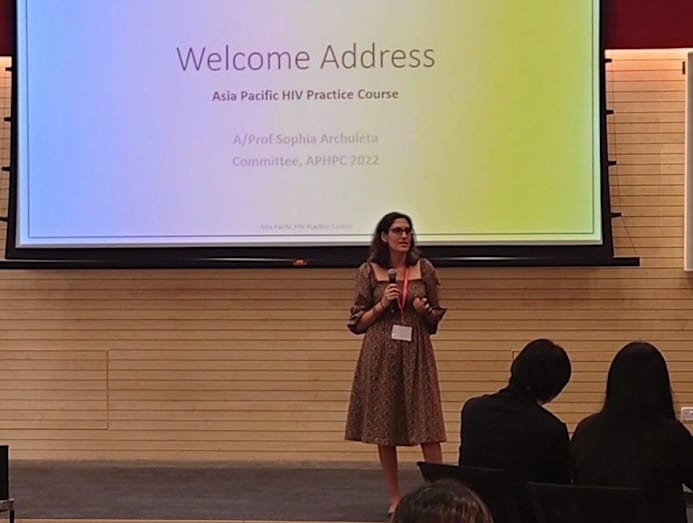
In 2016, she worked with colleagues to establish training initiatives such as the Asia Pacific HIV Practice Course to educate healthcare workers across Singapore and the region about HIV care and stigma, and ensure that patients receive appropriate and sensitive care even when visiting general practitioners, dentists, gynaecologists and other specialists.
As director of the National HIV Programme at the National Centre for Infectious Diseases from 2017 to 2024, she worked with community organisations such as Action for AIDS and public health agencies to support education and outreach efforts to encourage testing and reduce stigma surrounding HIV.
Because one common misconception is that HIV will inevitably spread through sexual activity, one of the key messages she advocates is “U = U”, which stands for undetectable equals untransmittable.
Assoc Prof Archuleta explained that antiretroviral therapy can suppress the amount of HIV virus in the blood to undetectable levels. At undetectable levels, the virus cannot be transmitted to sexual partners.
“Though there is no cure for HIV, (with treatment), living with the condition can be pretty similar to living with diabetes, high blood pressure or some other chronic conditions,” she said.
Her hope is for the public to be mindful about how they think about infectious diseases in general, and HIV in particular, approaching each individual with an open mind.
“Empathy goes a long way. Everybody is an individual and has their own personal journey. They are not defined by their medical condition,” she said.

Looking back at her journey as an infectious diseases specialist, Assoc Prof Archuleta said she has been fascinated by microbes since she was seven or eight years old, when her mother – a microbiologist – gave her a storybook about a love story between Proteus and Klebsiella, two bacteria that coexist with us in the intestines, but cause infections elsewhere in the body.
Grateful for a dynamic career in her chosen field, she hopes to help other women access equal opportunities in the medical and academic field.
In 2017, she founded the National University Health System Women in Science and Healthcare, and now serves as Assistant Dean of the Equal Opportunities and Career Development Office at NUS Medicine, working to tackle gender inequality through mentorship, leadership development, and programmes to raise awareness of unconscious gender bias.
“A turning point for me was being in a committee meeting and being the only woman in the room – an isolating experience even though no one was doing anything on purpose or discriminating against women. Just the experience of being in the minority was isolating and takes away some of the power of a diverse voice,” she said.
Having pushed through these challenges to become one of Singapore’s leading infectious diseases specialists, her advice to young women is simple: pursue what fascinates you and don’t be afraid to take the leap.
CNA Women is a section on CNA Lifestyle that seeks to inform, empower and inspire the modern woman. If you have women-related news, issues and ideas to share with us, email CNAWomen [at] mediacorp.com.sg.