She lost one son to a rare genetic disease – now her fourth child has it too: 'I want to hold on to hope'
She slept in hospital intensive care units and navigated family outings with a breathing machine – all for her late son, who had spinal muscular atrophy. Now, with another child diagnosed with the condition, Norhaziqah Rosli is fighting to secure a future for him.
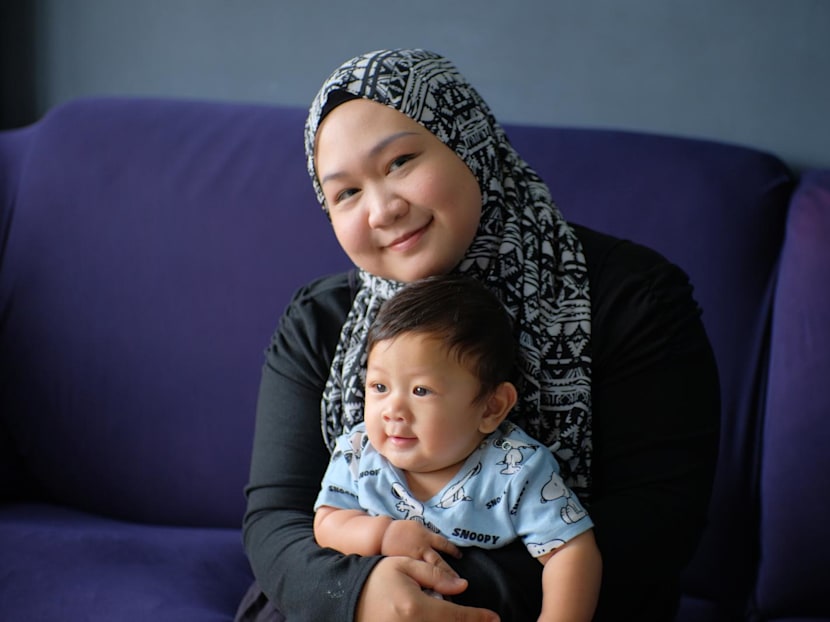
Norhaziqah Rosli with her seven-month-old son, Faziq, who was diagnosed with spinal muscular atrophy, the rare genetic disease his late brother had. (Photo: CNA/Izza Haziqah)

This audio is generated by an AI tool.


About five months into her pregnancy, Norhaziqah Rosli’s obstetrician-gynaecologist posed one of the most difficult questions she has ever had to answer: “Do you want to keep the baby?"
She was expecting her fourth child and had just received the results of her amniocentesis, an optional test for women in their second trimester that screens for genetic or chromosomal disorders and other infections.
“The doctor told me that the baby inside me tested positive for spinal muscular atrophy (SMA),” the 34-year-old told CNA Women, her eyes downcast.
SMA is a rare genetic condition that causes muscles to weaken and break down. It is a progressive disease, so without proper medication, the condition will worsen over time.
Her second child, Faris, had died in 2022 from complications due to SMA. He was six.
“It was as if my whole life was sinking again,” she said.
Nevertheless, she told her obstetrician-gynaecologist: “Yes, I want to keep my baby.”
Her baby, Faziq, was born in June 2025 and is now seven months old. “I could hardly believe that this is happening again to me and my husband,” she said. “But I believe that all will be well, I want to have hope.”
HER FIRST ENCOUNTER WITH SPINAL MUSCULAR ATROPHY
In early 2017, Norhaziqah noticed that her late son Faris had not met many of his six-month developmental milestones.
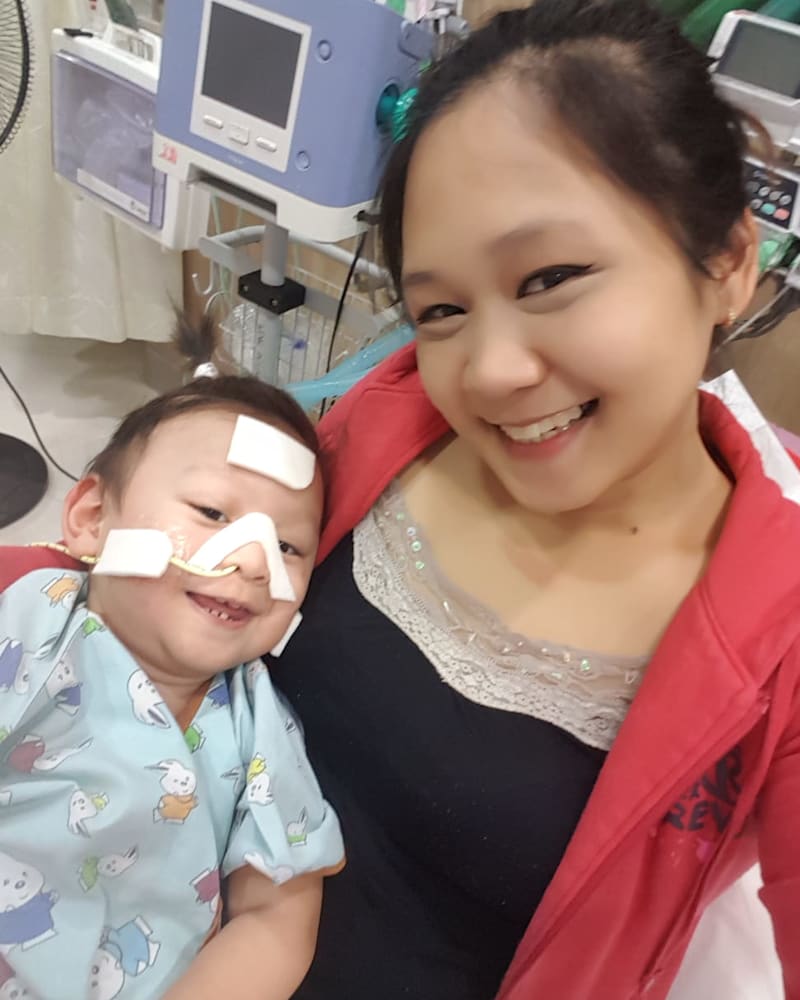
When his parents took him to a paediatrician, the doctor advised them to send him for genetic testing.
The results returned positive for type 1 spinal muscular atrophy. The disease is usually diagnosed within the first six months of life, when the child misses crucial milestones like holding their head up independently or swallowing and sucking with little trouble.
“It was my first time hearing about it; the name looked so medical and foreign,” said Norhaziqah. “I didn’t really know what it was, but I can clearly remember the doctor’s face – he looked very sad and serious, like he was about to deliver the most heartbreaking news.”
And he did.
There are different types and severities of SMA, and the doctor told her that those with type 1 SMA typically have a life expectancy of under two years, without treatment. His condition would also worsen over time.
There is no known cure for SMA, and medication can cost up to tens of thousands of dollars a month – far beyond what the family could afford. Doctors could only manage Faris’ symptoms, which included severe muscle weakness, breathing difficulties and pain due to orthopaedic issues like hip dislocations.
“I looked at Faris. On the outside, he looked so normal. He smiled, he babbled, he was a happy baby. But apparently, inside, his body was breaking down. I was shocked. I didn’t know what to do,” Norhaziqah said.
She did everything she could to ensure her son lived comfortably and with dignity. She remained a stay-at-home mum while her husband took on additional part-time work so she could focus on caring for Faris and their older son, Farrell, who was then two years old.
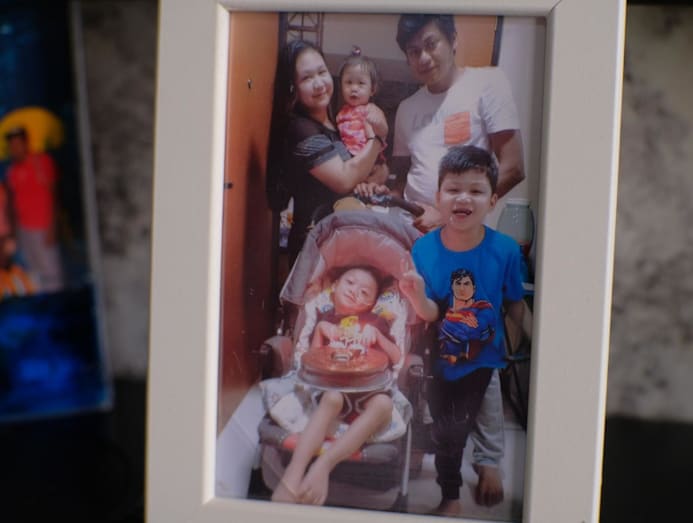
“I was told I won’t have that much time with Faris, so I wanted to be there for him at every moment,” she said.
“Since his diagnosis, it was constant in-and-out of the hospital intensive care unit (ICU) for us,” she added. “There were many frightening moments. One moment, he would seem fine, and the next, he would suddenly turn blue because he couldn’t breathe. We had to make multiple frantic rushes to the hospital.”
The couple took turns staying overnight in the hospital with Faris. Despite her husband’s multiple jobs, he would care for Faris in the ICU while Norhaziqah managed matters at home and looked after Farrell.
Her mother was another source of strength. “She was always there for me,” Norhaziqah said. “She would hold me when I cried, cook for me, clean for me, and care for her grandson whenever I had to make emergency trips to the hospital.”
In July 2018, Norhaziqah gave birth to her third child, a daughter named Fasha.
She recalled being filled with anxiety during the pregnancy. “I had so many thoughts running through my head,” she said. “What if she’s also born with a disease? Could I cope? I already had Farrell and Faris to take care of – could I really manage?”
Those fears eased when Fasha was born healthy.
BALANCING JOY AND STRUGGLE
“Faris couldn’t walk or move much, so he was always in a stroller and relied on breathing machines to survive, but even then, he was a talker,” Norhaziqah said, smiling.
“He learned how to talk faster than Farrell and Fasha. He was excited about the smallest things, and he used every moment to show off what he knew.”
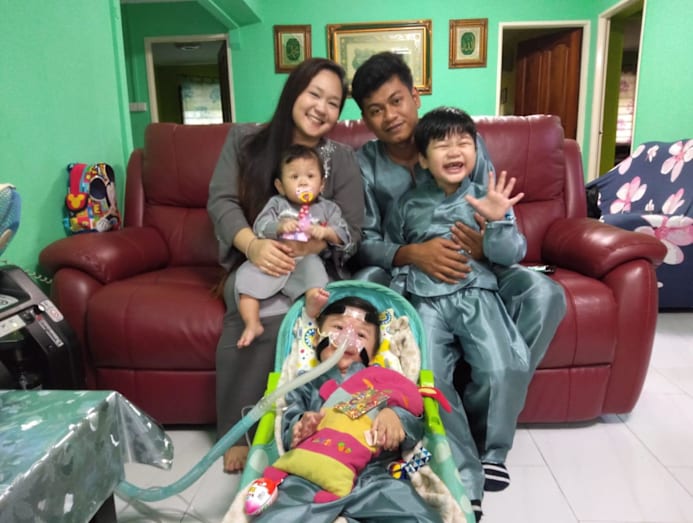
Despite the logistical challenges and the constant anxiety of needing yet another emergency visit to the hospital, the family made it a point to go out together occasionally. The couple felt it was important to spend time as a family, even if it took careful planning.
They would pack Faris’ breathing machines and plan every detail – from the journey to what to pack in case of another hospital stay – before heading out to the zoo, the beach, and other spots.
Farrell and Fasha adored their brother and were kind and understanding about his condition, said Norhaziqah. “They loved playing with Faris. They would joke and laugh together a lot.”
When Faris turned two and surpassed the doctor’s initial prediction of his life expectancy, there were days when Norhaziqah felt they could grow into this life – one marked by frequent hospital visits, financial strain, and exhaustion – while still trying to live as normally as possible.
“I was getting used to the fact that this was my life,” she said. “It was tough and crazy, but this life and my children were mine, and I was grateful.”
But in June 2022, on her birthday, Norhaziqah lost Faris.
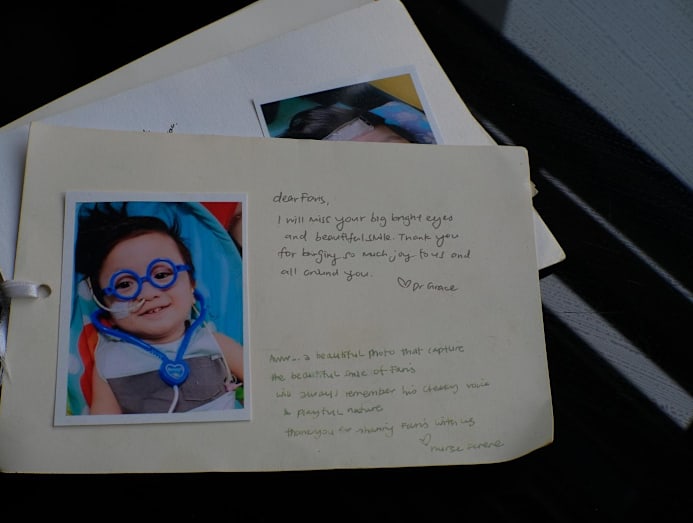
Two years after his death, Norhaziqah found out she was pregnant again.
“I was surprised and excited,” she said. “But I also had darker thoughts, worse than when I was pregnant with Fasha. Will the same thing happen again? What if he’s sick?”
Those fears were confirmed with her amniocentesis. Her fourth child would also have SMA.
“I was so shocked that I couldn’t feel anything, like I was numb,” she said. “I was told SMA was a rare disease, so how was it possible that I got two children with it?”
Her obstetrician-gynaecologist was gentle and understanding. She reassured Norhaziqah that she would support whatever decision she made about her pregnancy.
As she deliberated, Norhaziqah thought back to what it had taken to raise Faris.
“The mountains of hospital bills, the sleepless nights, the constant trips in and out of the hospital, the screams of pain, the endless hardship – I thought of it all,” she said.
“I wondered: Could I really do this again? Now that I’m older, and I already have two children, aged 10 and seven, to raise?”
It was tough and crazy, but this life and my children were mine, and I was grateful.
“In the end, what assured me was my husband and mother; they told me that children are blessings, and that whatever happens to this baby inside me, the two of them will be there for me.”
Their words gave her the strength to move forward and to prepare herself to raise her fourth child.
Not everyone, however, was supportive.
“Some people have said things like: You and your husband aren’t millionaires, you already have two kids, your son has died – why are you so obsessed with having more children?” she said.
“These comments hurt. But I truly believe that children are a source of joy and blessings. Whatever struggles come with raising them, I believe I can manage, with the support around me.”
HOLDING ON TO HOPE
Faziq is now seven months old. Norhaziqah calls him her “miracle baby” and her “anak syurga” – Malay for “child of heaven” and a term commonly used to refer to children with disabilities or special needs.
“His older siblings love to play with and tease him – we all miss Faris all the time, so I feel like Faziq makes us complete again,” she said.
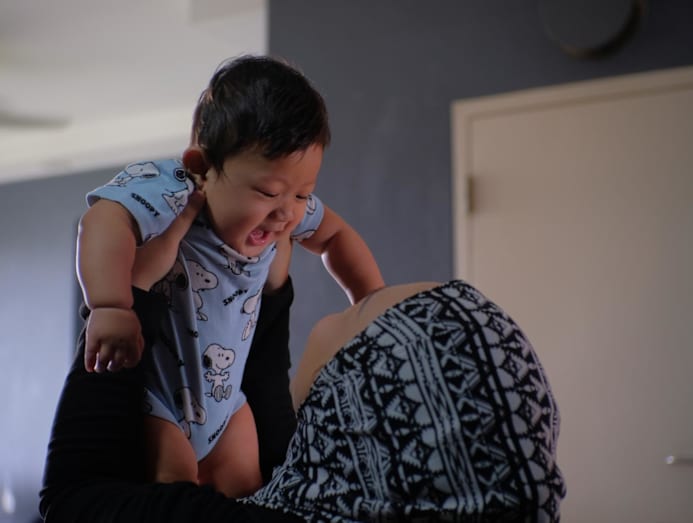
Unlike his late brother, Faziq’s condition is more stable. He can move around on the floor, raise his arms, and become animated when he is excited.
“Faziq is also not as ‘floppy’ as Faris was – he can sit up straighter, and though he sees the doctor regularly, we all get to go out more as a family,” Norhaziqah said.
The difference, she said, is early access to treatment.
“With Faris, there was no medication that was available and that we could afford – so we had to make do by only managing his pain and symptoms” Norhaziqah said.
Faziq, on the other hand, has been on a daily medication, risdiplam, since birth. The drug is a relatively new treatment that was approved by the Health Sciences Authority in 2021. It helps slow the progression of SMA, and with the drug, Faziq has reached some motor milestones, albeit with some muscle weakness.
Risdiplam currently costs about S$4,800 a month at Faziq’s dosage, Norhaziqah said. It is not a cure and must be taken long-term to maintain muscle strength. But as Faziq grows, they will need to fork out about S$12,000 a month for an appropriate dose of the medicine, she added.
Because of this, Faziq’s paediatric neurologists have recommended a one-time gene therapy that targets the root cause of SMA by replacing the missing gene. While it does not cure the disease, the treatment stops its progression and significantly improves muscle function, helping children with SMA achieve developmental milestones.
Doctors recommend that babies with SMA receive the therapy as soon as possible – ideally in the first few months of life, and before they turn two years old – as the therapy works best when administered early, before the muscle damage becomes permanent.
Whatever struggles come with raising them, I believe I can manage, with the support around me.
However, Norhaziqah said that the treatment costs more than S$2.3 million and is not subsidised or covered under Singapore’s Rare Disease Fund.
To raise the funds, Norhaziqah is currently working with crowdfunding charity Ray of Hope.
“It’s definitely a lot of money,” she said. “But I have redha (acceptance and contentment with fate in Malay) that as long as we do our best, we will be okay, no matter what happens.
“Of course, the worst thoughts still cross my mind. What if we don’t raise enough funds? What if he can’t get the medication in time? What if I lose him the way I lost Faris?
“But I want to hold on to hope. I must believe that there is a possibility that all will be well, that there will be a cure, and that Faziq can receive it.
“And if not,” she said, “I believe there is still good in this situation, and that one day, I will meet them again."
CNA Women is a section on CNA Lifestyle that seeks to inform, empower and inspire the modern woman. If you have women-related news, issues and ideas to share with us, email CNAWomen [at] mediacorp.com.sg.