From baby carriers to Tamil books: How 4 Singapore mums built businesses for children
From babywearing products and Tamil learning tools to reusable dining mats for screen-free mealtimes and sustainable clothing, four Singapore mums have built businesses inspired by their children and experiences of motherhood – while balancing the demands of work and family.
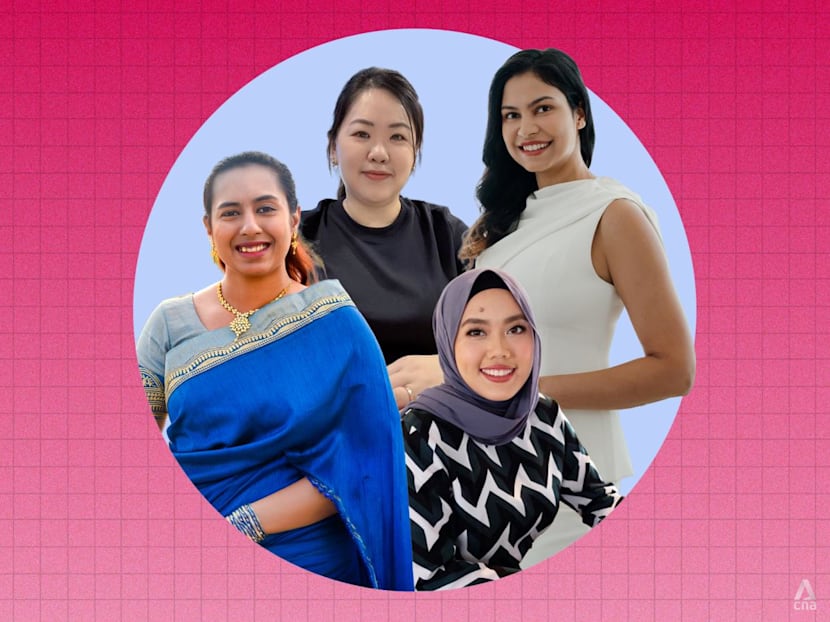
(Clockwise from left) Aysha Iqbal, Valene Lin, Kriti Gupta and Nurjanna Ng are mothers who started businesses inspired by their children. (Art: CNA/Jasper Loh)

This audio is generated by an AI tool.


Inspiration for businesses comes from many sources. For these four mums in Singapore, it was their children and motherhood journeys that sparked ideas for their foray into entrepreneurship.
Meet the women who are making a difference in children’s lives – and are doing it all for their own kids.
SOULSLINGS SINGAPORE: BABYWEARING
Nurjanna Ng’s oldest child was a year old when she was retrenched from her marketing job in 2015. To support her family, she started an online store selling baby carriers from international brands.
Soulslings, a babywearing brand from India, was one of those brands.
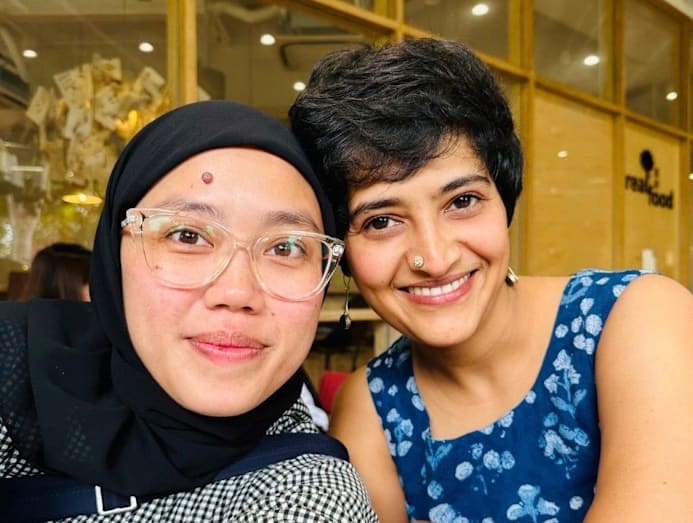
Ng was impressed by its thoughtful designs and how it suited Asian body types. “Many carriers designed for Western markets do not always translate seamlessly to the region, often falling short in terms of suitability for humid climates and Asian body types,” the 42-year-old told CNA Women.
In 2017, she founded Soulslings Singapore to sell its products exclusively.
The baby carriers and slings are made using 100 per cent natural fabrics; the handpicked materials are lightweight and breathable, yet supportive and durable.
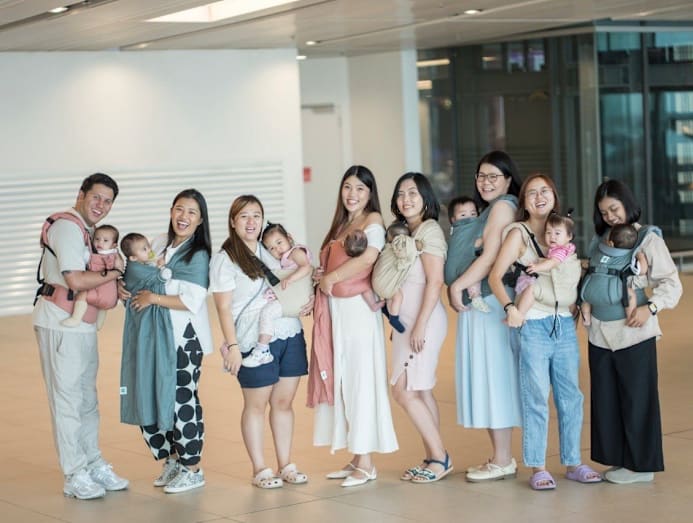
The brand is proudly size-inclusive, catering to a wide spectrum of body types. Carriers and slings are available in a range of colours and designs for newborns to five-year-olds, costing from S$79 to S$379.
The products are available online and through Shopee and TikTok. The brand also offers in-person visits at its warehouse in Yishun, by appointment.
Ng is now a mother of five children aged 13, 11, four, two, and one month, and her journey has taught her the power of delegation, trust and empowering like-minded mothers to grow alongside her and support the business operations.
Her Soulslings team is made up of Singaporean mums – two full-time staff and several part-timers – and the work culture is “designed to be flexible and empathetic”. Each team member decides on a rhythm that works best for her, while also respecting other team members’ boundaries and responsibilities.
ABCS OF TAMIL: MAKING LANGUAGE FUN
Aysha Iqbal’s love for Tamil began in primary school, thanks to a teacher who went the extra mile to help her become fluent in a short time. In secondary school, she joined the Indian Cultural Society as a co-curricular activity, which helped her feel connected to her community and heritage.
As a young mother, she observed that the connection that Singaporean Indians had with Tamil was fading. “I noticed a growing decline in children’s interest in their mother tongue and I felt a strong need to act before it was too late,” said the 43-year-old.
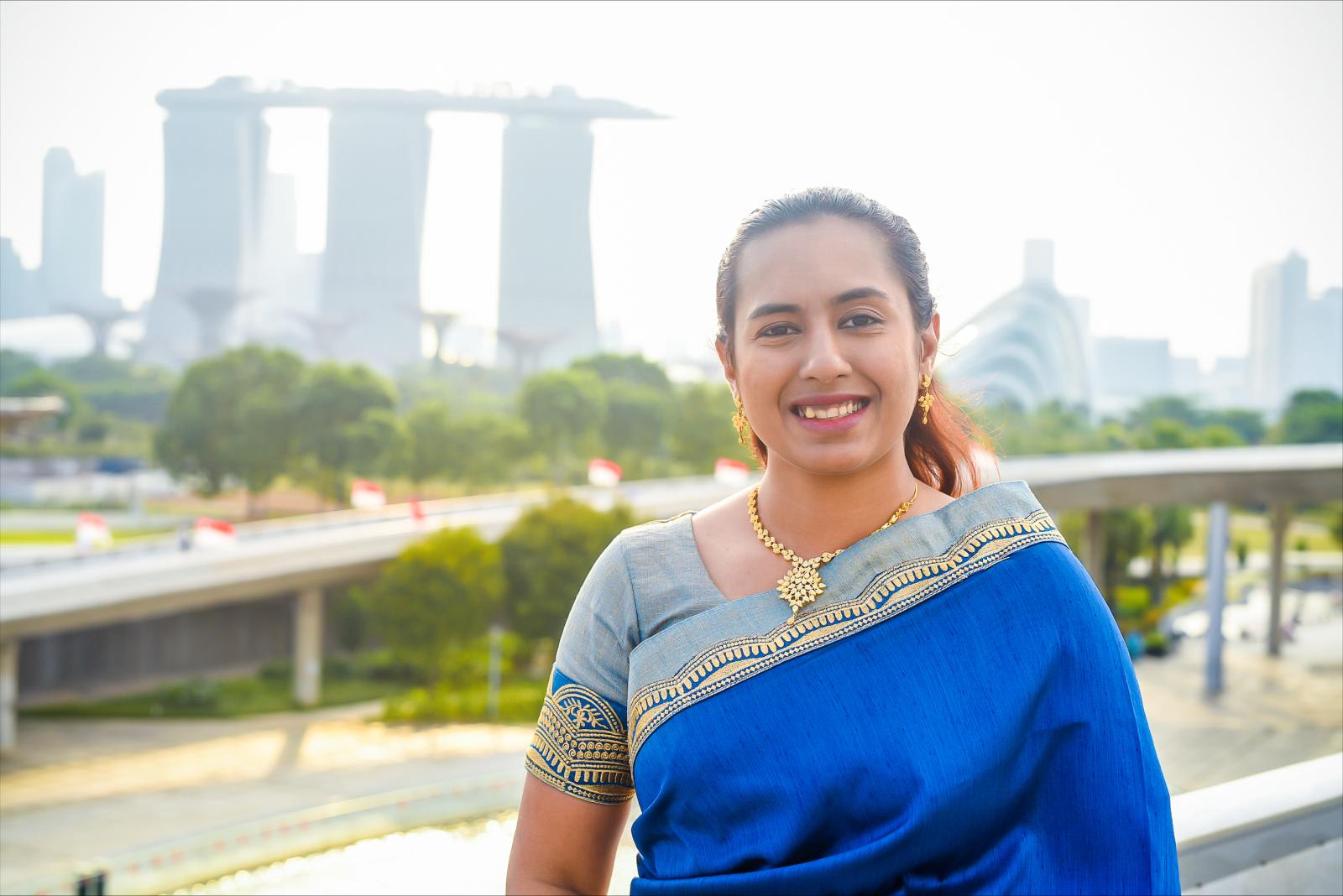
In 2014, Aysha, then a stay-at-home mum to her seven-year-old son, started ABCs of Tamil to “help parents and educators nurture a genuine love for the Tamil language from an early age”.
She created her own resources at home – activity books that introduced basic Tamil vocabulary and letters to young children.
The brand currently has a catalogue of about 60 products – from storybooks and workbooks to puzzles and educational toys – for babies to Primary Six students. Aysha also created a Primary School Leaving Examination Tamil assessment book with guidance from educators.
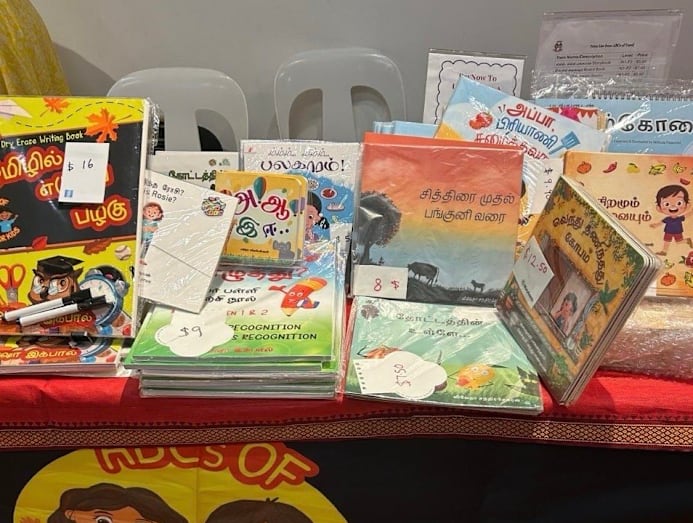
She also offers a curated collection of Tamil books from other authors from Singapore and India. In-house titles are priced between S$5 and S$18 while others can go up to S$25.
The full range is available on the website, as well as at pop-ups, school book fairs and community events.
She launches new resources every year or two and updates her stock whenever she finds titles children in Singapore might enjoy.
“It’s incredibly fulfilling to know that we are making Tamil more accessible and enjoyable for families,” Aysha told CNA Women. “In a multicultural society like ours, preserving our mother tongue will preserve our identity for generations to come.”
BUSY MAT: FOCUSED FUN AT MEALTIMES
Keeping children focused during mealtimes is a struggle for many parents. Valene Lin, 40, found a solution for her own child – and turned it into a business.
In 2019, when her daughter was eight months old, the Singaporean mum wanted mealtimes to be a space to slow down, talk and connect.
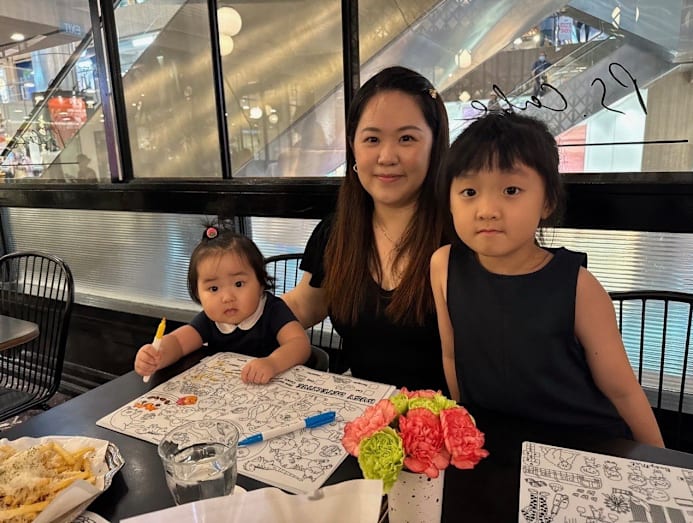
“I’ve always loved drawing and colouring so I began sketching simple designs for my daughter to colour at the table,” Lin told CNA Women. “That was how the first Busy Mat came about – a reusable, screen-free activity that felt both practical and meaningful.”
Busy Mats are placemats in various sizes that children can draw or colour on while having a meal. They cost from S$11 for a travel-size (15cm by 20cm) mat to S$23 for a premium large (30cm by 40cm) dining placemat.
Many of them incorporate learning elements like simple puzzles, tracing and guided prompts to encourage creativity and thinking. The ink can be easily wiped off with a damp cloth or wet wipe – making them reusable.
The mats are recommended for children aged two to seven but Lin has seen younger toddlers and older kids enjoy them in different ways.
The intention of the mats is not just to keep children occupied – they also create space for conversation, creativity and presence without relying on screens.
“One meaningful feedback I’ve received is from parents who share that their children now ask for Busy Mat when they go out, instead of reaching for a device,” Lin said. “For some families, it has become part of their routine.”
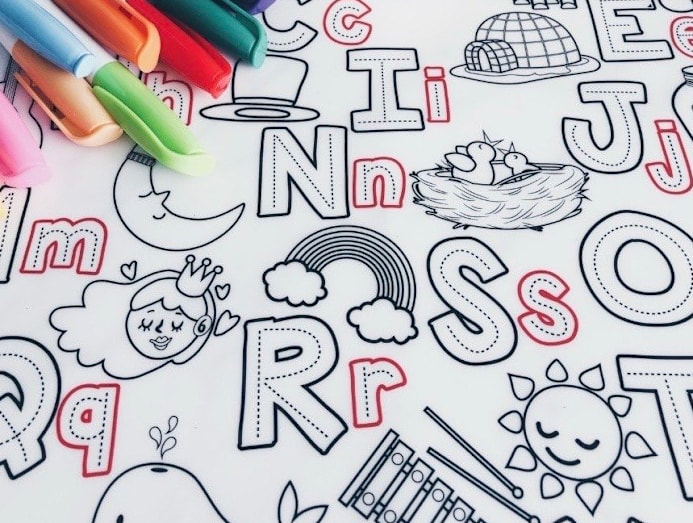
Lin conceptualises the themes, such as dinosaurs or mermaids. She hand-draws some while her in-house designer illustrates the others based on her concepts.
Busy Mat is available through the website, Instagram and TikTok accounts, as well as at Motherswork stores.
Lin’s daughter is now seven and she also has a two-year-old. She said she juggles being a mum and a business owner by getting her kids involved at times.
“My eldest has seen me run pop-ups, speak to customers and experience both encouragement and rejection. It’s not always easy, but it’s important to me that she understands what it means to build something from the ground up,” she said.
NIMBU: SUSTAINABLE KIDSWEAR
Kriti Gupta grew up in India and moved to Singapore in 2006 on a scholarship to study engineering at the National University of Singapore. She then spent over a decade working in sustainability and business development, including leading sustainable mobility initiatives at SP Group and the Singapore Economic Development Board.
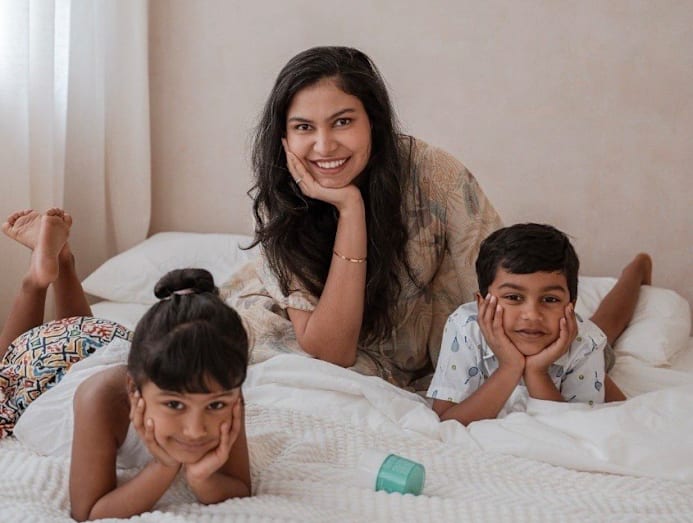
As a champion for sustainability, her perspective changed after she saw how fast her kids outgrew their clothes.
“I was standing in a room full of things my son had outgrown – most of them barely used, almost new,” the 38-year-old told CNA Women. “Here I was, working in sustainability professionally, advocating for large-scale change but at home, I was part of the same cycle of over-consumption.”
She set up Nimbu as a website and Instagram account in 2020. It’s a circular kids and family fashion brand which allows customers to return items through its buyback programme, once your child outgrows the clothes. Customers receive store credits for their next purchase and Nimbu resells the items under its ‘preloved’ category.
Clothes are available for newborns to 14-year-olds, and the adult range starts from XXS sizes for teenagers. Casual outfits start around S$49.90; girls ethnic sets from S$59.90, boys ethnic sets from S$49.90.
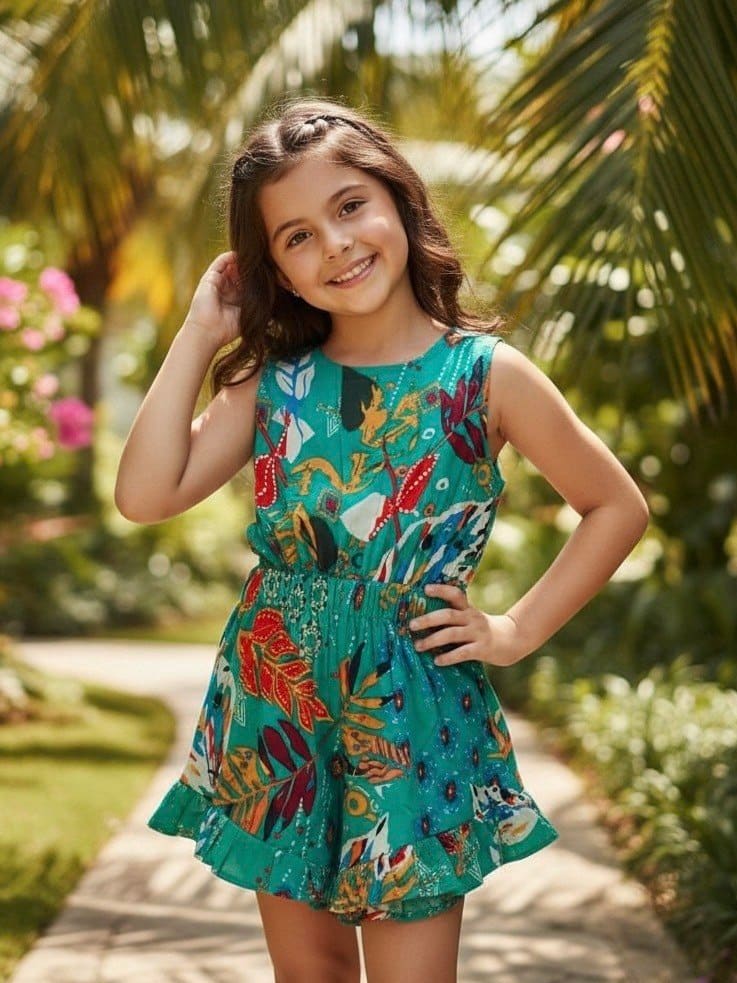
One unique aspect of the clothing line is its ethnic designs – outfits for occasions like Hari Raya, Deepavali and Chinese New Year.
“When I moved to Singapore, I fell in love with how multicultural and expressive the city is,” said Gupta, who is now a Singapore citizen.
“Our ethnic collections are some of our bestsellers. But what’s even more encouraging is seeing customers wear these pieces beyond occasions, returning to get the next size up while we find a new home for the once-celebrated garments, which means we’re slowly shifting behaviour.”
Gupta designs the clothes and produces them via artisan workshops in Jaipur, India. The brand is also stocked at The Green Collective, Design Orchard and The Eco Club at I12 Katong.
Gupta runs Nimbu full-time, which can sometimes be challenging as a mum of two kids, aged seven and five.
“I’m not chasing a perfect balance; I’m building a life where my work and my values can coexist,” she said. “There are days when the business needs me more and days when my kids do. I’ve learned to be okay with that fluidity instead of chasing perfection.”
CNA Women is a section on CNA Lifestyle that seeks to inform, empower and inspire the modern woman. If you have women-related news, issues and ideas to share with us, email CNAWomen [at] mediacorp.com.sg.