JB food guide: Hossan Leong’s picks at Taman Sentosa’s nostalgic open-air hawker street
In this instalment of Makan Kakis, Mediacorp Gold 905’s Denise Tan joins JB resident Hossan Leong for the best bites at Sentosa Street Food, including Grandma Ong’s heritage noodles, Penang laksa and herbal roast duck so popular it sells out by sunset.
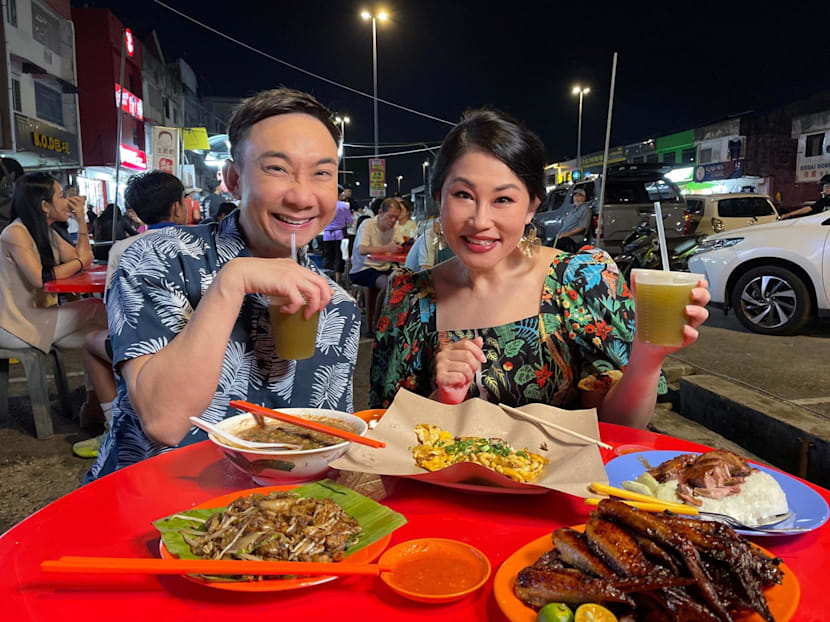
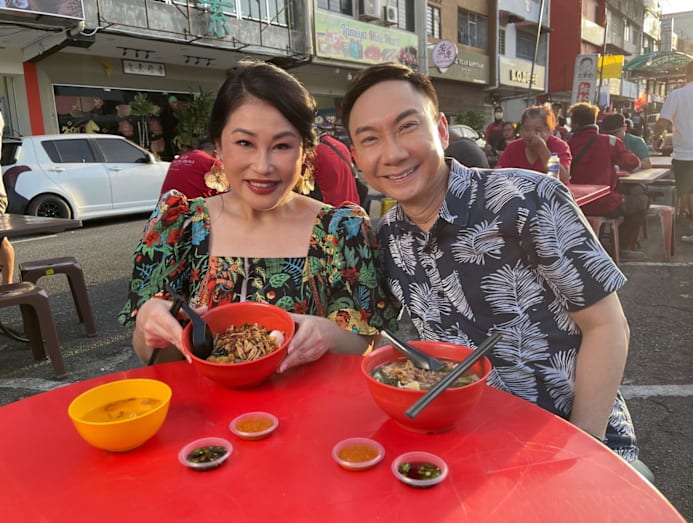
Mediacorp Gold 905 DJ Denise Tan (right) and JB resident Hossan Leong feasted from sunset to supper at Sentosa Street Food and they still couldn't cover all the stalls. (Photo: Denise Tan)

This audio is generated by an AI tool.


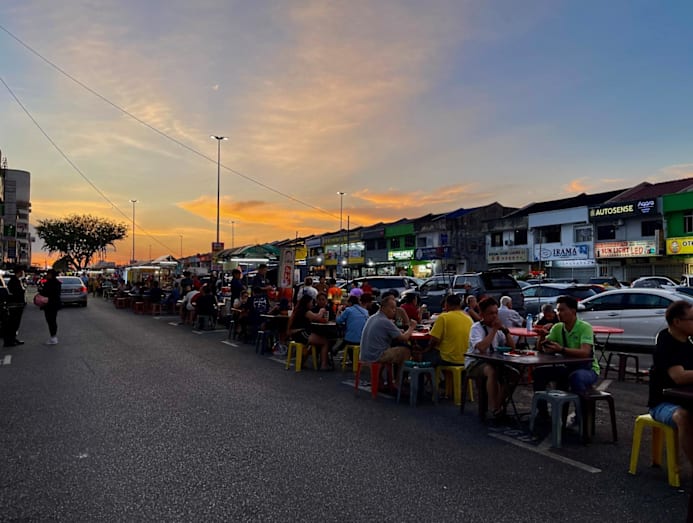
It was close to 5pm at Taman Sentosa in Johor Bahru and the transformation had just begun.
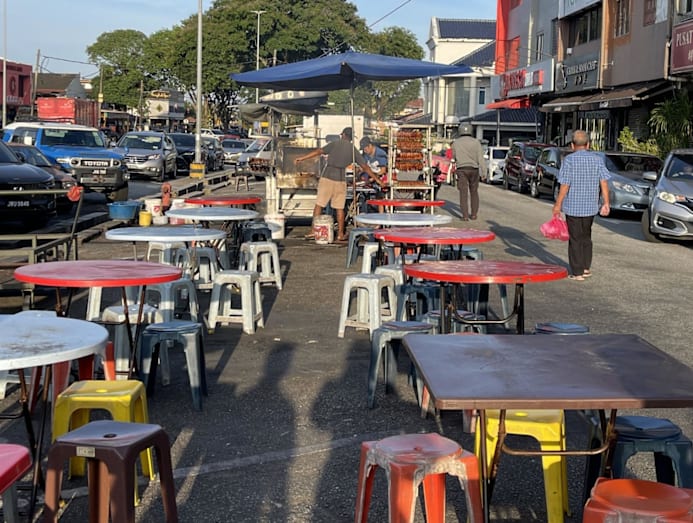
What was a nondescript street parallel to the main road of Jalan Sutera was starting to come alive. Cars were ushered away, pushcarts were rolled in and goods were unloaded from vans and lorries. Tables and chairs were set up next to stalls bustling with the sounds of gas stoves sparking, charcoal fires igniting and the clang of woks being put to work.
The narrow strip of parking lots, just a 10-minute drive from the Causeway, was turning into the famous Sentosa Street Food. As the irresistible smells of cooking filled the air, the scene was set for a meeting with my Makan Kaki – Singaporean entertainer, entrepreneur and JB resident Hossan Leong.
“As the younger generation will say, this is a vibe,” he remarked. “It’s like really a throwback to when I was growing up.” Old school vibes were definitely in place as we situated ourselves at a table and watched the street around us morph into an open-air hawker wonderland.
In this Singaporean's world of shiny shopping malls and homogenous food courts, the food street was an anomaly and charming connection to childhood memories of roadside eating. While a few pockets still exist back home, seeing it in full swing here felt like stepping back in time.
Our first stop was Wang Nai Nai, or Grandma Ong. While it’s now a JB institution with another 16 outlets across the city and even in Kuala Lumpur, we were there for the original – the humble pushcart where the legacy began in 1999. There, 69-year-old matriarch Madam Tan Aik Kin still oversees the making of her signature mee hoon kueh (RM8 or around S$2.60 for a small bowl, RM 9 for medium, RM10 for large).
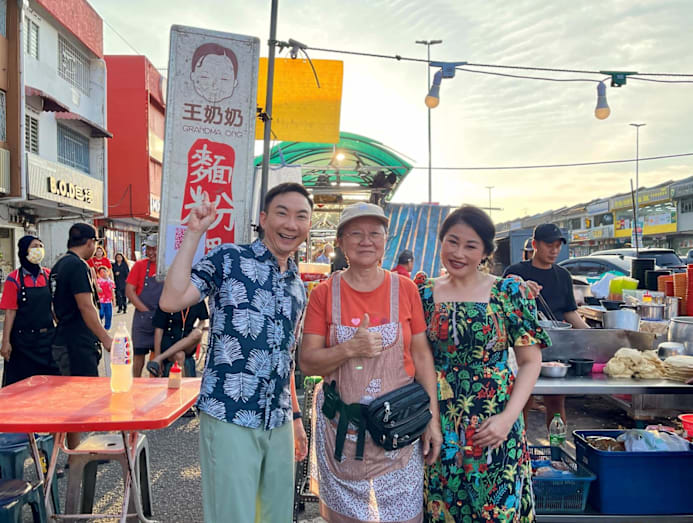
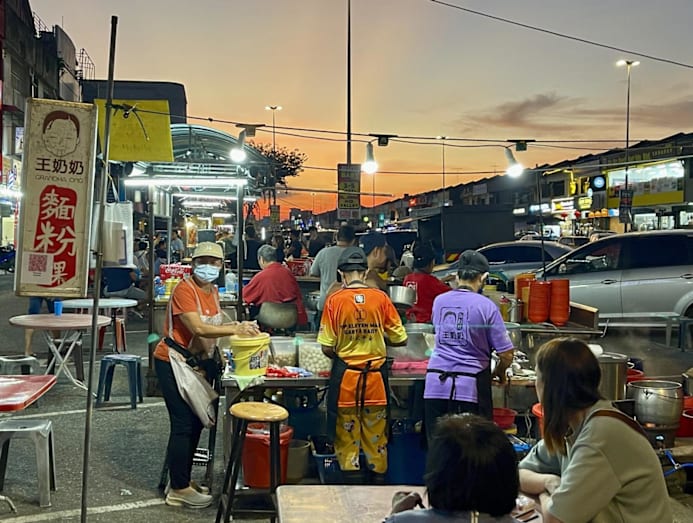
Her stall was a hive of activity, staff diligently churning out steaming bowls of hand-torn noodles at a rapid pace. First, a pasta machine was used to work fresh balls of dough into the perfect consistency. Flattened into sheets, little pieces were casually pinched off and tossed into waiting pots of broth. The dough was also cut into long strands of pan mee (ban mian) and you mian (thin) as other noodle options.
Hossan dove straight into his bowl of mee hoon kueh soup with gusto and declared: "Wow. You can really taste the ikan bilis."
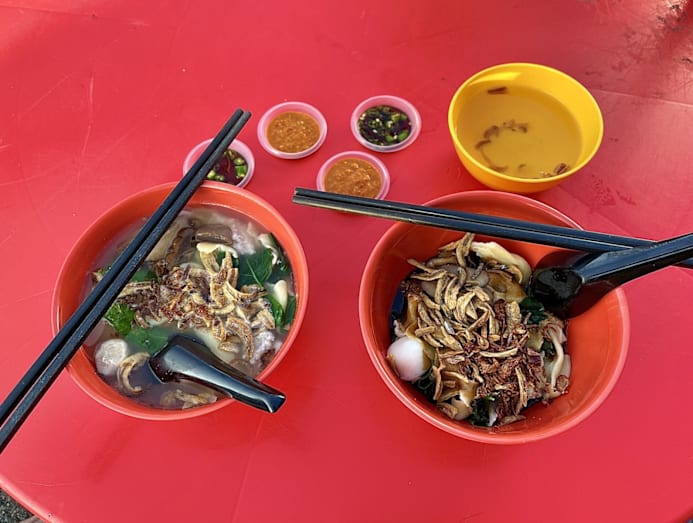
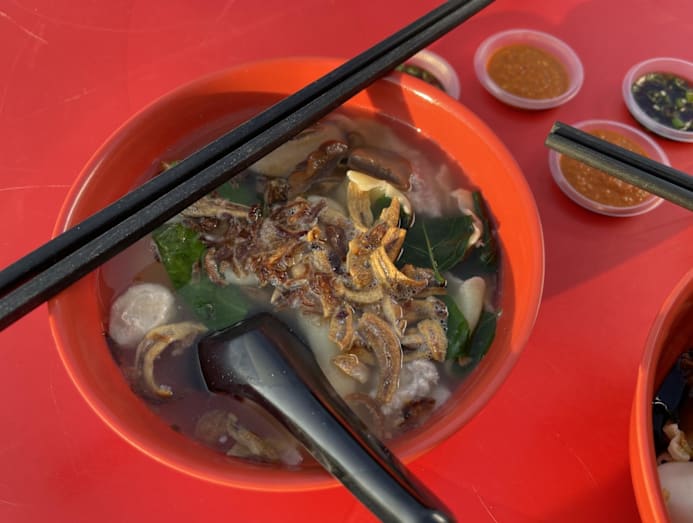
Created from a base of prized, premium quality blue-eyed anchovies, the broth was light yet rich. An ample topping of crispy ikan bilis amplified its umami depth, while fried shallots added toasty sweetness. Handfuls of leafy green sayur manis (mani chye) provided a fresh, herbaceous crunch.
Fishballs and two distinct kinds of meatballs completed the hearty bowl – uniformly firm pork balls contrasted with rustic hand-hewn clusters of tender, fatty minced pork for a meaty mix of textures.
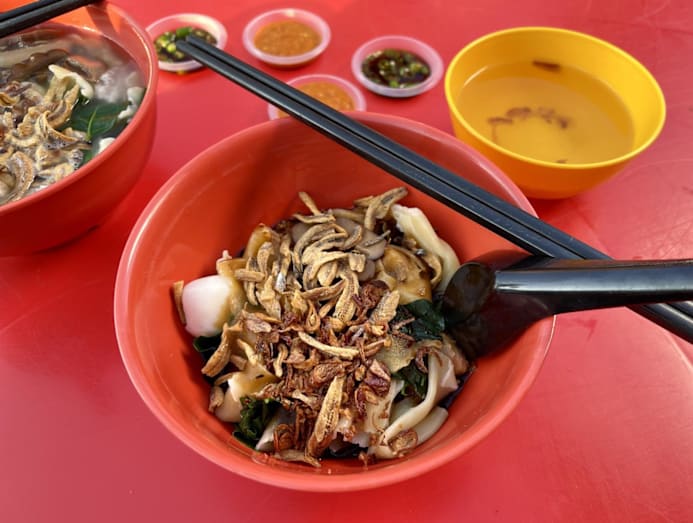
I opted for the dry version, which was tossed in a glossy, caramelised dark sauce. Even after a lengthy spell on the table, the mee hoon kueh didn’t coagulate into a gluey clump, but remained tender, with a delightful chew.
For an essential kick of spice, there were slices of green cili padi in light soya sauce and chunky chilli sauce in little dishes for the dipping. I could smell the latter before I even tasted it. The punchy, lime-spiked sambal belacan with funky notes of fermented shrimp took everything over the top. It was so good that Hossan asked, half-jokingly: "Can I buy this in bottles, please?" The answer is a resounding yes.
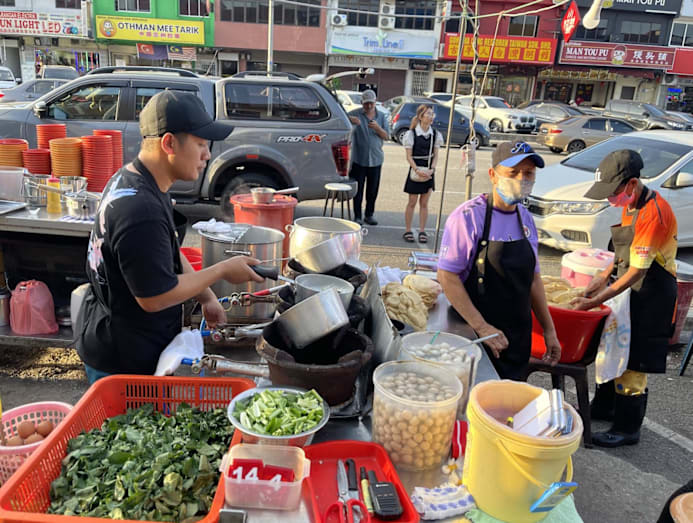
Testament to the family’s entrepreneurial spirit, Mdm Tan and her children have grown the Grandma Ong brand into a ready-to-eat range of condiments and meals, as well as a successful chain of air-conditioned outlets. But for a taste of true street food culture, the original pushcart at Taman Sentosa’s food street is where you’ll find the most authentic experience.
Bathed in the golden light of sunset, the street took on an almost cinematic, vintage hue that sent our sense of nostalgia (and our stomachs) into overdrive. Through a magically retro haze of hunger – or perhaps just the fragrant smoke from the no-name barbecue chicken wing stall next door – Hossan and I split up to hunt down more tasty street eats.
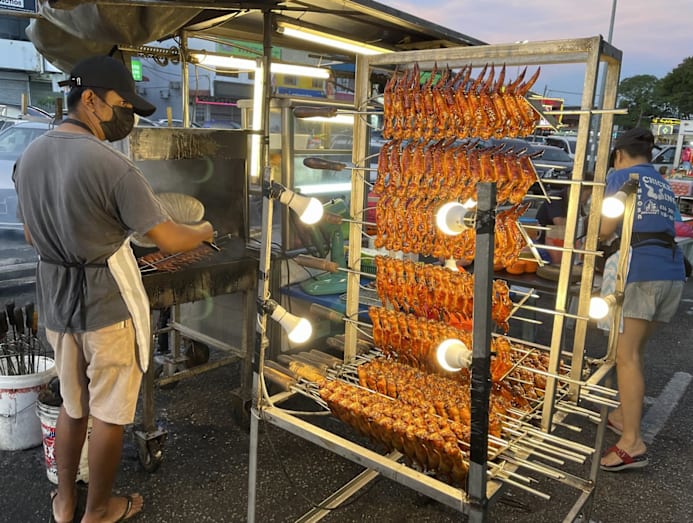
Clearly inspired, Hossan went on a spree and ordered a whopping 20 pieces. At the bold price point of RM4 each, the wings turned out to be undeniably delicious. Laboriously turned over hot coals to burnished bronze perfection, the flame-kissed meat was succulent and bursting with smoky juices.
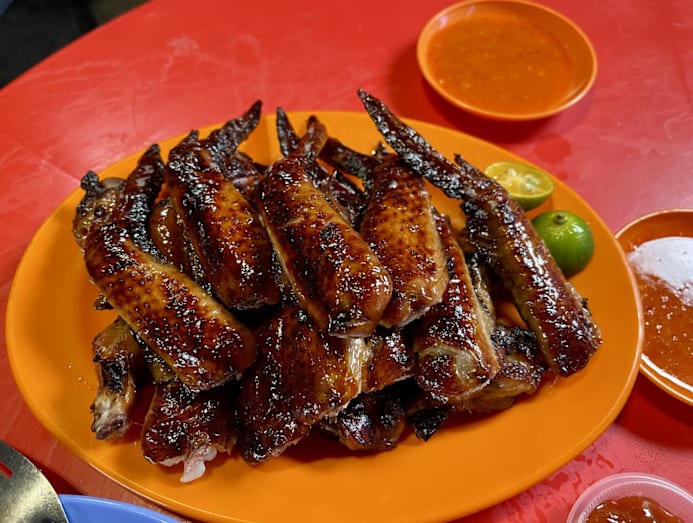
The skin, lovingly glazed in a savoury-sweet marinade, snapped with just the right amount of crispy char. But we both admitted that spending the RM80 on chicken wings was entirely motivated by greed, not rationality.
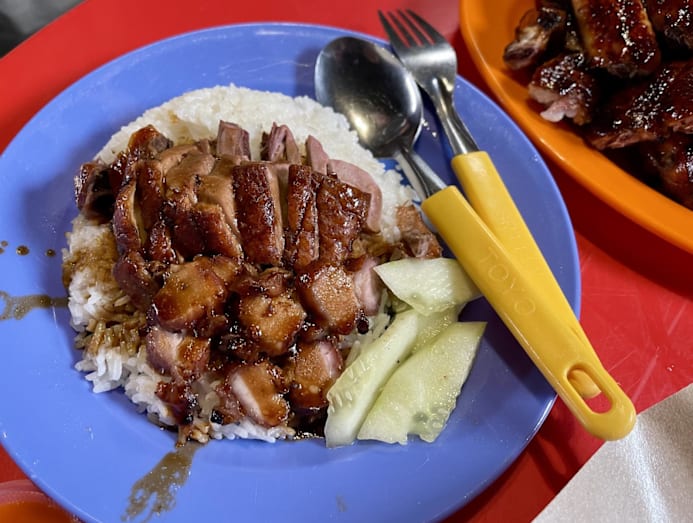
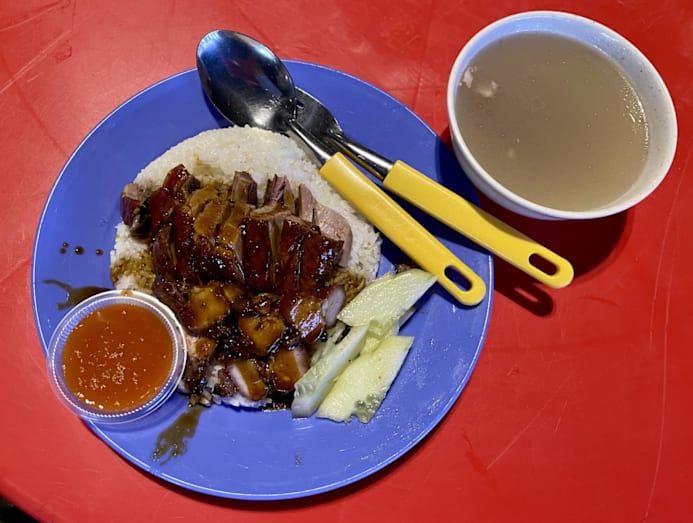
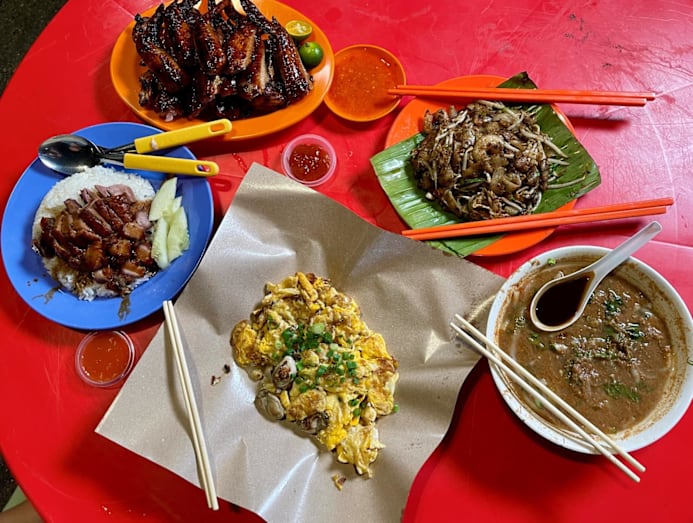
If there is one dish that demands tactical planning to procure, it’s Ya Xiang Herbal Roast Duck. From 5pm, the queue begins forming and by 7pm, it’s usually curtains down. I managed to secure one of their very last portions of duck and added char siew (roast pork) for good measure.
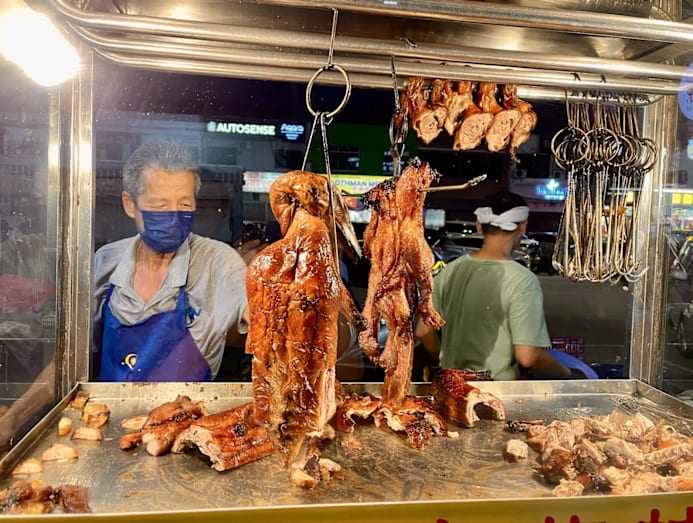
It was worth the hustle – the tender duck was aromatic and herbal without being unpleasantly medicinal. Far from the artificially sweet, red-tinted variety, Ya Xiang’s char siew was roasted till a dark crust encased the springy pork. Slicked in a silky gravy, both meats paired well with plain white rice, cucumber slices, tangy chilli sauce and a side bowl of soup.
As night fell, the street entered its second act – the atmosphere was electric with the cacophony of sizzling food, hungry crowds and the call of vendors amidst the fluorescent glow of lighted signboards.
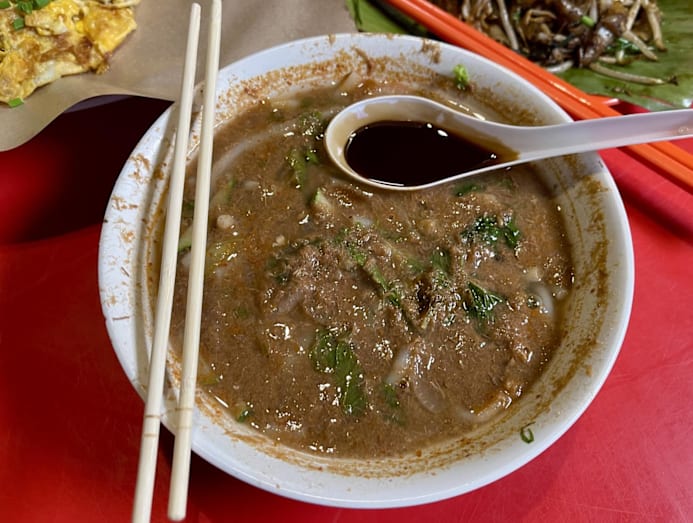
One, simply proclaiming the words “Asam Laksa”, drew Hossan in – for good reason. At RM8, the Penang-style noodle dish was well worth its value in taste, featuring a broth thick with tamarind and flaked mackerel. I’m not usually a fan of the dish, mainly because of the pungent hae ko (prawn paste), but Hossan challenged me to try it first without, then with.
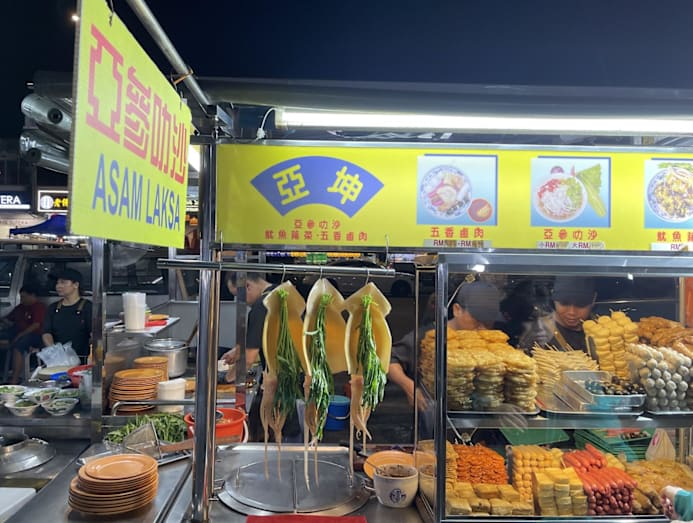
Once the dark, sticky shrimp sauce was stirred in, I had to eat my words. Where it was robust and tangy before, the hae ko added a surprising dimension to the laksa. It enhanced the fish flavour and mellowed the sharp acidity of the asam (tamarind). Matchsticks of cucumber and mint leaves added a refreshing touch to the earthiness of the thick vermicelli dish. For variety, the same stall, Ah Kun Penang Asam Laksa, also serves ngoh hiang and kangkong with cuttlefish.
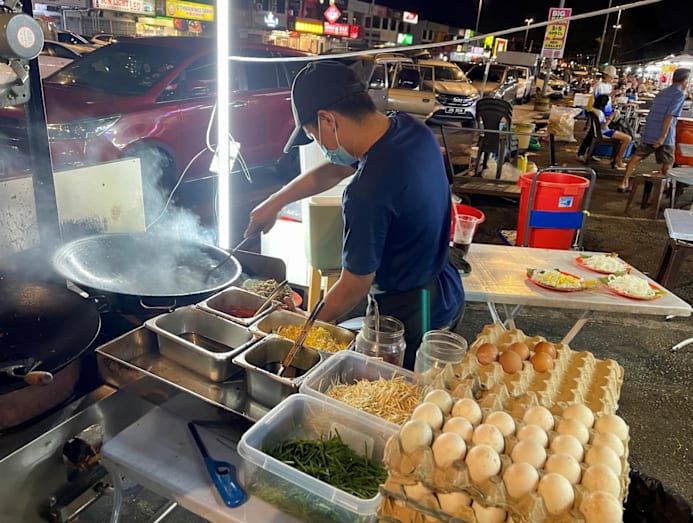
Revived from the evening’s humidity by freshly pressed sugar cane juice (RM4.50), we continued our eating excursion down the street. We tucked into Penang-style char kway teow with duck egg (RM12), which was tossed with prawn, cockles, chives and beansprouts.
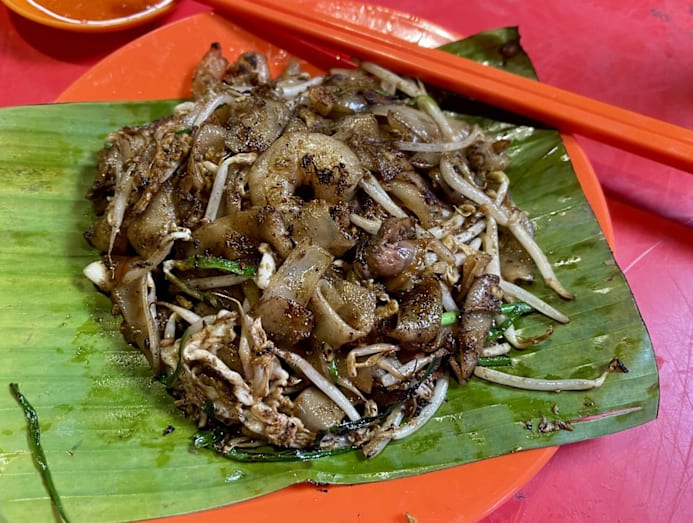
Though I had forgotten to ask for chilli, the dish was saved by an intensely smoky "wok hei", ingredients attractively branded with char from the screamingly hot pan. Perhaps because of its scarcity back home in Singapore, I was convinced the duck egg also lent a richer flavour to fried noodles. If preferred, the stall also has regular char kway teow with chicken egg (RM10).
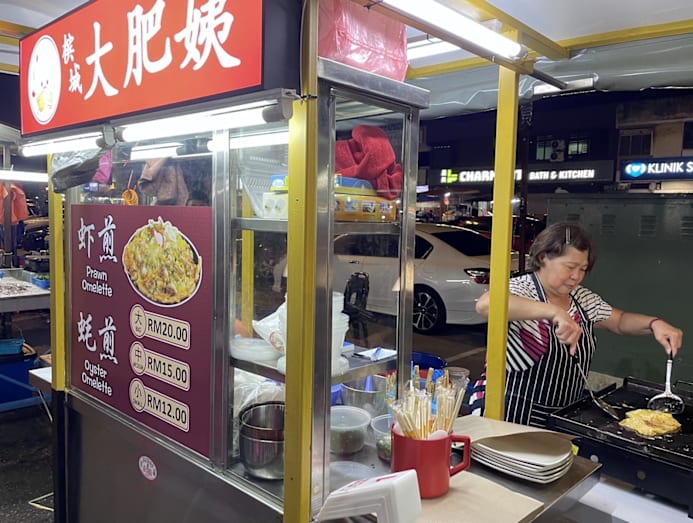
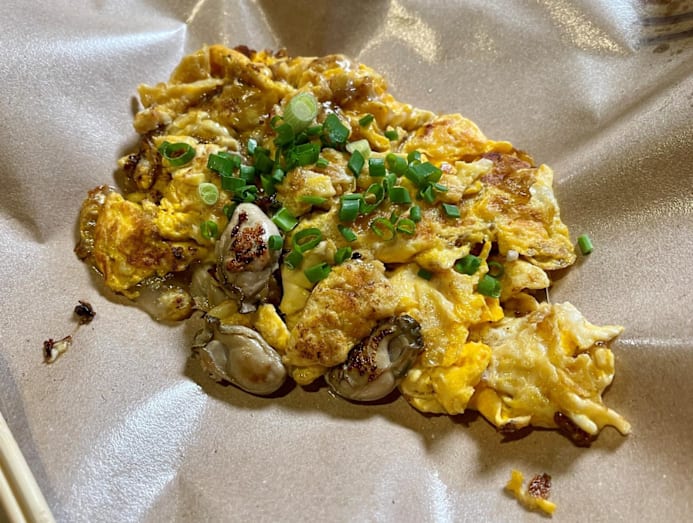
One final indulgence – a plate of oyster omelette (RM12 for a small portion) from Bin Cheng Da Fei Yi (Penang Big Fat Auntie) – and we finally had to reluctantly surrender our utensils.
Our roadside feast had been a thoroughly enjoyable adventure in gluttony, yet so much remained unexplored, including the wildly popular Penang pork noodles (open till 2am) and on the opposite side of Jalan Sutera, a similar makeshift food street setup that is entirely halal.
A return trip was looking very necessary, but it wasn’t just about the food. There was an unmistakable soulfulness to roadside eating that modern hawker centres simply cannot replicate. For a brief, few hours in Taman Sentosa, the “vibe” reminded us of what home used to be.
Sentosa Street Food is located at Jalan Sutera (carpark between Jalan Sutera 5 and 6), Taman Sentosa, 80150 Johor Bahru, Johor Darul Ta'zim, Malaysia.
Grandma Ong is open from 5.30pm to 11pm. Ya Xiang Herbal Roast Duck is open from 5pm till sold out (usually by 7pm). Ah Kun Penang Asam Laksa is open from 5pm to 12.30am
Sentosa Street Food is closed on Mondays.
Catch Makan Kakis with Denise Tan every Thursday from 11am on MediaCorp Gold 905.