I followed rare black-necked cranes in Bhutan’s valleys – and discovered a country quietly reimagining itself
Winter in Bhutan brings rare encounters: near-threatened black-necked cranes, textiles inspired by their calls, and cultural spaces reimagined for a new generation.
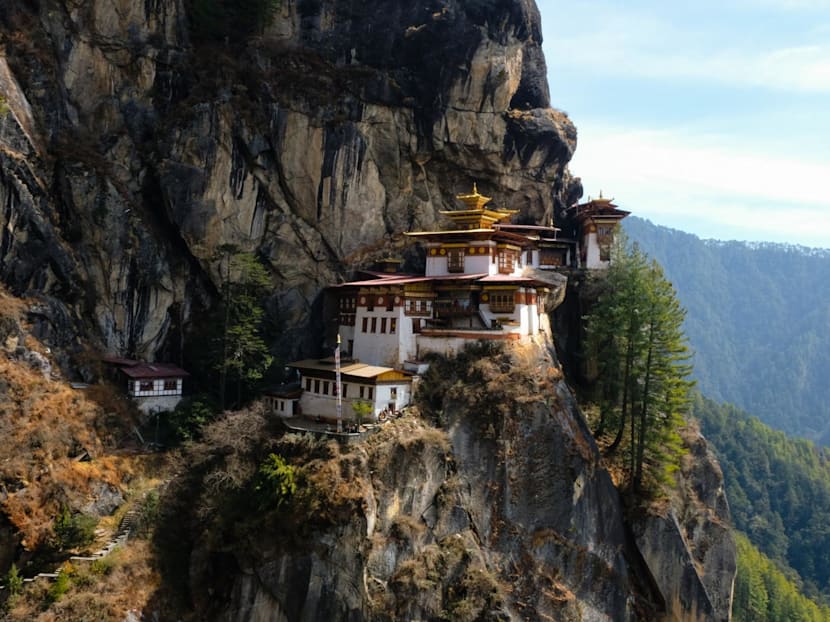
Tiger's Nest Monastery (Paro Taktsang) is a sacred, 17th century Buddhist monastery in Bhutan. (Photo: Toh Ee Ming)

This audio is generated by an AI tool.


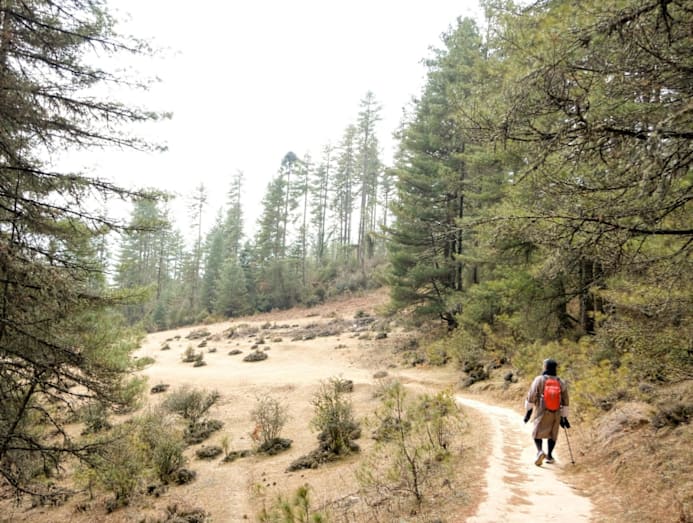
We wend our way past hilltop monasteries and farmhouses, our footsteps softened by the earth beneath a dense tapestry of pine-clad hills. In Phobjikha Valley (also known as Gangtey), winter pares the landscape back to its essentials.
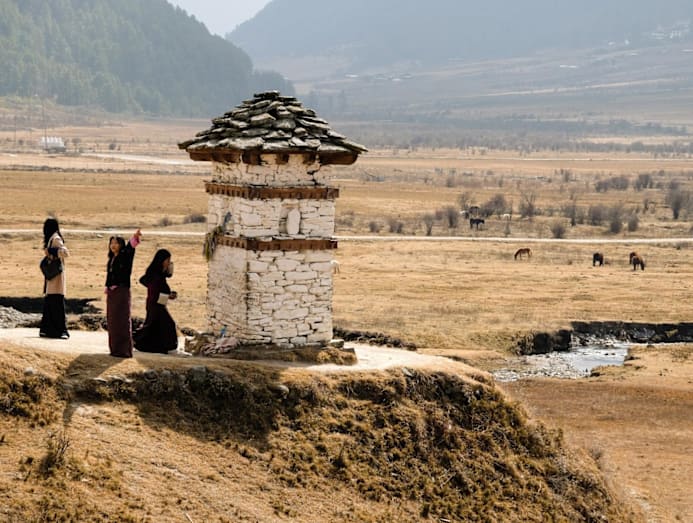
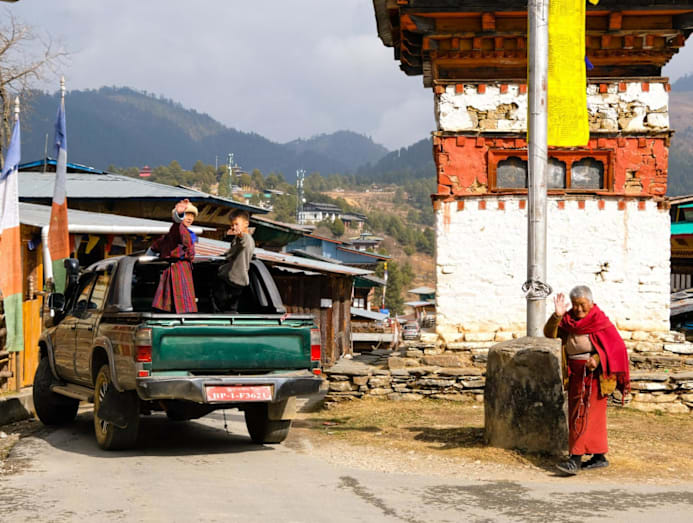
With few crowds, the season slows everything down, urging visitors to move with respect through the hushed, austere landscapes. Life reveals itself slowly: in scenes of grazing horses and cows, passing children on the back of a truck who flash quick smiles, with silence as my companion.
The deep quiet is broken only by my guide’s signal. Then I hear their haunting call.
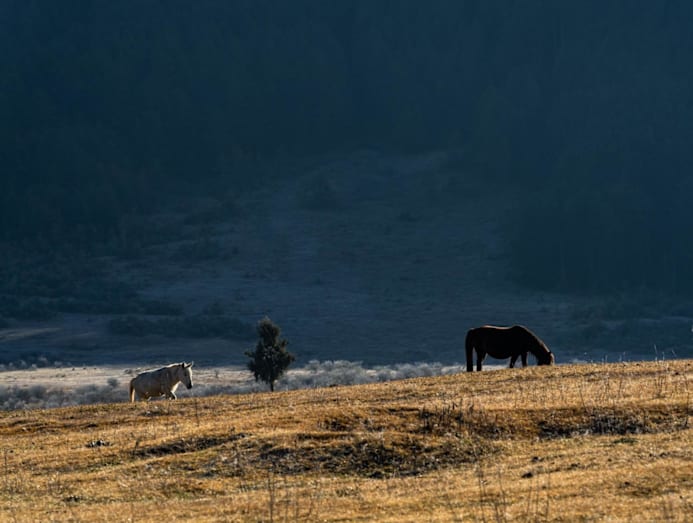
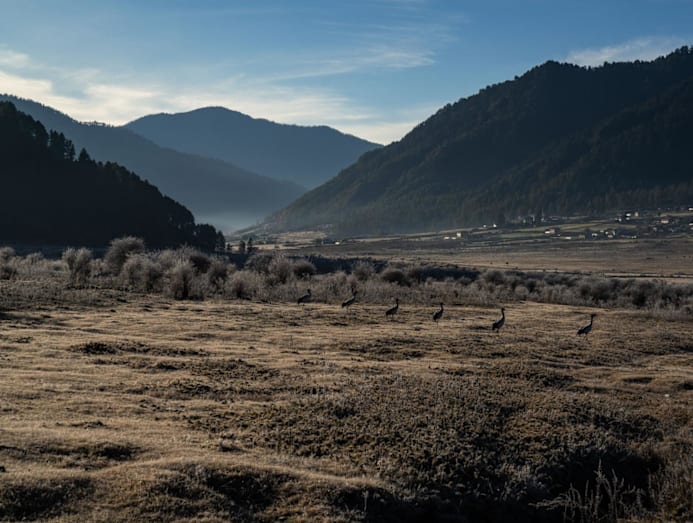
Emerging into a clearing, we spot an entire flock of black-necked cranes foraging in the fields. A few sentinel birds watch from the edge. I inch closer, careful to keep my distance. After a few moments, the flock suddenly rises, wings spread wide, black necks and red crowns silhouetted against the vast sky. I’m struck wondrous.
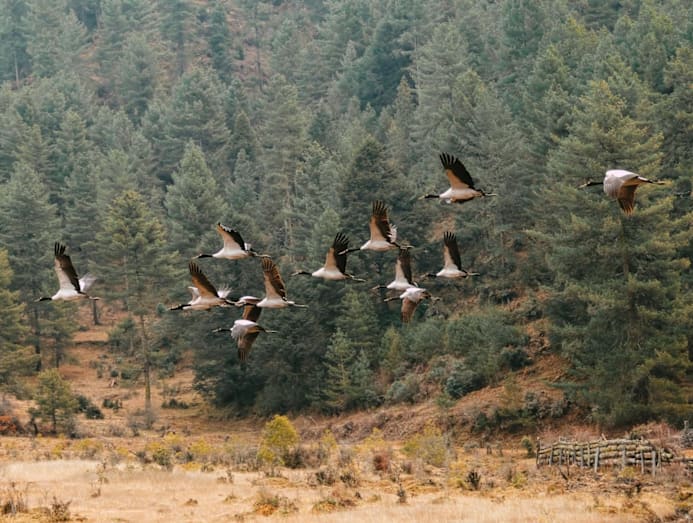
Revered as symbols of longevity and peace, these near-threatened birds are among Bhutan’s most cherished winter visitors. Every year, from late October, they leave the harsh high-altitude winters of the Tibetan Plateau to roost in the expansive marshlands of Bhutan’s Phobjikha Valley.
NAVIGATING PRESERVATION AND CHANGE
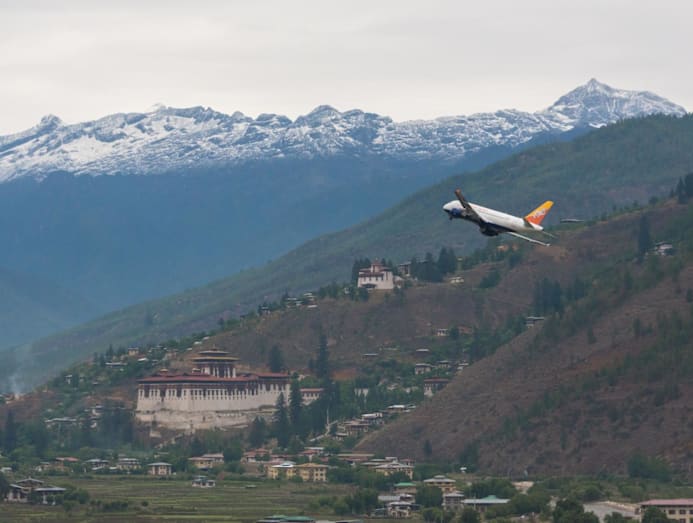
In early February, I flew into Paro International Airport on Drukair, the plane dipping low over the tranquil folds of the Himalayas. My trip, organised through Druk Asia, which also represents Drukair in Singapore, promised a deeper, more meaningful journey beyond sightseeing.
Wedged between geopolitical giants China and India, the landlocked kingdom has steadfastly charted its own path through decades of change. Now a democratic constitutional monarchy, Bhutan has preserved a distinct cultural identity rooted in Buddhism, with a conscious commitment to balance, compassion, and wellbeing.
Guided by the Gross National Happiness ethos, Bhutan pursues responsible growth, maintaining over 70 per cent forest cover and its status as the world’s first carbon-negative nation.
But today, Bhutan faces modern pressures – from the erosion of traditions to rapid technological change, and rising expectations among its youth for opportunities on par with the wider world. At this crossroads, it seeks to balance progress with core values, with the next generation as custodians of heritage and architects of the future.
FROM CRANES TO CRAFT: THREADS OF RENEWAL
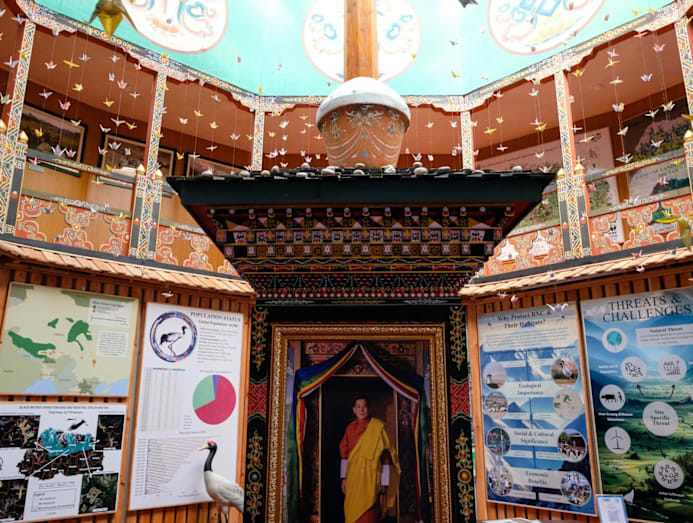
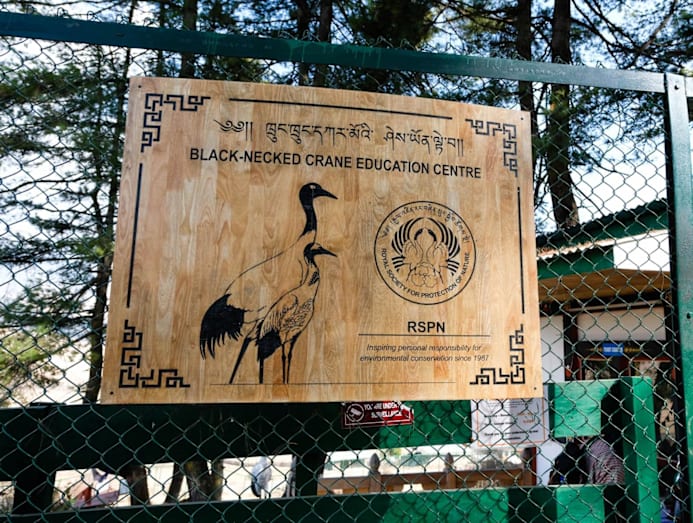
A winding five-hour drive from the serene mountain town of Paro brings me to Phobjikha Valley, where I catch a glimpse of the cranes and visit the Black-necked Crane Education Centre, run by the Royal Society for the Protection of Nature (RSPN).
Here, visitors can observe the birds through high-powered spotting scopes and explore their behavior via displays and documentaries. I learn how the Phobjikha Conservation Area protects not only the cranes but 13 other vulnerable species.
Other conservation measures range from underground power lines and waste management to education programmes for schools, farmers and local hotels. Alongside this, Gangtey has emerged as a model for eco-tourism and homestays.
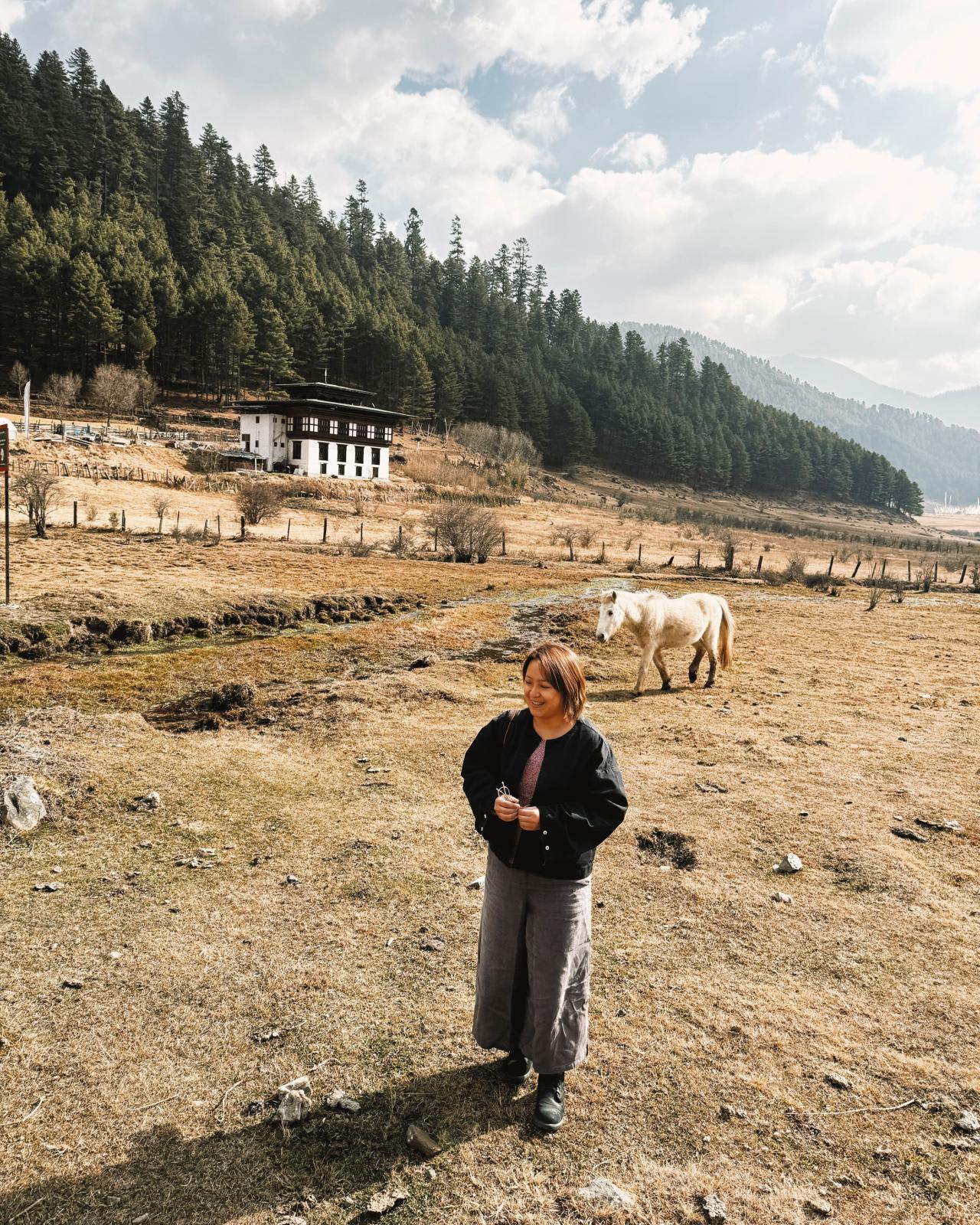
On Nov 11, the valley comes alive for the annual Black-necked Crane Festival, celebrated with joyous masked dances. Bhutan’s conservation efforts yielded a record 709 Black-necked Cranes in the 2024 to 2025 winter count.
“Everyone is now aware of why we conserve black-necked cranes,” said 29-year-old naturalist Karma Lodhen Wangmo. Yet as the valley sees more tourism development and intensified farming with chemical inputs, Karma worries the cranes’ habitat is under pressure.
In capital Thimphu, the cranes reappear in a different form: through biodiversity-inspired scarves, where their slow, rhythmic calls flow into patterns dyed in winter greys and whites, accented with deep black derived from Bhutanese mud clay.
This scarf is part of a first-of-its-kind bio-acoustic textile collection launched last December, blending bird calls, sonograms, and storytelling to celebrate Bhutan’s iconic endangered birds.
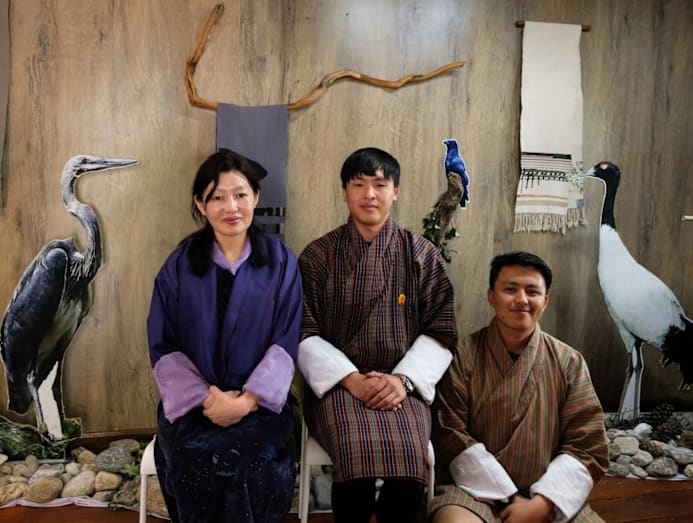
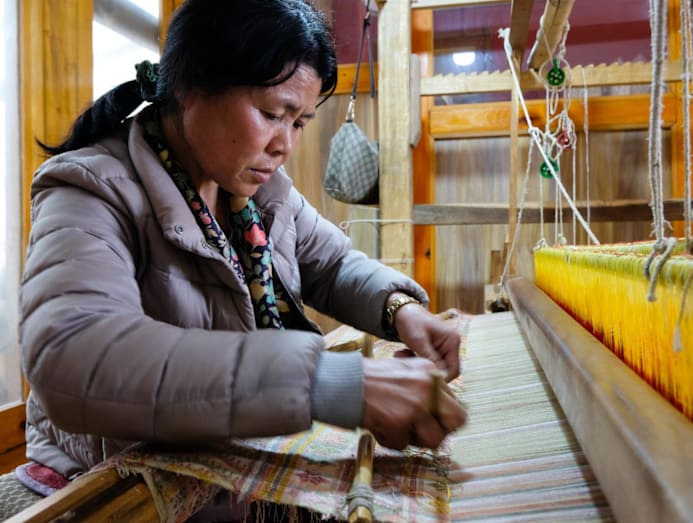
DrukVana (Forest to Fabric), a social enterprise flagship initiative under the Bhutan Youth Development Fund, produces a range of sustainable textiles that empower Bhutanese women and youth to sustain the ancient art of handweaving with natural fibres and plant-based dyes.
For instance, its artisans handweave on Bhutanese blackstrap looms using eri silk, a cruelty-free “peace silk” (Ahimsa) sourced from Northeast India.
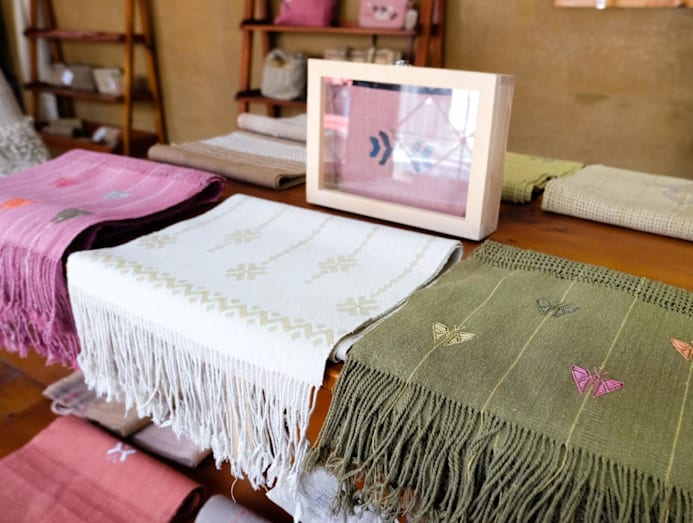
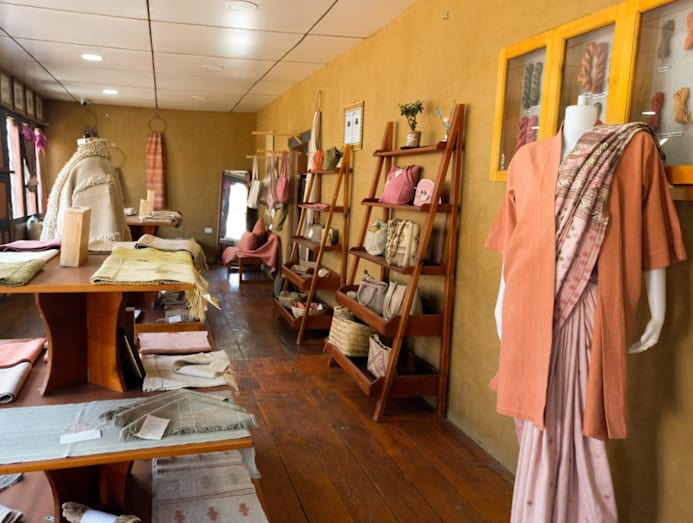
The raven scarf transforms Bhutan’s national bird – a symbol of wisdom and watchfulness – into bold, dark weaves dyed in rhododendron purple, echoing its mountain haunts and deep, resonant calls. Meanwhile, the white-bellied heron scarf captures the elusive river guardian’s elegant plumes in soft grey-blue and pale silvers, reflecting the Punatsangchhu and Mangdechhu rivers, which are increasingly threatened by development.
The collection grew from a year-long collaboration between DrukVana and London-based textile designer Ellen Rock. Working with rare dyes and developing new pattern concepts presented challenges, but ultimately proved rewarding.
“It’s a new concept globally, with sonograms translated into fabric design,” said Karma L Dema, DrukVana’s senior social enterprise officer. “It gave us the impetus to innovate more boldly and step beyond our cocoon.”
She added that the project could expand into bags and other products, highlight additional endangered Bhutanese species – such as butterflies – and reach global markets.
CULTURAL RENEWAL: MUSEUMS REIMAGINED
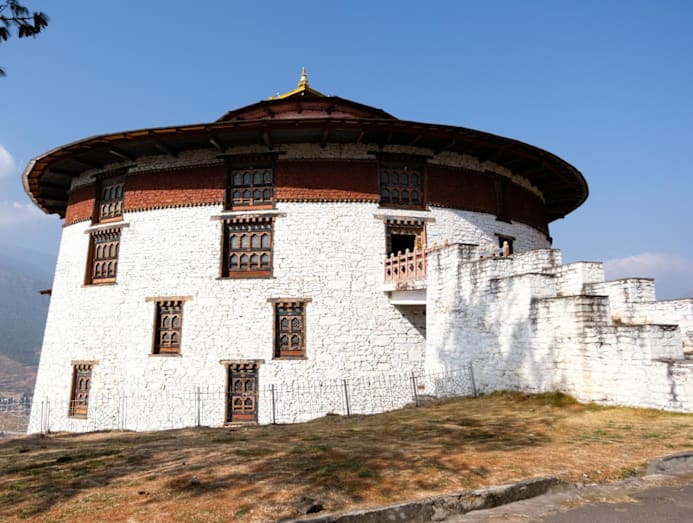
Another key thread in Bhutan’s cultural renewal is the US$12 million (S$15.2 million) Museums of Bhutan fundraising campaign, a national effort to reimagine museums as dynamic community hubs – places locals return to, while also serving as essential stops for culturally curious travellers.
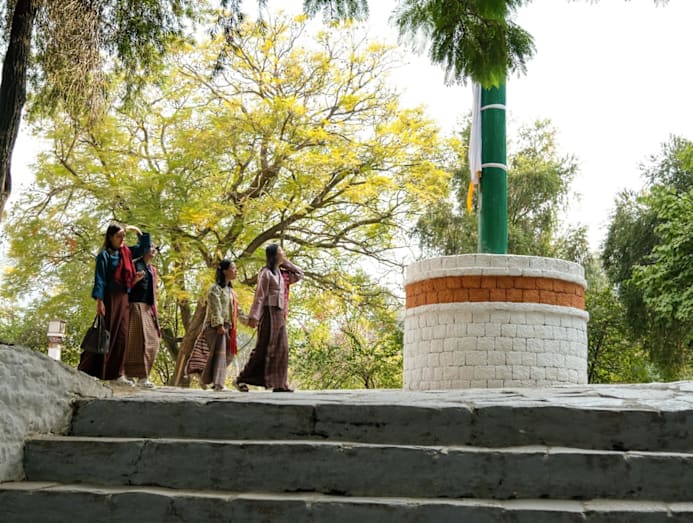
With Bhutanese youth increasingly swept up in K-pop and Western trends, and with traditions and skills at risk as modern life accelerates, the government faces a pressing challenge: how to pass on the country’s living heritage. Traditional skills – from zhali, the art of laying riverbed pebbles, to intricate handwoven textiles – are fast fading as faster, commercial methods take hold.
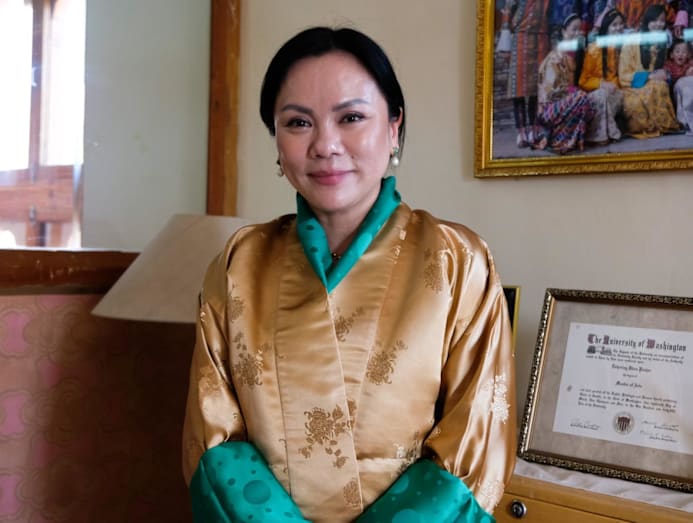
In Thimphu, Tshering Uden Penjor, chief curator at the Department of Culture and Dzongkha Development’s museum division, shares a renewed urgency to transform how museums are perceived. “Many Bhutanese still think museums are places for tourists,” she said. “We want locals to take ownership, to appreciate and celebrate their heritage.”
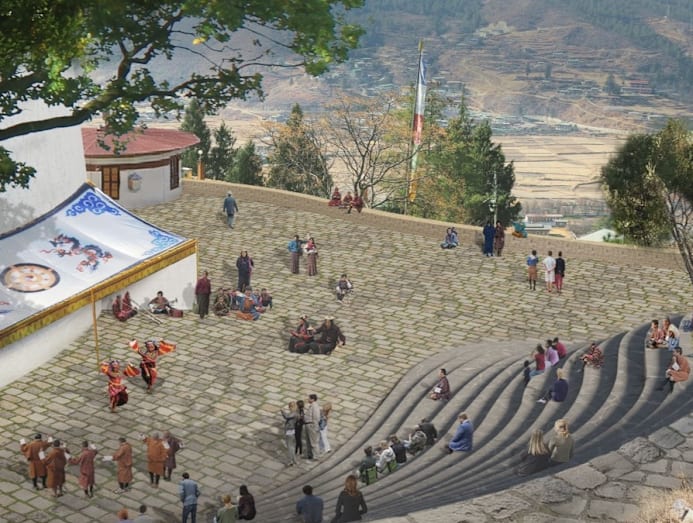
In Bhutan’s Trongsa district, plans are afoot at the Royal Heritage Museum to turn its forested grounds into part of the museum experience, with hiking trails featuring auditory exhibitions on migratory birds, alongside tea tastings using Samcholing village’s bright, sweet green tea.
At Bhutan’s National Museum in Paro, housed in the former watchtower of Ta Dzong, a major revamp is underway. Long home to some 3,000 artefacts – from royal heirlooms and sacred relics to textiles and natural history – the museum is looking to construct a new outdoor amphitheatre, and introduce sound-and-light installations for cultural events.
In June, it will launch the country’s first fully digital immersive exhibition, using 3D and interactive technology to bring Bhutan’s history to life. The shift is reinforced by a new council of 50 youth ambassadors set to be embedded in schools nationwide.
Penjor said museums must now compete for attention in a crowded cultural landscape that includes a new generation of local contemporary artists, including a newfound craze over Bhutanese rap. “We want young people to come into these spaces, co-create with us,and contribute meaningfully back to society,” she said.
The department is also stepping up outreach to elders and rural communities, while partnering with overseas organisations such as the Australian High Commission and international conservation institutes.
Other exciting threads include Bhutan positioning itself as a budding wine destination, and the much-anticipated Gelephu Mindfulness City in southern Bhutan – a forward-looking, sustainable urban experiment that reflects the country’s drive for renewal.
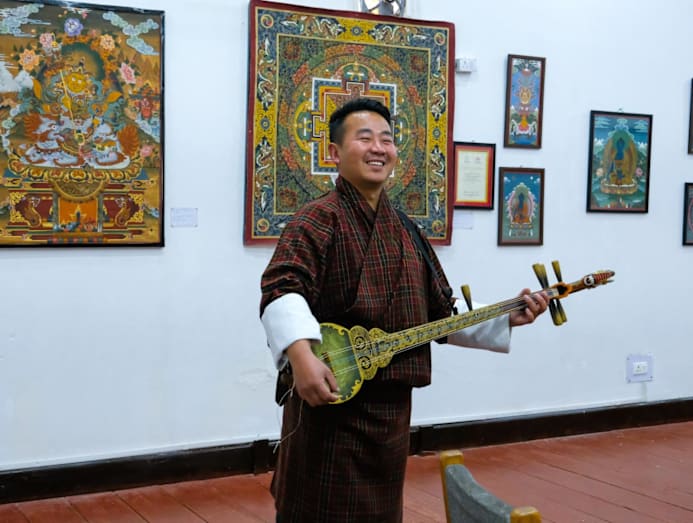
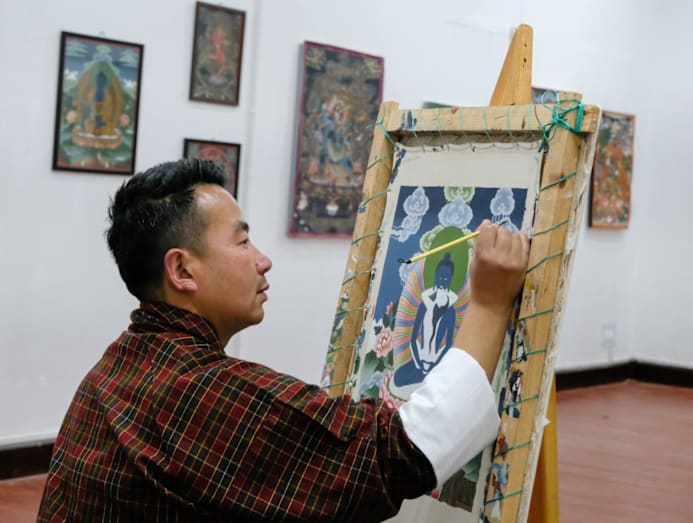
I witnessed this at the National Museum’s new artist collaboration programme, a platform for local artists to showcase and sell their work. Artist-in-residence Pema Choejay, 40, incorporates Bhutanese motifs, folklore, and nature into paintings of mountains, life, and Buddhism. Based in Paro, where he runs a live thangka painting showroom, this marks his first major exhibition in Bhutan.
“Even young Bhutanese living abroad don’t always know the meaning behind our art and handmade traditions. With AI and mass-produced goods everywhere, it feels more important than ever to help keep this art alive,” he told me, before spontaneously breaking into song on a drangyen, an ancient Himalayan lute.
HOSPITALITY RENEWAL: LUXURY RECONSIDERED
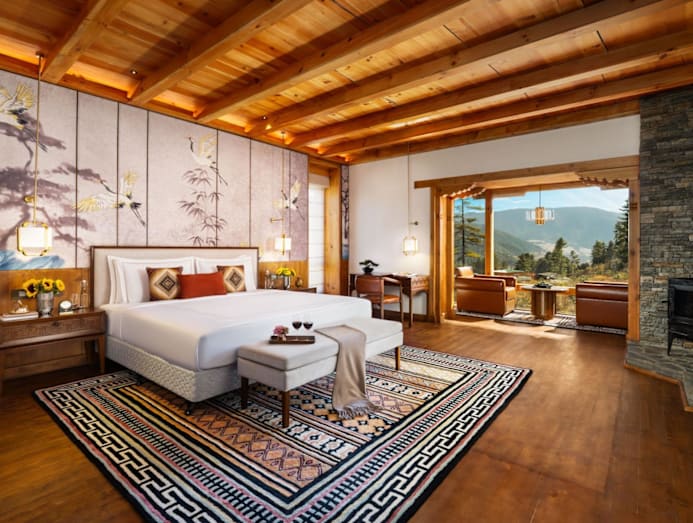
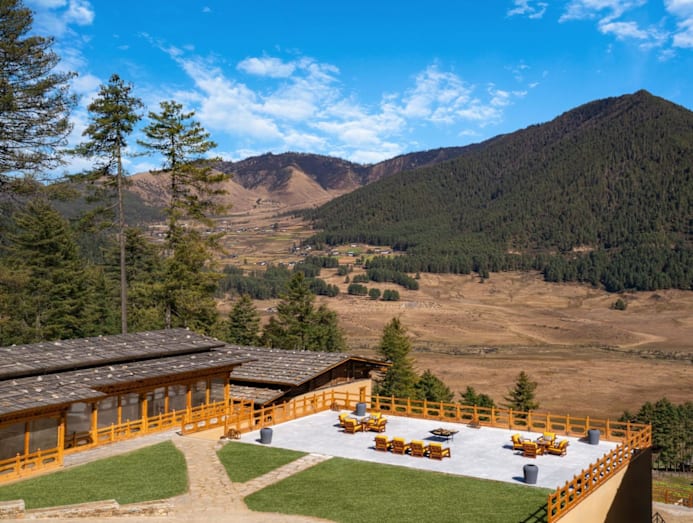
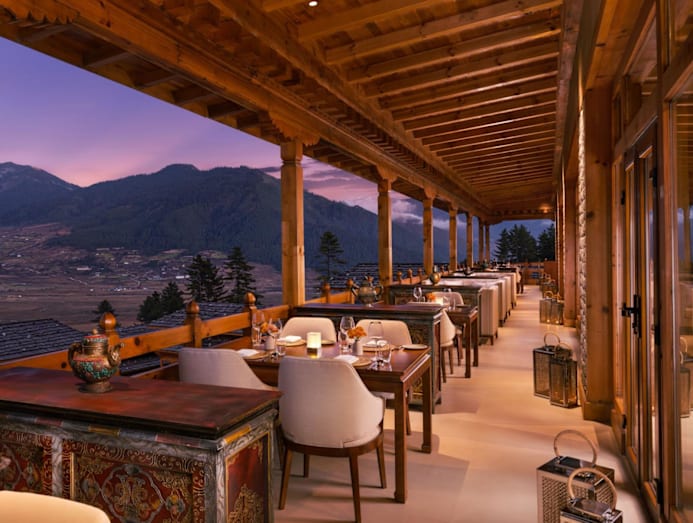
Underpinning my visit is a stay at Bhutan’s newest entrant to the luxury hospitality scene, two new Taj properties which just opened in January, sanctuaries shaped by Bhutanese respect for nature and traditional craft.
Taj Gangtey Resort and Spa perches above the fragile marshland soil in a dispersed layout designed to minimise ecological impact. Rooted in the concept of architecture of observation, the 35-room resort is a discreet hide from which guests drink in the valley’s sublime theatre of nature through panoramic windows.
Low, long timber boardwalks link rooms and dining spaces, fostering gentle, constant engagement with the crisp mountain air and vast open skies. Constructed from local blue pine and if left untreated, it will weather to a silvery-grey to blend into the landscape. Guests can immerse themselves in the local culture, from cheese-making with villagers to stupa-making with artisans, or horseback riding along the valley trails.
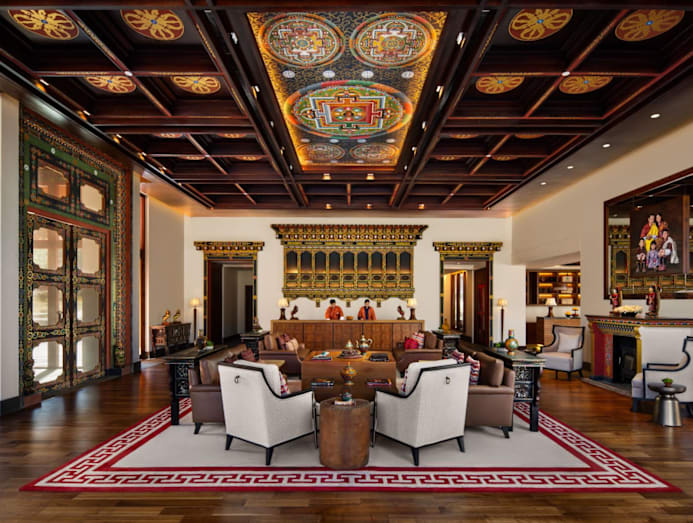
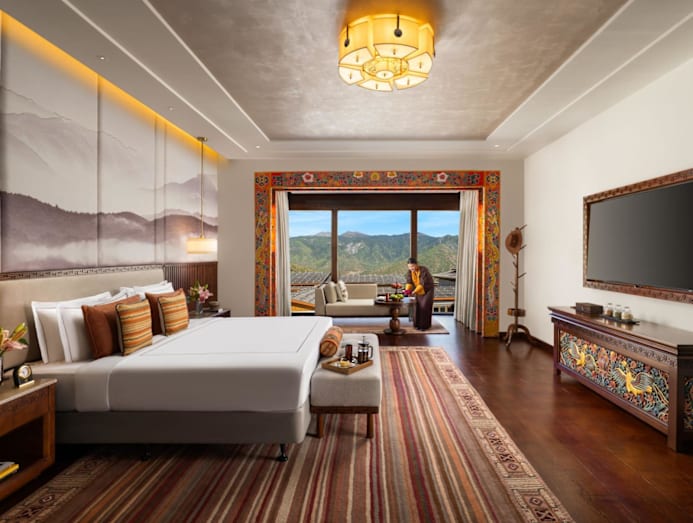
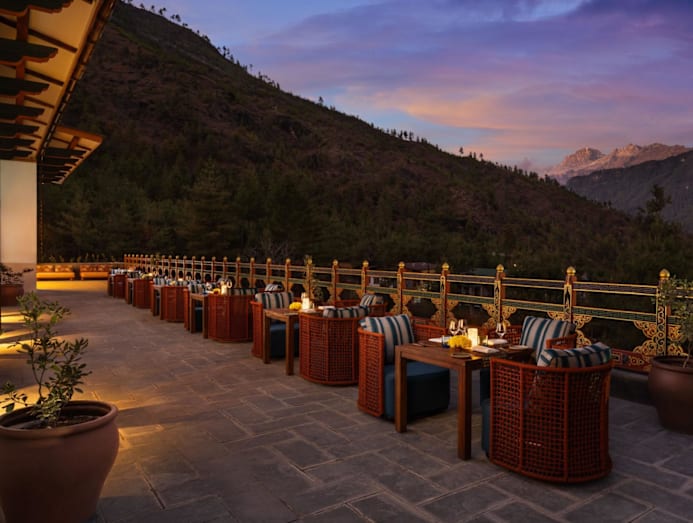
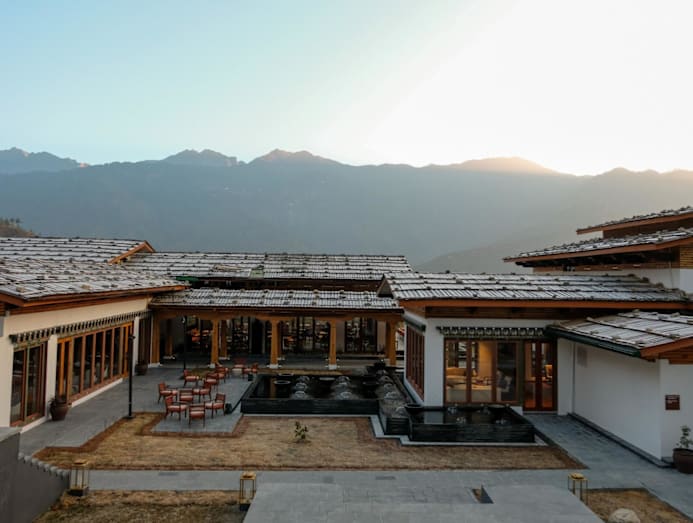
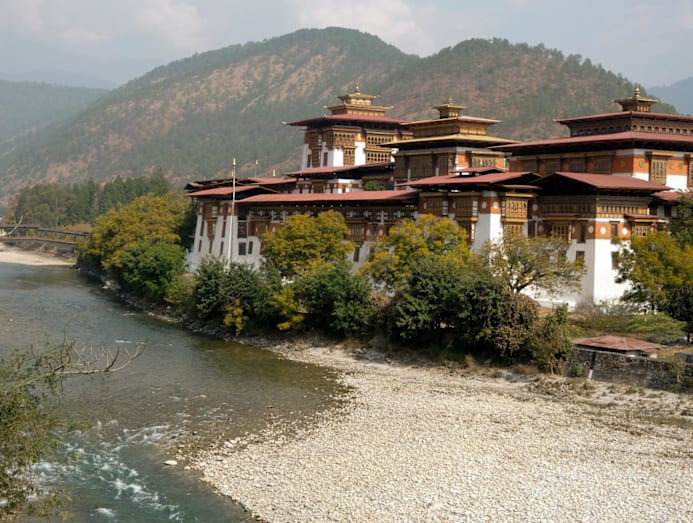
Taj Paro Resort and Spa, a 45-room retreat, frames sweeping views of Bhutan’s most iconic spiritual landmark, Paro Taktsang (Tiger’s Nest Monastery). A contemporary take on the Bhutanese Dzong – majestic fortress-monasteries that anchor every district – the resort is a collection of smaller, interconnected buildings and pathways, with sloping tiered roofs creating an intimate, village-like atmosphere that harmonises with the undulating mountain terrain.
Wood is the soul of the resort. Himalayan pine beams, cornices, and window frames are hand-carved by local master artisans, while the play of natural light shifts the mood from crisp dawn to warm, golden dusk.
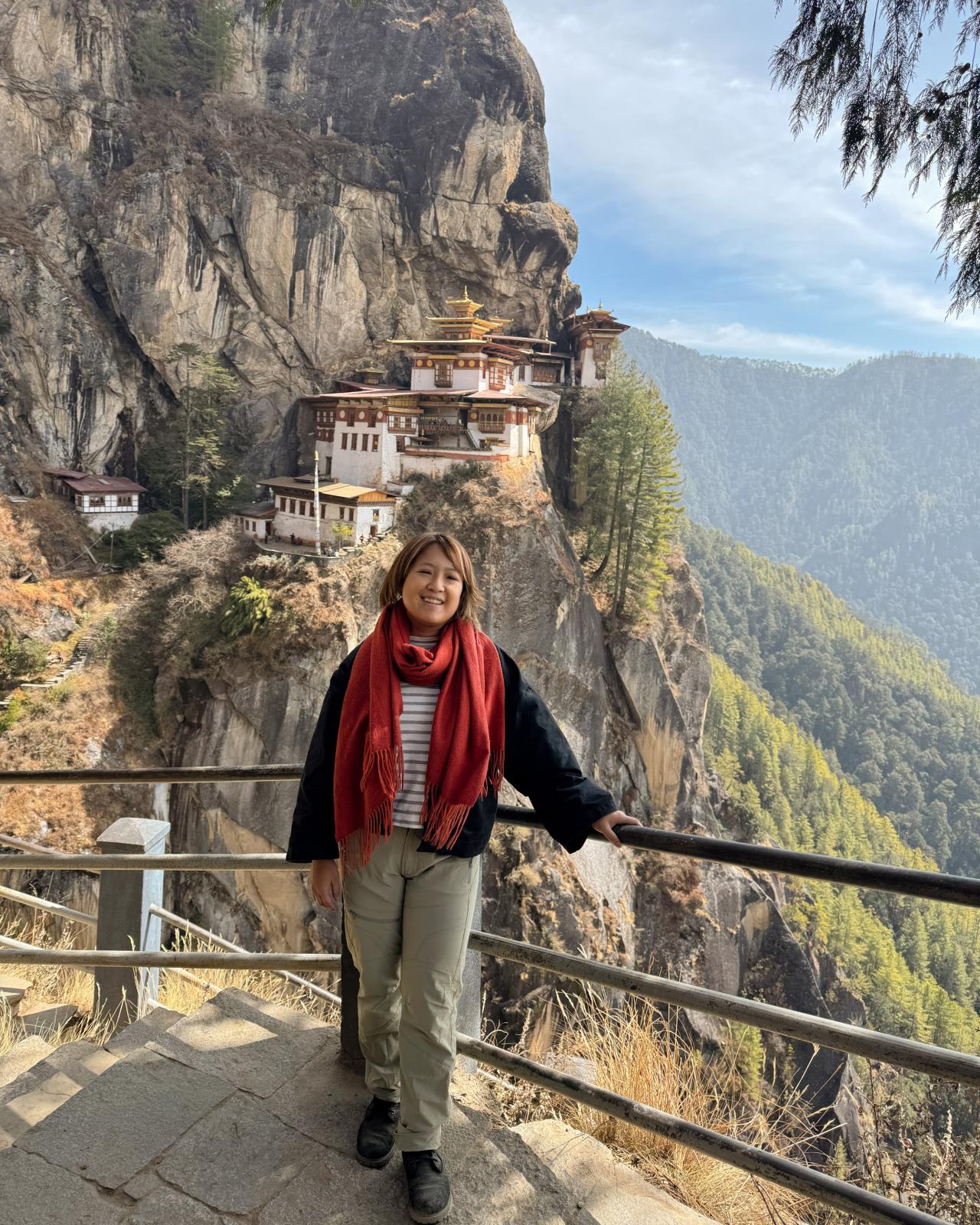
After a restorative six-hour hike to Tiger’s Nest on my last day, I unwind with a Bhutanese hot stone bath, warmed by river stones and infused with medicinal herbs.
A RETURN TO VALUES
Having lugged home the newly published Bhutan: Portrait Of A Kingdom, a collection of striking images by some of the world’s top photographers, including a contribution from the King of Bhutan, the book let me travel to extraordinary corners of the kingdom I hadn’t yet seen.
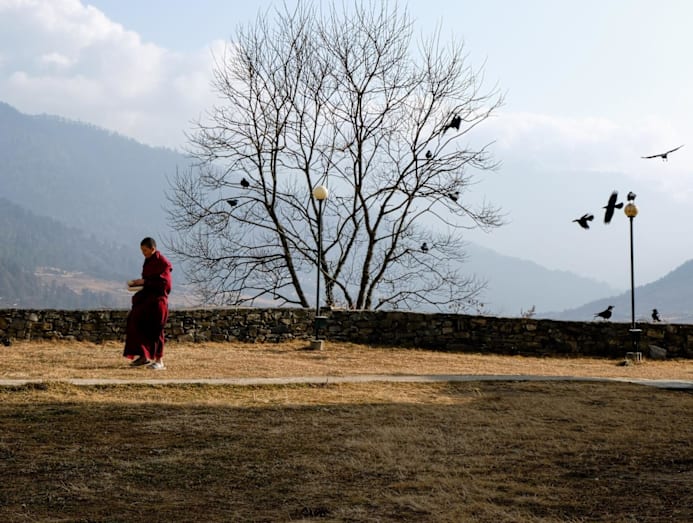
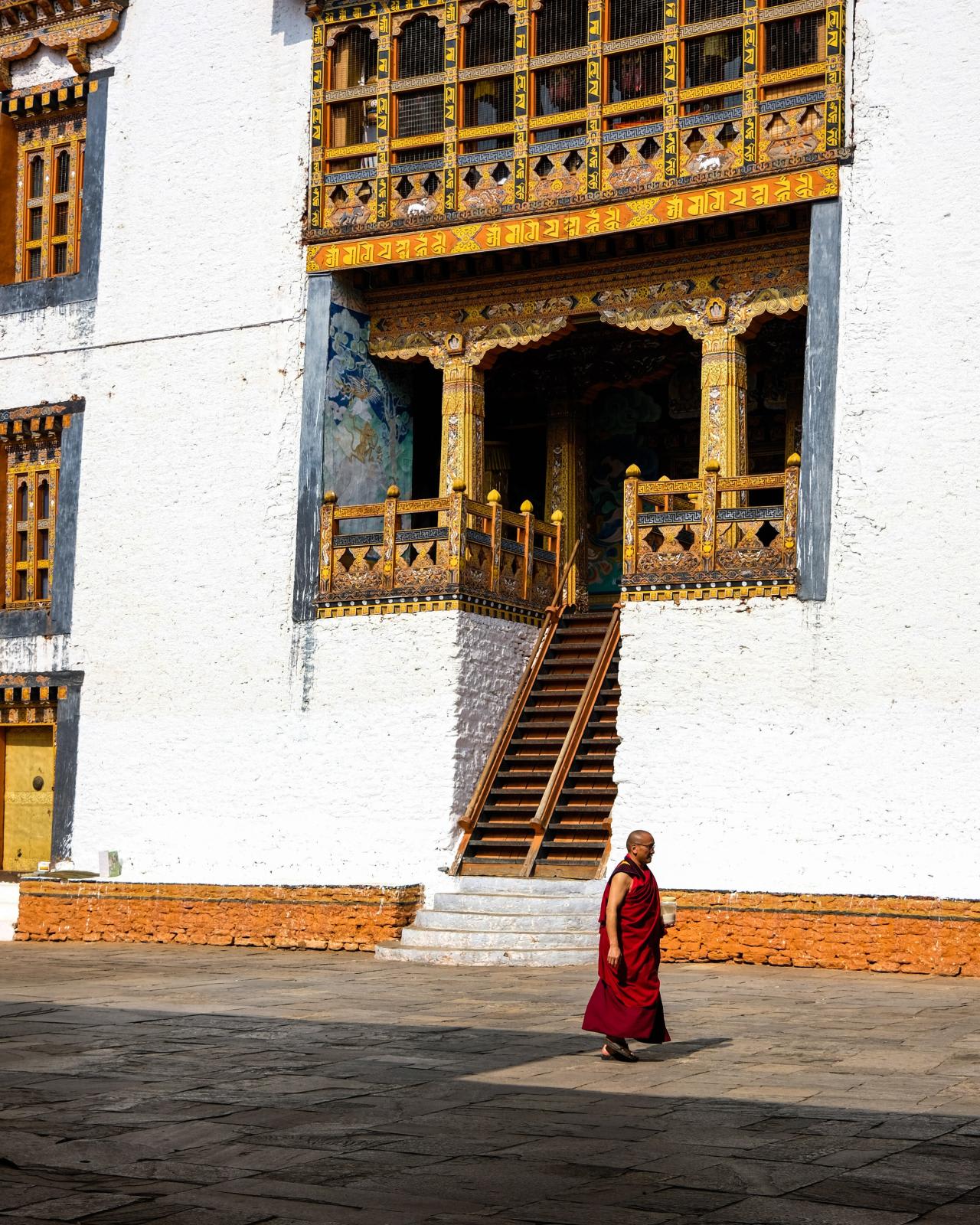
Amid new ideas and mounting pressures as the rest of the world chases limitless growth, it’s striking to see how firmly Bhutan holds to its moral centre. I think back on the everyday acts that reflect this: a young woman who told me over lunch how she returned from a fast-paced life in Thailand and now savours forest picnics with friends; my guide fretting over a distant forest fire until relief teams arrived; and a monk collecting plastic along a trail, telling me: “We take care of the earth because it’s our home.”
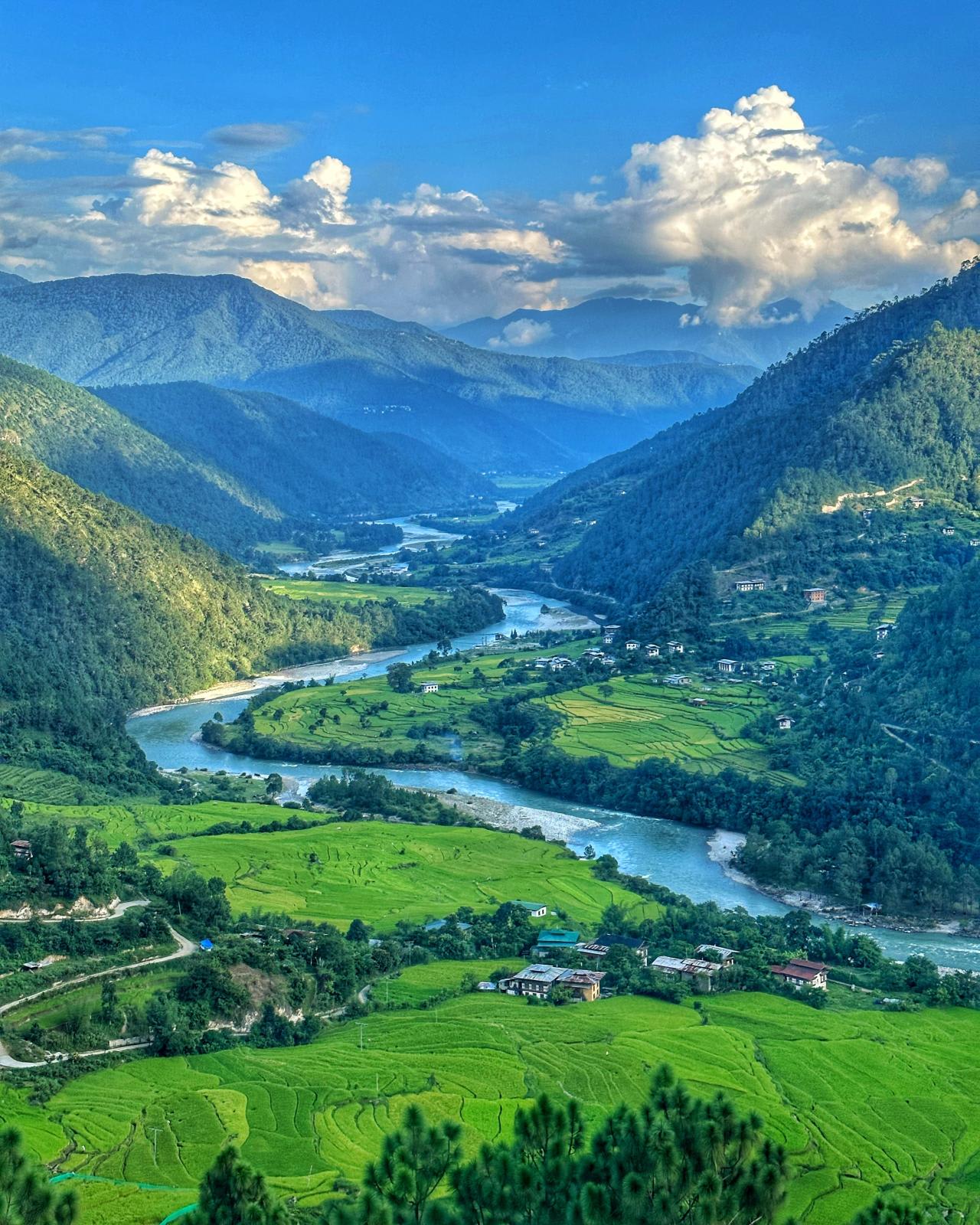
In my mind’s eye, I still picture the fluttering prayer flags, the low murmur of a stream, and recall the spectacle of the black-necked cranes in mid-flight – said to trace a looping, clockwise path around Gangtey Monastery before their mid-February departure. Their fleeting presence feels like a gift, mirroring Bhutan itself: a rare chance to pause and witness the world moving in quiet harmony.
CNA Lifestyle was in Bhutan at the invitation of Druk Asia.