Why is everyone saying 'I Am Jane Doe' – and why should you care?
When internet users tried to uncover the identity of a woman accusing seven Cornell University students of sexual assault, social media users responded with “I Am Jane Doe”. The movement has become a viral stand against victim-blaming, with a message that resonates in Singapore too.
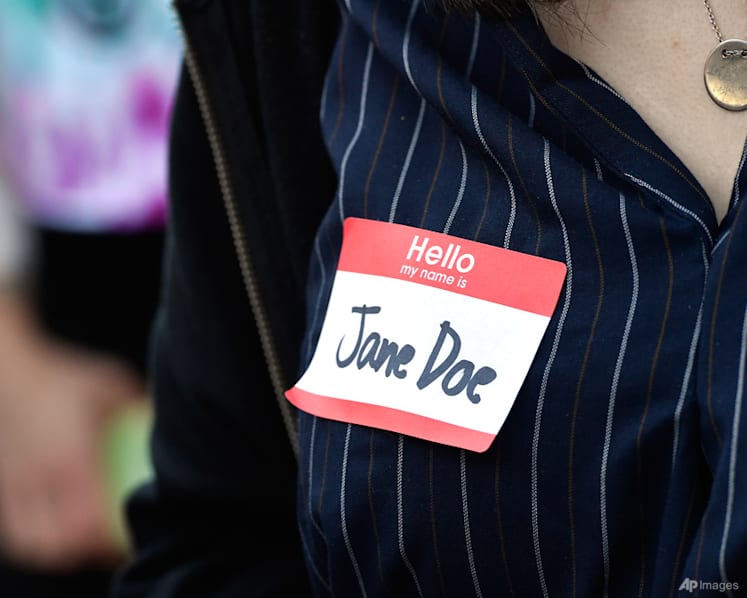
An attendee wears a name tag reading "Jane Doe" during a protest against Cornell University's handling of the 2024 fraternity-house gang rape allegations at the campus on Oct 5, 2026, in Ithaca, New York. (Photo: AP/Adrian Kraus)

This audio is generated by an AI tool.


What are we talking about? The I Am Jane Doe movement.
Who's Jane Doe? Jane Doe is a pseudonym commonly used to protect the identity of women in legal cases, including victims of sexual assault.
It sounds familiar. A 2017 documentary titled I Am Jane Doe followed a group of American mothers seeking justice for their teenage daughters who were trafficked for commercial sex through the now-defunct classifieds website Backpage.com.
So who does this Jane Doe refer to? She is the woman who has accused seven men of sexually assaulting her in 2024, when she was an undergraduate at Cornell University, an Ivy League institution in the United States.
The men were members of the university's Chi Phi fraternity. According to her lawsuit, she was pressured into taking drugs and sexually assaulted while incapacitated.
In September 2026, the former Cornell student filed a civil lawsuit against the seven men, Cornell University, the Chi Phi fraternity and other parties. The allegations have not been proven in court, and no criminal charges have been filed against the seven men – dubbed the Cornell 7 – as of writing. The criminal investigation was reopened in September.
How did the I Am Jane Doe movement start? Disturbingly, some internet users tried to uncover the victim’s identity. Their efforts led to several women being wrongly identified as Jane Doe, and harassed and threatened as a result.
In response, people – mostly women – began declaring “I Am Jane Doe” across social media. Some men joined in too.
Beyond expressing solidarity with the victim, the movement sought to protect Jane Doe’s anonymity by flooding social media with posts, making it harder for those attempting to identify her through online searches.
Some participants also shared their own experiences of sexual assault and harassment in various spaces, including on school campuses and at home.
But this happened in America. What does it have to do with Singapore? Quite a lot, actually. Sexual violence, harassment and the attitudes that excuse them are not uniquely American problems. Singapore has its own uncomfortable history of such incidents.
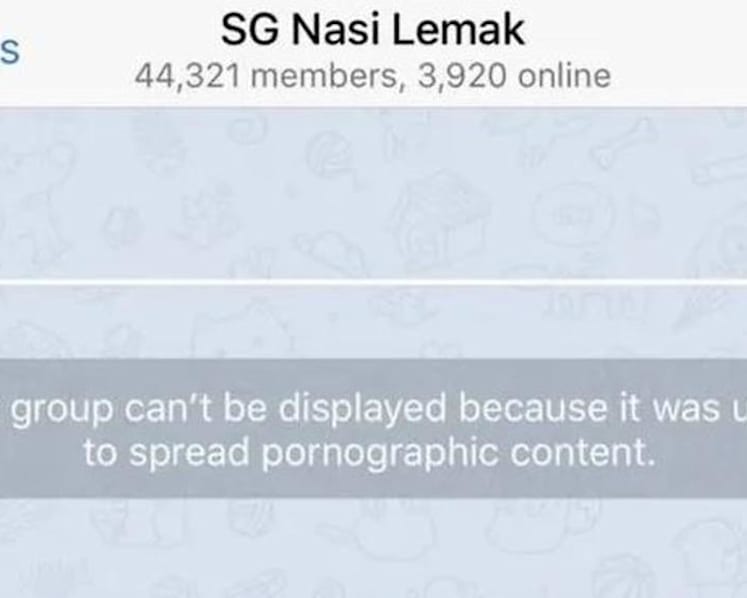
Like what? Remember the notorious SG Nasi Lemak Telegram group, which had more than 40,000 members and was used to circulate obscene images and videos of girls and women?
Or the Singapore Sports School case in 2024, when police investigated students creating and circulating deepfake nude images of their female schoolmates?
There were also voyeurism cases involving university students, including the National University of Singapore scandal that prompted a review of the university's disciplinary procedures, and several female private-hire drivers who experienced sexual harassment.
These are different offences with different circumstances. But they touch on similar issues around consent, privacy and the sexual objectification of women and girls – as well as how institutions and communities respond when boundaries are violated.
Why do people still excuse or minimise sexual violence? One explanation is what advocates call rape culture – attitudes and behaviour that normalise, trivialise or excuse sexual violence, or shift responsibility onto the victims.
It can appear in familiar questions and remarks: What was she wearing? Was she leading him on? Why was she out so late? Why was she drinking? Why didn't she fight back? Why did she take so long to report the assault? Surely he didn't mean any harm? Do we really need to ruin his future over one mistake?
The conversation shifts from examining the alleged wrongdoing to questioning whether the person reporting it behaved appropriately.
And these attitudes aren't merely hypothetical. Singapore women's rights organisation AWARE has repeatedly highlighted how such misconceptions, also known as rape myths, can discourage survivors from seeking help or reporting sexual assault.
According to AWARE, only three in 10 clients who approached its Sexual Assault Care Centre between 2018 and 2021 had made a police report.
What happens when the hashtag stops trending? Well, the internet will probably find something else to talk about. But the questions raised by the movement remain: Why does the person reporting an alleged sexual assault sometimes end up facing as much scrutiny as the allegation itself?
What can I do if I know someone who has experienced sexual violence? Listen, respect their privacy and avoid pressuring them to disclose details or take steps they're not ready for.
In Singapore, AWARE's Sexual Assault Care Centre provides support and information to survivors of any gender. The National Anti-Violence and Sexual Harassment Helpline is another avenue for help. SG Her Empowerment (SHE) also has a helpline to support victims of sexual deepfakes and other forms of digital harassment.
CNA Women is a section on CNA Lifestyle that seeks to inform, empower and inspire the modern woman. If you have women-related news, issues and ideas to share with us, email CNAWomen [at] mediacorp.com.sg.