‘They feel disconnected from who they used to be’: Why becoming a mother can affect a woman’s sense of self
When a baby is born, a mother is born too. Known as matrescence, this transition can leave women feeling like they’ve lost a part of themselves. Why it happens – and how some are turning to coaching for support.
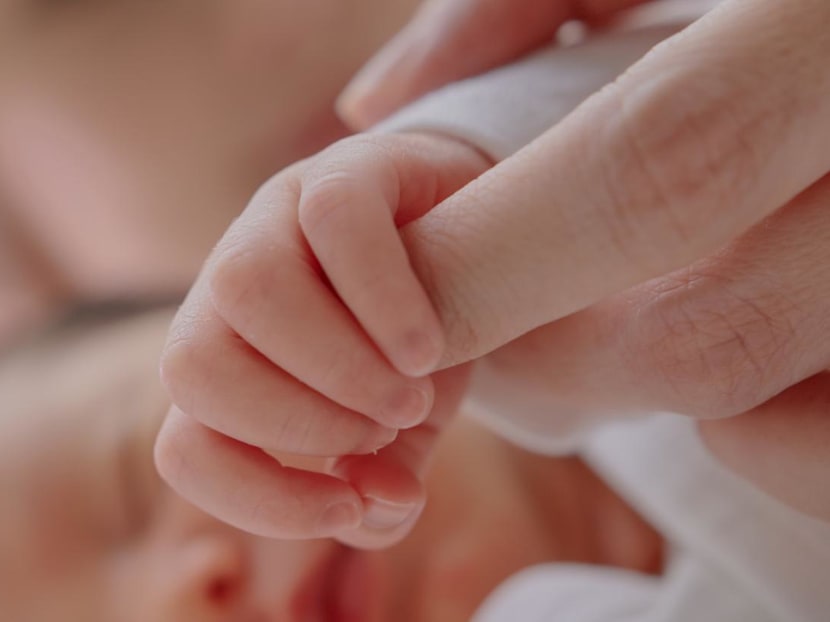
Motherhood is a development transition where a woman goes through a profound psychological, emotional and identity transformation. (Photo: iStock/ATHVisions)

This audio is generated by an AI tool.


When a woman becomes a mother, she becomes a completely different person in many ways – physically, emotionally and socially. This phase of becoming a mother is known as matrescence.
The term was coined in the 1970s by American medical anthropologist Dana Louise Raphael, who described it as “the time of mother-becoming”.
To put it simply, when a baby is born, a mother is born too. And while support is usually at hand in terms of looking after a child, women tend to be left to their own devices to deal with this big life change.
“Matrescence is often described as the motherhood equivalent of adolescence,” said Elle Cheng, a psychotherapist and matrescence coach in Singapore.
“It is the developmental phase where a woman undergoes a profound psychological, emotional and identity transformation as she moves from thinking about conception, through pregnancy and into motherhood.”
To help with this life transition, some women are getting guidance from a matrescence coach.
Sara Pantry is a matrescence practitioner in Singapore who founded Return Ready, a peer-to-peer mentorship programme designed to help women navigate the complexities of returning to work after parental leave.
Pantry describes matrescence coaching as a much softer, deeper process than traditional coaching, where it’s not about goals, performance or ‘what’s next’. Instead, it’s about slowing down, recentring and reconnecting with yourself so you can redefine who you are now in the present moment.
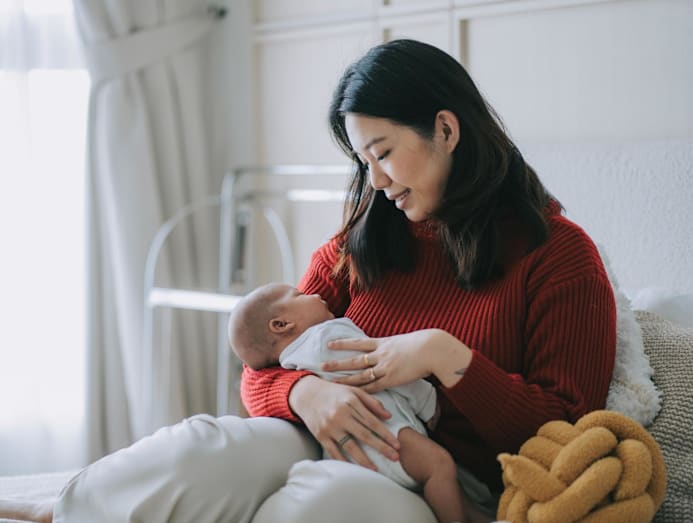
“It’s also very different from parenting coaching. That focuses on the baby,” Pantry, who works full-time as Senior Workplace Leader, APAC, at LinkedIn, explained. “This focuses on the mother because becoming a mother isn’t just a life event, it’s a full identity transformation. And women need space to process that, not just push through it.”
INCREASING AWARENESS AROUND MUMS’ MENTAL HEALTH
Matrescence as a concept has been revived by various experts over the years in Western countries. In this part of the world, women are becoming more aware of the need to better understand the changes they’re going through when they become mothers.
Cheng, who shares her work through Relating Authentic Women, a platform that supports women through fertility, motherhood and identity transitions, said she’s not necessarily seeing a rise in the term itself, but a clear rise in the struggles it describes.
“I often work with women who return to work after maternity leave and find that while they are functioning on the outside, internally they feel disconnected from who they used to be – as a professional, partner and individual,” she told CNA Women.
“There is increasing awareness around mental health and motherhood but many women still lack a framework or language to understand the identity shift they are going through,” Cheng added. “When they are introduced to matrescence, there is often immediate resonance.”
Kelly Wong is the founder of Your Mama Tribe, a pilates studio for mums and mums-to-be. The pilates instructor and nutrition consultant runs a three-month online postpartum preparation programme called Journey through Matrescence. She told CNA Women that interest in matrescence coaching is steadily growing, though awareness still has a long way to go.
“The women I work with are often thoughtful and intentional – they recognise that motherhood is a significant transition and want to enter it feeling prepared, supported and grounded,” Wong said.
Pantry said women are starting to realise that what they’re feeling isn’t just being overwhelmed – it’s a fundamental shift they’ve never been given language for. Matrescence gives words to that experience.
“We’re starting to understand that this isn’t just an emotional experience – it’s a full developmental transition,” she said. “What’s happening now is that we’re starting to name it. And when you name something, you make it visible and when it’s visible, you can begin to support it properly.”
EMBRACING A FLEXIBLE VIEW OF "IDENTITY"
Eliza Koo is a lactation consultant at Tender Loving Milk, a maternal and breastfeeding support company. She also provides motherhood coaching for mums whose babies have hit the one-year mark.
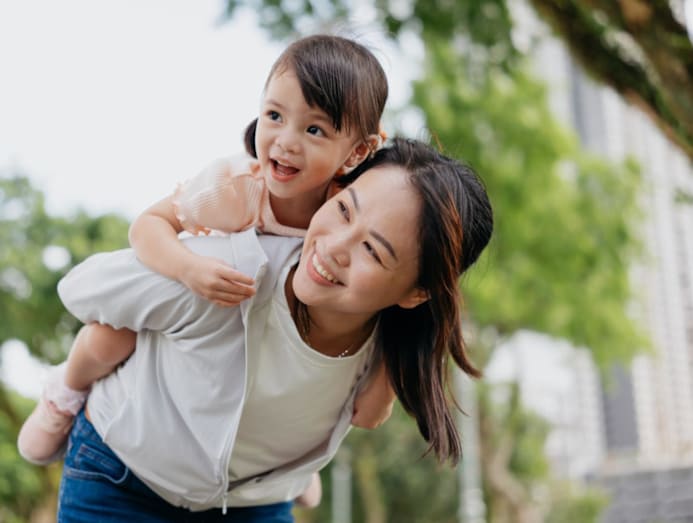
She has seen a growing interest in women seeking such coaching and a pattern of women asking who they are outside of being a mother, what they want for themselves and what needs to change.
“Many mums struggle to define what ‘being a mother’ is supposed to feel like, leading to a sense of confusion,” said Koo. “The tension between who they were before and who they are now can feel difficult to reconcile.”
She added: “My work is to guide women to embrace a new, flexible view of ‘identity’, to allow multiple roles to co-exist and evolve over time. Motherhood is a period of huge transformation and growth. I help mothers move towards a more grounded and sustainable sense of self.”
This includes exploring their values, their expectations of themselves and the systems they are operating within – including cultural and societal pressures.
“A big part of the work is helping women realise that nothing is ‘wrong’ with them, and what they’re experiencing is part of a larger developmental and systemic process,” said Cheng.
“From there, we look at practical ways to support them in this transition, such as building support systems, adjusting working arrangements and developing self-compassion, so they can step into this new phase of life more intentionally,” she added.
NOT JUST FOR FIRST-TIME MUMS
Cheng revealed that matrescence coaching is not limited to first-time mothers, as “each transition can bring a new layer of identity shift”.
Wong said that while it’s especially valuable for first-time mothers, mums with subsequent children can also benefit, “particularly if they felt unsupported or unsettled in their earlier experiences and want a more grounded transition this time”.
“Matrescence evolves as your children grow, as your life changes, as you move through different phases of identity, work and relationships,” said Pantry.
“You don’t ‘complete’ matrescence after the newborn stage. There’s no one-size-fits-all approach and there’s no end point, only an ongoing process of becoming,” she added.
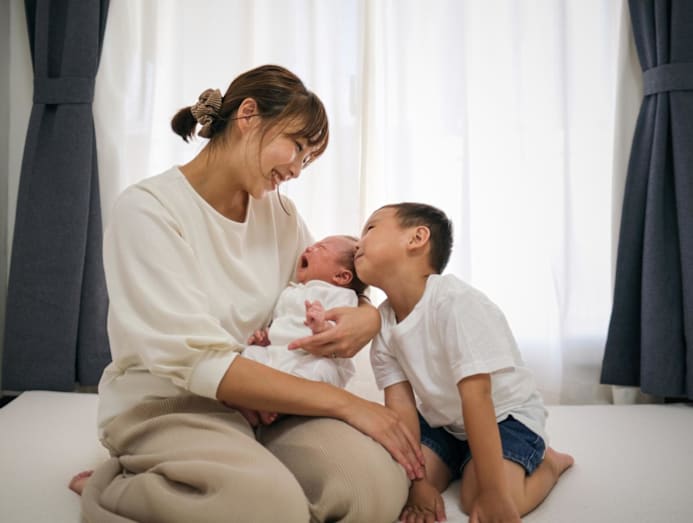
Each child and each transition brings a new version of you and with that, new questions, new challenges and new opportunities to redefine what motherhood and life look like.
A SPACE FOR WOMEN TO BE SEEN
Cheryl, who declined to reveal her full name, sought motherhood coaching from Koo when her child was 22 months old. She said she was burnt out at work, losing her sense of self in motherhood and struggling to manage both her child’s meltdowns and her own emotions.
“I realised what I was doing wasn’t working and I wanted to find a more sustainable way forward, rather than just trying harder,” the 36-year-old told CNA Women.
Her child is now three and she said that one of the most valuable lessons she learnt was that while she couldn’t control what happened around her, she could manage how she responded to it.
“Instead of pushing away difficult emotions, I’m learning to process and understand what they actually mean for me,” she said. “This has helped me navigate the unpredictability of motherhood with a little more ease, allowing me to go with the flow rather than resist it.”
Pantry said matrescence coaching creates space for women to talk openly, to be seen and to realise they’re not alone. And, when women are supported to trust themselves, rather than constantly second-guessing, that’s where confidence and maternal instinct naturally grow.
“We don’t need more information on how to raise babies – we need more support for the women raising them,” she said.
CNA Women is a section on CNA Lifestyle that seeks to inform, empower and inspire the modern woman. If you have women-related news, issues and ideas to share with us, email CNAWomen [at] mediacorp.com.sg.