After 9 years battling a relapsing blood cancer, this educator discovered a sense of gratitude through art
Wong Ching Yee survived multiple myeloma, lost her husband to colon cancer and faced a relapse soon after. She turned to art to make sense of a cancer known to return, and to navigate mortality and loss.

Diagnosed with multiple myeloma nine years ago, Wong Ching Yee survived treatment, remission and relapse. Now, in her second remission, she finds healing and gratitude in art. (Photos: Wong Ching Yee; Art: CNA/Jasper Loh)

This audio is generated by an AI tool.


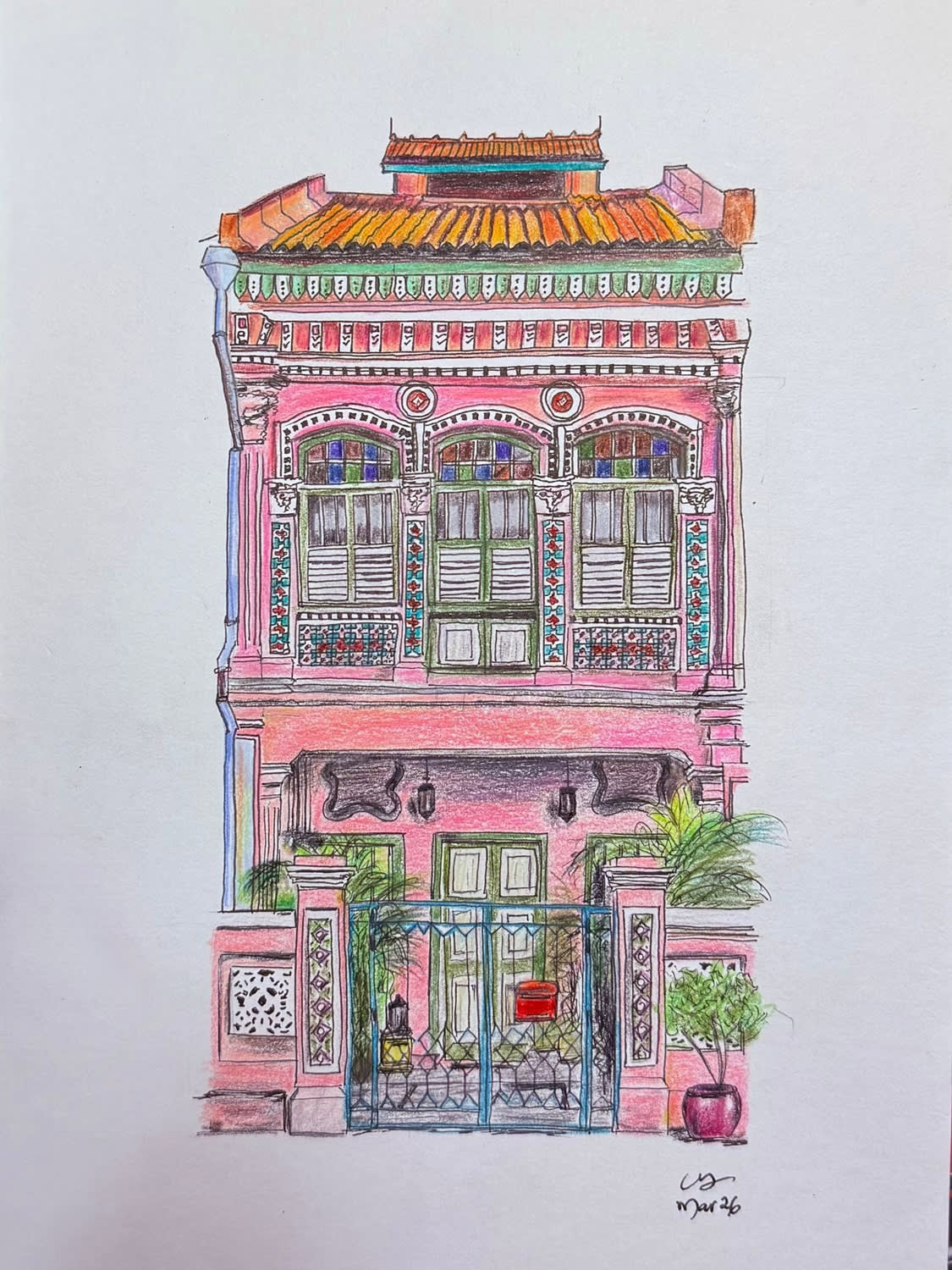
With an ink pen, 58-year-old Wong Ching Yee sketched her childhood home in Tiong Bahru, tracing the rounded corners, curved balconies, and Art Deco-inspired elements.
As a child, Wong had climbed up three storeys of the low-rise block to the warmth of her parents’ study lamp flooding the room and the laughter of her brother and cousins filling the air.
More than five decades on, her parents and aunt, now in their 80s, still live there. But much else has changed.
In 2017, Wong was diagnosed with multiple myeloma, a blood cancer that begins in the plasma cells in the bone marrow. She went through treatment, remission, relapse, a second round of treatment, and is now in her second remission.
During her long cancer battle, her husband was also diagnosed with colon cancer. He succumbed within 10 months.
It was in this season of loss that Wong, an educator, picked up art, first experimenting with card-making in 2019, then moving on to sketching, calligraphy and painting. She was then in her early 50s.
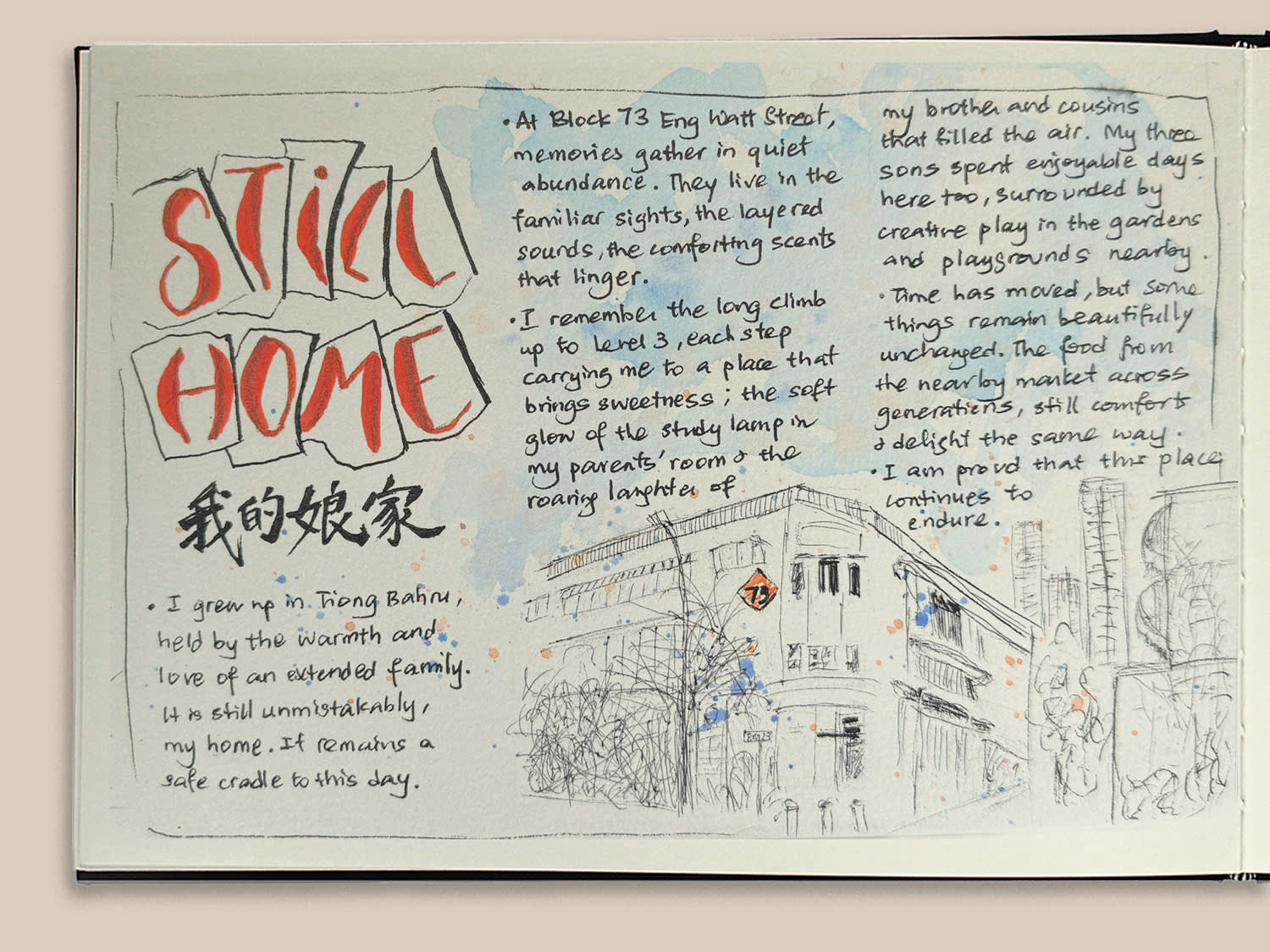
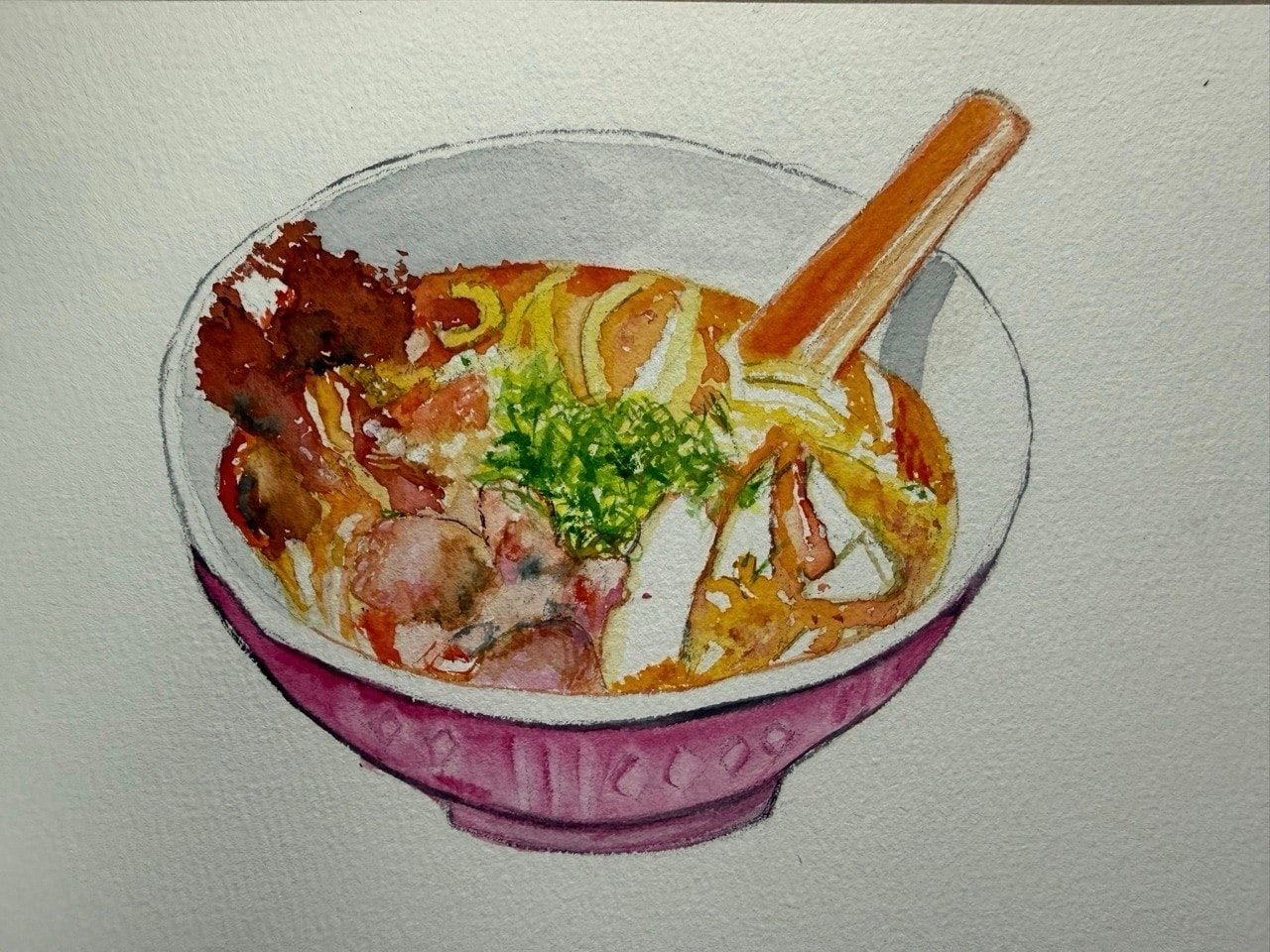
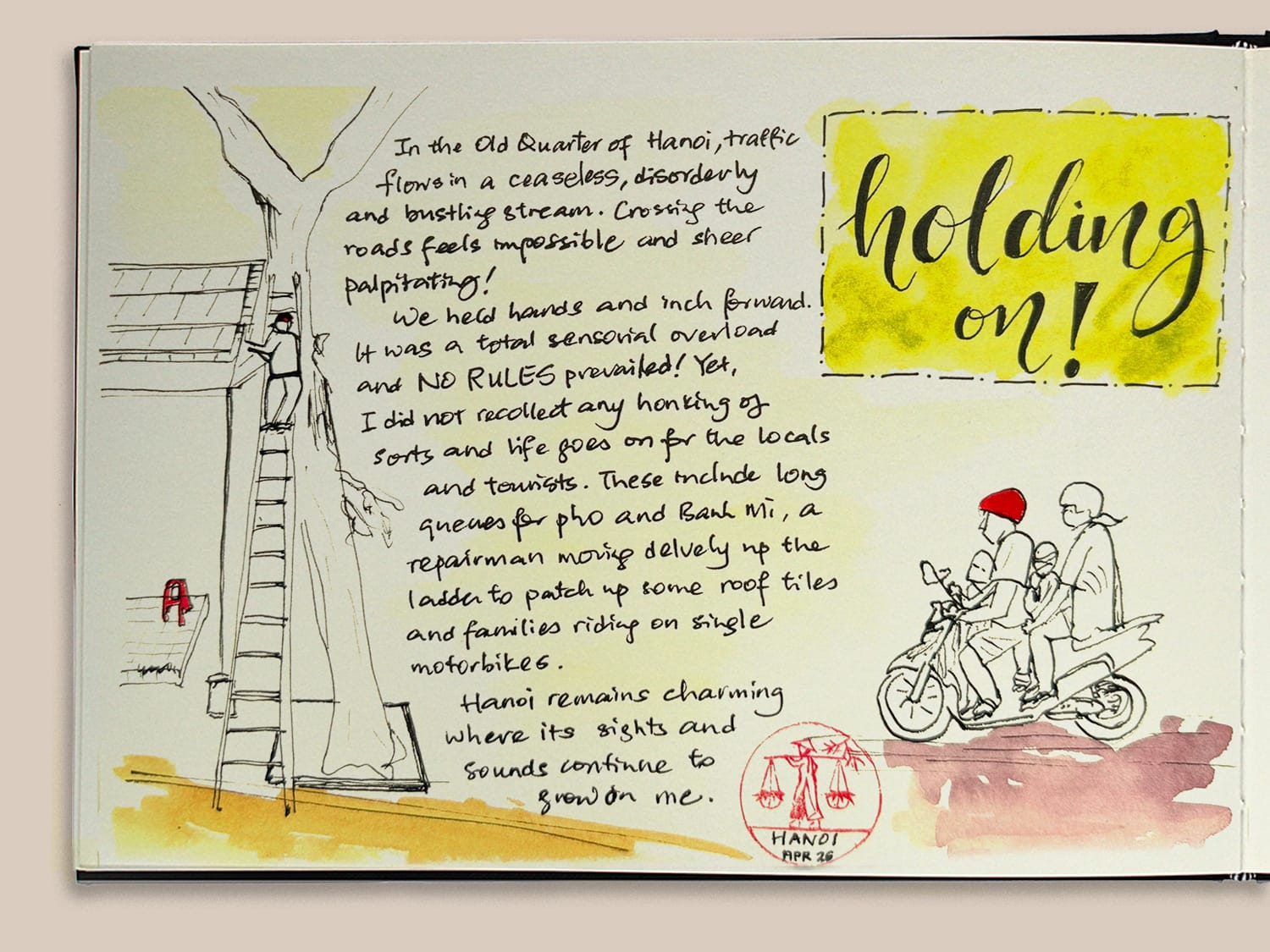
She wanted to capture the fleeting moments and anchor herself in gratitude.
“Mortality is very real. It’s staring at me in the face,” reflected Wong, who has three adult sons aged 30, 28 and 21.
AN ILLNESS SHE HAD NEVER HEARD OF
It began in 2015 with persistent joint pain in her shoulder, back and knees, as well as chronic fatigue.
Wong was diagnosed with monoclonal gammopathy of undetermined significance (MGUS), a usually benign condition where the body makes an abnormal protein in the blood. However, MGUS patients have about a 1 per cent yearly risk of developing multiple myeloma.
She was scheduled for regular blood tests to monitor her condition, and put on painkillers.
Two years later, however, she started to have daily nose bleeds, which led to a bone marrow biopsy to check if her MGUS had progressed into multiple myeloma or other plasma-cell disorders.
The call from the hospital came just as she boarded a cruise to Hong Kong. She went to the hospital after the trip.
“I was expecting bad news but I did not expect cancer,” she told CNA Women. “In fact, when they told me I had multiple myeloma, I asked them what it was. Could they spell it out for me?”
“When they told me it was cancer, I broke down,” said Wong, who was 49 then.
In June 2018, she began chemotherapy at the National University Cancer Institute, Singapore, and six months later, underwent an autologous stem cell transplant, where doctors collect a patient’s own blood-forming stem cells, give high-dose chemotherapy to kill the cancer cells, and then return the stored stem cells to help the bone marrow recover.
“I lost my hair and lost about 10kg. I didn’t have energy to walk from the bed to the toilet. I had diarrhoea, nausea and vomiting, and had to get disposable underwear because I would soil myself,” she said.
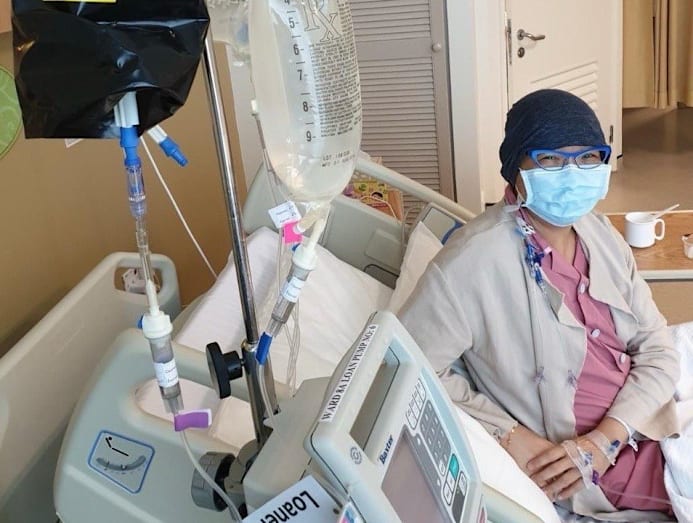
Wong took six months’ leave from her job as an educator and after the transplant, spent about three months in near-isolation as her immune system slowly rebuilt.
During this period, an old friend sent her handmade cards with uplifting messages. After her isolation period, Wong expressed interest in learning how to make them. So her friend brought calligraphy stamps, colour pencils and markers to Wong’s house and the duo began making cards together.
Wong enjoyed the session so much that she shopped for her own art supplies, and over the next few months, made around 50 such cards for family and friends. “Making cards helped me to reflect on gratitude, and was very therapeutic. It was a medicine of sorts,” she shared.
A CASCADE OF BAD NEWS
After the treatment, Wong’s cancer went into remission, and she threw herself back into work in June 2019. However, in December 2019, her husband was diagnosed with Stage 4 colon cancer.
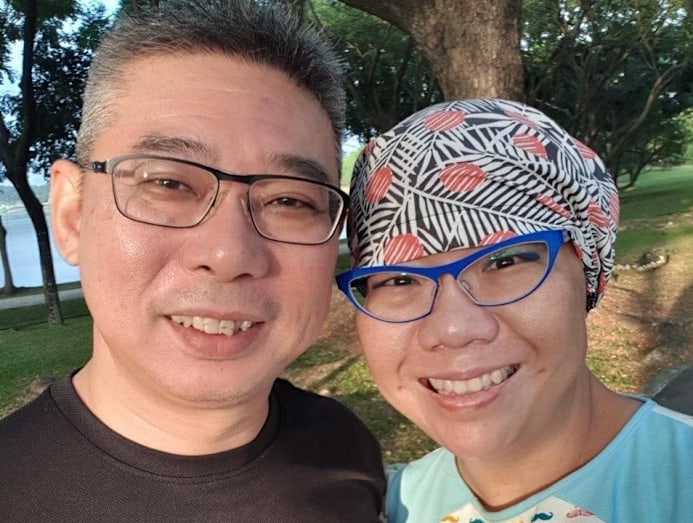
“It came as a thunderbolt. I was shattered,” Wong recalled. “I was barely out of the woods from my stem cell transplant, barely back to my job, barely had hair growing, and then this.
“His diagnosis affected me more than my own diagnosis.”
The disease progressed rapidly. In September 2020, the couple, who had been married for 26 years, went for a one-night staycation to celebrate his birthday. A couple of weeks later, he was hospitalised for an infection and died in October 2020. He was 53.
“[With his death] I did not have the luxury to dwell on the fact that I’m a cancer patient. I became a single parent and was back in the pilot seat,” she said.
Wong continued working through the grief of widowhood. However, in 2022, her cancer relapsed. She began chemotherapy again in 2023.
“Looking back, I guess I did not fully understand that health is wealth; health is most important. I still wanted to hang on to my career – something that I’ve built and loved,” she said.
It was only at the end of 2024, when her brain fog and fatigue intensified, that Wong realised work was no longer sustainable. In January 2025, she took long-term no-pay leave.
LIVING WITH MULTIPLE MYELOMA
Multiple myeloma can be a long journey marked by cycles of remission and relapses, said Professor Chng Wee Joo, senior consultant at the Department of Haematology-Oncology at the National University Cancer Institute, Singapore.
A chronic relapsing cancer
About 80 per cent of patients relapse after treatment, even if the disease goes into remission. However, with newer treatments, a smaller proportion of newly diagnosed patients are likely to relapse in the future. Prof Chng said current patients can still benefit from the newer treatments, depending on when they start it.
Each remission tends to be shorter
The first remission typically lasts four to five years. For newly diagnosed patients receiving newer treatment, however, remission may last as long as 10 years. The remission period tends to become shorter with each relapse.
Psychological toll
The high risk of relapse takes a toll on patients and caregivers. The need for long-term treatment to maintain remission, and more intensive treatment after each relapse can strain finances and lead to cumulative side effects such as fatigue, immune suppression making them prone to infections, and an increased risk of developing another cancer.
Living well after diagnosis
On a positive note, treatments are generally effective and well tolerated, and many patients maintain a good quality of life, living more than 10 years after diagnosis.
FINDING MEANING IN ART
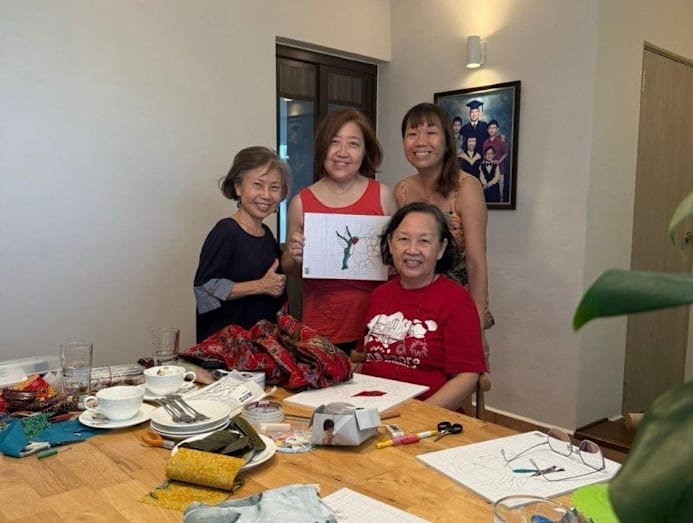
Wanting to deepen her art journey, Wong also began online classes, including a 10-month art course with Fei Yue Family Service Centre. She also did ad hoc art sessions with friends.
A Japanese craft Wong particularly enjoyed is kinusaiga, where pieces of fabric are pressed on a board to create a picture. With pieces of cloth a friend had collected, including batik, Japanese cotton and scraps from old dresses and skirts, Wong created a picture of a bird.

She also particularly enjoyed kintsugi, the Japanese art of repairing broken pottery with lacquer mixed with powdered gold, silver or platinum.
“To me, this (symbolises) picking up pieces – whether they be sad news or the brokenness in myself, and putting them together into a new story,” she reflected.
“When something broken is pieced back, you may see the fractures, but it’s okay. It can still be repurposed once there is an acceptance that there’s beauty in imperfection.”
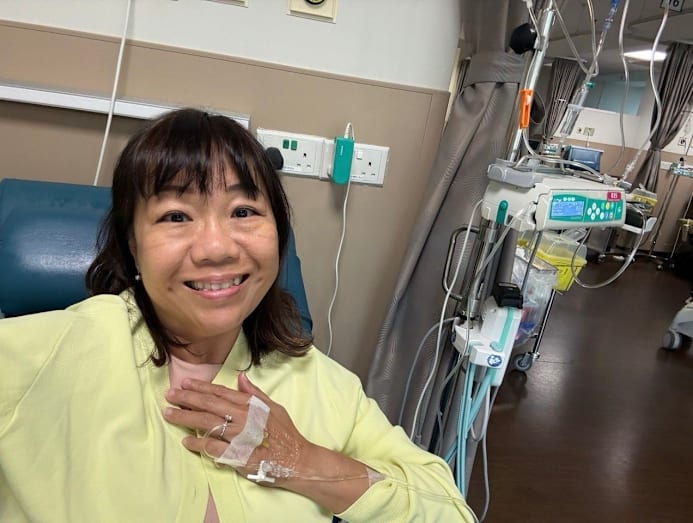
Wong has been in her second remission since April 2025 and is on monthly maintenance chemotherapy. But the likelihood of relapse hangs over her.
“My cancer journey feels like Hyrox (an indoor fitness race) and a marathon,” mused Wong, whose sons participate in these fitness events.
“I have had very tough days, when my nose bleeds make me look like a pontianak (a vampiric spirit in Malay folklore). But on good days, I choose to count my blessings,” she added.
“I’m grateful for this season of my life living with cancer. I feel rich,” she reflected. “Richness now comes in the form of relationships, and time with my family and ageing parents.
“I also now have time to discover what I love – art. I have time to learn, create and be transported back to that disposition of awe, wonder and creativity just like a child again,” she said.
CNA Women is a section on CNA Lifestyle that seeks to inform, empower and inspire the modern woman. If you have women-related news, issues and ideas to share with us, email CNAWomen [at] mediacorp.com.sg.