PMS making your usual workout feel impossible? 6 gym exercise swaps to try
You don’t always have to skip the gym when premenstrual syndrome or your period makes exercise uncomfortable. Scroll down for alternatives to your usual barbell squats, hip thrusts, crunches and more, with demo videos.
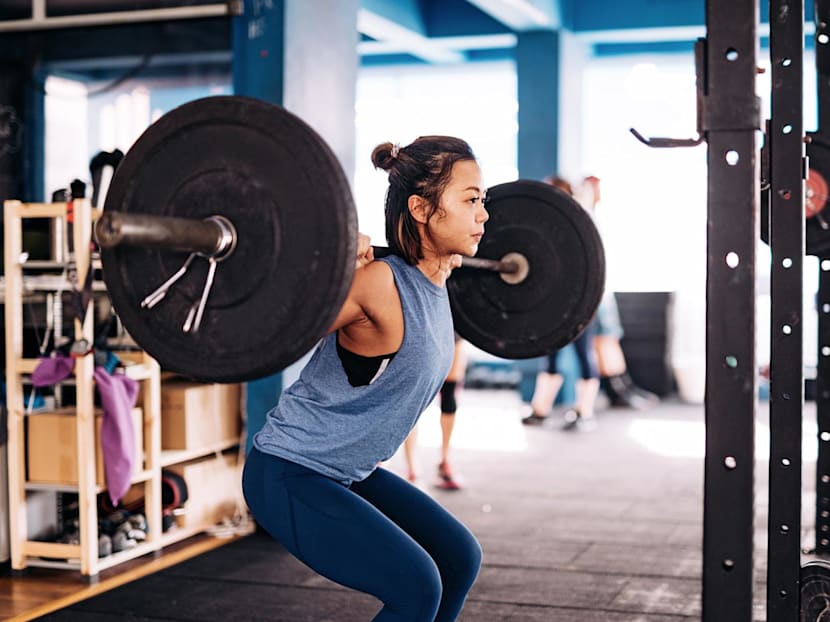
(Photo: iStock/Drazen_)

This audio is generated by an AI tool.


You know how it is when it’s that time of the month – or the days leading up to it. You’re lethargic, grumpy and feel defeated by throbbing abdominal cramps, lower backaches, headaches and maybe even bowel changes – all the classic signs of pre-menstrual syndrome or PMS.
No thanks to fluctuating hormonal levels, everything – especially your abdomen and breasts – feels heavy, tender and bloated, like you’d burst with a single touch. Squeezing your body into a tight sports bra and leggings, and hauling yourself to the gym? You’d rather be hit on the head with a dumbbell.
But if you’re chiding yourself for not taking advantage of your follicular phase to work out (see The 4 Phases below) when oestrogen levels rise, and you feel more energised – don’t be so hard on yourself. Here’s why.
HOW DOES YOUR MENSTRUAL CYCLE AFFECT YOUR WORKOUTS?
While certain studies suggest that body strength and endurance during the follicular phase is increased in women, the evidence is not strong, said Dr Karen Lim, a consultant with National University Hospital’s Department of Obstetrics & Gynaecology, Division of Maternal Fetal Medicine.
THE 4 PHASES
Dr Karen Lim, a consultant with National University Hospital’s Department of Obstetrics & Gynaecology, Division of Maternal Fetal Medicine, explains the changes a woman’s body undergoes during each of the four phases of her menstrual cycle – and how they affect her.
Menstrual phase: Days 1 to 5
The first day of your period. Oestrogen and progesterone levels are at their lowest. You feel more fatigued due to blood loss and menstrual cramping.
Follicular phase: Days 6 to 14
Oestrogen levels rise during this phase. You may feel more energetic due to the effects of oestrogen on the brain. Oestrogen is also involved in metabolism, muscle building and repair, and may also result in more joint flexibility.
Ovulation phase: Around Day 14
Ovulation may occur on or around this day in women with regular cycles. You may or may not perceive it but some women may feel a slight ache or discomfort on one side of their bodies, depending on which ovary is ovulating that month. This is usually mild and does not limit exercise or activity.
Luteal phase: Days 16 to 28
This phase is mainly predominated by progesterone, which results in an increase in basal body temperature and basal metabolic rate. The effects of progesterone on the body may include breast soreness, fatigue, an increased appetite and feeling warmer during exercise, especially in humid weather.
Secondly, “there is conflicting evidence on whether the different phases of the menstrual cycle truly impact exercise performance”, she said. “This is likely because there are many factors that influence exercise performance, and there is a wide variation between the physical abilities of individual women.
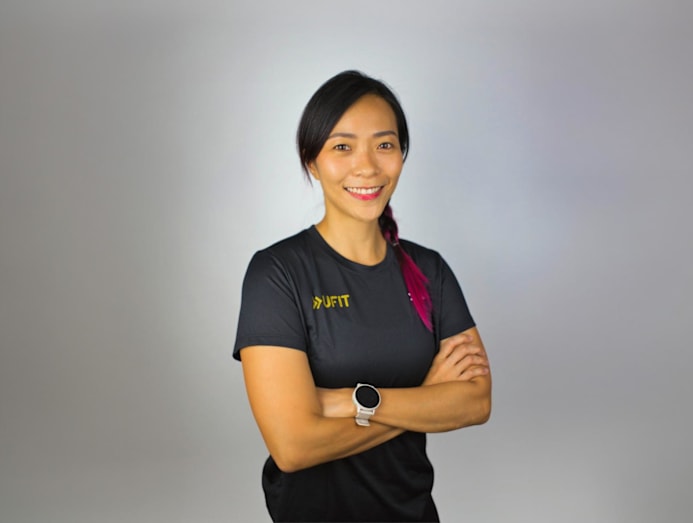
Kino Soh, a personal trainer with UFit, agreed: “Multiple studies suggest that strength is not significantly affected during menstruation. However, common PMS symptoms such as fatigue, back pain, headaches and nausea, coupled with Singapore’s hot and humid climate, may contribute to greater cardiovascular strain and reduced exercise tolerance.
“As a result, some women may feel more breathless than usual, or experience a higher perceived level of exertion during high-intensity activities.”
Moreover, not every woman goes through the distinct phases of a menstrual cycle, said Dr Lim. “The phases only occur in women with regular monthly cycles (that is, 21-to-35-day cycles). Women with irregular cycles or who are on hormonal treatments may not go through the menstrual, follicular, ovulation and luteal phases on a monthly basis.”
SO SHOULD YOU PUSH OR PULL BACK IN THE GYM?
The key is to let your body tell you. “Everyone responds differently, so it really comes down to how the person feels on the day,” said Soh. “If someone is dealing with more severe symptoms like strong pain, dizziness or vomiting, rest is the better option.”
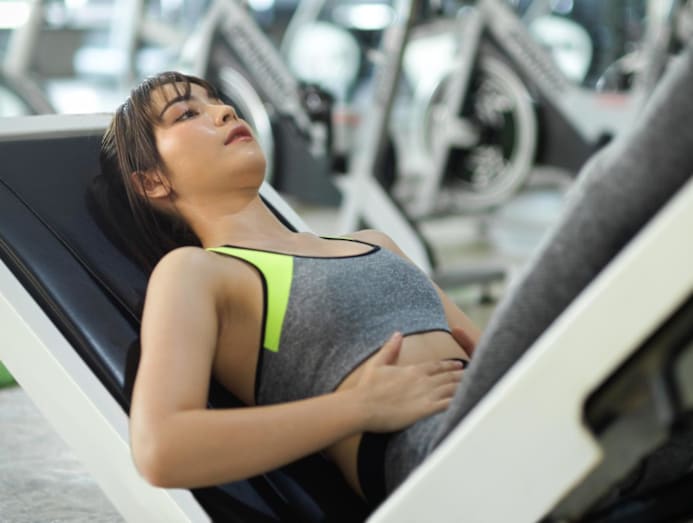
For mild to moderate discomfort, she said: “We can always adjust the session’s intensity.”
Soh highlighted that “in real-world settings, many women continue with their daily activities such as work, life and mummy duties, despite experiencing menstrual symptoms”.
Of course, “no one should feel obliged or pressured not to take a break from her training”, she added.
Another reason to not skip the gym is your body’s reaction to exercise – more specifically, endorphins, a chemical that your body produces to relieve pain and give a sense of well-being, said Dr Lim.
For women who experience PMS, endorphins could improve mood and primary dysmenorrhea (menstrual cramps that occur in the absence of any underlying pelvic disease), she said. However, “there is no clear evidence that exercise results in lighter menstrual flow”.
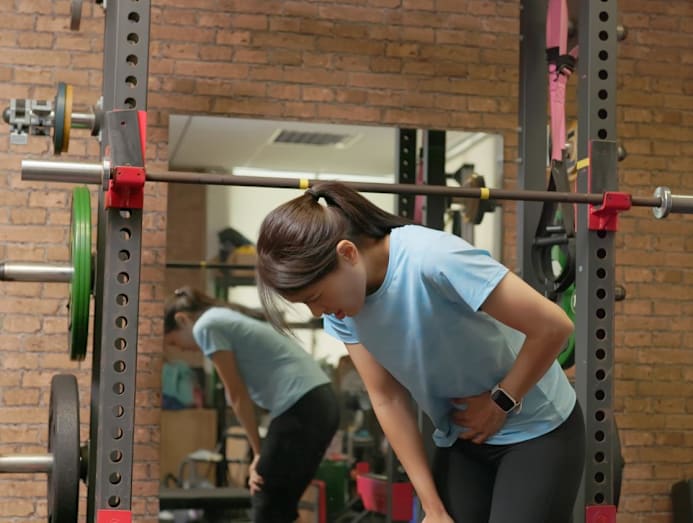
The only time when rest is non-negotiable is when you have very heavy periods over a long period of time. This is defined as having to use more than four or five heavy-flow pads a day on your heaviest days, said Dr Lim.
You may be anaemic due to the regular blood loss – in which case, you should see a doctor for help. “Intense exercise while being anaemic may result in feeling dizzy or fainting,” said Dr Lim. “Importantly, this can put a strain on the heart muscles, which could be life-threatening.”
WHAT ARE THE ALTERNATIVE EXERCISES TO TRY?
Generally speaking, said Soh, there aren’t specific gym exercises to avoid during menstruation. “Some women can train normally during their periods, so there really isn’t a one-size-fits-all approach.”
If you want to take it a bit easier during this time, you can simply reduce the number of repetitions and lighten the load of your usual exercises, said Soh. “Work with two to four repetitions in reserve (or RIR; meaning you still have energy to complete two more repetitions) instead of pushing to failure. This helps you to complete your session without accumulating excessive fatigue,” she said.
Or “lower your weights but work with a tempo to focus on quality and move with intention”, she added. And “allow a bit more time to rest between sets”.
That being said, it can be helpful to adjust certain exercises, said Soh. “When you’re experiencing bloating or discomfort in the abdomen area, you can choose to reduce load-on movements like heavy squats, hip thrusts or leg presses, which could potentially increase intra-abdominal pressure or bear down on the belly.
“For example, if you have cramps, you can switch to a different type of core exercise that can still work on core strengthening at an altered intensity,” she added.
Here’s a look at six alternative exercises you could try during your period in place of your usual ones:
Try: Goblet squats
Instead of: Barbell back squats
- Stand with your feet slightly wider than hip-width apart and toes angled slightly outward.
- Hold the dumbbell with both hands at chest height.
- Inhale as you bend your knees and sit your hips back, lowering over 3 seconds until your thighs are parallel to the floor.
- Stand back up while exhaling.
Video: Goblet squats. Picture: Barbell back squat. (Video & photo: CNA/Khoo Bee Khim and Chern Ling; model: Joy Vicky)
Try: Dumbbell floor presses
Instead of: Barbell bench presses
- Lie on your back with knees bent, hip-width apart and feet flat on the ground.
- Hold a dumbbell in each hand, shoulder-width apart.
- Lower the dumbbells to your upper chest with control, until your elbows touch the floor.
- Press up the dumbbells and straighten your arms to complete the repetition.
Video: Dumbbell floor presses. Picture: Barbell bench press. (Video & photo: CNA/Khoo Bee Khim and Chern Ling; model: Joy Vicky)
Try: Seated cable rows
Instead of: Bent-over rows
- Sit on the bench with your feet on the machine’s footrest and knees slightly bent.
- Grip the attachment with both hands, arms fully extended in front of you while sitting tall with a straight back and neutral neck.
- Drive your elbows back, pulling the handle towards your lower abdomen. Squeeze your shoulder blades together at the end of the movement.
- Slowly extend your arms back to the starting position in a controlled manner.
Note: Remain upright throughout the movement and avoid using momentum to pull the weight.
Video: Seated cable rows. Picture: Bent-over row. (Video & photo: CNA/Khoo Bee Khim and Chern Ling; model: Joy Vicky)
Try: Dumbbell Romanian deadlifts
Instead of: Barbell deadlifts
- Stand with your feet hip-width apart. Hold a dumbbell in each hand and position it at the front of your leg. Keep your back straight and neck neutral.
- Send your hips back until your knees start to bend; that is a hinge. At the same time, keep your arms straight and move the dumbbells down the shins.
- Once you feel a stretch in the back of your thighs, take a short pause.
- Bring your hips forward again, allowing your body to straighten back to the upright position.
Video: Dumbbell Romanian deadlifts. Picture: Barbell deadlift. (Video & photo: CNA/Khoo Bee Khim and Chern Ling; model: Joy Vicky)
Try: Box-elevated glute bridges
Instead of: Hip thrusts
- Lie on a mat with both legs elevated on a box. Place your heels or mid-foot at the edge of the box. Keep your knees bent around 90 degrees.
- Maintaining your chin tucked and core braced, drive through your heels to push hips up toward the ceiling until your body forms a straight line from shoulders to knees.
- Squeeze your glutes at the top and hold for a short pause, then slowly lower your hips back down towards the floor.
Note: Throughout the movement, avoid over-extending your lower back. The movement should come from the glutes driving the hips up, not the spine arching.
Video: Box-elevated glute bridges. Picture: Hip thrust. (Video & photo: Khoo Bee Khim and Chern Ling; model: Joy Vicky)
Try: Deadbugs
Instead of: Crunches
- Lie flat with your lower back pressed firmly into the floor.
- Raise both arms straight up toward the ceiling and lift your legs to a tabletop position (legs bent at 90 degrees).
- With control, lower one leg to the floor while lowering the opposite arm in the opposite direction.
- Pause briefly, then bring both limbs back to the starting position before repeating on the opposite side.
Note: Throughout the movement, avoid letting your lower back arch away from the floor to ensure your core is working correctly.
Video: Deadbugs. Picture: Crunch. (Video & photo: CNA/Khoo Bee Khim and Chern Ling; model: Joy Vicky)
CNA Women is a section on CNA Lifestyle that seeks to inform, empower and inspire the modern woman. If you have women-related news, issues and ideas to share with us, email CNAWomen [at] mediacorp.com.sg.