Working women face different challenges across life stages: PAP Women’s Wing survey
Early-career women reported burnout, caregivers cited flexible work as helpful workplace support, while only one in 10 experiencing perimenopause or menopause symptoms felt their workplace was open to discussing support. The survey was conducted by the PAP Women's Wing and NTUC Women and Family.
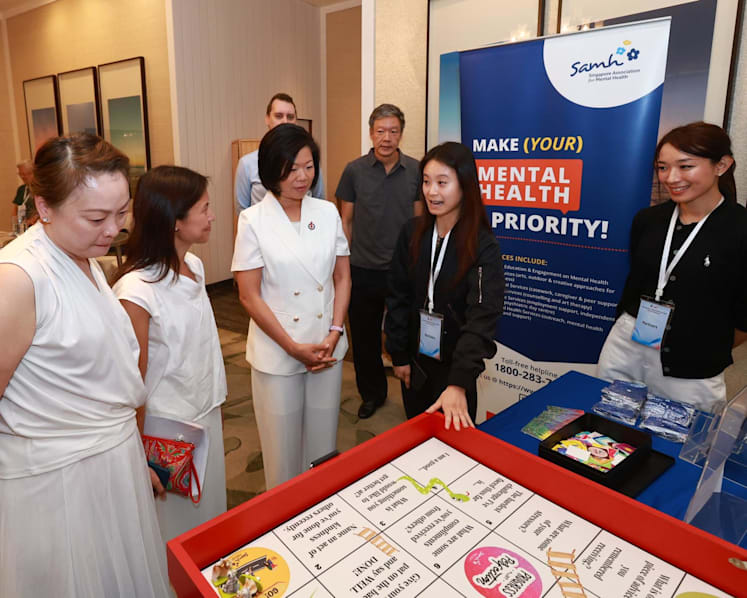
PAP Women's Wing chairperson Second Minister for Foreign Affairs and Home Affairs and MP for Holland-Bukit Timah GRC Sim Ann (third from left), meets with community partners from the Singapore Association for Mental Health (SAMH). (Photo: People's Action Party)

This audio is generated by an AI tool.


Working women have different health and well-being needs as they move through the various stages of life, from the early stage of their career to menopause, a joint People’s Action Party (PAP) Women's Wing and NTUC Women and Family (NTUC WAF) survey found.
The survey, titled Women Across Life Stages, involved 2,375 working women aged 18 and above, and was conducted online from Aug 3 to 31, 2026.
An NTUC WAF spokesperson told CNA Women that respondents’ ethnicities were not tracked; the demographic breakdown was by age.
The findings fell under three areas: Early-career women; women balancing work with parenting, caregiving and family planning; women experiencing perimenopause or menopause symptoms.
EARLY CAREER: STRESSED, BUT RELUCTANT TO SPEAK UP
Among 224 early-career respondents, one in four reported that stress, anxiety, burnout or emotional strain affected their work significantly.
The biggest contributors were high pressure to perform well (47 per cent of respondents) and having too much work or working long hours (41 per cent).
When it came to seeking support for their stress, half the respondents said they were comfortable looking for support outside work, but only 21 per cent felt comfortable speaking to their manager or human resources department.
PARENTS AND CAREGIVERS WANT FLEXIBILITY
Among 912 working mothers, 61 per cent identified flexible work arrangements, including working from home, as the workplace support that would help them the most. A supportive workplace culture came next (46 per cent), followed closely by having flexible start and end times (43 per cent).
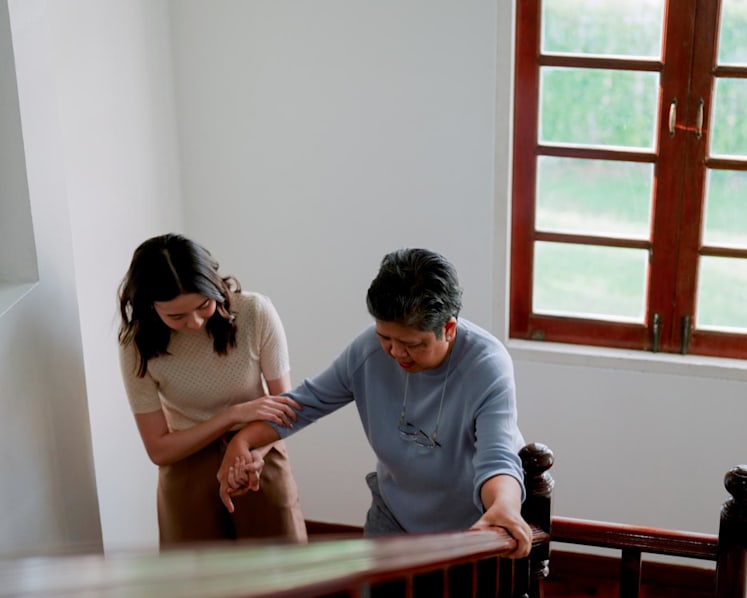
Among the 819 respondents who cared for an elderly parent, family member or dependent adult, the need for flexibility came up top – 68 per cent said flexible work arrangements would help reduce caregiving strain. The women also wanted more understanding supervisors and managers (44 per cent) and a supportive workplace culture (43 per cent).
The survey also examined the needs of new mothers. Among 147 respondents who were returning to work while still breastfeeding or pumping, 51 per cent wanted sufficient time to pump at work, 50 per cent wanted a private space at work to do so, while 42 per cent cited flexible work arrangements as valuable support.
“Flexible work arrangements remain important, but women must also feel confident using them without being seen as less committed,” said Yeo Wan Ling, MP for Punggol GRC, NTUC assistant secretary-general and director of NTUC WAF.
“As caregiving becomes more complex, we should also study the role of family-care leave alongside flexible work arrangements.”
Among 271 respondents considering whether to start a family or have more children, 41 per cent cited the cost of raising children as a concern, followed by long working hours or workload (34 per cent) and housing or financial readiness (31 per cent).
PERIMENOPAUSE AND MENOPAUSE: FATIGUE, POOR SLEEP, LITTLE WORKPLACE OPENNESS
Among 288 respondents experiencing perimenopause or menopause symptoms, 61 per cent indicated that low energy and fatigue had the greatest impact on their work or well-being, followed by poor sleep (50 per cent).
Despite these challenges, only one in 10 felt their workplace was open to discussing support for perimenopause or menopause.
In response to the survey findings, PAP Women’s Wing is working with community partners such as the Obstetrical & Gynaecological Society of Singapore to organise workshops covering women’s health and well-being, including mental health, fertility, perimenopause and menopause.
PAP Women’s Wing will also work with NTUC WAF to encourage employers to better support women’s health and caregiving needs, including through flexible work arrangements.
Additionally, PAP mental health ambassadors – volunteers across the party’s branch offices in Singapore to promote mental well-being – will be trained to tackle mental health issues in women.
Marymount SMC MP Gan Siow Huang, who is also Minister of State for Foreign Affairs and Trade and Industry and adviser to the Women’s Wing research group, added: “Women should not have to struggle in silence or compromise their well-being to succeed at work.
“Employers, managers and co-workers can take action to create workplaces that are more flexible, inclusive and responsive to women’s needs while fostering a supportive workplace culture where everyone feels valued and empowered to thrive.”
CNA Women is a section on CNA Lifestyle that seeks to inform, empower and inspire the modern woman. If you have women-related news, issues and ideas to share with us, email CNAWomen [at] mediacorp.com.sg.