Do you really need to wear a bra all the time – and how does it affect your health if you don't?
We wear bras for lift, shape and confidence, but the wrong fit could do more harm than good. CNA Women asks two doctors how ill-fitting bras, sagging and going braless can affect breast health.

A well-fitted bra offers support, improves breast movement control and can positively influence a woman’s mood and confidence. (Photo: iStock/Suwanb)

This audio is generated by an AI tool.


When it comes to bras, it’s not uncommon to ponder whether to wear one or not. While bras provide breasts with support and a well-fitted one can give you a confidence boost – plus sexy cleavage when you want to show it off – they can also be a pain, literally.
Picture wired bras poking into the skin or ill-fitting ones that give your breasts an unnatural shape.
But before we consider the pros and cons of wearing a bra, we first need to understand a little more about breasts.
Dr Sabrina Ngaserin, general surgeon (breast) at Mount Elizabeth Novena Hospital, explained that breast tissue is made up of glandular components (for milk production), fibrous connective tissue (which provides internal support), fat and milk ducts.
These are held in place by the skin envelope and Cooper’s ligaments – fibrous bands that anchor breast tissue to the chest wall.
THE CASE FOR WEARING A BRA
A well-fitted bra is needed for “structural assistance”, said Dr Ngaserin, supporting the breast tissue and reducing strain on the ligaments.
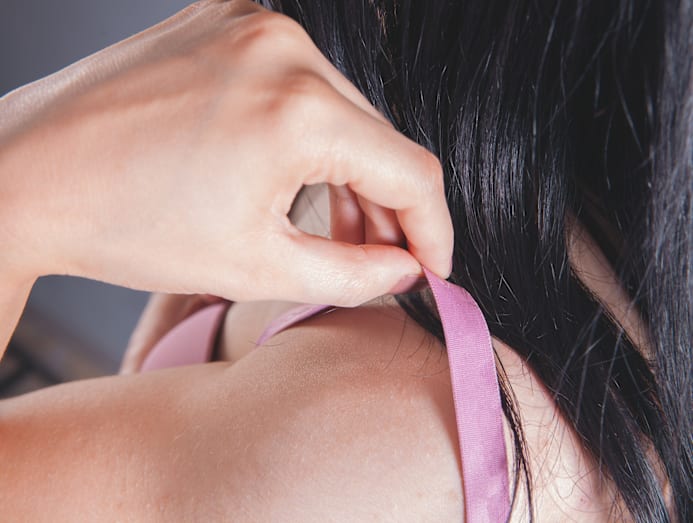
Associate Professor Lim Geok Hoon, head and senior consultant, KK Breast Department, at KK Women’s and Children’s Hospital, added: “Wearing a bra with good support can alleviate breast pain, which some women experience, and may improve posture. Women who are breastfeeding or have large breasts particularly need the support of a bra.”
… AND NOT
If you find bras restrictive or uncomfortable, Dr Ngaserin said there is nothing wrong with exploring alternative options. These include stick-on covers or adhesive bras that offer minimal support while maintaining coverage.
Or you could choose to go entirely bra-free, as a matter of personal comfort or expression.
“Ultimately, bra-wearing is a personal choice, and there is no one-size-fits-all approach when it comes to feeling supported – both physically and emotionally,” Dr Ngaserin added.
BRAS AND BREAST CANCER
One myth surrounding bras is that they may increase your risk of breast disease, particularly breast cancer. Dr Ngaserin said population-based studies have found no evidence to support an association between bra use and breast cancer risk.
“This misconception likely arose from the unfounded belief that bras restrict lymphatic drainage, leading to a build-up of ‘trapped toxins’,” she said.
“Scientifically, there is no credible evidence that factors such as the age at which one begins wearing a bra, the number of hours worn per day, cup size or underwire design have any impact on breast cancer risk,” Dr Ngaserin added.
SHOULD YOU WEAR A BRA TO SLEEP?
At night, Dr Ngaserin noted that there is no scientifically proven health benefit or harm in whether you sleep with or without a bra. Once again, it’s a personal choice guided by comfort and individual preference.
“Anecdotally, some individuals may choose to wear a bra at night to reduce nipple sensitivity caused by friction from fabric movement,” she added.
A MUST DURING EXERCISE
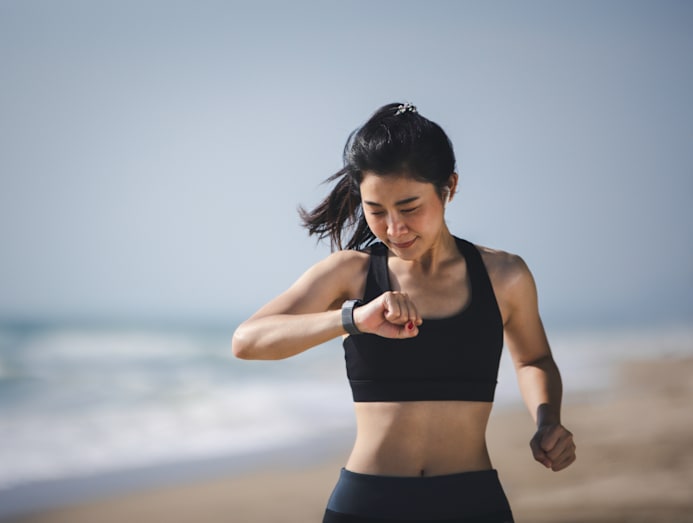
Wearing a bra during your workouts is recommended. “High-impact physical activity, particularly without adequate support, can increase strain on the breast ligaments, leading to greater risk of sagging over time, especially in those with larger breasts,” said Dr Ngaserin.
HOW TO GET THE RIGHT BRA SIZE
A well-fitted bra helps strike the right balance between coverage, support, comfort and aesthetic, said Dr Ngaserin.
You can get yourself professionally fitted by a qualified bra-fitting specialist in Singapore, or you can take some measurements at home to gauge your size.
Step 1: Measure your underbust (or band) size. Stand upright without a bra on and place a tape measure just under your breasts, where your bra band sits. For comfort, the tape should feel snug against your skin but not too tight. This number (for example, 34 inches) is your band size. If it's an odd number, round it down to the nearest even number.
Step 2: Measure your overbust size. While the bra band holds your breasts in place, your cup helps to define the shape of your breasts. Put on a non-padded bra, then measure around the fullest part of your chest, which is around the nipples. If you get a half-measurement here, round up to the next number.
Step 3: Cup size equals overbust size minus the band size.
But note that bra brands have their own guidelines for both band and cup sizes – a 34C bra from one brand may differ slightly from the 34C of another brand. A physical try-on is needed to find the best fit, said Assoc Prof Lim.
As a general guide, band sizing increases in 4cm intervals. If your underbust measurement is 68-72 cm, you are a 32; 73-77cm is a 34; 78-82cm is a 36, and so on.
Cup size increases in 1-3cm intervals, depending on the brand. For example, if the difference between your overbust and underbust is 10-12cm, you would be an A cup; 13-14cm, a B cup; 15-17cm, a C cup; 18-19cm, a D cup.
“Ultimately, the most important thing is that the bra fits well, feels comfortable and caters to one’s needs,” said Assoc Prof Lim.
If you have differently sized breasts, you are one in four women who faces this, said Assoc Prof Lim. No treatment is needed for breast asymmetry, but you might want to note what to do when buying bras – for optimal comfort, the bra should be fitted to the larger breast.
HEALTH CONSEQUENCES OF ILL-FITTING BRAS
“Over 80 per cent of women may be wearing the wrong bra size, often due to errors in selection or natural changes in body shape over time,” Dr Ngaserin told CNA Women. “Regular fluctuations in weight, hormonal shifts, pregnancy and ageing can all impact breast size and fit.”
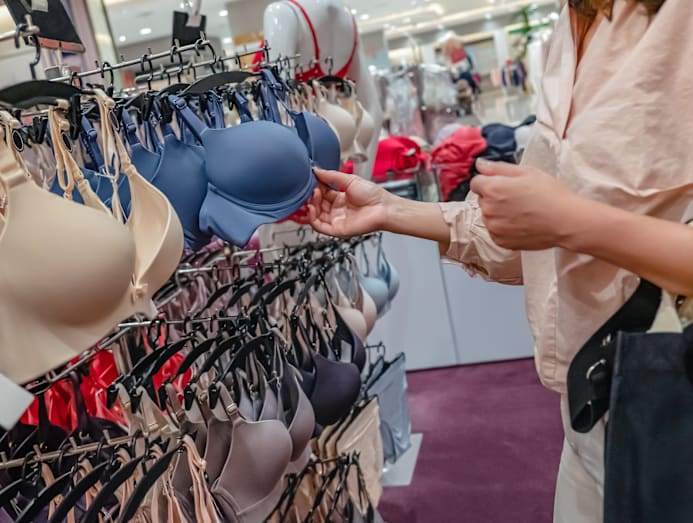
Wearing an ill-fitting bra may lead to health issues in the long run. Assoc Prof Lim said it can cause discomfort to the breasts, shoulders and back. She added that over the years, this could aggravate breast sagging, which can occur with ageing.
“Women with large breasts may suffer from chronic back pain and poor posture and a poorly fitted bra may worsen this,” she said. “Persistent compression from an overly tight bra can damage the skin and result in red marks, and indentations from the shoulder straps. A very tight bra could even affect breathing during exercise.”
Dr Ngaserin recommended that women get professionally fitted by a qualified bra-fitting specialist to ensure the right combination of support and comfort. And these fittings should be revisited at regular intervals, especially when significant body changes occur.

“A well-fitted bra does more than just offer support; it can improve breast movement control, enhance posture and positively influence one’s mood and self-confidence,” she said.
BREASTS AND AGEING
Over time, “the natural support systems weaken”, said Dr Ngaserin – ageing and hormonal changes lead to a reduction in glandular and fibrous tissue, which is gradually replaced by fat.
“Cooper’s ligaments also lose their elasticity, especially when stretched by the effects of gravity, repeated fluctuations in breast size due to changes in body weight and the physical demands of pregnancy and lactation,” Dr Ngaserin said.
She added that smoking and excessive sun exposure degrade collagen and elastin, the proteins responsible for skin firmness and elasticity, “hastening the loss of support”.
All these cause the breasts to sag or droop over time. And while bras do not prevent sagging entirely, they can reduce the cumulative effects of stress on breast structures, said Dr Ngaserin. “A well-fitted bra can help mitigate some of these changes.”
CNA Women is a section on CNA Lifestyle that seeks to inform, empower and inspire the modern woman. If you have women-related news, issues and ideas to share with us, email CNAWomen [at] mediacorp.com.sg.