From takeaway containers to receipts – how everyday plastics may disrupt hormones and your fertility
Chemicals in everyday plastics can interfere with our hormones. While no direct link to fertility has been established, they have been associated with issues such as polycystic ovary syndrome and poorer egg quality. CNA Women speaks to experts on what the research shows and how to reduce exposure.

Chemicals added to plastics can interfere with our hormones, especially when heated, such as in disposable food containers and utensils. (Photo: iStock/blackCAT)

This audio is generated by an AI tool.


You might pick up a takeaway from the hawker centre a few times a week. Or perhaps your refrigerator is stocked with ready meals you can easily microwave when you don’t have time to cook.
That hot food you’re consuming from plastic containers could potentially affect your fertility. When plastic meets heat, it can release chemicals that affect our hormones.
During the manufacturing process, chemicals like bisphenol A (BPA), phthalates and PFAS (an umbrella term that covers perfluoroalkyl and polyfluoroalkyl substances) may be added to make plastics rigid, flexible or resistant to heat.
These chemicals are endocrine disrupting compounds (EDCs), which can interfere with how hormones work in the body.
“Hormones serve as the body’s chemical ‘messengers’, regulating critical processes including ovulation, sperm production, embryo implantation, thyroid function, metabolism and even to maintain a pregnancy,” explained Lee Joo Mong, senior principal embryologist at the Department of Reproductive Medicine at KK Women’s and Children’s Hospital (KKH).
“EDCs can disrupt hormones in several ways, for example, mimicking or blocking hormones, changing the levels of hormones and/or changing the way the body responds to hormones,” she added.
WHERE HORMONE DISRUPTERS ARE FOUND
The most common food-related products to worry about are containers made of plastic and cling wrap. Other examples include pizza boxes and popcorn bags – the grease-proof linings contain PFAS.
Avoid using disposable plastic utensils when eating hot food. And that plastic bag of kopi from the coffeeshop? That is harmful too as it involves mixing plastic and heat.

Heat increases the migration of EDCs and other chemicals out of the plastics and into the food, while fatty or oily food act as a solvent for them, Lee said.
Besides heat, how long you store your food in plastic containers, the type of food that’s in it, how much wear and tear has happened, and their size also plays a part.
This is not a purely plastic problem, though. Indoor dust can also contain harmful microplastics, or tiny plastic particles, that could contain EDCs. This includes lint from clothes and furniture, pet dander, dust mites on furniture or carpets, and soil from shoes.
Another unexpected everyday source is thermal paper receipts, which are coated with chemicals to create text. BPA is commonly used in this heat-sensitive coating.
Dr Lisa Webber, senior consultant, Department of Obstetrics and Gynaecology, Singapore General Hospital, told CNA Women that EDCs may enter the body via the gut (by being eaten or drunk), absorbed through the skin (via personal care products such as deodorant and soaps) or breathed in (due to poor air quality or smoking, including passive smoking).
MICROPLASTICS AND WOMEN’S FERTILITY
So how do microplastics affect our fertility? Professor Jerry Chan, senior consultant, Department of Reproductive Medicine, KKH, said there is ample published data from cohort studies to show the impact in both males and females.
However, he added that while these studies do not definitively prove that microplastics directly cause fertility issues, the EDCs found in plastics have been shown to disrupt hormone systems.
Dr Webber said that in women, although EDC exposure has been linked to issues such as premature ovarian insufficiency (POI – "young menopause"), polycystic ovary syndrome, as well as a reduced number and quality of eggs retrieved for in vitro fertilisation (IVF) and poor embryo quality, there is no clear evidence that EDCs are the cause.
Prof Chan, who is also director of the KKH Maternal and Child Health Research Institute, said high levels of microplastics in the male partner may also cause poorer IVF outcomes.
In men with infertility, EDCs have been linked to reduced sperm count or motility (how efficiently sperm moves), Dr Webber added.


"FOREVER CHEMICALS" THAT IMPAIR FERTILITY
The Netflix documentary The Plastic Detox examined how microplastics can affect fertility. Epidemiologist Shanna Swan took six couples struggling to conceive on a journey to reduce their exposure to plastics in everyday products, charting the impact on their fertility.
Even though it’s a small sample size and the number of chemicals used in products in that country varies from most other countries, it is a timely reminder of just how harmful plastics can be on not just our fertility but overall health too.
PFAS, in particular, has a bad rap, nicknamed "forever chemicals" “because they stay in the environment for a long time and break down very slowly”, said Prof Chan.
A Singapore study examined 382 women of reproductive age who were trying to conceive between 2015 and 2017. Researchers measured PFAS levels in their blood and tracked their fertility outcomes over one year as part of the KKH-led Singapore Preconception Study of Long-Term Maternal and Child Outcomes.
PFAS – rather than other EDCs – were specifically chosen because of our widespread daily exposure to it, as well as its long-lasting existence in human tissue.
The findings showed women with higher PFAS levels in their blood had a 5 to 10 per cent lower chance of getting pregnant. They also had 30 to 40 per cent reduced odds of achieving pregnancy and live birth over the one-year study period.
“The study suggests PFAS may impair fertility through endocrine disruption, potentially altering hormone levels like oestradiol (a type of oestrogen) and progesterone that are crucial for the menstrual cycle and reproduction,” Prof Chan told CNA Women.
He added: “This research is particularly significant as it is one of the first to examine PFAS and fertility in an Asian population, and it demonstrates that these ‘forever chemicals’ may be contributing to fertility challenges even at the exposure levels commonly found in the general population.”


HOW TO MINIMISE MICROPLASTICS EXPOSURE
The level of microplastics exposure, both length of time and amount, needed to cause harm hasn’t yet been determined by experts.
“There is no safe threshold that can be defined for all different microplastics,” said Prof Chan. “The timing of exposure may matter as well, with exposure during the preconception and early pregnancy stages having a bigger impact. This is because the foetus is more vulnerable during these early developmental stages.
“Exposure to microplastics is often continuous and from different sources (food, air, skin, dust). And because the impact of these 'forever chemicals' lingers for a long time, the most sensible approach is to minimise exposure.”
Dr Webber said there are suggestions that countries should limit the usage of EDCs in plastics and other sources through regulation.
“It is very important to keep the possible adverse effects of EDCs in context of other more important issues known to have adverse effects on reproduction, such as obesity, smoking and the impact of advanced female age,” she said.
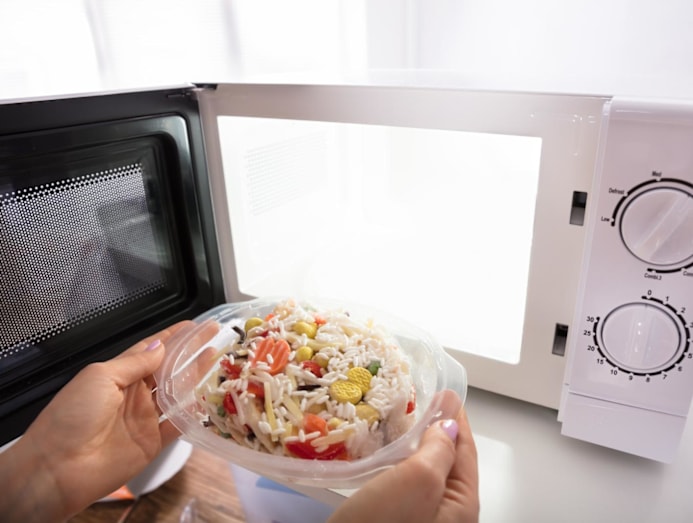
Prof Chan recommended using glass or ceramic containers when heating or microwaving food. Also, replace damaged plastic containers and avoid storing fatty and acidic foods in them.
For non-plastic items, choose fragrance-free personal care products and reduce the number of products used. You can also reduce dust-borne exposure by vacuuming and mopping your home more frequently.
And the next time you’re asked if you’d like a receipt for a purchase, say no or opt for a digital one, if possible.
“People handle receipts without thinking about it. The exposure happens through direct skin contact, which can be quite effective at getting chemicals into the body,” said Prof Chan.
CNA Women is a section on CNA Lifestyle that seeks to inform, empower and inspire the modern woman. If you have women-related news, issues and ideas to share with us, email CNAWomen [at] mediacorp.com.sg.