After a traumatic birth and postpartum depression, this mum built the centre she wished she had – in Vietnam
A traumatic postpartum experience that included breastfeeding struggles, a NICU stay and postpartum depression led Kun Jiang to create The Joyful Nest – a confinement centre in Vietnam designed to support new mothers.
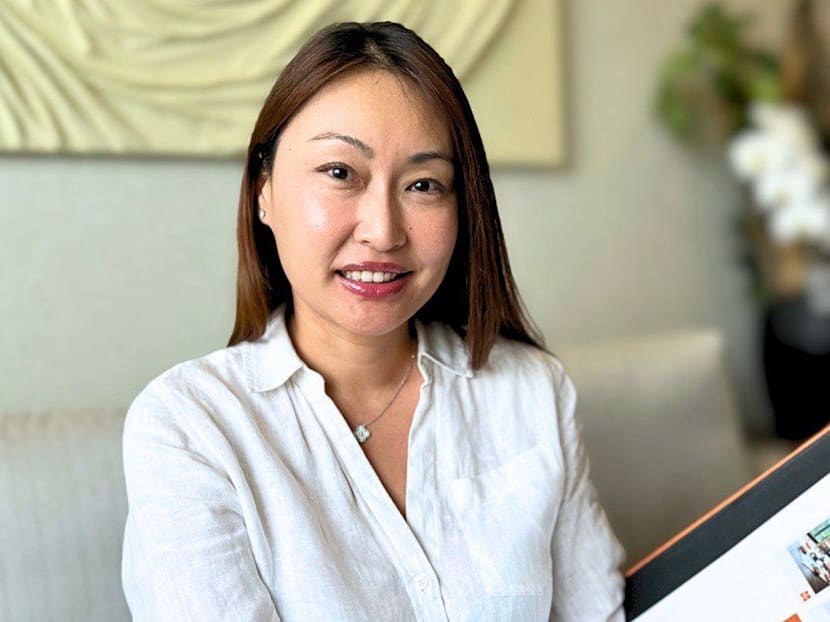
Kun Jiang was inspired by her postpartum ordeal to build The Joyful Nest, a luxury confinement centre in Vietnam. (Photo: The Joyful Nest)

This audio is generated by an AI tool.


There is a new hotspot in Ho Chi Minh City attracting some of the most famous Vietnamese celebrities. Former Miss Universe Vietnam H’Hen Nie, actress Veronica Ngo, supermodel Tuyet Lan, and a whole host of celebrities and influencers have stayed there since it opened in early 2025.
No, it is not the latest hotel or yoga retreat. The Joyful Nest is a luxury postpartum centre in Vietnam, said to be the country’s first, founded by Singapore permanent resident Kun Jiang.
Online reviews have been so positive that some new mothers from other countries have even shifted their delivery to a hospital in Vietnam or flown in shortly after giving birth to check into the postpartum centre. They come from countries like Cambodia, and even further, like Saudi Arabia and the United Kingdom.
But behind its remarkable success is a personal and painful story. Through tears, the centre’s 42-year-old founder Jiang, who was born in Australia and moved to Singapore in 2013, tells CNA Women how her own traumatic postpartum experience inspired her to build this sanctuary.
HER MOTHERHOOD BEGAN IN CRISIS
In 2017, a month after Jiang quit her private equity job to start to her own health tech company, she got pregnant.
Nine months later, while in the thick of building her first software product, she gave birth. “I had no time to think about postpartum at all,” the entrepreneur recalled.
It was an exhausting labour that lasted 24 hours.
After discharge, when Jiang tried to breastfeed, she struggled with low milk supply. The new mother frantically searched online for answers. Web sources reassured her that newborns do not need much milk, only colostrum.
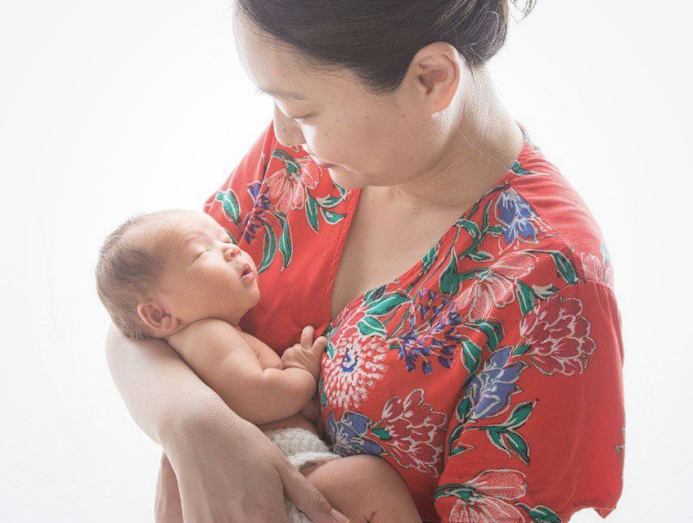
But her baby kept crying. Jiang called her paediatrician the next day, who suggested supplementing breast milk with formula. She did, but when she brought her baby to the paediatrician on the third day, he was found to be severely dehydrated and had to be warded in the Neonatal Intensive Care Unit (NICU).
“I felt like the biggest failure,” Jiang said. “I was completely overwhelmed, crying, crying, crying.
“At the waiting area in front of NICU, I put my baby down on a changing table. Then this nurse came, picked up the baby and said, ‘What are you doing? You cannot leave a baby crying like this. You might cause permanent brain damage’,” Jiang recalled, fresh tears streaming down her face.
There is no medical evidence that briefly leaving a crying baby alone while a caregiver is overwhelmed causes brain damage. However, this offhand remark at a deeply vulnerable moment scarred Jiang for a long time.
I felt like the biggest failure. I was completely overwhelmed, crying, crying, crying.
While her baby was in NICU, Jiang engaged a lactation consultant to help with breastfeeding. But two days later, after her baby was discharged, she continued to struggle with it, suffering from bleeding nipples and mastitis, painful breast tissue inflammation.
She later discovered her baby had a tongue tie, a condition where the band of tissue under the tongue is too short, tight or restrictive. He also had a lip tie, where the tissue connecting the upper lip to the gum is too tight and thick. Both conditions can interfere with breastfeeding. He underwent a minor surgical procedure to correct that.
Jiang herself also had umbilical hernia, a bulge near the belly button caused by muscle weakness; diastasis recti, separation of the abdominal muscles; and weakened pelvic floor muscles. She sought treatment from a physiotherapist.
Her mother stayed with her during this period to help. Her mother-in-law also checked into a hotel near her.
“My mother is Australian-Chinese, and told me to only eat warm things, and not go out or get cold. My mother-in-law is English and told me to take a walk, show off my baby, visit friends. They were trying to help. But they were giving me completely opposite advice,” Jiang recalled.
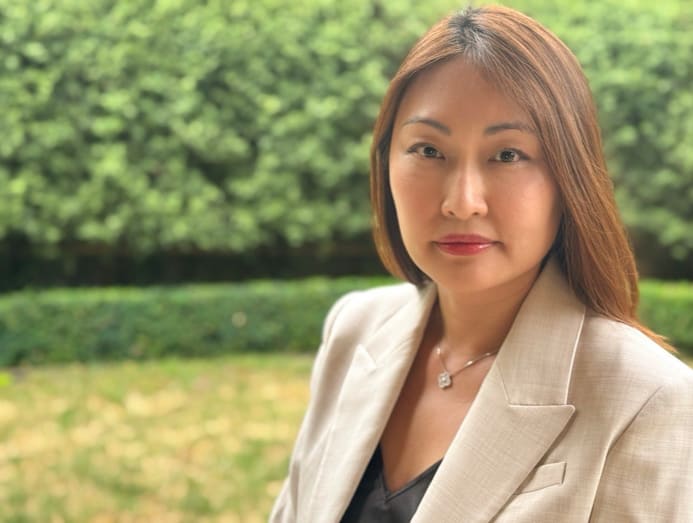
Overwhelmed, Jiang cried for hours every day. When she went for her one-month baby check-up, she could not even speak. Her obstetrician referred her to a psychologist, and she was diagnosed with postpartum depression.
She began private therapy, as well as group therapy with other mothers who also had traumatic postpartum experiences and made a gradual recovery over six months. “We each told our stories and cried together,” Jiang said.
TURNING PAIN INTO INSPIRATION
Despite her postpartum struggles, Jiang continued to work 60- to 80-hour weeks on her health tech startup. She expanded the business from Singapore to Malaysia, Philippines and Indonesia. At the end of 2020, the company was acquired by a large healthcare organisation.
Having just given birth to her second child at that point, Jiang took three years away from work, spending her time mentoring, judging and investing in other startups.
She never forgot her harrowing experience. “I kept thinking to myself, what could I have done to avoid this experience,” she said. “As a new mum, I fell through the cracks.”
That eventually led to the creation of The Joyful Nest, where new mothers could go after birth and have professionals at their fingertips – nurses and doctors to check on the baby and mother, lactation consultants to help with breastfeeding, and a dedicated team to care for mother and baby.
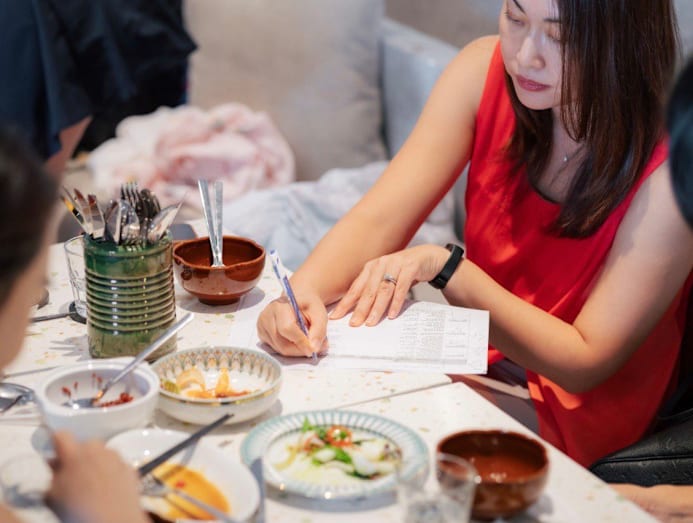
“That was what I would have wanted for myself,” said Jiang. “If I had that, my baby would not have been severely dehydrated and ended up at NICU, and they would have figured out I had postpartum depression earlier.”
Though Jiang is based in Singapore, she was deterred from starting a confinement centre here because of the high setup cost.
She shared her idea with Ruby Ngoc Nguyen, a fellow entrepreneur whom Jiang was then mentoring. A Vietnamese mother, Nguyen also had a horrible postpartum experience.
She loved the idea and suggested starting the centre in Vietnam, where Jiang had worked for many years. That is how the duo became co-founders of The Joyful Nest.
“Like the Chinese, Vietnamese have confinement traditions, centred around keeping warm and resting after birth, although they have slightly different traditions around the healing process,” Jiang said.
“But postpartum services in Vietnam were fragmented, ad hoc and unregulated. There were no confinement centres. Most people get relatives to help.
“Although there are home spa services where a masseuse or a nurse will come to your home for two or three hours to massage the mum and baby, a lot of these are either freelancers or small local companies,” she added.
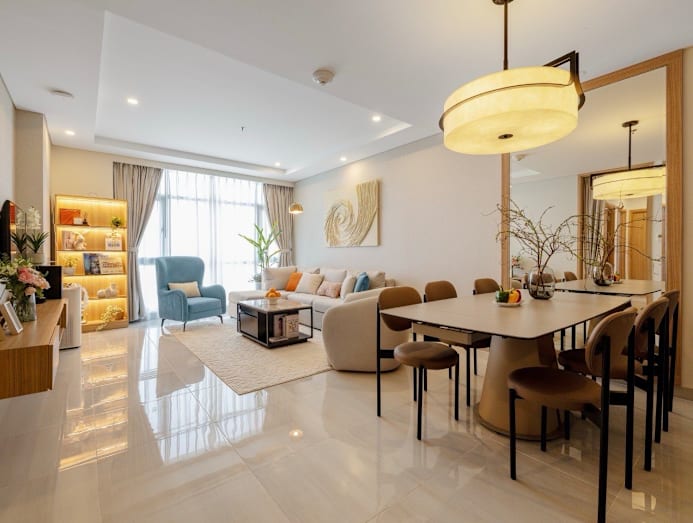
The duo partnered with Oakwood Residence Saigon in Ho Chi Minh City and launched The Joyful Nest in January 2025.
A COCOON FOR NEW PARENTS
“The reason we have a centre is so that the mums and dads can make a really gentle transition into parenthood on their own terms, supported by professionals.
“That way, they can do so not in their homes where there may be external pressures, people offering advice or doing things for them that they may not want, but somewhere where they are pretty much by themselves and can control who gets access – a cocoon for mum, baby and dad,” Jiang explained.
Rates start from 195 million dong (S$9,533) for a two-week stay, and mothers get their own suite, two personal nannies to look after them and their baby in round-the-clock shifts, 24/7 nurse and lactation consultant support, and a paediatrician and obstetrician on hand.
The centre also offers daily facial and body treatments such as breast massages to stimulate milk production and clear blocked ducts, abdominal massages to support healing, and lymphatic draining massage to reduce water retention.
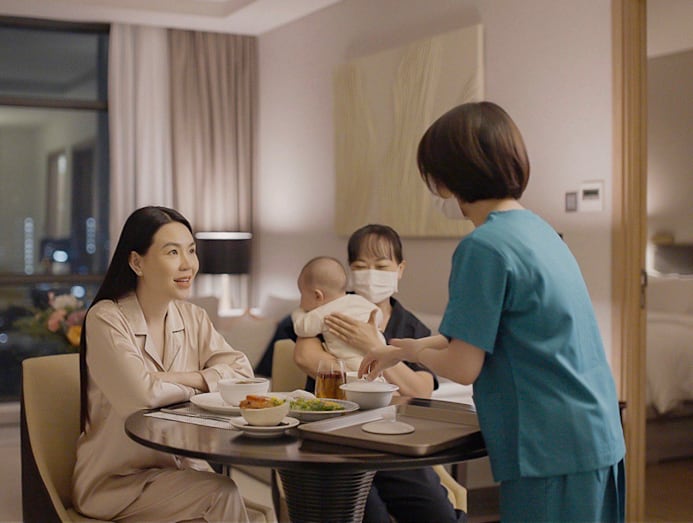
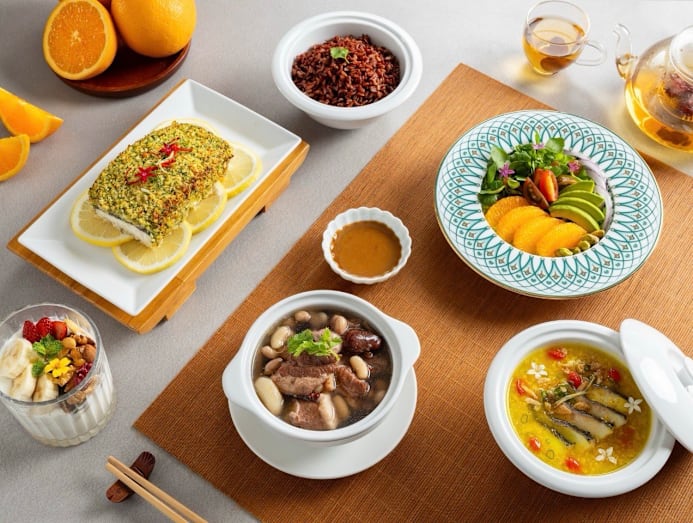
Meals combine traditional Chinese confinement recipes with Vietnamese ingredients to suit local taste profiles. It features 56 different herbal soups to support healing and milk production.
The centre also provides psychological support, yoga sessions and group afternoon tea with other mothers. One package even allows mums to take home a nanny for two weeks after leaving the centre to ease the transition.
Jiang, whose two children are aged seven and five, travels from Singapore to Vietnam weekly to manage the centre.
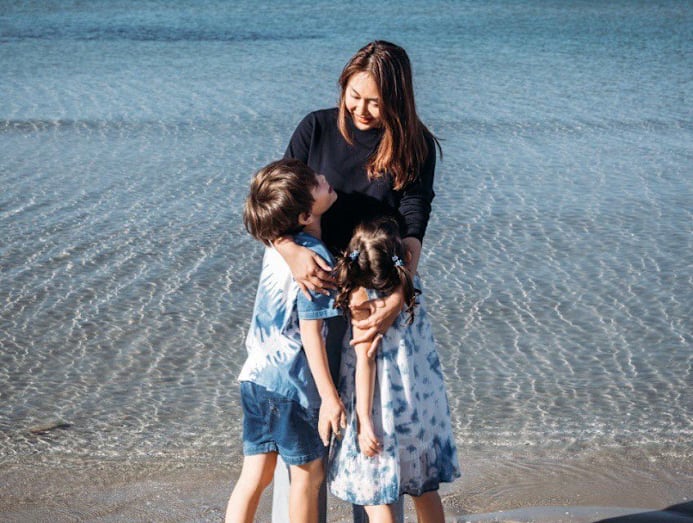
Seeing the impact of her work gives her a great sense of purpose. Since opening, the centre has had several emergency cases where overwhelmed mothers at their wit’s end called in last-minute to book a stay, she said.
“Motherhood is an immense privilege. To be able to watch children grow, and mould and shape them is such an amazing experience,” Jiang reflected. “But childbirth and postpartum are such universally painful, and potentially harrowing and traumatic, experiences.
“What I love about this journey is helping other mums and supporting them through what can be an incredibly difficult part of their lives and making sure that they have a gentle transition and the best start on this new journey,” Jiang said.
CNA Women is a section on CNA Lifestyle that seeks to inform, empower and inspire the modern woman. If you have women-related news, issues and ideas to share with us, email CNAWomen [at] mediacorp.com.sg.